



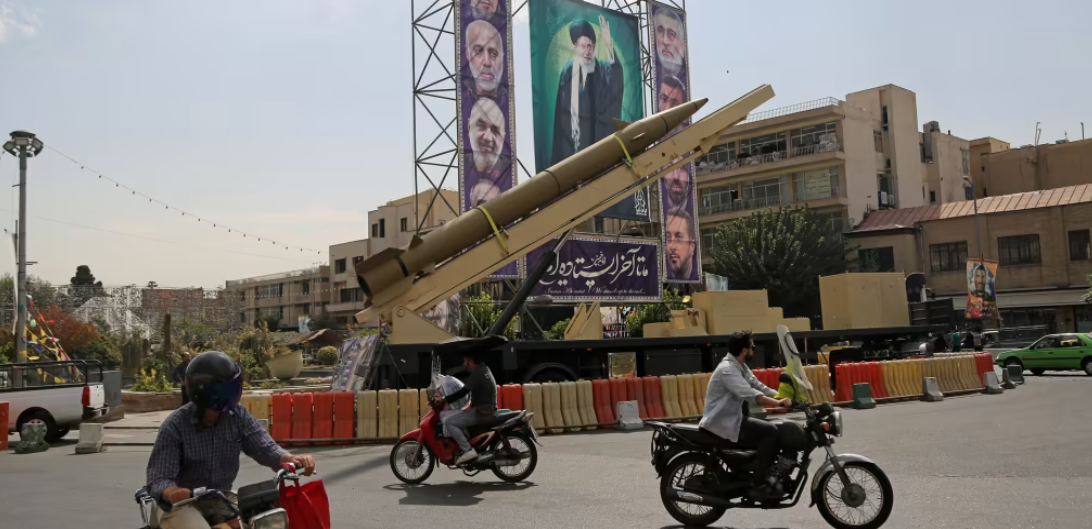

As President Trump escalates tensions with Iran! US carrier groups swarm the Middle East, and now Tehran's ready to unleash its wrath. Despite facing hits from Israel and homegrown unrest, Iran's grip on the region remains ironclad. Experts warn of a volatile riposte—a powder keg waiting to ignite!
Iran has spent decades honing its military prowess, anticipating an American confrontation. Although it's outgunned, Tehran's focused on exacting a hefty toll. Think missile barrages, proxy mobilizations, and economic upheaval that could rattle markets globally. The question is: How will Iran wield its arsenal?
Farzin Nadimi from the Washington Institute offers insight: "If Iran sees an existential threat, they'll throw everything they've got."
Iran's missile capabilities are staggering—thousands of ballistic artifacts aimed at US bases and Israel. The June exchange with Israel was a grim preview, where waves of missiles ravaged defenses. Despite a drained stockpile, Iran is rebuilding furiously. Even aging jets pose a threat, with short to long-range missiles poised to reach far-flung targets.
"We have 30,000–40,000 American troops within Iran's missile range," cautions US Secretary of State Marco Rubio. The reality? Iran’s military might complicates any decisive US offensive.
But it doesn't stop there. Iran's network of allies is stirring too. Iraq’s militias and Lebanon's Hezbollah pledge allegiance in the event of an attack. Kataeb Hezbollah's leader calls for global loyalists to rally. The Houthis in Yemen remain defiant, hinting at fiery support for Iran.
Yet, challenges loom. Hezbollah faces disarmament, and Iraqi militias grapple with government restraints. The Houthis, though battered, remain fierce, disrupting adversaries across the region.
On the economic front, Iran's trump card—the Strait of Hormuz—is a ticking time bomb. This vital oil artery could choke global trade if Iran shifts to drastic measures. Closing the strait threatens global economic tremors, with energy prices skyrocketing. Even brief disruptions risk triggering a worldwide recession.
Energy expert Umud Shokri highlights the danger: "Partial strait disruptions could spike prices and inflate costs globally." Iran’s naval prowess underpins this threat, with fleets and submarines lying in wait.
Recalling past skirmishes, Tehran’s ability to menace shipping lanes isn’t new. Sea mines in the '80s and the 2019 tanker attacks echo Iran's maritime menace. Ominously, this very scenario could mark the flashpoint for war.
Nadimi warns: The "next war might start… in the Strait of Hormuz." Tehran’s specter might soon loom over the world's oil veins, turning simmering tensions into full-blown conflict.
Key Takeaways:
Iran’s missile stock and allies are primed for a potent retaliation.
The Strait of Hormuz is Tehran’s trump card, threatening global markets.
Historical precedents loom, with Iran’s naval menace sparking fears anew.


Adapted by ASEAN Now from Source 2026-01-29


-
 1
1
-
 1
1