Tramboy
Member
-
Joined
-
Last visited
-
Your needs have already been met by your car. But, your needs are not driving the market which are tech, culture, trust and competition driven.
-
I was a little bit unclear. I mean 500/600 klms real world range. Not NEDC, CLDC WLTP or even PEA. Not having to optimise for the best battery management. Air-con on, drive as fast as the traffic goes, up and down mountains etc. Basically like for like (at least) with a typical ICE car. So, from a range perspective, there would be no difference in buying say a Yaris or a Dolphin and most people would drive them in the same fashion. And the EV vehicle would be priced about the same or cheaper. I see the tech tracking much like PC tech. Initially, it seemed like there were big breakthroughs in processing speed. Then it got to a point where the next new, new thing only produced minor improvements. Then the manufacturers kept making sub-par machines (think Pentium, i3, I5, I7 and I9) so they could justify price differentials. It's an interesting concept already at play, even in Thailand where lots of people don't seem to mind waiting forever, for anything 555. PEA charge 5.9B/KWH for 25KW chargers to 7.9B for 300-360 KW chargers even now. As the input tech changes (how fast a car can accept charge), so will the output tech (the charging infrastructure). But I suspect, much like computers, the cap will come not from capacity but from price. The mass market will adopt be form 80%+ of the market. The top 10% or less may have cars that can charge at 10C+ but will the average charging company go to the expense of paying for and setting up the infrastructure to serve 10% or less of the market? Personally, I doubt it. The car companies will, like BYD is in China as they are getting multiple benefits from their spend including marketing and showcasing their tech. Those benefits (mostly) evaporate from a EV charging company's point of view. At some point, the amount of energy required to power high output chargers would increase the costs of providing them exponentially - that's where the rubber hits the road from a ROI point of view. Mix in people's expectations around time (not early adopter's expectations but the mass market) and what price they are prepared to pay and you have somewhat of an answer. I suspect most people would be happy with the ZEEKR 7X charging rate (20-80% in under 10 minutes - real world) using a 500KW charger. As the input tech improves, things will only get better.
-
The Blade 2.0 battery looks really good. It allows BYD to increase range dramatically (Seal 8) or decrease battery size and increase dynamics and efficiency (Seal 7). IMO, mass market adoption without govt incentives will happen when real world range gets to 500/600 Klm and charging 10-80% settles at around 10-12 minutes with the requisite infrastructure to support better batteries. Obviously, solid state will get the industry there but the industry is still 5+ years away from having SS at mass market pricing. So these LFP improvements are really exciting.
-
PSA for those considering an ATTO1, recently announced for Thailand. https://youtu.be/GaLZxU7-hjI?si=leXiNO_bi3dGPf_S This video seems to be warts and all. And we won't necessarily get the exact same spec as Australia gets.
-
Prices are just normalising after the Government sweeteners were removed. If you are looking for "extras" for the money you pay, compare Chinese BEV's to the legacy ICE vehicles or stay out of the market until you find something you like at a price you are prepared to pay.
-
I recommend you join some model specific FB groups as people report what they like and what they don't like about li as well as the manufacturers approach to warranty claims and what getting spare parts is like.
-
International travel right now. Pffft.
-
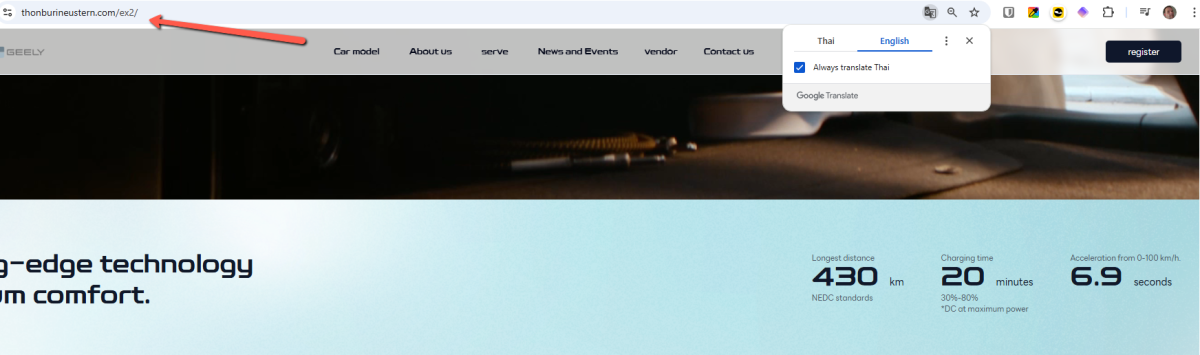
https://www.thonburineustern.com/ex2/
-
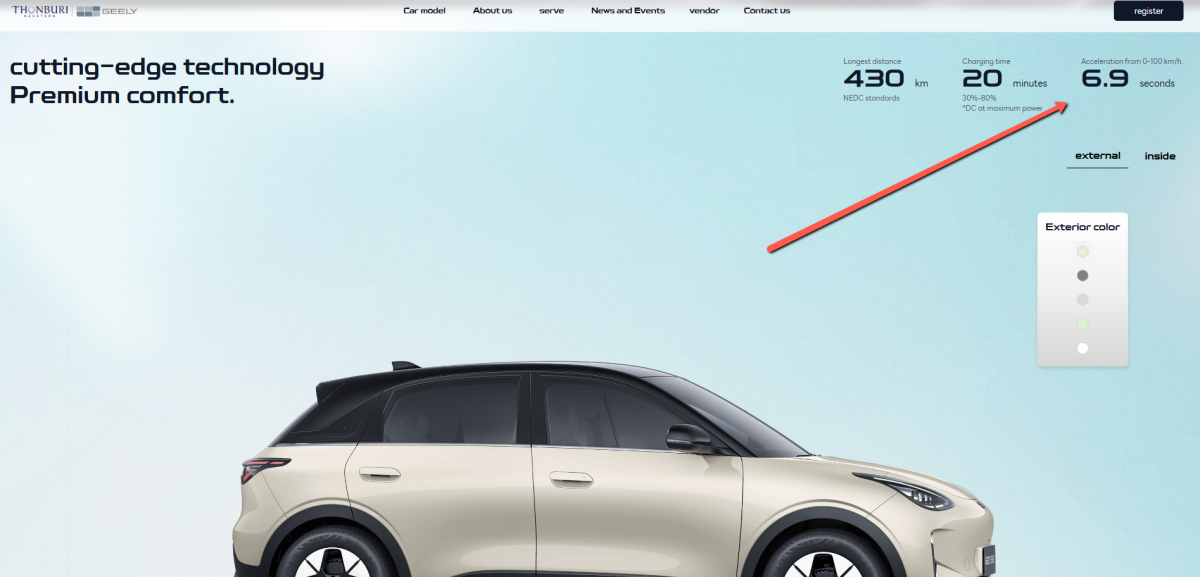
Yah. I'll put it down to an editing issue from the company. FYI, I'm accessing the same site as you, from Thailand with NO VPN. I suspect this car would require about 140-160KW to achieve sub 7 sec 0-100 and it doesn't have that.

-
Something is going on with the stats Geely are quoting....
-
Gotta have something to do while the car is charging 555
-
The BYD Atto 3 is a representation of where BYD feels it needs to be to capture buyer interest given the intense competition it faces from all of the other EV brands. It feels strange to me that it has made it hot hatch+ powerful while maintaining a conservative looking stance that the casual observer might not pick from the current model when looking from the front. The extra space in the rear and the usable frunk will tick boxes, especially in countries with networks of small roads and lanes where many of the larger EV's are just not feasible due to their size.. At 1,199,000 the ZEEKR X still looks better (IMO) but now has a smaller battery with less range, slower charging and NMC as well as less cargo space, so it looks very expensive in comparison.
-
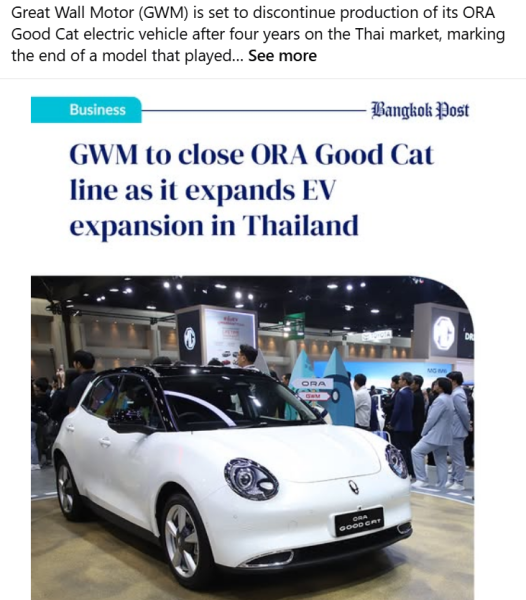
GWM is closing down the Ora line in Thailand. On to bigger and better things.
-
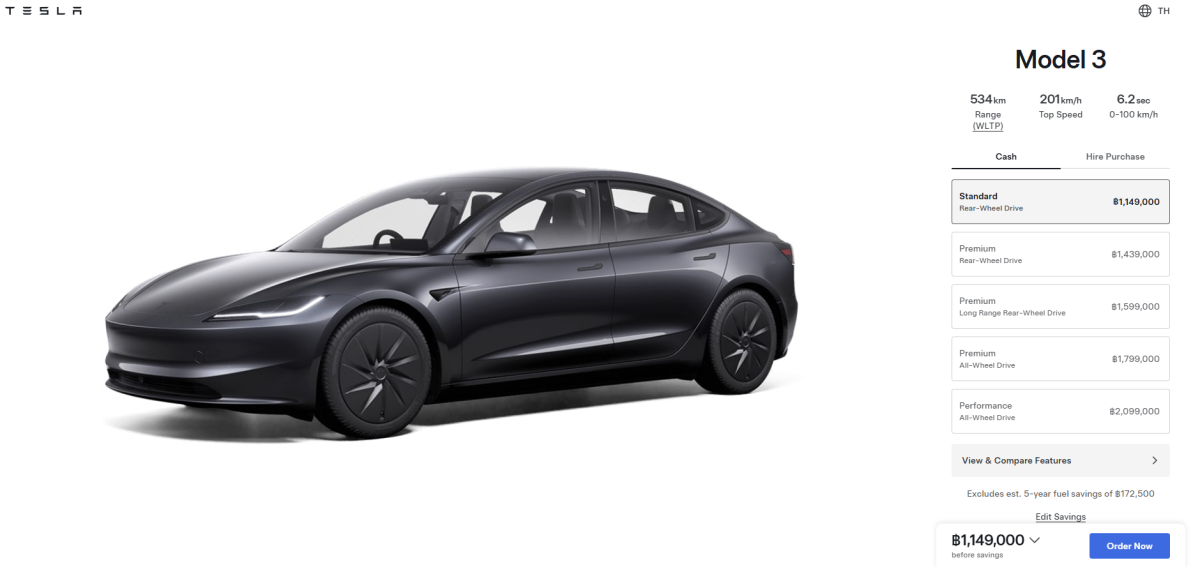
Has the Tesla Model 3 Standard been discussed? It was recently released for 1,149,000 THB and judging by my girlfriend's reaction, Tesla is a highly regarded brand in Thailand. The Standard has only a single wheel choice, deletes the rear screen and upper mood lighting and Tesla's version of hands-free lane centering. As well, the seats are fabric/vegan leather and the side mirrors are only operable via the screen. The sub has also been deleted with a total of 7 speakers and the battery is an LFP good for 534 KM WLTP and charging is restricted to 150KW. Thoughts?
-
Sodium-ion batteries will not replace car batteries anytime soon according to some. CATL doesn't make a use case for cars ATM. This is apparently because their watt hours by volume is too high for cars. Most people have come to use the KWH/KG measurement and it's all very useful when everybody measures the same thing. As far as I can tell, sodium-ion batteries require about double the volume as an NMC or LFP battery. That is, it needs to be twice as tall.