



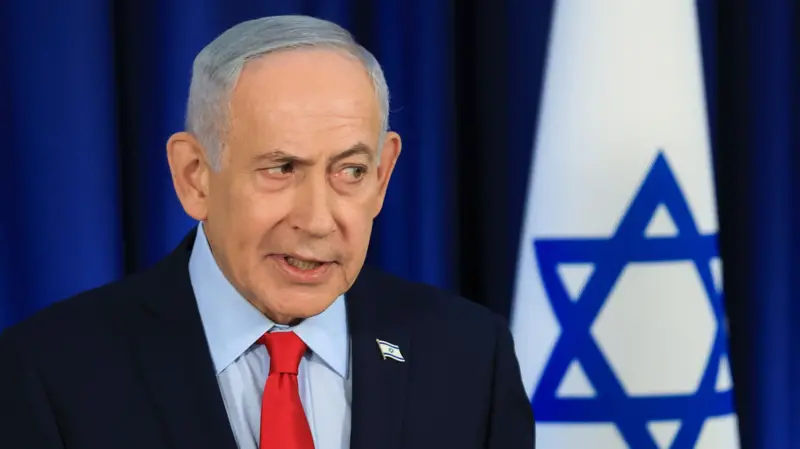

Israeli Prime Minister Benjamin Netanyahu has said Israel will suspend further attacks on Iranian gas facilities following a request from US President Donald Trump, as tensions continue to escalate across the Middle East. Speaking at a press conference, Mr Netanyahu confirmed that Israel would “hold off” on targeting gas infrastructure after discussions with Washington. He also rejected claims that he had drawn the United States into the conflict, insisting Israel was acting independently.
Get today's headlines by email 
The announcement came as explosions were reported in both Jerusalem and Tehran, underlining the ongoing hostilities despite the apparent shift in Israeli strategy.
Earlier, Iran’s foreign minister had warned that Tehran would respond with “zero restraint” if further attacks were carried out against its infrastructure, signalling the risk of further escalation.
In recent hours, several Gulf countries have reported missile and drone strikes. The United Arab Emirates and Bahrain attributed the attacks to Iran, while Kuwait and Saudi Arabia also confirmed incidents affecting their territories.
Rising casualties and humanitarian concerns
The conflict, which began in late February, has led to a mounting death toll. The Human Rights Activists News Agency (HRANA) said the number of people killed in Iran had risen to 3,186 since the start of the war on 28 February.
The figures highlight the growing humanitarian impact of the conflict, as fighting continues across multiple fronts in the region.
Energy infrastructure under pressure
The war has also had significant consequences for global energy markets. Prices have risen sharply in Europe and the United Kingdom following an attack on Qatar’s Ras Laffan energy complex.
Qatar’s prime minister described the strike as a “very dangerous escalation,” reflecting concerns about the targeting of critical infrastructure linked to global energy supplies.
The decision by Israel to pause further attacks on Iranian gas fields may ease some immediate fears of disruption, though uncertainty remains high as both sides continue military operations.
Regional tensions remain high
Despite the temporary restraint announced by Israel, the broader conflict shows little sign of de-escalation. Ongoing strikes, retaliatory threats and widening regional involvement have raised fears of a prolonged crisis.
Diplomatic efforts to contain the situation have so far struggled to gain traction, with both sides maintaining firm positions.
Observers say the coming days will be critical in determining whether the pause in attacks on energy facilities leads to a wider reduction in hostilities or proves to be a limited measure amid an intensifying conflict.
Join the discussion? 
Already a member? 
 Adapted by ASEAN Now. Source 20 March 2026