matchar
Member
-
Joined
-
Last visited
-
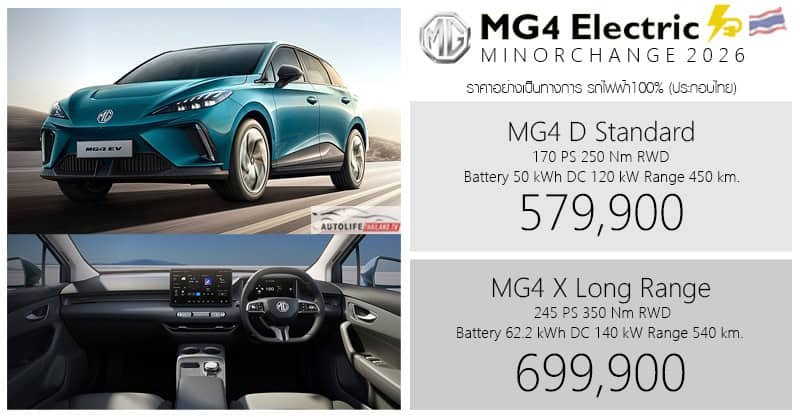
New MG 4 pricing. Only the top spec gets a new bigger LFP battery with faster charging although it seems slightly different to the UK version.
-
Sounds a bit fishy to be honest. I'm still not convinced BYD completely fulfilled their domestic manufacturing quota under EV 3.0, and they could be negotiating to rollover any unfulfilled quota into the EV 3.5 scheme.
-
How can it not be registered by now? Weren't they required to register all vehicles by the end of January to receive the EV 3.0 subsidies?
-
It seems to me that the Chinese brands with the longest delays for newer models are those who have invested heavily in Thai factories like BYD. Presumably they want to maximise the use of the old production runs before upgrading them. MG also seem to be delaying new releases in Thailand compared to the UK and Australia.
-
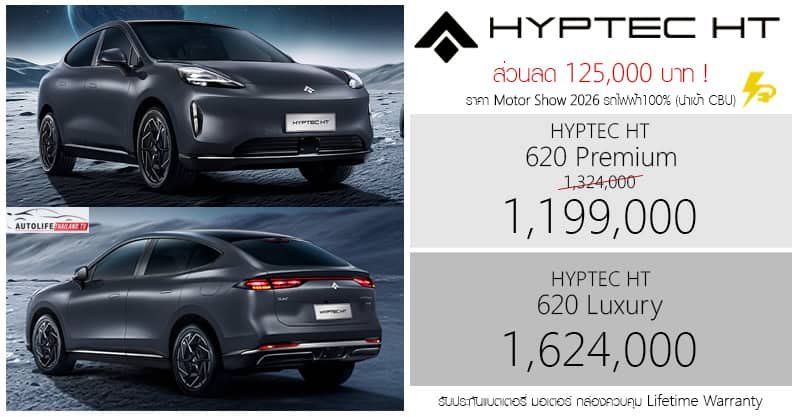
https://autolifethailand.tv/official-price-discount-gac-hyptec-ht-ev-motor-show-2026/ I think this is the lowest price yet, it was previously on sale for 1,249,000 last year. I'm surprised it hasn't been more popular as it's 800V architecture, unlike the Thai version of the BYD Sealion 7.
-
There is still a domestic gas supply as well as gas from Myanmar.
-
Both brands are fairly niche in Thailand at the moment. I would be looking at a car that has sold many units like the MG 4 so spare parts will not be an issue further down the line. After the MG 4 facelift is revealed at the motor show, there should be some good deals on the old model. Also the new interior looks a lot nicer and I don't think the price of the new model will be much higher, maybe around 599k (but it also depends if they have upgraded the battery or not).
-
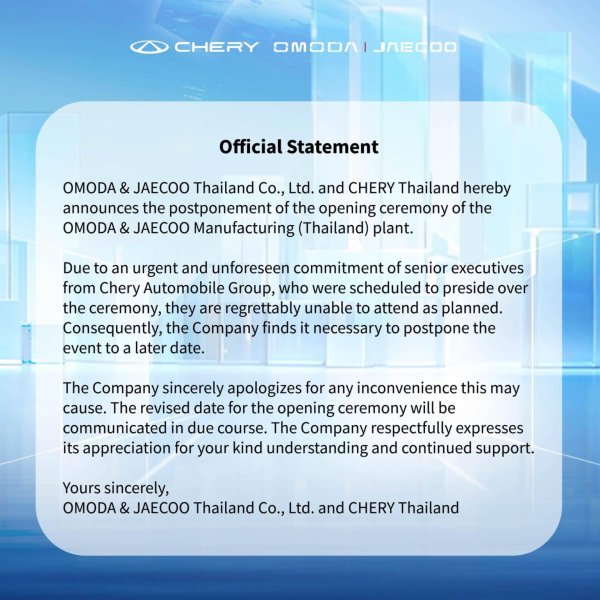
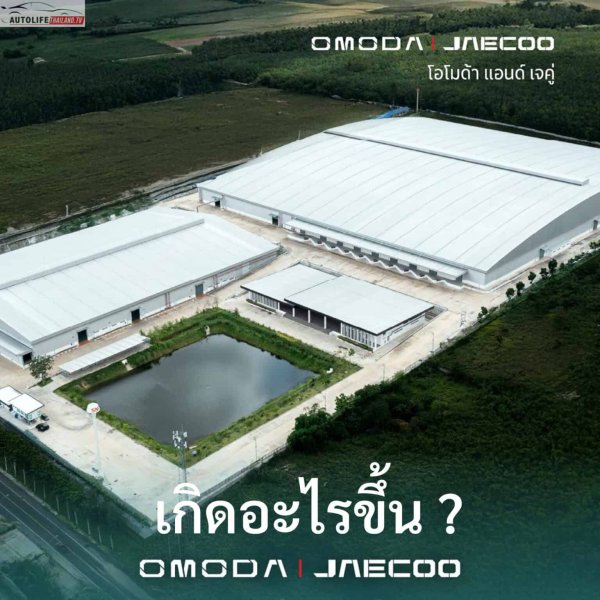
Chery, Omoda and Jaecoo recently cancelled the opening ceremony of their factory in Rayong at very short notice. It all seems a bit fishy to me. https://autolifethailand.tv/chery-omoda-jaecoo-cancel-factory-ceremony-thailand/ Some people are speculating the factory is actually just a parts storage warehouse as the site is too small?
-
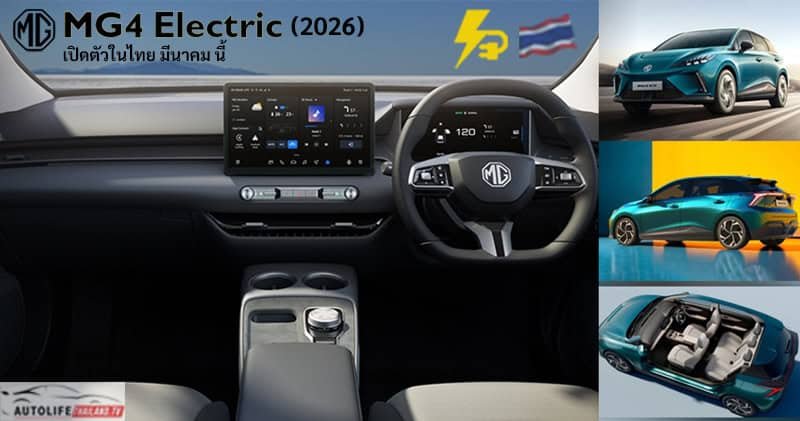
The refreshed interior MG 4 is set be be launched in Thailand at the end of March. No sign yet of whether or not it will include the upgraded 64 kWh LFP battery that the European model has. And no news yet about the MG 4 Urban. https://autolifethailand.tv/mg4-electric-2026-ev-bev-coming-thailand-motor-show/
-
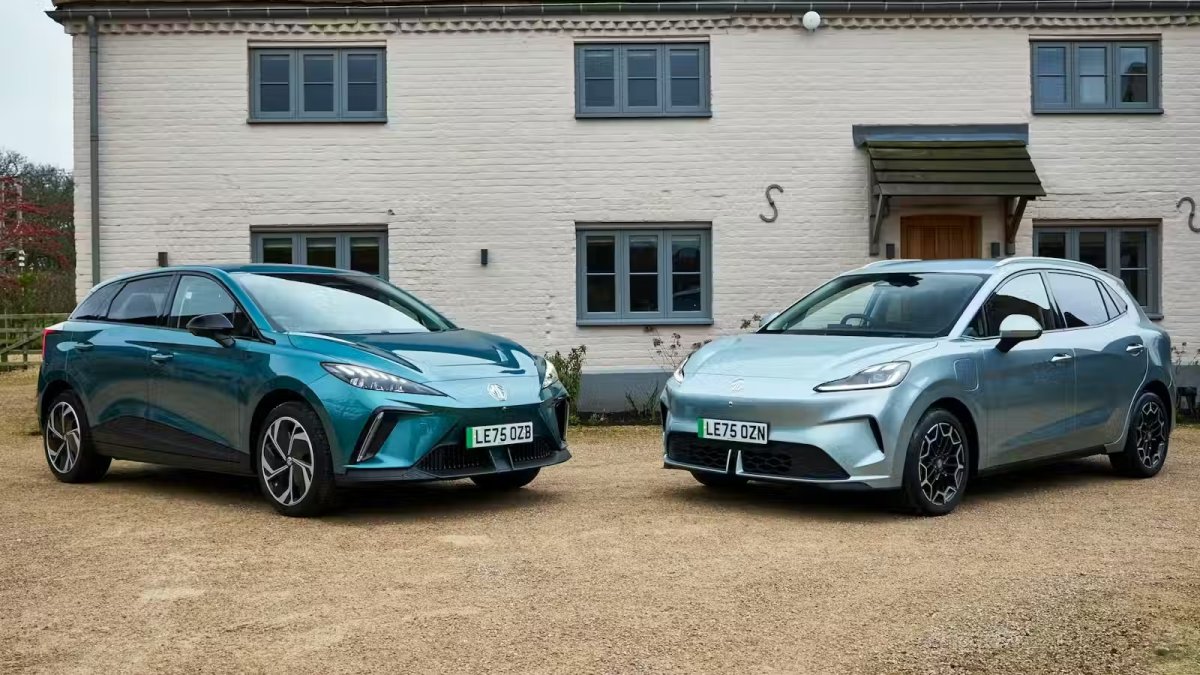
https://www.carwow.co.uk/news/10258/mg4-vs-mg4-urban-twin-test-tom-wiltshire The MG 4 has been updated in the UK with a much improved interior and a cheaper price. The entry level MG 4 Urban has also launched there at lower price making it one of the cheapest new cars in the UK. The Urban is FWD to cut manufacturing costs but is also slightly bigger with significantly more interior space due to the cell-to-body battery pack. Both models will probably be coming to Thailand later this year, it will be interesting to see the local pricing.
-
The Leapmotor B10 looks like a good car with good reviews, and is also RWD. Overall quality looks better than Jaecoo but obviously it's not quite as cheap although still good value.

-
Thai people on Facebook have been reporting issues with the air conditioning drain pipe (translated and summarised with AI below): In the Jaecoo 5 EV (and related Omoda C5 EV), the air conditioning (AC) drain pipe often fails to extend beyond the vehicle's body, causing water to drip onto internal components rather than the ground. Why the drain pipe is short Design Oversight: To optimize aerodynamics, EVs use extensive underbody panels. The drain pipe may be designed too short or misaligned with these panels, causing water to pool behind them. Cost & Assembly: Lengthening the rubber hose to clear the undercarriage requires extra parts and more precise factory installation, which is sometimes skipped to simplify manufacturing. Long-term Risks Chassis Rust: Constant moisture on the subframe or suspension mounts can lead to premature corrosion and structural damage. Battery Risks: In some cases, water may drip onto or near the high-voltage battery casing, potentially causing rust on fuse covers or compromising seals over time. Mold & Odors: If the underbody panels are made of absorbent fibers, they can trap water, leading to mold growth and unpleasant smells. Panel Damage: Daily exposure to water can cause fiber or composite underbody covers to sag, rot, or eventually fall off. Recommended Action Owners are increasingly seeking to extend the AC drain pipe themselves or via third-party shops, though some centers have issued warnings that unauthorized modifications could affect your warranty
-
No I think the 10% is standard. Now only locally produced models have the reduced 2% excise tax, hence the large price increase on the BYD Sealion 7 (loss of 75k subsidy plus another 100k or so in excise tax). Now imported and locally produced PHEVs have an excise tax of only 5% in 2026 and they also have much lower insurance costs than pure EVs. I think my next car will be a PHEV. I would prefer a pure EV but the price of insurance puts me off.
-
"Rêver Automotive, BYD’s distributor, expects total 2025 sales to reach nearly 50,000 units (with registrations at 44,636). Executives have confirmed that BYD ATTO 3 and BYD DOLPHIN will move up in price as previously announced, with new pricing being prepared and awaiting approval from the Excise Department. Imported models have already been repriced. BYD Sealion 7 is up 190,000 baht to 1,264,900-1,364,900 baht, while BYD M6 has risen 160,000 baht to 909,900-1,009,900 baht." Perhaps BYD are negotiating their production quota and subsidies with the Excise Department?
-
https://www.nationthailand.com/business/automobile/40061166 Chinese automakers are raising EV prices for 2026 after EV3.0 ended and EV3.5 cut subsidies to 50,000 baht for locally built models, while imports lose support and face 10% excise. Chinese automakers are rolling out new, higher EV price lists for 2026 after the government’s EV3.0 scheme ended and was replaced by EV3.5, which reduces support and changes incentives, particularly for imported models. Under EV3.5, the subsidy has been cut to 50,000 baht and applies only to vehicles assembled in Thailand. Imported models are not eligible for benefits and face a higher excise tax of 10%, up from 2%, if brought in under EV3.5 conditions.