Uncle John
Member
-
Joined
-
Last visited
Everything posted by Uncle John
-
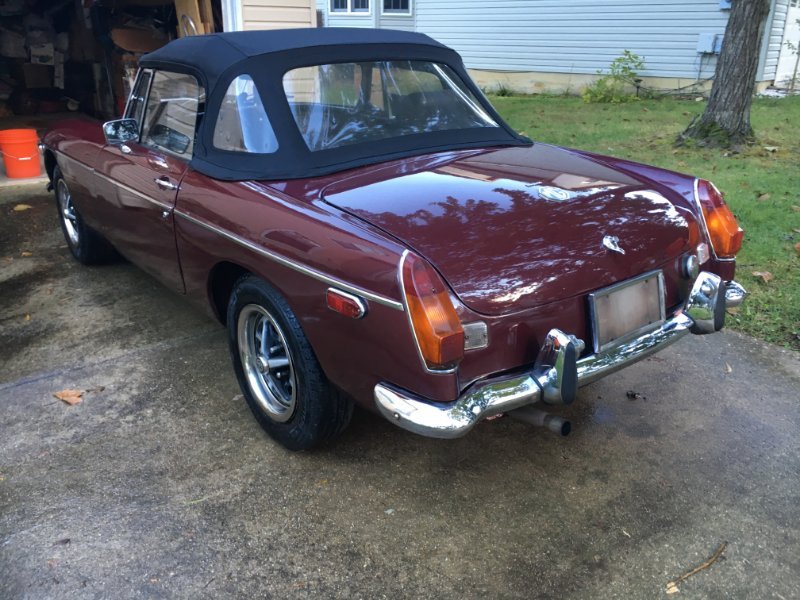
I had a few more thoughts as I reviewed this post and the many responses to it along with my own. At least part of the reason My Bride and I chose her ancestral home for our retired life was that living here in Isaan takes us back to basics. As we cleaned out our home in the U.S. in preparation for this move, we soon realized that over the decades of our working lives, we had accumulated so much “stuff” that does not really matter – trophies and plaques from various milestones reached in either our working careers or our volunteering, that at the time we received those accolades seemed important and nice, but the reality is that they matter very little as we approached what is perhaps the last chapter of our lives. For many of those things as I looked at them after months or even years, my response was, “Why did I think this was so important at the time I received this?” In the process of cleaning out our home in the U.S., we put over NINE TONS of “stuff” into a large roll-off dumpster destined for the local landfill – old furniture, old broken items that I always intended to fix – someday – dozens of boxes of files, papers, records, etc., that we long since no longer needed to keep, a garage full of various spare parts for items we no longer had, etc., etc. We even had a huge collection of nearly 2,000 VHS video tapes of movies, along with three VHS players that no longer worked… And that is just SOME of the items we sold or trashed. I also had a burgundy1973 MGB convertible that I had completely restored in 1981 and then drove to and from work for the next nearly 40 years. Realizing I could not bring that car with us to Thailand due to the prohibition at the time of our move against importing used vehicles, I sold it to a sports car enthusiast and never looked back. I think that one act was representative of our leaving our old life behind and moving on to our new lives here in Isaan – it was cathartic. I will try to attach a picture of that 1973 MGB to this post. We have come to realize that as we eventually approach perhaps the final chapter of our lives, we cannot take anything with us – no treasures, no keepsakes, no fancy clothes – nothing… And the sooner we faced that inescapable fact, the better for our mental health. The result of this realization was that we only brought with us those items of furniture, clothing, appliances, personal items, pots and pans, dishes and utensils, etc., that we would need to use in our retirement home here in Isaan. I thought about the monks who walked across part of America from Fort Worth, Texas to Washington DC – an unbelievable 2,300 mile (3,700 kilometer) journey in a “Walk for Peace” to present to the world another option other than conflict to live life to its fullest. The monks walked barefoot for much of their journey, except when the snow and ice forced them to don winter boots, socks, and other winter-protective gear. In the following, I am paraphrasing the words of Raj Rak<deleted>, another writer who shared this incredible story, “FROM MOTOROLA TO THE MONASTERY…”. The most important part of this amazing story begins with the lead monk, “the Venerable Bhikkhu Pannakara, who was born in Vietnam, raised in the U.S., and did everything a driven young man is supposed to do. He navigated the challenges of a new culture with grace. He was sharp, ambitious, and focused. He studied very hard, earned an engineering degree, and landed a prestigious engineering job with Motorola. He had the badge, the office, the respectable salary, and the admiration of his peers. He lived among people chasing the American Dream of happiness through better cars, larger homes, and the latest technology. By every modern standard, his was a success story…” “Yet sitting in the climate-controlled comfort of corporate America, a quiet realization began to grow… He was engineering solutions for machines… But his own heart was searching for a signal it couldn’t find in the material world. It is one thing to fail and seek religion for comfort. It is entirely another to succeed, look at the prize in your hand, and realize it is empty. “Venerable Pannakara saw that the happiness promised by the “American Dream” was fragile, and depended on the stock market, employment, good health, and ‘things’. He realized something radical: TRUE PEACE – the kind that doesn’t shatter when life gets hard – cannot be bought. It must be built from within… So… he walked away…” “He resigned from Motorola, he left the comfort of the suburbs, and he traded his suit for saffron robes. Then he traveled to Myanmar (Burma) to immerse himself in the strict, ancient discipline of Theravada Buddhism, specifically the philosophy of ‘Dhutanga’ (Asceticism). Venerable Pannakara didn’t just become a monk. He chose the forest tradition. He practices dhutanga – ascetic practices meant to strip away attachment to the body and comfort.” That is why you may have seen him, “…walking barefoot on freezing American highways, eating only one meal a day before noon, sleeping in tents, often on hard ground, exposing himself to biting cold and scorching heat. To the outside world, this looks like suffering. To Venerable Pannakara, it is FREEDOM! He lives by a powerful truth: pain is inevitable; suffering is optional. By refusing to be a slave to comfort, he has built a mind that is calm, resilient, and nearly unbreakable.” This reminded me of what we might all work towards achieving in our lives here in Isaan – “…a mind that is calm, resilient, and nearly unbreakable…” – not by shedding our civilian clothing and donning the saffron robes of a monk, but by striving to find inner peace through daily meditation, perhaps through using either Scripture from the Holy Bible or by following parts of the tenets of Buddhism as a guide… Just a few thoughts for your contemplation… Enjoy!!
-
Even after reading most of the responses to this initial query, I will try to respond to the question asked, honestly, openly, and forthrightly. At 78-years-old, I am old school, and so I would not use AI, even if I eventually learn how to access it. I much prefer to develop my responses in Microsoft Word, edit them for errors, punctuation, spelling, omissions, content, etc., and then post the final result – so this may take a while… My story is definitely different from that of most expats now living here in Thailand, mostly because it began with my being transferred to Korat Royal Thai Air Base during the Vietnam War, after serving nearly two years in Vietnam at both Da Nang and Phan Rang. I was a fighter jet mechanic, maintaining mostly F-4Es at the time. I was assigned to Korat for eight years, mostly because I kept extending for another year at a time when my unit was desperate for more maintenance personnel and extensions were almost always approved. That provides a short background – now let me delve into my personal experience… I was a fairly young kid of 19 when I arrived at Korat, and I did what nearly all of my colleagues did after working 12-hour shifts and on our one-day off on “weekends” – I took a “baht bus” into Korat, which was a fairly small town in 1968, and “hit” the small bars along a strip close to the Sripatana (SP) Hotel. Those who preferred Jack Daniels or other whiskey over local beer brought a bottle with us in a cloth carrier. That was not much of a lifestyle, I know – but it is what teenagers and 20-something-year-olds did back then. There was a local orphanage in town that my unit sponsored as part of our Civic Action outreach. It was run by a Thai foundation, and most of the children were Amer-Asian, abandoned by their mothers after their American “tee-locks” had returned to the U.S. We held a carnival on base shortly after I arrived at Korat, with a goal of raising enough money to build a new home for the orphanage, since the building they had was in sad shape. The carnival lasted for three days, and we raised just over $7,500 U.S. (about $71,700 in 2026 dollars), or about 156,000 baht in 1968 at 20.8 baht to $1 USD – but $71,700 would have been about 2,222,700 baht today at 31 Thai baht to $1 USD. Needless to say, that was a LOT of money back then, and we bought enough materials to build the orphanage a completely new facility, which volunteer workers from the U.S. Air Force and U.S. Army stationed at Korat, combined with volunteers from the local community built over the next ten months or so. It was at that carnival that I first saw my future Bride caring for a large group of children. I was mesmerized by the love she showed the children, and I was smitten by her beauty, too. I began courting her a few weeks later, and after a few more months, we traveled to her ancestral home in Isaan where I asked her father for her hand and I met her extended family. On our second day there, the family held a Bai Sri Su Kwan (special blessing) ceremony for us, which was actually a wedding ceremony, at the end of which, My Bride and I were married according to Isaan custom and tradition!! That was about 58 years ago! I have often said that God in the U.S. and Buddha in Thailand brought My Bride and me together to be of one heart and one mind to live our lives together. How I knew that at age 19, I don’t know – except that it must have been the hands of God and Buddha that guided me and My Bride somehow. We have had the pleasure of living in several places in the U.S., and also in Jakarta, Indonesia, and Manila, Philippines – but we have always returned to My Bride’s ancestral home in Isaan, to the life we have always loved. Over the course of moving around the world, raising our two daughters, and traveling quite extensively, we decided that her ancestral home was where we wanted to eventually retire, and we did just that almost eight years ago. After living and working in the Washington DC area for about 30 years, with its frantic pace, frenzied driving, icy winters, etc., we decided that the only way we could enjoy retirement to its fullest was by moving here to Isaan to the life we have always loved – with its calm, slow-paced, relaxing life style. One more important thing – I became fluent in Thai and Isaan while I was courting My Bride, and once we were reassigned to the U.S., My Bride studied English and has become fluent in that as well. We raised our daughters speaking both Thai and English at home, and we also were members of Buddhist Temples and Christian churches near where we lived so our daughters would be thoroughly exposed to both and chose which, or both, they wanted to pursue once they grew up. Now, back to your more specific questions as to whether living in Isaan ever gets dull, or I am relegated to indifference or some form of “neutrality”… I can say that has definitely never happened to me anywhere, let alone in Isaan. We have really good friends here, and we often meet new people who also become our friends. We have a pretty active life here, in spite of our “elder” status. We often travel around the region to visit other cities, towns, and provinces, and also to visit Khmer-period temple ruins in our area. Besides, we always dreamed of coming back to My Bride’s ancestral home in Isaan ever since we first visited while I was stationed at Korat – and we PLANNED for this move for well over 35 years!! We live in the same “compound” with My Bride’s two younger brothers and their families, so we are looked after VERY WELL!! Although they are REALLY busy with their farm work, at the end of each day we sit with them to find out how their sugar cane or other harvesting is progressing, and to catch up on any family news. We built our retirement home here so we could be close to them after living halfway around the world for most of our lives. Early each morning My Bride and I go out to our front gate to wait for the monks who pass by on their alms walk. As we wait, several of our village neighbors walk or ride past, and we always greet them with a warm “Good morning!”, after which many of them stop by for a chat. We also greet the other neighbors who are waiting for the monks, and we talk with them about their lives, about their farming, about the weather – or whatever – just to stay engaged. When the monks arrive, we speak to each one, asking how they are doing, when their next event will be held, or whether they have any needs we can help with. Frankly, we are DELIGHTED that our lives here demand less of us than we experienced in the U.S. over the past 30 years where I was working full time and then some. My job took me to countries all over Africa and to Germany for meetings about the programs I was managing in 44 countries. That pretty much had me working ten-hour days, even on weekends. In spite of those long work hours and travel, I also served on the Board of Directors for our local Thai Buddhist Temple as their Vice President. I also served as the emcee for all of the main Buddhist holy days through the year, I was the emcee for Thai funerals, and I was the emcee at Royal Thai Embassy events. My Bride volunteered at our local Buddhist Temple where she coordinated bringing food to the monks, since the typical “alms walk” was not possible. My Bride cooked three or four kinds of food to provide for the monks in enough quantities to feed an average of 25 people one day a week, and she coordinated with her friends to do the same for the rest of the week. She also went to the Wat every day to provide the food and to clean everything up afterwards. My Bride and I attended Christian services at the main Chapel on Andrews Air Force Base every Sunday, where I was also on the vestry and President of the Christian Men of the Chapel. The bottom line is that our lives for the past 30 years living in the Washington DC area had been VERY frantic, VERY busy, and VERY FULL, with very little time to ourselves. Moving to Isaan has blessed us with changing all of that and our being able to relax for the first time in decades! But in that relaxed lifestyle, we also find great fulfillment here in Isaan, and if we had it to do all over again, we would still choose the same path! My Bride and I are involved in ALL of our village events, from funerals, to weddings, to home blessings, to school fund-raising and sports events, to local Buddhist Temple events in and around our village – in summary, we are fully engaged in our local community and its activities – so much so that we don’t miss our former Washington DC life at all. Of course, we miss our daughters and their families, and we miss our friends, but our daughters mitigate that by visiting us here once a year. As a retired expat being granted the distinct privilege of living in Isaan long-term by having my visa extension for the purposes of retirement approved by the Thai Government annually, I MUST realize that as a foreigner, I do NOT have any right to involve myself in politics, border disputes, or other matters involving the local, provincial, or Thai Governments or their officials. Along with that restriction, I must keep my opinions to myself, particularly when it comes to the Thai Government or any member of the Royal family. That is called FOLLOWING THE THAI LAW, and I am happy to do so. But that does NOT mean that we are not fully engaged in our local community, because we definitely are! I have NEVER felt considered as an “outsider”, even though I am a foreign expat. My opinions on things are often sought by villagers and townspeople. It may be that a lot of that comes from my being a foreign expat who has lived all over the world and has returned here. My perspective on things is different from other locals, but because I am an “elder”, my opinions matter – I just don’t engage in political, governmental, or Royal family discussions, and those topics rarely come up, thankfully. I may be a foreigner, but I am definitely NOT considered an “outsider”. I know this has become a VERY long post, but I hope it adds perspective from one very happy, if elderly, expat loving life in Isaan!!
-
CITIZENS!!! I don't want anything more from The Guardian, any more than I listen to N.P.R.: they are virtually identical.
-
To Khunheinekin -- the USE of the Magic Jack app and the owning of a U.S./Canada VoIP phone number subscription costs about $50 per year. You need to buy the Magic Jack DEVICE as part of your first year subscription cost, but as I said, you do NOT need to either set up that device or use it. The Magic Jack app gives you full access to VoIP calling for about $50 per year, but you will also need a WiFi connection.
-
I use Magic Jack (https://www.magicjack.com). MagicJack provides you with a device that you CAN hook up to a line at your U.S. or Canadian home, but you do NOT have to hook it up at all. The MagicJack app on any smart phone provides for FREE calls and texts to/from the U.S and Canada, and YES, you can call government agencies, banks, businesses, or any cell or landline with the Magic Jack app. When you activate MagicJack, you can select a phone number from their list in an area code of your choice. Also, in most cases, you can transfer your own number to your Magic Jack account. The cost of the MagicJack activation and device is about $50 U.S. a year. MagicJack DOES REQUIRE a WiFi connection to make or receive calls. We have 3BB Broadband fiber-optic WiFi at our home in Thailand. When I am away from our home, I use a Ryoko portable WiFi device that is about half the size of a typical cell phone. The Ryoko device provides completely encrypted communication through a password you set. The battery is rechargeable and lasts about 8 hours. The device costs about $85 U.S., and comes with a SIM card that works in about 110 countries, but sadly NOT in Thailand. So I swapped out the SIM with one from AIS for 50 baht, and I bought a 100GB per month data plan for 400 baht that I just top up once a month using my banking app. My 3BB Broadband WiFi went out one day for about 8 hours. I connected to my Ryoko device, and it worked just fine, streaming videos on several devices with no delay, latency, or hesitation, along with doing work on my laptop. So we could really use our Ryoko all the time if we want to.
-
This is a very difficult and challenging topic that has no universal resolution. So let me share from my personal experience, starting with a bit of background. At the time I met, courted, and married my Isaan Bride, I was 19 and my Bride was not quite 16. Before anyone judges that, we have been married for 56 years so far, this was by far the best decision I ever made, and the marrying age for women at that time in Isaan was far younger than that. If memory serves, women could legally marry at age 13, and a lot married far younger than that, believe it or not! At that time I was a young sergeant in the U.S. Air Force making about $300 USD a month plus room and board on base. My Bride worked at a local orphanage caring for young, mostly Amer-Asian orphans, for room and board plus about 300 baht a month, which she sent to her family. Yes we were both very young, but we just knew we were of one heart and we were meant for each other, so we would face any challenge or obstacle together and make a joint decision. During the 8 years I was stationed in Thailand, I was bound and determined to conquer learning how to speak Thai - a goal made that much more urgent as I hoped to, and eventually succeeded in, winning my Bride's heart. She spoke not a word of English, so my conquering the Thai language was our only avenue. Needless to say, I was successful in that vital endeavor! One other important fact is that my Bride is the eldest of six children plus one step-brother. Now to the topic at hand... With so little income then, there was not much we could do to help support ourselves in the U.S., let alone send anything to help her family. But I was "required" to pay a dowry, mostly of my choosing. Back then, the machine that stripped the hull from rice grains was huge. It was housed in a building about the size of a 2-car, 2-story garage and was driven by an electric motor and a very long and very wide rubber drive-belt. It cost me about 3 month's of my meager salary for both the huge machine and the building to house it. To that, I added a Thai gold "1-baht" necklace, a Thai gold "1-baht" bracelet, and 30,000 baht in cash. The cost of "1-baht" Thai gold jewelry back then was about $20 USD, or about 400 baht at 20 baht to the dollar. We still tried to help my Bride's family from time to time, but we were never "asked". After 8 years living in Thailand, we moved to Utah in the USA, where we spent the next 6 years. My Bride was home with our 2 daughters during the day, but she took them along to on-base English classes for about 6 hours a day, 6 days a week. Once I got home from work, she went to work at Max Factor processing cosmetics in their plant not too far from where we lived. My Bride, shortly after being hired by Max Factor, sent some of her earnings to her family in Isaan, at my encouragement. Once my Bride's 6 nieces and nephews completed the equivalent of high school, we paid for their university educations in Thailand. Once again, that gave them an advantage getting good jobs for their future, and the cost was only about $250 a month at the time. We also helped one niece obtain a U.S. visa, and once she became an American citizen, she sponsored her Mom, my Bride's sister, to come to the U.S. to live. So the bottom line is that we voluntarily helped my Bride's family quite a bit over the years, and right after I retired and moved here about 7 years ago, we hired 2 of my Bride's sisters-in-law to cook all of our food, and we also hired 4 other family members to come thoroughly clean our house twice a month. We pay for all of that, of course. We also periodically help 2 of my Bride's brothers and their families. They live on our "compound" in Isaan-style homes of their own that we rebuilt for them when we built our retirement home. That's about it. Once again, everyone is certainly free to handle their own extended Thai family as they wish. But culturally, particularly for the eldest of the siblings, they are "obligated" to support their family in some way, even if only their parents or grandparents. The amount of that support should be based on what you and your Thai life-partner/wife can afford combined with what your heart tells you. I sincerely hope this very long post helps you with making your own decisions regarding family support. Good luck to all of you, and may you always be blessed with the Triple Gems of Buddha, Pra Put, Pra Tham, Pra Song, (the Lord Buddha, the Teachings of Buddha, and the monks who represent Buddha).
-
I know the feeling. I drove a 1973 MGB to/from work for 40 years, as well as a few cross-country trips in the U.S., all totaling nearly 300,000 miles. Could not bring it to Thailand (in 2019), so sold it and never looked back...

-
Your post entitled, “The Mnemonic Sediment: An Operating Manual for Understanding the Thai Mind” was most compelling for me – so much so that, for the first time in over six years, I signed up for an account on this ASEAN NOW forum so I could respond to you. First, a bit about myself for context: My Bride of 56 years is from Isaan. We met, courted, and married at Korat during the Vietnam War. I was stationed in the U.S. Air Force at Korat Royal Thai Air Base as a jet fighter mechanic at the time. My Bride was a caregiver at the local orphanage in town. Both my Bride and I were teenagers then. But somehow the initial spark that brought us together, our relationship, and our marriage have lasted the test of time. Once we retired just over six years ago, we moved to my Bride’s ancestral home in Isaan. Although I certainly did not completely understand what I was getting into back then in marrying a Thai, I most certainly understand more about the concepts you have presented here now, and I agree with them. I did not find your post to be too long at all. In fact, I found it just right and most cogent! You have obviously put a great deal of thought and effort into this, and I, for one, really appreciate it! Thank you!! Although I certainly don’t want to upset anyone also on this forum, in reading the various responses/comments to your post, I found most of them to be really sad because they seemed to me to come from folks who either are not in current deep relationships with a Thai or don’t want to understand more about their partner and what makes them “tick”. In my opinion, that is a severe mistake on their part, and they would have been better off not commenting at all rather than being so negative. But, of course, that is just my opinion…