



Leaderboard
-

SiSePuede419
Advanced Member17Points7,416Posts -

Bday Prang
Advanced Member16Points13,296Posts -

Lacessit
Advanced Member15Points34,820Posts -

josephbloggs
Advanced Member13Points9,849Posts
Popular Content
Showing content with the highest reputation on 09/04/2026 in all areas
-
 And this is in which way related to the topic?6 points
 -
 Trump knows that if he doesn't promote himself, no one else will.6 points
 -
 History will show that after this blowhard dies,not only was it the worst president in the history of the USA,he will also go down as one of the lowest of the low human beings.5 points
 -
The Boss doesn't walk. When that giant diaper gets full, he waddles.4 points
-
I would happily pay the face value of 1 dollar, they will never be worth anything less. and who knows what they might be worth in the future , In the UK they issued a stamp worth just 1 penny with queen victoria's dour face on them, today they can be worth £20 - £13000 depending on condition , and with 1.3 million remaining they are not even that rare No point in cutting ones nose off to spite ones face, due to one's personal dislike of Trump4 points
-
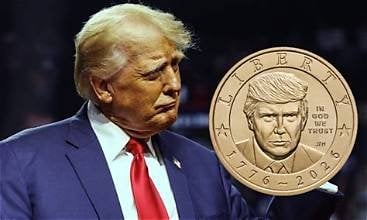
 I asked my brothers in the United States who are patriotic American citizens to go onto the U.S. mint website and try to buy some President Trump coins for me. Unfortunately, they could not even log on from the number of people trying to buy these coins. They are going to keep tying and hope to buy a bag of 100 coins. These coins will surely go up in value in the years to come as most patriot citizens realize that President Trump is and was one of the greatest Presidents in U.S. history.
 4 points
 -
 Zionazism on full display, proudly parading his planned crimes against humanity. He would not make these obscene statements if they were not what his constituency within Israel want to hear.3 points
 -
 How sad... People are often very proud to have so many friends on the social media, and they share everything with them. But this is the proof they are all fake friends, not real, as people have to hire someone only to take pictures or company.. their hundreds of friends can't do that. Before the digital era and the anti-social media we had real friends, people who we have a drink, go out, on holiday, have fun, and good talks....not emoji, and abbreviations..tbh, lol, etc......Loneliness is a real problem nowadays3 points
 -
Vance: Iran isn't a war Vance: We've lost so many wars in the last 42 years until Donald Trump came along. Brilliant! Can't lose a war, if you don't call it a war. 😂
 3 points
 -
 I wish folk would stop this nonsense guess work. Correct answers have been posted by experts throughout the thread. So for Last time.... Book a flight (best to pp country) Best to have both pp to show entry stamp. Take 20k cash for fine. Accept 10 year ban And Nick off.3 points
 -
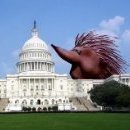 Based on academics surveyed. This person was an 'academic'.
.jpg.bbf58fef6f674bb04f8ee4ed66f0d480.jpg) 3 points
3 points -
 I would only pay ten cents for one. Anything with his very ugly piglike face on it is downgraded to a dramatic degree.3 points
 -
 Socialism is what they called public power. Socialism is what they called social security. Socialism is what they called the growth of free and independent labor organizations. Socialism is their name for almost anything that helps all the people. —Harry Truman, 19523 points
 -
 There has been no shift in policy, just some Senator wanting to get a name for herself3 points
 -
 In the words of Ricky Jervais, 'I thank god for making me an atheist!'2 points
 -
 2 pointsI imagine pushing the button has become a full-time job. He makes "Sleepy Joe" look like a human dynamo.2 points
 -
 2 pointsIt's huge for the lefties, Reform voters mostly don't care, we can see they are trying to throw as much at Farage as possible2 points
 -
 Is it just me, or does that resemble prostitution ? Rent a friend, companion ... hmm, just a play on words.2 points
 -
 2 pointsAFAIK it's because the ATM withdrawals are also going to be tracked and accrued via global sharing mechanisms (AI and other automated BS) for those staying more than six months in Thailand if you get pulled at the airport?2 points
 -
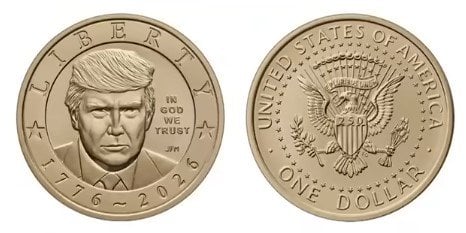
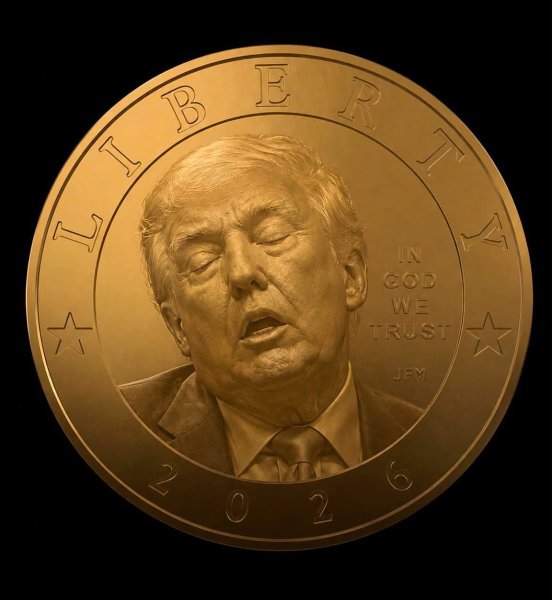
 New $1 Trump coins sell out within hours as collectors pile in for a piece of presidential history Donald Trump has finally achieved something that politicians have dreamed about for centuries. He is now money. And apparently quite popular money at that. The U.S. Mint began selling its new $1 coins featuring President Donald Trump at noon Wednesday. Within hours, the Mint's website was reporting that the 25-coin rolls were no longer in stock, while bags containing 100 coins were listed as unavailable. The website warned would-be buyers that availability was not guaranteed. It wasn't kidding.Two coins, please The Mint initially imposed a limit of two purchases per household, with customers entering an online waiting room and being given just 10 minutes to complete their orders. At one point, visitors were facing an estimated one-hour wait. The basic maths is rather amusing. A roll of 25 coins costs $61, despite the coins having a face value of just $25. A bag of 100 costs $154.50, compared with a face value of $100. Clearly, these aren't being bought to pay for the morning coffee. Trump on the front — America on the backThe obverse carries Trump's presidential portrait along with “LIBERTY” and “IN GOD WE TRUST.” The reverse features the presidential seal and the number “250,” marking America's 250th anniversary. And for collectors there is an additional temptation. The Mint has slipped 250,000 specially marked coins into the rolls and bags. They carry a “July 4th” privy mark and were struck on July 4 itself. In other words, some buyers aren't merely purchasing a Trump dollar. They're gambling on finding the special Trump dollar. A president on a coin — not quite normalThere is also a fascinating constitutional footnote. American law traditionally prohibits putting the image of a living president — or living former president — on U.S. coins. But Congress created an exception for America's 250th anniversary, allowing the Treasury to produce special $1 coins celebrating the occasion. The Mint says the design complies with the law because Trump's portrait appears on the front of the coin, while the statutory restriction specifically concerns portraits on the reverse. The only previous living president to appear on a U.S. coin was Calvin Coolidge in 1926, when he appeared on a commemorative half dollar marking America's 150th anniversary. And don't forget your pocket changeThe Mint has also issued what could become the most entertaining treasure hunt of 2026. It says the Trump coins are entering circulation. So Americans have been told to check their pocket change. Imagine buying a sandwich and discovering that your change contains a Trump dollar worth considerably more to a collector than the one dollar printed on it. For now, however, getting hold of one the old-fashioned way isn't proving particularly easy. The Mint ran out. Within hours. Trump may have spent years promising to make America great again. He may now have discovered an even simpler trick: Make America collectible. SOURCE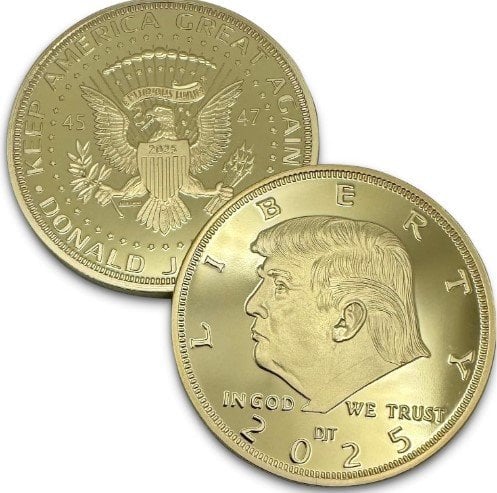
 2 points
 -

 Israel's ambassador to Thailand, Dr Alona Fisher-Kamm, met the commissioner of the Central Investigation Bureau (CIB) on 2 September to discuss possible legal and investigative responses to fake news and disinformation. The talks focused on false information that could mislead the public and have a negative impact on Israeli tourists and the Israeli community living in Thailand. Meeting at the Central Investigation Bureau Dr Fisher-Kamm met Pol. Lt. Gen. Nattasak Chaowanasai, the CIB commissioner, in a discussion on information that could cause public misunderstanding. The two sides exchanged views on how fake news and disinformation may affect Israelis in Thailand, including visitors and members of the resident community. No particular claims, online platforms or cases were identified in the account of the meeting. Nor were any new enforcement measures announced. Embassy stresses accurate information The Israeli Embassy said it attached importance to promoting accurate information. It said it would continue to work with Thai authorities to support responsible and informed access to information. The embassy said its continuing work with Thai authorities would be aimed at encouraging more responsible access to information rather than relying on unverified reports. Picture courtesy of Khaosod Join the discussion? 4 September 20262 points
 -
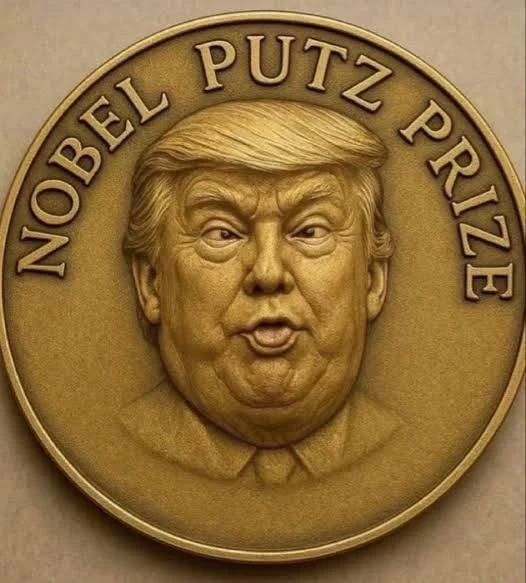
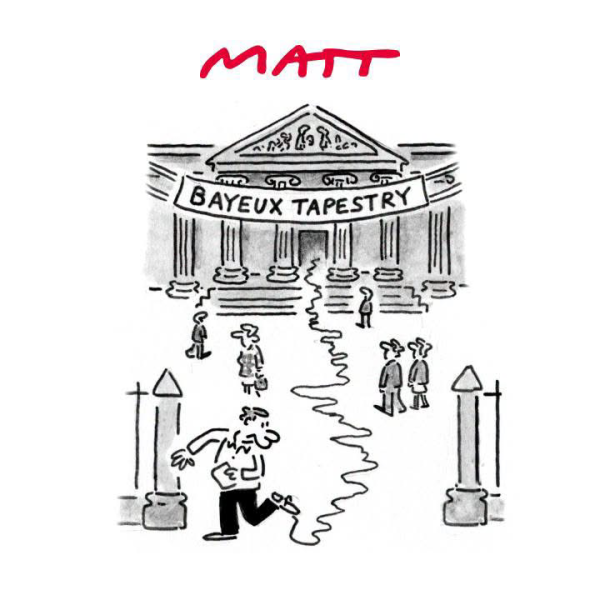
I thought it was going to look like this to commemorate the prize he didn't get.
 2 points
 -
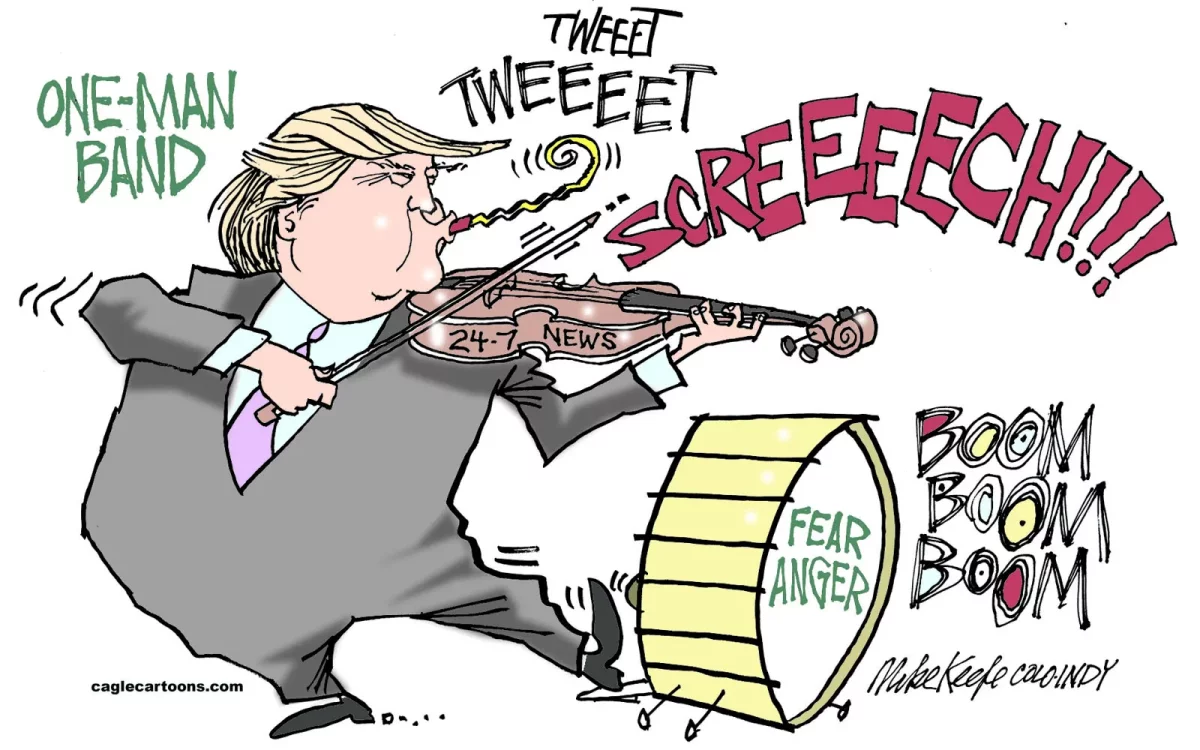
Donald Trump is a "one-man band" centralized, independent, and dominant style of campaigning and governing. Dominant? Like a loudmouth, off-key blowhard.
 2 points
 -
Vice President JD Vance said he thinks “end times . . . are coming,” that he wouldn’t be surprised if the “antichrist was walking among us” Totally absurd! Everyone knows Jared doesn't walk. He takes limos everywhere. 😀2 points
-
 Thanks. I actually have accounts at most of the major Thai banks, but I keep most of my savings with UOB in accounts that don't have ATM cards issued on them and have the transfer function disabled for security reasons. So I use UOB mainly as a holding account and one of my other Thai bank accounts for most of my daily spending in Thailand and for local QR and utility bill payments.2 points
 -
 2 points
 2 points2 points
Well Einstein if you know that 70% of Americans are obese then you have answered your own stupid question, Why did you even ask it in the first place ?2 points
2 points2 points
Well Einstein if you know that 70% of Americans are obese then you have answered your own stupid question, Why did you even ask it in the first place ?2 points During the recent House debate on the resolution condemning socialism,Gop J. Crank challenged the platform of the (DSA), arguing that their institutional goals run directly counter to the U.S. Constitution. In the vote 8 dems sided with GOP to condemn Socialism. Crank pointed out that the DSA’s agenda includes radical overhauls such as pushing to abolish the U.S. Senate, open borders, dismantling police and prison systems, allowing non citizens to vote, and stripping away free market protections. He warned that these policies represent an un American effort to dismantle the constitutional safeguards that have protected individual liberty and state representation for 250 years, describing the DSA as an insidious movement infiltrating the broader Dem party that threatens to assault free speech. American expats receiving campaign messaging from far left progressive groups need to ask themselves where they stand on an agenda that actively seeks to dismantle the foundational governing institutions of the Republic for which it stands. "House passes a resolution condemning socialism in all its forms, with 8 Democrats breaking ranks to join Republicans in the 220-192 vote".2 points
He says he went in February. Probably during Chinese New Year, one of the busiest times. And guess what, loads of Chinese go there then. And he insists it is like that all year round. Ridiculous man.2 points
During the recent House debate on the resolution condemning socialism,Gop J. Crank challenged the platform of the (DSA), arguing that their institutional goals run directly counter to the U.S. Constitution. In the vote 8 dems sided with GOP to condemn Socialism. Crank pointed out that the DSA’s agenda includes radical overhauls such as pushing to abolish the U.S. Senate, open borders, dismantling police and prison systems, allowing non citizens to vote, and stripping away free market protections. He warned that these policies represent an un American effort to dismantle the constitutional safeguards that have protected individual liberty and state representation for 250 years, describing the DSA as an insidious movement infiltrating the broader Dem party that threatens to assault free speech. American expats receiving campaign messaging from far left progressive groups need to ask themselves where they stand on an agenda that actively seeks to dismantle the foundational governing institutions of the Republic for which it stands. "House passes a resolution condemning socialism in all its forms, with 8 Democrats breaking ranks to join Republicans in the 220-192 vote".2 points
He says he went in February. Probably during Chinese New Year, one of the busiest times. And guess what, loads of Chinese go there then. And he insists it is like that all year round. Ridiculous man.2 points Lookie here! It appears that Jess Grossman was one of the card carrying plebs….or should I say “gestapo”. “So I did what you were supposed to do. I spent weeks – no, months – without stepping foot outside my condo’s door. We wiped all our groceries. We dumped all our takeout orders into our own Tupperware.We ordered everything we needed online. I got my 3 doses of Pfizer, (even after a severe allergic reaction to the first and a recommendation from an allergist to not to receive anymore doses). I was going to play my part in stopping the spread, slowing the curve, and protecting myself.” “Once we’re officially negative, we’ll go back to living our lives as we had – maybe with some adjustments. We’re still going to mask, and probably still wipe our groceries. And to be honest, it’s way more convenient to eat takeout in your own Tupperware because it makes saving the leftovers so much easier! And while you can still get reinfected after having COVID, they say that it’s usually not for at least 3 months after having it – at least, as long as it’s the same variant. So we’ve decided that we’re going to use this little bit of immunity to try and enjoy the summers we’ve lost over the last 2 years. We still prefer the couch and Netflix, but it will be nice to not have to worry to the same degree as we had been, at least for a little bit. Thanks to the vaccine and some unbelievable luck, I am ok. I just hope it stays that way. Stay safe out there, everyone.” From “Thin Red Lined” by Jessica Grossman https://uncoverostomy.org/2022/06/09/thin-red-lined/ Karma!2 points
 Perfect post. They had to rely on Diego Garcia 2500’miles away for a resupply. I’ve be there — hole in the wall island. Let those folks buy as much as they need imo while in the Kingdom. Ships at sea for 266 days run out of things. When your down to Eating corn and rice for food yeah Donnie fats “”they have not been out long enough” while he eats His 3rd Big Mac.2 points
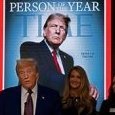
 Donald Trump has placed himself above all other US presidents in a ranking he shared on social media, declaring himself the only leader in the “greatest” category despite presidential scholars consistently giving him some of the lowest historical ratings. Trump posted the ranking on Truth Social last Thursday, dividing presidents into six groups ranging from “greatest” to “failures”. Abraham Lincoln, Franklin D Roosevelt and George Washington were placed one level below Trump in the “great” category. Scholars rank Trump near the bottomThe president’s assessment differs sharply from surveys of presidential historians and political scientists. Justin Vaughn, a political science professor at Coastal Carolina University and co-creator of the Presidential Greatness Project, said Trump’s ranking was inconsistent with the findings of expert surveys. “It’s not consistent with the findings of the surveys we’ve conducted,” Vaughn said. “It’s also not consistent with other surveys that have been conducted over the last several years.” The most recent Presidential Greatness Project survey questioned 154 academics and ranked Trump last among the 45 presidents assessed. He received an average score of 10.92 on a scale from zero, representing failure, to 100, representing greatness. Lincoln topped the survey with an average score of 93.87. Former presidents such as James Buchanan, who is often criticised for failing to prevent the US civil war, also ranked above Trump. A separate survey by Siena College in 2022 produced a slightly better result for Trump, but still placed him third from the bottom. Only Buchanan and Andrew Johnson ranked lower. Questions over Trump’s recordThe Siena survey also assessed presidents on areas including executive ability, leadership, integrity and intelligence. Trump ranked 45th out of 45 in both integrity and intelligence. Barbara Perry, a presidential studies professor at the University of Virginia, said presidential reputations can change over time as historians reassess their records. Americans, she said, tend to develop “a kind of a golden glow about most ex-presidents”. Trump’s ranking also offered a glimpse into the presidents he admires. Theodore Roosevelt and Grover Cleveland, who like Trump served nonconsecutive terms, were placed in the “near great” category. Perry rejected the idea that Trump belongs among the highest-rated presidents. “In no universe of scholars, I believe, would Donald Trump be in the ‘great’ category, the ‘greatest’ category, ‘near great’ category,” she said. She pointed to Trump’s role in promoting the January 6 insurrection and his continued claims that Joe Biden stole the 2020 election as factors that she believes will weigh heavily on his historical reputation. Perry said those actions undermined the US constitutional system and the rule of law. She also cited what she described as racism and bias against people who are not white Anglo-Saxon Protestants. White House defends Trump’s legacyDavis Ingle, a White House spokesperson, said Trump was focused on delivering what he described as a strong, safe and prosperous country. “The only legacy President Trump is concerned with is making America greater than ever before,” Ingle said. He added that Trump would ultimately be remembered as “the most successful and consequential president in modern American history”. Whether that prediction is borne out will depend on how historians judge Trump’s presidency over time. For now, however, academic surveys place him far from the top of the presidential rankings. Join the discussion? 3 September 20262 points
 2 points
 Imagination does all kind of strange things to people.2 points
 It took a bit longer than 1984 ,but we are well on the way now , regards worgeordie2 points
2 points2 points
It took a bit longer than 1984 ,but we are well on the way now , regards worgeordie2 points
2 points2 points We're all seeing it through the lens of an expat wanting to own a bar and a villa. The reality is that Thailand would be inundated with Russkie Oligarchs, Israeli mobsters and worse, looking to hide ill gotten gains. Not to mention, the worst scourge of all: Private Equity. The "You'll own nothing and be happy" people. They'd snap up half of Thailand in a year or so. And we may be allowed to buy a villa. But we won't be able to afford to buy a villa. Neither will Thai people.2 points
 I am more inclined to believe the social media posts of the crew and their families, as well as those of serving and veteran US military service personnel, than the excrement following out of Trump and Hegseth.2 points
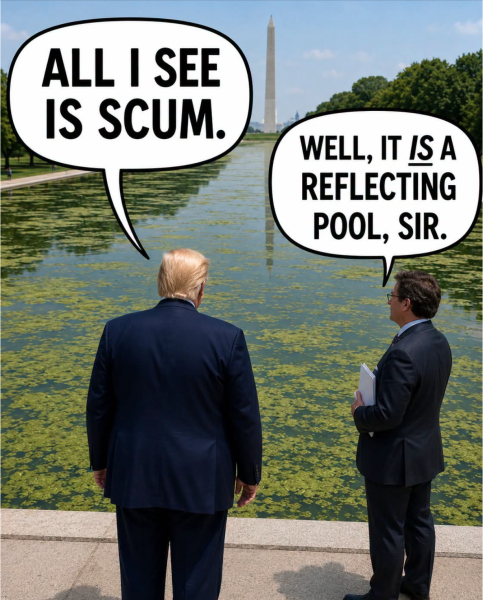
 Limited edition on sale next week🤔
 2 points
 You do NOT represent Jews or Israel. Your opinions are those of one person, whether you ar a "Jew" or a martian.2 points
MAGA's getting milked again, and they are too dumb to know it. ROFL with the "Special privy mark" . How many Americans still know what a privy is?2 points
You do NOT represent Jews or Israel. Your opinions are those of one person, whether you ar a "Jew" or a martian.2 points
MAGA's getting milked again, and they are too dumb to know it. ROFL with the "Special privy mark" . How many Americans still know what a privy is?2 points Thank you for my laugh of the day...folly2 points
Ignorance is Bliss with you ... ... "Socialism - is an economic system and political philosophy centered on collective or public ownership of the means of production, rather than private ownership." ... ... "Capitalism - is an economic system where private individuals and businesses own and control the means of production for profit" ... Explain yes, help you understand, no. Here's simpliest explanation ... Captitalism ... ... you keep what you earn, more you earn, the more you keep Sociallism ... ... they take what you earn, the more you earn, the more they take2 points
Thank you for my laugh of the day...folly2 points
Ignorance is Bliss with you ... ... "Socialism - is an economic system and political philosophy centered on collective or public ownership of the means of production, rather than private ownership." ... ... "Capitalism - is an economic system where private individuals and businesses own and control the means of production for profit" ... Explain yes, help you understand, no. Here's simpliest explanation ... Captitalism ... ... you keep what you earn, more you earn, the more you keep Sociallism ... ... they take what you earn, the more you earn, the more they take2 points "Hard to get those things back in America." Yeah, especially when you're not there.2 points
 And Putin can walk in EU. Iran will strike in self defence, they fight for their freedom, not for their Ego. That's the difference2 points
 To add: Trump floats renaming Strait of Hormuz the ‘Trump Strait’ https://www.cnbc.com/2026/09/02/trump-hormuz-strait-ontario-iran.html2 points
I will take Mary Trump's version of Trump over yours. She is a clinical psychologist, AFAIK you are not. Quote: Antisocial Personality Disorder: Marked by a chronic disregard for rules, social norms, and the rights of others, along with a lack of remorse or empathy. Dependent Personality Disorder: Reflected in an underlying inability to function independently without constant validation and sycophantic reinforcement. Undiagnosed Learning/Sleep Disorders: Impairments that hinder his ability to process complex information, learn new facts, or maintain cognitive focus. No argument from me Iran's leaders are sociopaths or even psychopaths. My point is they were only a threat to Israel, now they are a threat to everybody, and that is down to Trump. When Mary Trump says Trump's ability to process complex information is hindered, the Strait of Hormuz is a good example. A fifth-grader could have seen Iran would be asserting control. The real problem is negotiations are going to be futile while Trump is in the White House. If someone killed my family and friends without warning, then wanted to make nice, I would be telling them to screw themselves too.2 points
2 points
It is clear that economic sanctions will not win this war. If that were a good strategy it would have been used at the outset. Everyone knows sanctions take a long time to take effect. This use of sanctions is desperation, clearly. This war against Iran has been a terrible mistake by Trump. Sure, he was cajoled into it by Israel, but he should have seen through this. Perhaps the US military will destroy Iran's civilian and military infrastructure. That is not going to stop them from rebuilding.2 pointsThis leaderboard is set to Bangkok/GMT+07:00
To add: Trump floats renaming Strait of Hormuz the ‘Trump Strait’ https://www.cnbc.com/2026/09/02/trump-hormuz-strait-ontario-iran.html2 points
I will take Mary Trump's version of Trump over yours. She is a clinical psychologist, AFAIK you are not. Quote: Antisocial Personality Disorder: Marked by a chronic disregard for rules, social norms, and the rights of others, along with a lack of remorse or empathy. Dependent Personality Disorder: Reflected in an underlying inability to function independently without constant validation and sycophantic reinforcement. Undiagnosed Learning/Sleep Disorders: Impairments that hinder his ability to process complex information, learn new facts, or maintain cognitive focus. No argument from me Iran's leaders are sociopaths or even psychopaths. My point is they were only a threat to Israel, now they are a threat to everybody, and that is down to Trump. When Mary Trump says Trump's ability to process complex information is hindered, the Strait of Hormuz is a good example. A fifth-grader could have seen Iran would be asserting control. The real problem is negotiations are going to be futile while Trump is in the White House. If someone killed my family and friends without warning, then wanted to make nice, I would be telling them to screw themselves too.2 points
2 points
It is clear that economic sanctions will not win this war. If that were a good strategy it would have been used at the outset. Everyone knows sanctions take a long time to take effect. This use of sanctions is desperation, clearly. This war against Iran has been a terrible mistake by Trump. Sure, he was cajoled into it by Israel, but he should have seen through this. Perhaps the US military will destroy Iran's civilian and military infrastructure. That is not going to stop them from rebuilding.2 pointsThis leaderboard is set to Bangkok/GMT+07:00
Account
Navigation
Search
Configure browser push notifications
Chrome (Android)
- Tap the lock icon next to the address bar.
- Tap Permissions → Notifications.
- Adjust your preference.
Chrome (Desktop)
- Click the padlock icon in the address bar.
- Select Site settings.
- Find Notifications and adjust your preference.
Safari (iOS 16.4+)
- Ensure the site is installed via Add to Home Screen.
- Open Settings App → Notifications.
- Find your app name and adjust your preference.
Safari (macOS)
- Go to Safari → Preferences.
- Click the Websites tab.
- Select Notifications in the sidebar.
- Find this website and adjust your preference.
Edge (Android)
- Tap the lock icon next to the address bar.
- Tap Permissions.
- Find Notifications and adjust your preference.
Edge (Desktop)
- Click the padlock icon in the address bar.
- Click Permissions for this site.
- Find Notifications and adjust your preference.
Firefox (Android)
- Go to Settings → Site permissions.
- Tap Notifications.
- Find this site in the list and adjust your preference.
Firefox (Desktop)
- Open Firefox Settings.
- Search for Notifications.
- Find this site in the list and adjust your preference.