



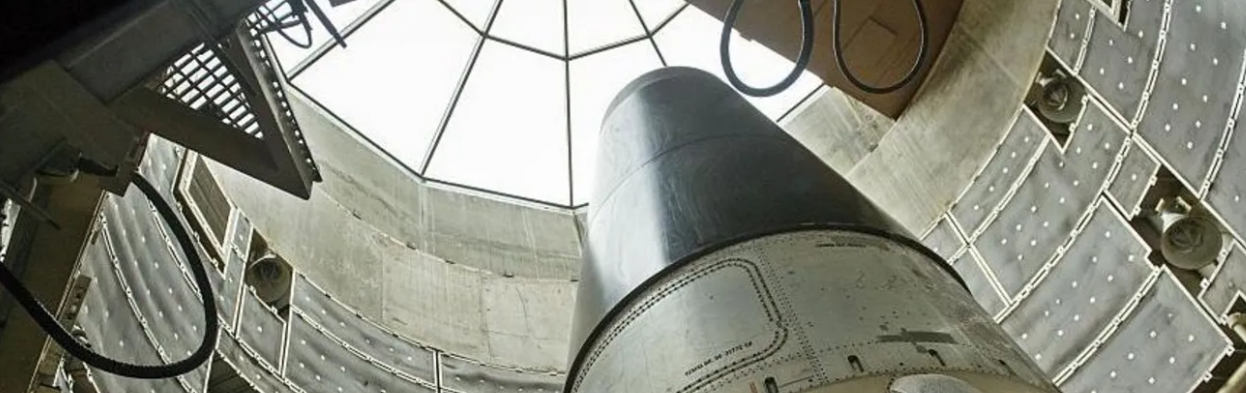

The expiration of the last nuclear weapons control treaty between the US and Russia, known as "New START," has heightened concerns about a potential new arms race. Signed in 2010, the treaty limited each nation's deployed strategic nuclear warheads to 1,550 and included transparency measures such as data sharing, notifications, and on-site inspections.
Its expiry marks the end of cooperative arms control that played a crucial role in de-escalating Cold War tensions. Pope Leo has called for the US and Russia to renew the treaty, stressing the importance of preventing a return to unchecked nuclear competition in the "current world situation."
The original START treaty, signed in 1991, restricted nuclear warheads to 6,000 for each country. New START, signed in 2010 in Prague, succeeded it. Although Russia suspended the treaty three years ago amid tensions over Ukraine, both nations were thought to adhere to its limits until now.
This development fits a worrying pattern of dismantling arms control agreements. Key treaties, such as the Intermediate-Range Nuclear Forces Agreement and the Open Skies Treaty, have already fallen by the wayside, undermining years of diplomatic progress in nuclear arms reduction.
Former UK armed forces chief Admiral Sir Tony Radakin highlighted the risks posed by unraveling arms control frameworks, describing them as "dangerous" alongside the growing importance of nuclear arsenals in global security dynamics.
Dmitry Medvedev, who signed the New START treaty for Russia in 2010, commented that its expiration should "alarm everyone." His remarks gain weight given his recent assertive rhetoric, which includes nuclear threats.
A high-level advisor to Russian President Vladimir Putin stated that Russia intends to act "in a measured manner" but remains ready to counter perceived threats to its national security. The Russian Foreign Ministry confirmed that both parties are now free from treaty obligations but emphasized responsible conduct.
President Trump, less concerned about the treaty's lapse, told the New York Times: "If it expires, it expires… We'll just do a better agreement." Washington argues that any future treaty should also include China's growing nuclear arsenal, a point of contention for Moscow, which insists on involving Europe's nuclear powers, France and the UK.
Darya Dolzikova of the UK-based RUSI’s Proliferation and Nuclear Policy Programme voiced concerns about each nation's drive to expand strategic capabilities. Both are modernizing nuclear forces, alongside China, making future negotiations more complex.
The development and deployment of new weapons systems, such as Russia’s Poseidon and Burevestnik, underscore the complexity of achieving future arms agreements. The US, Russia, and China are also advancing long-range hypersonic missiles, which maneuver at speeds exceeding 4,000 mph, complicating defense efforts.
Dolzikova notes that these technological advances "only make it harder" to agree on new controls. The increasing reliance on nuclear deterrence by more countries adds another layer of difficulty.
A recent meeting between President Putin and Trump in Alaska included arms control on the agenda, yet produced no breakthroughs. With New START's expiration, the risk of a more volatile and dangerous global security environment looms large, making renewed diplomatic efforts and arms control initiatives urgent priorities.
Key Takeaways
"New START" treaty expiration raises fears of a new arms race.
Urgent calls for renewal to prevent increased nuclear competition.
US and Russia modernize nuclear arsenals amid complex negotiations.


Adapted by ASEAN Now from Source 2026-02.04


-
 1
1