



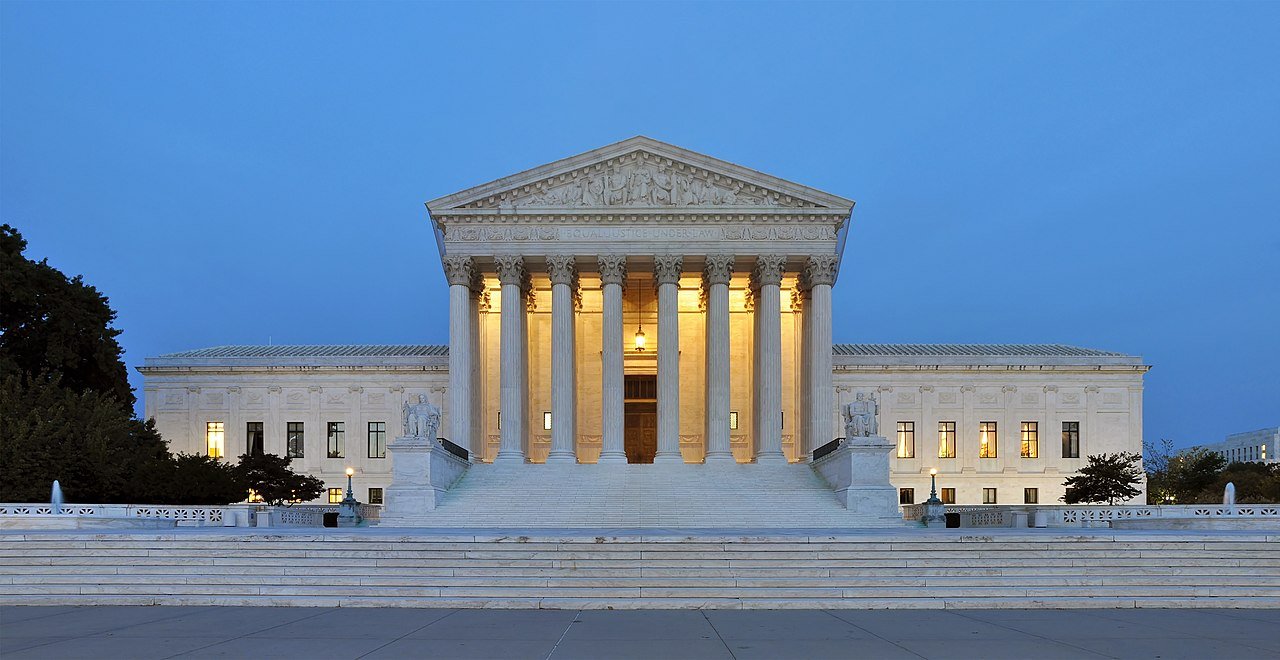

President Donald Trump plans to attend oral arguments at the Supreme Court of the United States on Wednesday as justices consider his administration’s attempt to end birthright citizenship.
Get today's headlines by email 
The White House schedule lists Trump at the court at 10 a.m., when arguments are set to begin. If he appears as planned, it would mark the first time a sitting US president has attended Supreme Court arguments in person.
Trump expected at Supreme Court hearing
Trump suggested earlier Tuesday that he was considering the visit. The case before the court challenges an executive order he signed shortly after returning to office that aims to restrict automatic citizenship for some children born in the United States.
Key test of immigration policy
The case, known as Trump v. Barbara, centres on Trump’s order targeting birthright citizenship. The directive seeks to prevent children born in the US to undocumented immigrants or people staying in the country temporarily from automatically becoming American citizens.
The order forms part of Trump’s broader effort to reshape US immigration policy. However, the measure has not taken effect because it faces numerous legal challenges in lower courts.
Legal opponents argue the order violates the Citizenship Clause of the Fourteenth Amendment to the United States Constitution. The amendment states that anyone born or naturalised in the United States and subject to its jurisdiction is a citizen.
For more than a century, courts and legal scholars have widely interpreted that clause as granting citizenship to nearly all people born on US soil, regardless of their parents’ immigration status.
Administration disputes constitutional interpretation
Officials in the Trump administration say that interpretation is incorrect. They argue the amendment was originally intended to grant citizenship to formerly enslaved people and their descendants following the Civil War.
Under that view, they contend, the clause was not meant to apply to children born to immigrants who are in the country unlawfully or on temporary visas.
The Supreme Court’s decision could determine whether the administration can proceed with the policy change or whether the long-standing understanding of birthright citizenship remains in place.
A rare presidential appearance
Trump has previously suggested he might attend Supreme Court hearings involving his administration’s policies.
Last year, he said he felt he had “an obligation” to appear when the court reviewed the legality of his global tariff measures. He ultimately stayed away, saying on his social media platform that he did not want to distract from the case.
If he attends Wednesday’s hearing, it would underline the significance of the birthright citizenship case for his administration.
Join the discussion? 
Already a member? 
 Adapted by ASEAN Now. Source 1 April 2026
Recommended Comments
Create an account or sign in to comment