




.jpg.b4d1f4e752094bc641c0c2b82d77fe65.jpg)
bannork
-
Joined
-
Last visited
-
Currently
Viewing Topic: ‘Killed by their own sons’: UK faces alarming rise in matricide
Posts posted by bannork
-
-
-

Pro-Israel Palestinian militias are intensifying attacks deep inside Hamas-controlled Gaza, launching raids, ambushes and targeted killings even as the wider regional conflict expands to Iran.
The armed groups — operating from Israeli-controlled zones created after the Gaza ceasefire — have stepped up operations in recent weeks with apparent logistical backing from Israel. Analysts say the growing militia campaign risks igniting a new internal front inside the already devastated enclave.
Militias push deeper into Hamas territory
The most powerful factions include the Popular Forces near the ruins of Rafah and the Strike Force Against Terror east of Khan Younis.
Both groups have launched incursions beyond the “yellow line” dividing Israeli-held zones from areas controlled by Hamas. Their operations reportedly include clandestine assassinations, abductions and ambushes targeting Hamas patrols and commanders.
A third group, the Ashraf al-Mansi militia, attempted a cross-line raid in Gaza City last week, triggering clashes in the Nasser neighbourhood before Hamas fighters repelled the attack.
Escalation despite wider regional war
The militia campaign has unfolded alongside continued Israeli airstrikes across Gaza.
Health officials say at least 16 Palestinians have been killed in strikes since the outbreak of the Iran conflict on 28 February. On Sunday alone, an airstrike and tank shelling killed six people, including two women and a girl.
Overall, more than 600 Palestinians have died in Gaza since the ceasefire began, adding to a war death toll that has surpassed 72,000.
Israel uses militias as local enforcers
Israel has increasingly relied on these groups for security inside areas it controls.
Fighters from the Popular Forces were recently deployed at the Rafah Crossing after it partially reopened. However, the Office of the United Nations High Commissioner for Human Rights has warned of abuse and humiliation of civilians by Israeli forces and allied armed groups.
Despite their growing role, the militias remain small — numbering only a few hundred fighters collectively.
Hamas vows retaliation
Hamas has responded by launching counter-attacks and hunting suspected collaborators.
The group says it has foiled several raids and killed militia fighters in ambushes around Gaza City and Khan Younis. Spokespeople have also warned the militias face “death and annihilation”.
A fragile ceasefire under strain
Security analysts warn the rise of armed proxy groups could destabilise any post-war settlement.
Tahani Mustafa of King’s College London said the militias risk fuelling further conflict rather than stabilising Gaza.
For civilians in the enclave — where nearly 2.3 million people remain trapped — the emergence of a shadow war between Palestinian factions threatens yet another layer of violence in an already shattered territory.
Israeli-backed Palestinian militias step up operations against Hamas in Gaza
-
 1
1
-
-
The US is moving more warships and troops to the Middle East as Iran steps up its attacks on the Strait of Hormuz, according to a new report.
The Pentagon is sending a Marine expeditionary unit to defend against Iran, three US officials told the Wall Street Journal.
Such units are typically made up of multiple warships and 5,000 troops, and the request from Centcom was approved directly by Defense Secretary Pete Hegseth, the news outlet reported.
US sending more warships and troops to Middle East as Iran war rages
-
JERUSALEM, March 13 (Reuters) - Israel has launched a new phase of its assault on Iran, targeting checkpoints manned by the Islamic Revolutionary Guard Corps (IRGC) based on tip-offs from informants on the ground, a source briefed on Israel's military strategy told Reuters.
On Thursday, Israel's military said it had struck checkpoints in Tehran operated by the Basij, a part-time paramilitary force under IRGC control that is often used to quell protests inside Iran.
The source, who spoke on condition of anonymity because they were not authorised to speak publicly, said informants on the ground in Tehran had passed intelligence to Israel on the locations of three checkpoints that were struck in the past three days. The source was not able to confirm whether these included the Basij positions mentioned by the military.
Israel targets Iranian checkpoints using tip-offs from informants, source says
-
8 minutes ago, Dave0206 said: Before I give my tuppence worth this is merely my theory with no hard evidence.
My ex sister in law had a son who was heavily into drugs and he became paranoid people were out to get him usually mothers are the last to abandon there children through cannabis many become schizophrenic ( if you have this tendency drugs will just enhance this)
So because families are often easiest victims for junkies even murder will be the same easy targets for disturbed minds
An example of what you're saying is the murder of Rob Reiner and his wife by their son.
Psychiatrists warned them about their son's state of mind but they brushed any concerns off saying they knew their son best.
-
 1
1
-
-

British expats rushing home from the Gulf to escape the widening Iran conflict are now confronting an unexpected second crisis — potential tax bills from HM Revenue & Customs.
Accountants say families who fled the region after the escalation involving Donald Trump’s Iran war could inadvertently trigger UK tax liabilities simply by returning home earlier than planned.
Thousands of Britons have already left the Gulf or are preparing emergency departures as tensions escalate across the region.
The five-year rule catching expats off guard
Tax specialists warn many returnees risk falling foul of Britain’s “temporary non-residency” rules, designed to stop people leaving the UK briefly to avoid tax before coming back.
If someone returns to Britain within five full tax years of leaving, certain gains made abroad — including profits from shares, businesses or investments — can suddenly become taxable in the UK.
That could leave some expats facing significant Capital Gains Tax demands despite believing their finances were outside the UK system.
Families fleeing war — not planning tax strategy
Sandra Jeevan, partner at the accountancy firm UHY Hacker Young, said many families never intended to return this year but had little choice.
“When you’re moving your family to safety, you’re not thinking about day-count rules or residence tests,” she said. A forced return could shift someone’s tax residency status overnight.
Although HMRC guidance recognises war as an “exceptional circumstance”, advisers warn the exemption is narrow and may not apply once the immediate crisis passes.
Exodus from a region under fire
The tax scramble comes as tens of thousands of Britons flee Gulf states, particularly the United Arab Emirates, where large expatriate communities live and work.
Around 140,000 UK nationals registered with the Foreign, Commonwealth & Development Office as officials prepared potential evacuation routes. In total, roughly 300,000 Britons were believed to be living, travelling or transiting in Gulf countries when the conflict began.
Drone incidents near major sites including Dubai International Airport have heightened fears.
Pressure grows for HMRC flexibility
Tax advisers say the government must show flexibility as displaced families try to rebuild their lives back in Britain.
For many expats, the fear now is that escaping a war zone could come with a costly financial sting — one that arrives long after the flights home.
Britons who fled Gulf desperate to avoid tax bills after London return
-
 1
1
-
-
Trump's own top officials admitted to lawmakers behind closed doors that they never planned for the possibility that Iran would shut down the strait in response to U.S. military strikes, multiple sources familiar with classified congressional briefings told CNN. The scenario is among the most catastrophic economic scenarios American national security planners have war-gamed for decades.
The staggering oversight stemmed from administration officials convincing themselves that closing the strait would hurt Iran more than America, according to the report.
Complicating things further, the Navy said it can't escort oil tankers through the strait, as it doesn't have ships to spare.
Energy Secretary Chris Wright told CNBC: “It’ll happen relatively soon, but it can’t happen now. We’re simply not ready. All of our military assets right now are focused on destroying Iran’s offensive capabilities and the manufacturing industry that supplies their offensive capabilities."
Ex-US official dumbfounded Trump didn't plan for Iran to close vital oil checkpoint
-
 1
1
-
-
- Popular Post

Iran has escalated the propaganda war surrounding the conflict in the Middle East with a bizarre AI-generated video depicting Donald Trump and Benjamin Netanyahu as Lego-style characters launching a missile strike after discovering a file labelled “Jeffrey Epstein”.
The two-minute clip, released by Iran’s state-aligned Tasnim News Agency, is a pointed attempt to tie the ongoing war to the scandal surrounding the late financier Jeffrey Epstein. The video arrives amid mounting political attacks in Washington accusing Trump of using foreign conflict to divert attention from the controversy.
A cartoon war with a sharp political message
In the animation, Lego versions of Trump and Netanyahu stand beside a Lego devil while reviewing a folder titled “Jeffrey Epstein File”.
The Trump character reacts angrily to what he sees and slams a large red button, launching a missile. The video then cuts to the strike hitting a girls’ school — a reference to the deadly explosion in the Iranian city of Minab that killed dozens of children and staff earlier in the conflict.
The blast scene ends with a Lego Iranian soldier holding a pink backpack among the rubble — an unmistakable attempt to frame the United States as responsible.
Propaganda war escalates alongside real one
The video forms part of a wider information campaign as tensions intensify between Iran, the United States and Israel.
The strike on the school remains under investigation, though footage reviewed by international outlets suggested a missile aimed at a nearby military installation struck the building next door. Trump has denied responsibility, suggesting Iran or “somebody else” could be to blame.
Meanwhile, Iranian messaging has focused heavily on civilian casualties to undermine support for the Western military campaign.
Critics in Washington amplify the controversy
Back in the United States, critics from both parties have seized on the Epstein scandal while attacking the war.
Progressive congresswoman Alexandria Ocasio-Cortez has argued Trump’s overseas confrontations often coincide with new developments in the Epstein case. Libertarian-leaning Republican Thomas Massie has also warned that bombing Iran “won’t make the Epstein files go away”.
From satire to street theatre
The controversy has spilled into American culture as well.
A statue titled “King of the World” recently appeared near the National Mall depicting Trump and Epstein recreating the iconic bow scene from the film Titanic.
For Tehran’s propagandists, the message is clear: the battlefield now includes not just missiles and drones, but memes, satire and political scandal.
-
1
-
2
-
-
1
-
-

A seven-year-old schoolboy caused a stir in Germany after turning up to class with a staggering €5,000 in cash stuffed inside his school bag. The youngster from the rural district of Osnabrück became the most talked-about pupil of the morning when he showed classmates a thick bundle of banknotes during lessons.
Police in Lower Saxony confirmed the unusual classroom drama on Thursday after teachers raised the alarm about the large sum of money circulating among children. According to police, the child found an envelope filled with cash before heading to school. The money had been withdrawn by his parents from a bank and was intended for a car purchase. But the youngster had other plans.
Instead of leaving the envelope at home, he slipped it into his satchel and took it to school. Soon after arriving at the elementary school, the boy began showing the notes to classmates. The reaction was immediate. The police later joked that the lad had suddenly become the “most popular kid of the morning.” Curious classmates gathered around to see the large pile of banknotes. Some even inspected the cash up close. Others were allowed to smell the notes as the excitement spread around the classroom.
It didn’t take long before teachers noticed something unusual was happening. A child waving around thousands of euros in cash naturally raised concerns. Staff quickly intervened and alerted authorities as a precaution.
Police officers arrived at the school on Wednesday morning to investigate the situation. Once the situation was clear, officers collected the scattered notes and gathered them back together. The entire €5,000 was placed back inside the envelope. It was then safely returned to the boy’s parents. Police stressed that no crime had taken place.
-
Four of six crew aboard a US military refuelling aircraft have died after it crashed in Iraq, US Central Command (Centcom) says.
Rescue efforts continue after the loss of the KC-135, it said, having earlier said neither hostile nor friendly fire were involved in the downing of the aircraft.
Centcom described the crash as happening over friendly airspace, but this is a region of Iraq where pro-Iranian militias operate. Iran's military claimed on state TV that an allied group had targeted the plane with a missile.
-
- Popular Post
3 minutes ago, unblocktheplanet said: Why do they give these "operations" such stupid name? How about Operation Heartless, Operation Hospitals, Operation Schools, Operation Parks, Operation... The real names for what is happening.
The current operation should surely be called Operation Dumb and Dumber or Operation Clueless.
-
2
-
 1
1
-
After that grim story, here is the follow-up.
When police finally freed a woman who had spent a quarter of a century trapped in domestic slavery, the first challenge was learning how to live normally again.
The victim — held for decades by Amanda Wixon in a house in Tewkesbury — arrived in foster care frail, frightened and deeply traumatised. Her carer says the woman recoiled from basic human affection and woke at 3am just to take long, hot showers in a desperate attempt to feel clean.
A body and mind shaped by abuse
The anonymous foster carer recalls a woman who was painfully thin and emotionally withdrawn after years of captivity.
“She was very skinny,” the carer said. “I had to take her to doctors, get appointments and try to feed her and show her love.” Even simple gestures were difficult. “She didn’t want me to hug her.”
Within days, however, the woman began cautiously accepting affection — the first step in rebuilding a life after years of isolation.
Life as a ‘proper slave’
As trust slowly developed, the woman began describing the reality of her captivity.
She had been given scraps of food, forced to carry out endless housework and locked in a room with black bags over the windows to block out light. Her abuser beat her, poured bleach on her face and forced washing-up liquid down her throat.
“She did all the housework — cleaning, ironing, everything,” the carer said. “She was a proper slave.”
Fear that still hasn’t faded
The trauma remains raw. The woman still calls Wixon “the witch” and lives in fear of encountering her.
During the long wait for the case to reach Gloucester Crown Court, she once accidentally ran into her abuser in a supermarket.
“She was hysterical,” the carer said. “Running around, absolutely terrified.”
A system that looked the other way
The carer believes authorities failed to intervene earlier despite warning signs.
At one point the victim tried to reach out for help, but the concern was reportedly brushed aside. “Nobody did anything,” the carer said. “They just left her there to suffer.”
She now wants a wider inquiry into how the abuse went undetected for so long.
Rebuilding a life — step by step
Recovery is slow but visible. The woman is attending college, learning skills she was once denied and travelling abroad for the first time.
Her hair — repeatedly shaved during captivity — has grown long. She dreams of taking a cruise after already visiting the Mediterranean.
“She’s enjoying life now,” the carer said. “I’m trying to show her the life she never had.”
‘She didn’t want me to hug her’: carer of enslaved woman describes her recovery
-

Amanda Wixon
A mother-of-ten who kept a vulnerable teenager as a house slave for more than a quarter of a century has been jailed for 13 years after police uncovered one of the UK’s most shocking modern slavery cases.
Amanda Wixon, 56, subjected the woman to decades of beatings, starvation and psychological control inside a filthy house in Tewkesbury. The victim, now in her mid-40s, was rescued only after a tip-off to police in 2021.
A chilling lie to hide a prisoner
As the years passed and neighbours stopped seeing the woman, Wixon offered a simple explanation: she had moved away.
Detectives say the claim was a calculated lie. Wixon told neighbours and relatives the woman had gone to Scotland with a boyfriend, when in reality she had been locked inside the house and banned even from the garden.
According to investigators, by that stage the victim believed escape was impossible after years of threats, beatings and psychological domination.
Decades of abuse behind closed doors
The woman moved into the home aged just 16 in 1995. What followed, prosecutors said, was more than 25 years of exploitation and brutality.
She was beaten with a broom handle that knocked out her teeth, punched and kicked, and pushed down the stairs. Bleach was thrown in her face and washing-up liquid forced down her throat, while her head was repeatedly shaved against her will.
Food was restricted to scraps and she was forced to wash secretly at night while carrying out domestic labour for the household.
Rescue from ‘absolute squalor’
Police described the house as overcrowded and filthy, with mould on the walls. But the victim’s bedroom was worse — a cramped space detectives described as “absolute squalor”.
Ian Fletcher, a senior detective who has spent nearly three decades in policing, said the case was among the worst he had ever seen.
“She was totally dehumanised,” he said. “She lost the prime of her life.”
No remorse from her abuser
At Gloucester Crown Court, Wixon was convicted of false imprisonment, forced labour and multiple assaults.
Investigators say she has shown no remorse, insisting even after the verdict that she had done nothing wrong.
For the woman who survived 25 years inside the house, detectives say the long process of rebuilding a life has only just begun.
Mum-of-ten's chilling lie before woman kept as slave for 25 years discovered
-
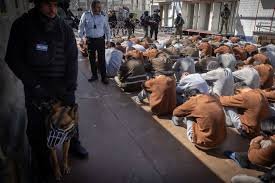
Israel’s military has dropped charges against five soldiers accused of torturing a Palestinian detainee during the Gaza war, abruptly closing a case that had exposed deep political and legal divisions inside the country.
The decision, announced Thursday, ends a prosecution that drew international scrutiny and fierce backlash from right-wing politicians and protesters. Critics warn the move risks signalling that abuses against Palestinian prisoners will go unpunished at a time when the region is already gripped by war.
Political pressure erupts over prosecution
Israeli Prime Minister Benjamin Netanyahu swiftly welcomed the decision, framing the case as an attack on the military.
“The State of Israel must hunt down its enemies, not its own heroic fighters,” he said. The prosecution had become a lightning rod inside Israel, with right-wing demonstrators — including members of Netanyahu’s cabinet — storming military bases to protest the investigation.
The political pressure turned the legal case into a national flashpoint, testing whether soldiers accused of abusing detainees would face consequences.
Leaked footage ignites the scandal
The controversy intensified after leaked security camera footage from the Sde Teiman detention camp appeared to show soldiers surrounding a Palestinian prisoner and shielding their actions from view with riot gear while holding a dog.
Military prosecutors alleged the detainee suffered severe abuse, including being stabbed with a sharp object that caused a tear near his rectum.
The footage was leaked by former military advocate general Yifat Tomer-Yerushalmi, who later resigned and was arrested. She said the leak was intended to counter what she described as propaganda undermining Israel’s military justice system.
Case collapses as evidence evaporates
Israel’s new chief military prosecutor, Itai Ofir, said the charges were being withdrawn due to “exceptional circumstances” affecting the ability to prosecute the case.
Central to the decision was the absence of the alleged victim, who has since been released back into Gaza as part of a ceasefire deal.
Without the detainee present to testify, prosecutors said the evidentiary basis for the case had weakened significantly.
Rights groups warn of dangerous precedent
Palestinian and Israeli rights organisations reacted with alarm, warning the move could embolden further abuse.
The Palestinian Prisoners Society said the decision amounted to a “green light” for mistreatment of detainees. Meanwhile the Association for Civil Rights in Israel has already petitioned for the closure of Sde Teiman over widespread allegations of torture.
Although Israel has begun scaling back the facility’s use, rights groups say reports of abuse inside Israeli detention centres remain widespread — and now even harder to challenge.
Israel drops charges against soldiers accused of abusing Gaza detainee
-
 1
1
-
-
3 minutes ago, FlorC said: Story lacks information about ethnicity of the murderers.
Statistics for the year ending March 2025:
Domestic Homicide Totals: There were 111 domestic homicides in the year ending March 2025. Of these victims, 75 were women and 36 were men.
General Victim Ethnicity:
White: 70% (367 victims).
Black: 14% (73 victims). This group saw a 25% decrease in victimisation compared to the previous year.
Asian: 7% (39 victims).
Perpetrator Trends: For the three years to March 2025, approximately 61% of convicted homicide suspects were White, 24% were Black, and 8% were Asian.
Regional Disparity: London remains the only region where homicide victims are more likely to be from the Black ethnic group (42%) compared to the rest of England and Wales (10%).
GOV.UK +3
ethnic background of cases of matricide in UK last year - Google Search
-
1
-
1
-
2
-

School leaders across England say confrontations with angry parents are escalating, with threats, abuse and legal complaints now becoming routine.
A survey by the Association of School and College Leaders found more than 90% of headteachers and senior staff experienced “challenging behaviour” from parents in the past year. Nearly 60% reported verbal abuse or threats, while three-quarters said the trend is damaging their mental health.
From complaints to confrontation
Teachers say disputes that once ended in polite conversations are now spiralling into aggressive confrontations.
Parents are increasingly challenging detentions, suspensions and truancy penalties. Confiscated mobile phones have sparked accusations of theft, while rejected term-time holiday requests have triggered heated rows.
School leaders warn that time spent dealing with angry parents is draining already stretched staff and diverting attention from pupils.
Short tempers and rising pressure
Jo Rowley, deputy headteacher in Stafford and president of the ASCL, says a small but disruptive group of parents is placing enormous strain on schools.
Speaking ahead of the union’s conference in Liverpool, she warned that “unreasonable expectations and short tempers” are consuming staff time and energy.
While most families cooperate with schools, Rowley urged parents to raise complaints in a “polite and reasonable manner” to prevent conflicts escalating.
AI complaints and legal tactics
A new flashpoint is the growing use of legal tools and artificial intelligence to challenge schools.
More than 70% of leaders surveyed said parents were filing excessive subject access requests — legal demands for personal data held by schools. Many also reported receiving long, legalistic complaints apparently generated using AI tools.
Over half said they had been targeted by hostile or defamatory posts on social media.
Education system under strain
The warning comes as Bridget Phillipson, the UK’s Education Secretary, prepares to address the conference about mounting pressures facing schools.
She says rising poverty, complex pupil needs and technology are reshaping childhood — and placing new demands on the education system.
For many teachers, however, the immediate pressure point is closer to home: a breakdown in trust between schools and some of the parents they serve.
Short tempers and legal threats: UK teachers report rise in problem parents
-

Two Ukrainian men who ran what prosecutors described as a “premium bespoke taxi service” smuggling migrants across the English Channel have been jailed after a court heard they ferried passengers to Britain aboard a yacht.
Vladyslav Cherniavskyi, 38, was sentenced to six years in prison and Oleksandr Yavtushenko, 43, to five years at Portsmouth Crown Court. Both men had previously admitted three counts of assisting unlawful immigration.
Intercepted just miles from the coast
The pair were arrested after their yacht, Uforia, was intercepted by authorities four-and-a-half miles off Chichester in West Sussex on 20 July last year.
On board were five migrants: four Albanian men and a young Vietnamese girl travelling alone. The group was handed over to immigration officials after the vessel was stopped.
Investigators from the National Crime Agency said the operation formed part of a small but lucrative smuggling route into southern England.
A luxury route for desperate migrants
Prosecutor Robin Leach told the court the pair had carried out at least eight crossings from northern France to the English coast.
Migrants reportedly paid up to €15,000 for a place aboard the yacht, with each trip carrying between three and six passengers. The crossings often ended at Itchenor in Chichester Harbour.
The court heard Cherniavskyi had bought the yacht for just £15,000 — a fraction of what the smuggling trips generated.
Judge condemns ‘insidious black market’
Sentencing the pair, Judge William Ashworth said they had played a role in a “black market” that exploits migrants and fuels illegal crossings.
He singled out the case of the young Vietnamese passenger, who was placed into foster care on arrival in Britain, describing her transport as “a callous act”.
Both men are expected to be deported after completing their sentences.
Money, desperation and regret
Defence lawyers said Cherniavskyi had been trying to raise money for urgent medical treatment for his parents.
Yavtushenko, a qualified sailor who had previously worked across Europe, told the court he deeply regretted becoming involved.
But the judge made clear the scale of the crime outweighed the explanations — warning that such crossings profit from desperation while exposing migrants to serious danger at sea.
Ukrainians who ran 'premium' migrant smuggling service to UK jailed
-

MPs fall silent as Jess Phillips lists the names of women killed by men in the last 12 months
Nearly one in five women killed by men in the UK over the past year are suspected to have been murdered by their own sons, according to new data presented in Parliament.
The stark figures emerged as Labour MP Jess Phillips read out the names of 108 women killed in the past 12 months during the annual International Women’s Day debate in the UK Parliament.
Among them were 19 mothers whose sons are suspected of their deaths — the highest number recorded in more than 16 years of tracking by the Femicide Census project.
A grim roll call in Parliament
Phillips’ reading of the names has become a yearly ritual intended to force lawmakers to confront the scale of violence against women.
It again required special permission to exceed the normal speaking time for MPs. Addressing the chamber, she warned that women and girls are facing abuse and violence “in every part” of the country.
“The scale of violence against women and girls shames our society,” she said.
Matricide emerges as a growing threat
Researchers behind the Counting Dead Women initiative say the rising number of mothers killed by their sons is deeply alarming.
Co-founder Clarrie O’Callaghan said many of the perpetrators had histories of violence or abuse in previous relationships before moving back into family homes.
Mental illness, substance misuse and housing instability are frequently cited factors. Yet she warned that older women are rarely recognised as being at risk of fatal violence from their own children.
Warnings ignored for years
Analysis by the Femicide Census previously found that more than 170 mothers were killed by their sons between 2009 and 2021.
Despite years of warnings, campaigners say no national strategy has directly addressed the risk of matricide.
“There are few dedicated services for older women in the UK,” O’Callaghan said, warning the problem remains largely invisible to policymakers.
Government promises action — critics demand more
The Home Office has pledged new oversight of recommendations from domestic homicide reviews, which examine killings within family or domestic settings.
But campaigners argue the government’s wider Violence Against Women and Girls Strategy lacks sufficient funding to meet its goal of halving such violence within a decade.
For Phillips, the annual reading of the names is a reminder that the stakes are measured in lives already lost — and those still at risk.
Sons were suspects in nearly one in five cases of women killed by men in UK in past year
-
After a strike on a Russian ammunition depot in the Donetsk region, Ukrainian forces carried out an additional attack on enemy equipment that was being evacuated from the strike zone, according to the Telegram channel Dosye Shpiona.
According to the source, the first series of explosions occurred on March 11 near the settlement of Shyroka Balka in the Donetsk region. Reports indicate that a Russian military ammunition depot was hit in the attack.
After the detonation, a rapid evacuation of military vehicles began. Columns of equipment started moving westward, trying to leave the strike area.
Follow-up strike on equipment
About half an hour after the initial explosions, Ukrainian forces carried out a follow-up attack on the equipment that had reached the settlement of Manhush, located roughly eight kilometers west of the original strike site.
Reports indicate that five pieces of military equipment were destroyed.
Ukraine destroys Russian equipment evacuated from Donbas depot
-
 1
1
-
1
-
-
59 minutes ago, Roadsternut said: Without clicking the link, was this in Saga magazine or something? Its an old song, only of real relevance if you are in your 80s and near the end.
That's a bit pessimistic, Roadsternut. I'm only 70 and have loved this song since the late 60s.
Jim had a real gift for melody, as mentioned the beginning sounds like a love song, a beautiful farewell to a lover, but then it transforms...
. Perhaps it shouldn't considering the subject matter he gets into, lol, but then it developed as it was performed live, and The Doors, Jim, were into drama, weaving themes with music.
He was a hopeless alcoholic but he could certainly write a tune, and sometimes poetry.
Just tipping my hat to a great band.
-
1
-
-
It began as a simple break-up song for a lost love.
It ended up becoming one of rock music’s darkest, strangest and most disturbing masterpieces. The haunting track “The End” by The Doors started life in the summer of 1965 after frontman Jim Morrison was dumped by his longtime girlfriend, art student Mary Werbelow.
Heartbroken Morrison poured his feelings into a tender goodbye song.
The couple had first met three years earlier on a beach in Clearwater, Florida.
Their relationship seemed strong enough that when Morrison moved to University of California, Los Angeles to study film in 1964, Werbelow followed him across the country to California. Yet by the summer of 1965 their romance was cracking.
At the same time fate intervened on another beach — Venice Beach — where Morrison bumped into fellow UCLA film student Ray Manzarek. Manzarek later recalled the chance meeting vividly in a 2013 interview.
When he asked Morrison what he had been doing since graduation, the singer replied he had been “consuming a bit of LSD and writing songs.”
Within an hour the two had decided to form a band. They even settled on the name — The Doors.
That same summer, Werbelow’s life was heading in a different direction. Manzarek remembered her as “a fox,” and she had just been crowned “Gazzari’s Go-Go Girl of 1965” at a popular Sunset Strip nightclub. She dreamed of breaking into show business.
Morrison was unimpressed. He urged her to focus on painting instead.
Werbelow fired back with her own advice — suggesting Morrison should focus on his studies and pursue a master’s degree instead of chasing a rock band dream. The clash proved fatal for the relationship.
Soon their three-year romance ended.
Within days Morrison began rehearsing with his new bandmates: Manzarek on keyboards, Robby Krieger on guitar and John Densmore on drums. Out of heartbreak came the first version of “The End.” The early lyrics were deeply emotional but simple.
“This is the end, beautiful friend,” Morrison sang. Originally the song lasted just two and a half minutes.
But when the band began playing club gigs — often performing four or five 45-minute sets per night — the track grew longer.
Morrison started improvising poetry during the extended instrumental sections. Then came the moment that shocked everyone.
During a performance at the legendary Whisky a Go Go, Morrison launched into a bizarre new monologue.
“The killer awoke before dawn…” he began.
The speech spiraled into a shocking Oedipus-inspired rant involving violent and explicit references to his parents.
The reaction was immediate. The club owner stormed upstairs and fired the band on the spot.
“You’re fired! Don’t ever come back,” Manzarek later recalled him shouting.
Despite the scandal, the song kept evolving.
By August 1966, the band recorded “The End” at Sunset Sound in Hollywood. The final version stretched to more than 11 minutes.
Manzarek later claimed Morrison was on “a huge dose of acid” during the recording session.
By 1969 Morrison himself admitted he wasn’t even sure what the song really meant.
Speaking to Rolling Stone, he said it began as a goodbye song “probably just to a girl.” But over time it seemed to grow into something much bigger.
“It could be goodbye to a kind of childhood,” he said. “I really don’t know.”
The singer also revealed he once met a young woman who had been admitted to the UCLA Neuropsychiatric Institute after a drug trip. She told him “The End” was a favourite among patients there.
Even Morrison seemed startled by how deeply listeners interpreted his lyrics. Years later the track gained another life in cinema.
Director Francis Ford Coppola used “The End” at the start of his Vietnam War film Apocalypse Now.
The reason was surprisingly simple. Coppola reportedly liked the irony of opening the movie with a song titled “The End.”
It was a twist Morrison himself might have enjoyed.
What began as heartbreak on a beach had turned into one of rock’s most haunting creations.
How a simple break-up song evolved into The Doors' darkest, weirdest and most disturbing freak-out
-
1
-
1
-
-
- Popular Post
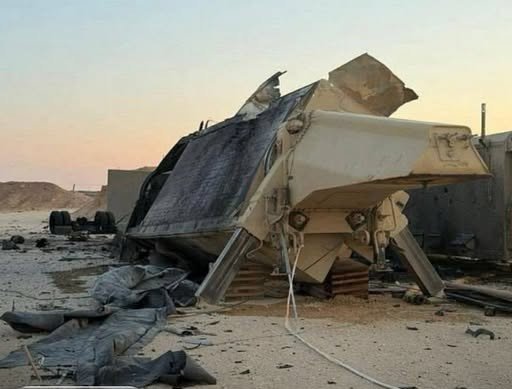
The AN/TPY-2 radar at Muwaffaq Salti Air Base sustained damage. The system is used for detecting and tracking ballistic missiles.
Iranian forces are systematically targeting the most critical components of America’s missile defence network across the Middle East, raising fears that the region’s protective shield is being quietly dismantled.
Military analysts say Tehran’s counteroffensive — launched after the US-led assault known as Operation Epic Fury — has focused on destroying the radar systems that guide American interceptor missiles.
Strike hits key US radar in Jordan
The Pentagon has confirmed an Iranian strike on a radar installation at Muwaffaq Salti Air Base in Jordan.
The damaged system is part of the AN/TPY-2 radar network that supports the Terminal High Altitude Area Defense (THAAD) missile shield. Without those sensors, interceptor missiles cannot accurately track incoming threats.
Defence specialists say the radar is effectively the “heart” of the system.
A precision campaign against US defences
Iran’s retaliatory operation — dubbed Operation True Promise 4 — appears designed to cripple the region’s early-warning architecture rather than overwhelm it with missiles.
Satellite imagery analysed by the open-source group Islander Reports suggests damage at multiple radar locations across the Gulf.
Potential strike sites include Prince Sultan Air Base in Saudi Arabia, Al Dhafra Air Base in the United Arab Emirates and installations in Qatar.
Billions in military hardware at risk
The radar systems under attack are among the most expensive pieces of equipment in the US arsenal.
An AN/TPY-2 unit can cost up to $1 billion and only about 20 have been produced since the 1990s. Analysts say even the loss of a single system would have a major operational impact.
If two radar units are disabled, experts warn that entire THAAD batteries could be rendered ineffective.
Strategic gamble with global consequences
Replacing destroyed radar systems could take years — and redeploying replacements would require pulling them from other theatres.
That would weaken US missile defence coverage elsewhere, potentially exposing allies in other regions.
For now, the strikes signal a clear shift in Iran’s strategy: not just retaliating against American power, but blinding the systems designed to stop it.
Iran is systematically taking out crucial US missile defense tools: reports
-
3
-

The Donald Trump administration dismantled key US military safeguards designed to reduce civilian casualties before launching its war against Iran, according to a new investigative report.
The rollback is now under intense scrutiny after a February missile strike in the Iranian city of Minab reportedly hit a girls’ primary school near a military base, killing more than 165 people — most of them children under 12, according to Iranian officials.
Washington says the incident is under investigation.
Deadly strike triggers global alarm
The attack is believed to have involved a Tomahawk cruise missile, a weapon widely used by the United States military.
An internal Pentagon probe reportedly found outdated targeting data may have caused the strike to hit the school instead of its intended military objective.
Asked about the report, Trump said he was unaware of it and suggested Iran or “somebody else” might have been responsible.
Civilian protection plan quietly gutted
According to reporting by ProPublica, the administration sharply scaled back the Pentagon’s Civilian Harm Mitigation and Response plan — a framework introduced in 2022 to reduce non-combatant deaths.
Former officials say the programme has been cut by as much as 90 per cent under Defence Secretary Pete Hegseth.
The strategy once required more detailed civilian mapping, enhanced targeting reviews and thorough investigations after strikes.
A shift toward ‘maximum lethality’
Hegseth has openly championed a tougher doctrine centred on battlefield aggression.
Speaking earlier this week, he criticised what he called “politically correct and overbearing rules of engagement” and pledged to “untie the hands” of US forces.
“We intimidate, demoralise, hunt and kill the enemies of our country,” he said.
Critics warn civilians will pay the price
Human rights advocates say weakening oversight risks repeating some of the worst tragedies of modern warfare.
Annie Shiel of the Center for Civilians in Conflict warned the dismantling of protection systems leaves civilians exposed. “The policies still exist,” she said, “but they no longer have the resources or support to work.”
If the Minab strike is confirmed as a US attack, analysts say it could become the deadliest American strike on civilians in decades — and a defining moment in the expanding war.
Trump ditched plans to avoid civilian deaths before Iran war: report
-
2
-
How to win a war? The recipe.
in Political Soapbox
The US is expected to send a marine unit and more warships to the Middle East, two officials tell the BBC's US partner CBS news
Plans have not been confirmed but the unit, which can carry out amphibious raids, is typically made up of up to 5,000 Marines and sailors across several warships.
https://www.bbc.co.uk/news/live/c4gqjyk0vx3t