
.jpg.b4d1f4e752094bc641c0c2b82d77fe65.jpg)
bannork
Advanced Member
-
Joined
-
Last visited
Everything posted by bannork
-
Mark Felton compares a possible US invasion of the Hormuz Strait with the attacks on Allied ships off Okinawa in 1945. He notes the similarities of some of the weapons used by the Japanese then compared to those available to the Iranians today.
-
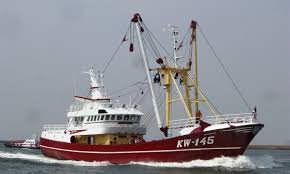
a Dutch beam trawler Europe’s fishing industry is beginning to feel the economic shock of the Iran war, with soaring diesel prices forcing large parts of the Dutch fleet to stay in port. Industry groups say at least half of the Netherlands’ fishing vessels remained idle this week as operating costs surged. For many crews, the numbers simply no longer add up. Beam trawlers hit first — and hardest The Netherlands is particularly exposed because of its large fleet of beam trawlers, fuel-hungry vessels that target valuable North Sea flatfish such as common sole, turbot and brill. These boats account for a sizeable share of the country’s fleet and roughly 7% of the European Union’s total fishing capacity. According to industry group VisNed, as many as 80–90% of beam trawlers did not sail this week. The reason is simple: fuel costs have exploded. Fuel bills now swallow entire catch value Before the conflict erupted on February 28, weekly diesel bills for a typical vessel ran around €12,000 to €13,000. Now those costs are approaching €30,000 — roughly the same as the value of the fish a boat might bring back to port at this time of year. Durk van Tuinen of the Dutch Fishers Union said the equation leaves nothing to pay crews. “When the fuel bill equals the revenue, the business stops working,” he said. Crisis spreads beyond the Netherlands The pressure is not confined to Dutch waters. The industry body Europêche says fleets across Europe are struggling with the same problem. Belgian and British vessels using similar gear are facing comparable fuel costs. Boats targeting species such as Atlantic cod and haddock are also nearing loss-making territory. With diesel prices up about 70%, some captains are choosing to remain tied to the dock rather than risk sailing at a loss. From harbour to dinner table Fishing leaders are pressing Brussels for emergency support, urging the European Commission to relax state-aid rules as it did during the 2022 energy crisis. Without relief, the consequences may soon reach consumers. Fish supplies are tightening and prices are already climbing. At Dutch auctions, sole has jumped from around €12 to €18 a kilo in days — a spike that could ripple through restaurants across Europe. As van Tuinen put it bluntly: “Fish will disappear from the menu.” Half of Dutch fleet idle as European fishing hit by high diesel prices
-
Ukraine reports first confirmed remote drone interception of Russian Shahed Officials said the interception took place on March 24 during a large-scale wave of aerial attacks involving Russian Shahed drones. The system was operated from a location far removed from the launch site, according to official reporting. The Ukrainian state platform United24 reports that the interception was performed using a long-range control system, allowing crews to engage targets without remaining near exposed positions. The drone used was identified as a Litavr interceptor, equipped with long-range piloting technology developed by Wild Hornets, as reported by United24. Unlike earlier systems, operators no longer need to stay close to launch sites. Ukraine reports first confirmed remote drone interception of Russian Shahed Wild Hornets has, according to L’Independant, indicated that pilots can work from protected indoor locations. In material released by the company, one operator is shown controlling the drone from a hotel room while tracking an aerial target in real time.

-
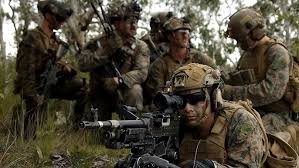
The 31st Marine Expeditionary Unit Plans to send thousands of US troops to the Middle East for potential operations against Iran have sparked a stark warning from military analysts. Experts say the numbers being discussed are nowhere near enough — and claim a full-scale campaign could require more than a million troops. Former and current military figures argue that deploying a few thousand soldiers against a country as large and populous as Iran would be vastly insufficient. The warning comes as President Donald Trump considers sending additional forces to the region. The proposed reinforcements include around 10,000 extra soldiers. They would join roughly 3,000 paratroopers and about 5,000 US Marines already preparing for potential ground attacks. Altogether, that would add to around 50,000 American personnel already stationed at bases across the Gulf. These forces include soldiers, sailors, airmen and women currently involved in bombing operations in Iraq and responding to Iranian missile and drone attacks. Critics say such numbers pale in comparison to the scale of previous wars. During the height of the US-led operations in Iraq between 2007 and 2008 — known as the surge ordered by George W. Bush — around 185,000 American and allied troops were deployed. Those troops were attempting to suppress an insurgency that had grown after the invasion that toppled Iraq’s dictator. Even with those numbers, stability proved elusive. Alongside coalition forces were between 450,000 and 550,000 Iraqi government troops. Yet despite the combined strength of roughly three-quarters of a million soldiers, the country still faced major security crises. In 2014, the militant group Islamic State seized large parts of northern Iraq and declared its own “state”. The group went on to sponsor global terror attacks for years. Analysts say the comparison highlights the immense scale of any conflict with Iran. The country has around 90 million people and covers a landmass roughly comparable to western Europe. Even smaller war zones required massive deployments. At the peak of the fighting in Afghanistan’s Helmand Province between 2009 and 2011, about 35,000 troops from the United States, the United Kingdom and other allies were concentrated in the region. That force included about 25,000 US Marines sent in a surge to support the British-led mission. Earlier British deployments had grown from around 3,000 troops in 2006 to roughly 10,000. Despite those numbers, allied forces struggled to secure the province. Yet Helmand is about 28 times smaller than Iran. The current troop movements also involve elite marine units designed for rapid-response operations. Two of the most prominent are the 31st Marine Expeditionary Unit and the 11th Marine Expeditionary Unit. Each unit contains around 2,500 personnel and operates from amphibious assault ships such as the USS Tripoli and the USS Boxer. These ships function as mini-aircraft carriers. They carry Marine fighter jets, Osprey tilt-rotor aircraft, helicopter gunships, transport helicopters and artillery. Analysts say such forces could potentially conduct targeted operations. One possible objective discussed by strategists is capturing Kharg Island, a key centre of Iran’s oil exports. The same units could also be used to try to counter Iranian threats to shipping passing through the Strait of Hormuz. The narrow waterway is only about 21 miles wide and is a crucial route for global oil shipments. Even so, military experts warn such operations would carry serious risks. Kharg Island lies more than 300 miles north of the Strait of Hormuz, leaving any captured territory exposed to Iranian counterattacks. There are also concerns about evolving battlefield technology. Analysts point to the rise of first-person drones used extensively by Russia during the war in Ukraine. Such drones could potentially swarm attacking troops while transmitting live footage of the fighting. Iran also has substantial military forces of its own. Its ground forces include around 600,000 personnel across the regular army, the Islamic Revolutionary Guard Corps and the Basij militia. According to British military veteran Nick Borton, any successful large-scale invasion would require enormous manpower. He said the US and its allies would need “many hundreds of thousands” of troops. Some former NATO generals have estimated even higher numbers. They believe a successful ground war might require well over a million soldiers. Borton pointed to another recent example: Russia’s invasion of Ukraine. Russia initially attacked with around 250,000 troops but failed to achieve its goals. The Russian military now has roughly 800,000 personnel involved in the conflict and still has not secured victory. Ukraine itself is less than half the size and population of Iran. Borton said limited operations were possible. Tactical missions such as seizing Kharg Island or parts of the coastline would require fewer troops. But he warned such operations could quickly expand without a clear long-term strategy. Without clarity of purpose, he said, a military operation would be “doomed”. Analysts also note that the objectives of the conflict remain uncertain. While the United States has been targeting Iranian military capabilities, Israel has focused on the possibility of regime change in Tehran. That lack of a single clear goal could complicate any military campaign. As tensions rise, experts say the numbers being discussed so far represent only a fraction of what would be needed for a full-scale war. For now, the question remains whether the troop movements signal a limited strike — or the early stages of something far larger. US needs a million troops to control Iran not the thousands on the way
-
US energy executives say America cannot fill the massive liquefied natural gas gap triggered by the Iran war, warning that infrastructure limits — not resources — are blocking any rapid surge in supply. The warning comes as the conflict involving the United States and Israel has effectively shut down shipping through the Strait of Hormuz, a route that normally carries roughly a fifth of the world’s energy exports. At the same time, President Donald Trump has pushed an aggressive fossil-fuel agenda under his “Drill, baby, drill” mantra. Industry leaders say the reality is far more complicated. Energy summit delivers blunt message Executives delivered the stark assessment at CERAWeek energy conference in Houston, one of the world’s most influential gatherings of oil and gas leaders. Charles Reidl of the Center for Liquefied Natural Gas said US exporters are already operating at maximum capacity. “We will not be able to make that volume up,” he warned, stressing that the United States has abundant gas reserves but lacks the export infrastructure to rapidly expand shipments. Hormuz blockade cripples global LNG flows The crisis deepened after Iran effectively blocked transit through the Strait of Hormuz following US-Israeli strikes in February. The disruption has paralysed exports from Qatar, the world’s second-largest LNG producer, while Iranian attacks on regional energy facilities have added further uncertainty. With Gulf supplies constrained, attention has turned to the United States, now the world’s largest LNG exporter. But even record-level production cannot fully replace the missing volumes. Europe faces winter energy crunch The shortage is triggering alarm in Europe, which has become heavily reliant on US LNG since Russia’s invasion of Ukraine. Governments are already worrying about whether they can build up enough gas reserves before winter — or whether prices will spike to politically dangerous levels. Meanwhile Asian economies, which normally receive the majority of energy shipments passing through Hormuz, are introducing conservation measures to curb demand. Permitting battles choke expansion Industry leaders say the long-term solution lies in new export terminals and pipelines — projects that can take years to approve. Executives complain that lawsuits, environmental challenges and congressional gridlock have slowed the permitting process for LNG infrastructure. Even if reforms pass soon, they warn, the global energy market faces an uncomfortable truth: the capacity needed to replace Gulf supplies simply does not exist — at least not yet. US cannot meet Iran war-induced LNG shortfall: industry leaders

-
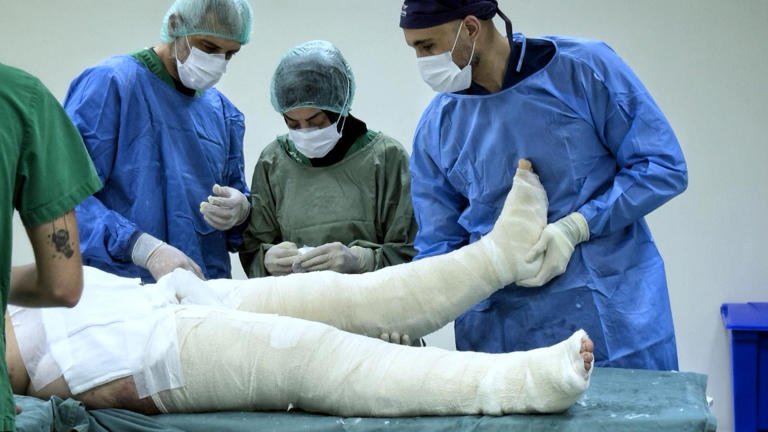
Doctors treating victims of Israeli airstrikes in Lebanon have issued a stark warning: the tactics they are seeing mirror what happened in Gaza. Medical staff say hospitals, ambulances and first responders are once again coming under attack — and they are urging world leaders to act before more lives are lost. A burns victim receives treatment at Sidon government hospital© N/A British surgeon Tom Potokar says the pattern is chillingly familiar. He previously worked inside European Hospital when it was bombed and is now treating patients in Lebanon. “The violation of international humanitarian laws has become normalised,” he said. “Once again we’re seeing attacks on the medical infrastructure, just like we saw in Gaza, but this time in Lebanon.” Potokar has travelled to Sidon to work at the government hospital there. The hospital houses the country’s key specialist burns unit, which he helped establish through his charity Interburns more than a year ago. Inside the ward, the impact of the airstrikes is brutally clear. One patient arrived after his home in Nabatieh was bombed in an Israeli airstrike just over a week earlier. He suffered burns to 65% of his body. Doctors say it will take months for him to recover. Two other severely burned victims were brought to the hospital after the same strike destroyed homes in southern Lebanon. Their bodies are now covered in bandages as medics battle to keep them alive. Among the doctors helping them is Anna Joseph, who has taken time off from her NHS role to treat patients. She says the destruction of healthcare systems is having devastating consequences. “The systematic destruction of healthcare facilities and staff from here and in Gaza has created a huge need,” she said. “People are suffering and dying and the specialists who could help them are being targeted, arrested, denied entry or even killed.” Another voice in the hospital comes from a doctor forced to flee Gaza. Mohammad Ziara said the scenes in Lebanon echo what he experienced while working at Al Shifa Hospital. “It is obvious what’s happening in Lebanon,” he said. “There is an attempt to degrade the medical facilities in order to push people to leave just like they have done in Gaza.” He warned that unless international law is enforced on all sides, the violence will continue. The Israeli military has rejected accusations of targeting civilians deliberately. It says Hezbollah fighters are hiding among civilian structures and using ambulances to transport military equipment, although it has not provided evidence. Officials at the Lebanese Ministry of Health strongly deny the claims. They say such accusations are attempts by Israel to “justify war crimes.” Another British-Palestinian doctor has also spoken out. Ghassan Abu Sittah, who runs a clinic in Beirut, says the impact on children is especially severe. He says Israel’s evacuation orders for the southern suburbs of Beirut forced several hospitals to shut. “When Israel ordered the evacuation of the southern suburbs we lost four hospitals,” he said. One of those hospitals had a paediatric intensive care unit. Without access to those facilities, doctors say the health system has shrunk dramatically. Ambulances are now hesitant to travel to outlying hospitals because of the dangers. Abu Sittah said three children died while waiting to be transferred for treatment. He describes the strategy as devastating. “What we are seeing is a scorched earth policy,” he said. According to him, such tactics can make an area uninhabitable by destroying its healthcare system. In densely populated cities, hospitals act as social anchors for entire communities. As the conflict intensifies, the humanitarian toll continues to rise. The Israel Defense Forces says it has killed hundreds of Hezbollah fighters and destroyed military infrastructure. In a statement on Thursday, it said more than 30 militants were eliminated in close-quarters combat and airstrikes. But the militant group Hezbollah says it remains capable of striking back. It claimed its fighters fired a record 80 rockets into northern Israel in a single day. Residents across southern Lebanon now live under the constant hum of Israeli jets. The noise is often followed by the sound of outgoing Hezbollah rockets. Civilians are caught in the middle. In the Sidon hospital burns unit, one father is grieving an unimaginable loss. Mohammad Kobeissi lost his teenage son when their apartment in central Beirut was hit during a night-time airstrike. “I have no feelings right now,” he said quietly. “Our family used to be four — now it’s three.” His son was just 15 years old. The toll across the country is climbing fast. The Lebanese health ministry says more than 3,000 people have been injured and more than 1,000 killed, although it does not separate civilians from combatants. The violence has also triggered a mass displacement crisis. More than a million people have fled their homes. Most have escaped communities near the Israeli border in the south. Others have fled the southern suburbs of Beirut, including the densely populated district of Dahieh. Israel says it is creating a security “buffer zone” along the border. Military operations have included blowing up bridges, bombing petrol stations and striking power plants supplying electricity to entire cities. Residents south of the Litani River have been warned to leave large areas of territory. Several Israeli officials have also indicated that ground troops could occupy the region. The zone would cover roughly 10% of Lebanon’s territory. As fighting intensifies, doctors on the ground say the humanitarian cost is already overwhelming. They warn that unless the violence stops, the health system — and the civilians relying on it — could collapse entirely. Lebanon doctors say Israel is repeating Gaza's 'scorched earth policy'
-
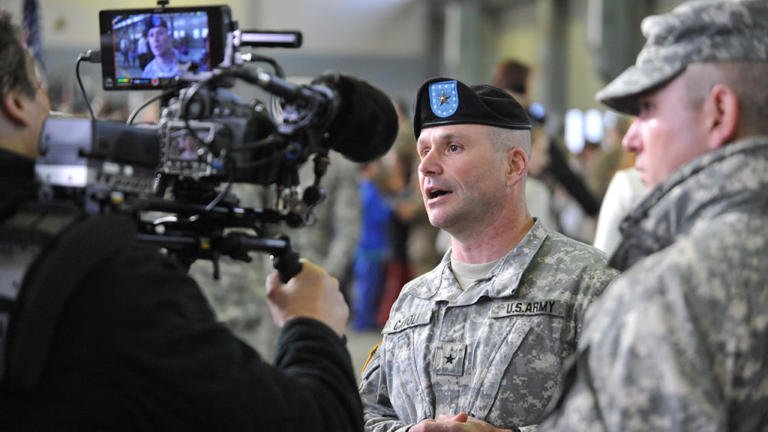
US general admits Ukraine outperforms American troops A senior US commander has acknowledged that Ukrainian troops are now operating Patriot air defence systems with remarkable effectiveness. According to The Insider cited by Ziare, General Christopher Cavoli made the comments during closed-door Senate hearings, where he reflected on how quickly Ukrainian forces adapted to the complex system. Cavoli admitted he was initially sceptical that Ukrainian troops could master such advanced technology in a short time. Training American personnel on Patriot systems typically takes years, making early expectations cautious. But the realities of war quickly overturned those assumptions. “They have become like fish in water,” Cavoli said, describing how Ukrainian operators have grown into the role. He noted that US forces are now learning from Ukraine’s battlefield experience, where systems are used under constant threat. Operating under relentless attacks, Ukrainian crews have had to refine their tactics while protecting the systems themselves. US general admits Ukraine outperforms American troops
-
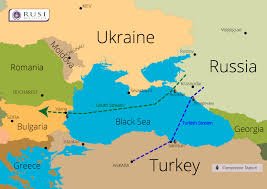
Ukraine’s military intelligence says the Kremlin may be preparing a dramatic escalation in the global energy war — potentially sabotaging its own gas infrastructure to blame Kyiv and pressure Europe into easing sanctions. The alleged plan, described as a coordinated political and intelligence campaign, aims to manufacture an energy crisis across the EU. By deepening shortages and driving up prices, Moscow could attempt to force European governments back toward Russian gas. A strategy built on accusations of “energy terrorism” According to Ukraine’s Defence Intelligence, the plan revolves around publicly accusing Ukraine of attacks on key export pipelines. Those claims have already surfaced at the United Nations Security Council, where Russia’s envoy Vasily Nebenzya accused Kyiv of targeting Russian energy infrastructure. Russian media amplified his allegations that drones struck compressor stations in southern Russia linked to gas exports to Europe. Pipelines at the centre of a high-stakes energy gamble Intelligence officials warn Moscow may suspend or damage key energy routes, including the TurkStream gas pipeline and the Blue Stream gas pipeline beneath the Black Sea. Another potential target is the Tengiz–Novorossiysk oil pipeline, a major route for crude supplies destined for international markets. The goal would be to trigger immediate shortages, spike global prices and undermine Western energy companies operating in the region. Putin’s warning raises suspicions The intelligence assessment points to remarks made by Russian President Vladimir Putin during a February meeting of the Federal Security Service board. At the time, Putin warned of alleged plots to destroy pipelines in the Black Sea — comments Kyiv now interprets as laying the groundwork for a potential false-flag operation. Europe caught between sanctions and energy pressure If supply disruptions drive up prices, the Kremlin believes political pressure inside the EU could intensify. Ukraine says Moscow’s calculation is simple: a severe energy squeeze might push the European Commission to soften sanctions on Russian oil and gas exports. Oil revenues already rebounding The warning comes as Russia’s energy income begins climbing again. Recent data cited by Bloomberg shows Moscow’s daily oil export revenues have surged from around $135m earlier this year to roughly $270m — approaching levels last seen in early 2022. For Kyiv, the stakes are clear: an engineered energy crisis could hand the Kremlin both financial relief and geopolitical leverage at the same time. Russia may strike its own gas pipelines as part of energy blackmail plan, intelligence warns
-
The White House is increasingly being caught flat-footed by events in the Iran war, according to a blistering analysis by Jamelle Bouie, who argues the administration failed to anticipate almost every major consequence of its own military campaign. Writing in The New York Times, Bouie says the chaos now engulfing Washington reflects a deeper problem: a leadership circle that mirrors the instincts of President Donald Trump — impulsive, dismissive of expertise and convinced reality will bend to its assumptions. War plan built on fantasy scenarios According to Bouie, the administration appeared to expect only limited Iranian resistance after launching the conflict. Officials did not seriously prepare for Tehran targeting shipping routes or threatening the Strait of Hormuz, one of the world’s most critical oil corridors. They also failed to plan for retaliation against US allies in the Gulf or the shockwaves such escalation could send through global energy markets. Even Washington’s diplomatic isolation appears to have caught the White House by surprise, with many European allies declining to support military action. Reality crashes into the strategy Bouie argues the administration expected a dramatically different outcome: brief Iranian pushback followed by rapid regime collapse. In this scenario, a pro-American government would emerge quickly, restoring stability and vindicating the intervention. The model, he suggests, resembled the White House’s expectations during earlier pressure campaigns against other adversaries. Instead, the conflict has expanded, threatening global shipping lanes and raising fears of wider economic disruption. A leadership culture that ignores other actors The columnist links the miscalculations to Trump’s governing style. The president, he argues, often treats political and geopolitical rivals as if they lack independent agency. That worldview, Bouie writes, has spread through the administration’s inner circle, creating an echo chamber where inconvenient possibilities are dismissed rather than planned for. When adversaries inevitably act in their own interests, the result is predictable: a White House repeatedly scrambling to react. Political opportunity emerges from the chaos Bouie argues the pattern presents an opening for Trump’s domestic opponents. If the administration consistently fails to anticipate the moves of others — allies, rivals or even Congress — its critics can shape events before the White House has time to respond. For now, he concludes, the defining feature of the presidency remains the same: a government repeatedly surprised by a world that refuses to behave according to its script. White House increasingly being caught 'flat-footed' because of Trump: columnist

-
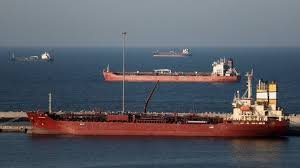
France has quietly begun rallying international support for a future naval mission to reopen the Strait of Hormuz once fighting between the United States, Israel and Iran subsides. Around 35 countries joined a mass video conference with France’s military leadership on Thursday to discuss how shipping through the critical oil corridor could be restored. The talks underline growing fears that even after the war ends, Iran may continue to threaten one of the world’s most vital trade routes. Behind-the-scenes diplomacy as oil artery stalls The discussions were led by France’s armed forces chief, Fabien Mandon, who convened military representatives from across multiple continents. According to the French defence ministry, the conversations were preliminary but aimed at gathering proposals for a possible international operation. The initiative, officials stressed, would be “strictly defensive” and separate from the current conflict. Its core goal: ensure commercial shipping can safely resume through the narrow strait that normally carries roughly 20% of global oil supplies. Naval chiefs align on freedom of navigation In parallel talks, Nicolas Vaujour, chief of staff of the French navy, held discussions with a dozen naval commanders from key maritime powers. Those included officers from the UK, Germany, Italy, India and Japan. The focus was safeguarding freedom of navigation in waters increasingly threatened by missile strikes, drone attacks and possible sea mines. “Maritime security is vital for the global economy,” Vaujour said, describing the sea as a “critical artery” for trade and stability. Paris and London quietly sketch a recovery plan France and Britain are emerging as the main architects of a potential mission to stabilise the waterway after hostilities ease. Emmanuel Macron has suggested any operation should operate under a United Nations framework and only begin once the fighting subsides and shipping insurers are consulted. France has already positioned significant forces nearby, including an aircraft carrier group and multiple warships across the eastern Mediterranean and Middle East. Mines, escorts and a long road to normal shipping Defence officials say the operation would likely begin with a large-scale mine-hunting effort — a technically demanding task that even the United States cannot manage alone. Only after waterways are cleared would naval escorts begin guiding tankers through the strait. For now, commercial traffic remains drastically reduced — a warning of how fragile the world’s most important oil route has become. France says it approached 35 countries over future Hormuz mission
-
Russian soldiers surrendered to Ukraine’s drone forces without a single shot being firedAccording to a March 26 statement from Ukraine’s 47th Separate Mechanized Brigade “Magura”, four Russian infantry soldiers were captured during an operation in the Sumy region. The brigade said the group had moved roughly 26 kilometers through a gas pipeline before attempting to advance across open ground and wooded terrain toward Ukrainian positions on the North-Slobozhanskyi axis. The brigade stated that reconnaissance and strike UAVs, including heavy bomber-type drones, were deployed against the advancing troops. Operators also released smoke to push the soldiers out of cover while reducing risks for Ukrainian personnel. “Our fighters had the task of securing the forest belt to prevent the enemy from reaching the settlement we are defending,” one servicemember said. Under sustained drone pressure, four Russian soldiers emerged and surrendered with raised hands. They were taken into custody and added to Ukraine’s exchange pool. Russian soldiers surrendered to Ukraine’s drone forces without a single shot being fired The brigade said one detainee cited financial pressures, including unpaid alimony, as a reason for joining the military, while others had reportedly enlisted after prison sentences.
-
A Russian court has banned the Oscar-winning documentary Mr Nobody Against Putin, ruling the film spreads “negative attitudes” about the government and the war in Ukraine. The decision blocks distribution of the award-winning film across Russia, including on major streaming platforms. Prosecutors argued the documentary portrays the state and its military campaign in an unacceptable light — and even promotes extremism. Court moves swiftly after global awards success The documentary, directed by David Borenstein and Pavel Talankin, won the top documentary prize at the Academy Awards earlier this month and also picked up a trophy at the BAFTA Awards. The film first premiered at the Sundance Film Festival in January 2025, where it received a special jury prize. But on Thursday a court in Russia’s Chelyabinsk region ordered the film banned nationwide, accepting prosecutors’ claims that it promotes “extremism and terrorism”. Secret classroom footage exposes war messaging At the centre of the film is covert footage recorded over two years by Talankin, a teacher in the industrial town of Karabash. The recordings show how Russian schools introduced “patriotic” lessons after the 2022 invasion of Ukraine. Pupils are shown attending lectures justifying the war, taking part in military-style drills and meeting visiting veterans. Talankin later passed the footage to Borenstein, an American filmmaker living in Denmark, helping create a rare inside look at how the war narrative is delivered to Russian children. Authorities cite extremist symbols and child filming The court said the film encourages hostility toward the government and contains banned political symbols, including the white-blue-white flag used by some Russian anti-war activists. Prosecutors also argued children were filmed without parental consent, an issue raised by Russia’s presidential human rights council. The ruling says the ban is necessary “in the interests of an indefinite number of persons”. Culture war deepens inside Russia The Kremlin has not publicly commented on the decision, but officials have repeatedly defended sweeping changes to the national curriculum since 2022. Schools are now required to run patriotic education programmes aligned with the state’s narrative of the war. When accepting his Oscar, Talankin framed the film as a warning about silence and complicity. “Mr Nobody Against Putin is about how you lose your country,” Borenstein said. “You lose it through countless small acts.” Russia bans Oscar-winning documentary Mr Nobody against Putin


-
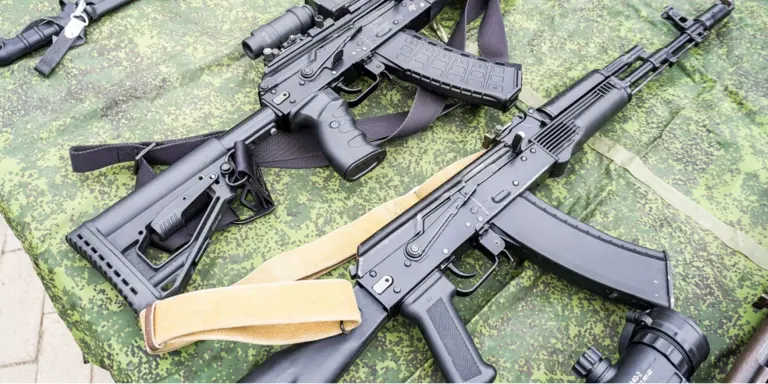
Russian commanders sell weapons on the black market, leaving soldiers with Soviet-era rifles, partisan group reports Suspected trafficking networkThe partisan group Atesh said its operatives embedded within Russia’s 127th Motorized Rifle Division identified what it described as a “persistent scheme” involving the removal of weapons from official stockpiles. In a statement posted on Telegram, the group claimed: “Russian armed forces are trafficking weapons in the Zaporozhye sector.” Atesh alleges that officers and depot staff falsify records, marking weapons as destroyed or missing before passing them to intermediaries who move them into illicit markets. Modern arms missingIn the Telegram post, which you can find on Atesh’s Telegram channel, the group says newer rifles, including AK-12 and AK-102 models, are among the weapons allegedly diverted. These firearms are considered some of the most up-to-date in Russian service. Meanwhile, troops on the front line are reportedly issued older AK-74 rifles dating back decades, creating what the group describes as a dangerous imbalance in equipment quality. “These weapons often jam or misfire during combat. This directly reduces the combat effectiveness of units and leads to additional casualties,” Atesh stated. Growing frustrationAccording to Atesh, ordinary soldiers are aware of the alleged practices and increasingly resentful of the situation. The group claims that financial gain is driving the scheme, with commanders benefiting while troops face heightened risks in combat conditions. “While commanders make money selling modern weapons, they are sent into battle with weapons that can malfunction at any moment,” the post reads. The claims have not been independently verified, but Atesh is known for having contacts deep within the Russian armed forces as well as partisan groups conducting sabotage on Russian territory. Russian commanders sell weapons on the black market, leaving soldiers with Soviet-era rifles, partisan group reports
-
Ukrainian paratroopers have completely liberated the village of Berezove in the Dnipropetrovsk region from Russian occupying forces, according to the official Telegram channel of the 95th Separate Air Assault Polissia Brigade of the Ukrainian Air Assault Forces. Situation in the Dnipropetrovsk region Ukrainian forces are conducting a planned offensive operation in the Oleksandrivka direction. According to the General Staff, the Defense Forces have already managed to liberate almost the entire territory of the Dnipropetrovsk region. In addition, the active operations of the Air Assault Forces aim to disrupt Russia’s plans to advance in Dnipropetrovsk and Zaporizhzhia regions. ISW analysts note that successful Ukrainian counterattacks in the south could completely undermine the enemy’s plans for the 2026 spring–summer campaign. Armed Forces of Ukraine take control of Berezove in Dnipropetrovsk region
-
Russian President Vladimir Putin held a closed-door meeting with Russian oligarchs on March 26, where he demanded that they "chip in" financially for the war. At least two agreed, according to The Bell. The idea of pushing businesses to contribute funds reportedly came from Rosneft chief Igor Sechin, sources said. He proposed issuing military federal loan bonds as a way to attract funding. Putin not only supported the initiative but also personally suggested that oligarchs make "voluntary contributions." At least two of them agreed to Putin’s proposal. For example, Suleiman Kerimov reportedly promised to contribute 100 billion rubles to the budget. Another unnamed oligarch also pledged a large sum, although exact figures were not disclosed. Putin demands oligarchs contribute money for war, The Bell reports
-
Barron Trump Jesse Ventura has taken aim at Donald Trump in typically blunt fashion, calling on his youngest son to enlist in the United States military while branding the President a ‘draft-dodging coward’. Drawing on his experience as a Vietnam veteran, the 74 year-old argued that leaders should be willing to put their own families on the line before sending others into battle. He suggested that anything less undermines the moral case for war. ‘There’s a simple thing as a leader, and you know this having been in the military. Trump wouldn’t know it because he’s a draft-dodging coward. But anyway it’s this: a war is justified if you’re willing to send your kids. Because how can you send somebody else’s kids to a war if you won’t send your own?’ WWE icon Jesse Ventura demands Barron Trump enlists with a swipe at 'draft-dodging' dad

-
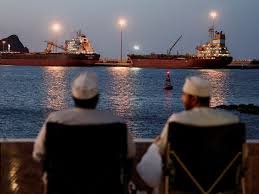
Iran has effectively turned the world’s most critical oil shipping route into a controlled checkpoint, forcing vessels to seek clearance from the military before passing through the Strait of Hormuz. Shipping intelligence reports say Tehran has already implemented a “de facto toll booth regime” in the strategic waterway. The move comes even as Iranian lawmakers prepare legislation to formally charge vessels for transit. The development threatens to reshape global shipping through a chokepoint that carries roughly a fifth of the world’s oil supply. IRGC tightens grip on the world’s busiest oil corridor The system is controlled by Iran’s powerful Islamic Revolutionary Guard Corps navy, which now requires ships to submit documentation and obtain clearance codes before entering a controlled transit corridor. According to maritime reports, vessels must provide ownership records, cargo details, crew lists and final destinations. The information is screened by the IRGC’s Hormozgan command for sanctions and “geopolitical vetting”. If approved, ships receive routing instructions and an escort through Iranian territorial waters near Larak Island. Traffic collapses as shipping lanes fall silent The impact has been immediate. Since mid-March, dozens of vessels have used the IRGC-controlled route while traditional commercial lanes have largely emptied. On Tuesday only four ships crossed the strait, according to maritime intelligence data. Several large vessels were seen waiting north of Larak Island, apparently queuing for authorised transit. Others appear to be avoiding the system entirely, hugging the Omani coastline or switching off location transmitters to bypass Iranian oversight. Some ships already paying tolls Reports indicate that at least two vessels have paid direct transit fees, with payments settled in Chinese yuan. Many other crossings appear to have been secured through diplomatic intervention rather than cash payments. Iranian officials argue the charges are justified because Tehran provides security in the waterway. Lawmakers say proposed legislation will formally establish Iran’s authority to collect fees from oil tankers and cargo ships. Legal minefield for global shipping companies The arrangement puts international shipping firms in a legal trap. The IRGC is designated as a terrorist organisation by the United States, meaning any payments could trigger criminal liability under US law. Legal experts warn even indirect payments could be considered “material support” to a banned group. UK and EU sanctions regimes offer no protection either. With billions in global trade at stake, security advisers say shipowners are scrambling for guidance as the strait — long treated as open international waters — risks becoming a militarised toll road. Iran imposes 'toll booth regime' to allow Strait of Hormuz passage
-
A woman who claimed she was too ill to leave her home has been exposed after investigators discovered she had been surfing and ziplining in Mexico. Catherine Wieland, 33, fraudulently claimed more than £23,000 in benefits while telling authorities her anxiety was so severe she was housebound. The woman from Goring-by-Sea in West Sussex had informed the Department for Work and Pensions (DWP) that her condition left her unable to manage basic daily tasks. Yet investigators uncovered a very different lifestyle — one that included holidays abroad, theme park trips and dozens of beauty appointments. The shocking deception stretched over more than two years. During that time, Wieland collected tens of thousands of pounds in Personal Independence Payments (PIP) while claiming she could not cook or wash herself. Officials later uncovered evidence showing she had been far from confined indoors. Records revealed she had been surfing in Cancun and ziplining during a trip to Mexico. Investigators also discovered she had visited Thorpe Park three separate times. The theme park trips were just one part of a busy social life that clashed sharply with her claims of being unable to leave home. Financial records exposed even more activity. While receiving the taxpayer-funded benefits, Wieland spent money on manicures, tanning sessions and appointments at a private Harley Street dentist. Her spending patterns also included visits to dozens of social venues. According to the investigation, she went to 60 pubs, clubs and restaurants during the period she claimed to be housebound. Bank statements revealed payments made in foreign currencies. The transactions helped confirm that she had travelled abroad despite telling authorities her condition prevented her from leaving her home. Investigators also found she had made 76 beauty appointments during the time she was receiving the payments. The number of visits raised further questions about the accuracy of her claims. When confronted by investigators about the bank statements, Wieland offered a blunt response. According to the DWP, she told them: “I didn’t realise you’re not allowed to leave your house.” Her explanation came after officials had already gathered significant evidence contradicting her account. The investigation showed she had continued claiming benefits even after returning from her luxury holiday to Mexico. After the trip, Wieland submitted a review to authorities stating that her condition had actually worsened. The claim came despite evidence showing she had been taking part in physically demanding activities such as surfing and ziplining. The benefits payments were made between 2021 and 2024. Over that period, she received £23,662 that investigators later concluded she was not entitled to. The case eventually reached court. Wieland pleaded guilty to failing to notify a change of circumstances relating to her benefit claims. She was sentenced on Thursday to 28 weeks in custody, suspended for 18 months. In addition, she must repay the full £23,662 taken from taxpayers. The case has sparked a strong response from government officials. Andrew Western, a minister at the Department for Work and Pensions, condemned the fraud in blunt terms. “This is an insult to every hardworking taxpayer and to people who genuinely depend on Pip,” he said. Western accused Wieland of repeatedly lying to exploit the system. He added that she had “milked the system for every penny she could get”. He also highlighted the contrast between her claims and her actions. “Wieland lied repeatedly, milked the system for every penny she could get and then had the nerve to claim her condition was worsening while she was ziplining and surfing in Mexico,” he said. The DWP says the case demonstrates its determination to pursue benefit fraud. Officials insist that those who abuse the system will be identified and held accountable. Western delivered a clear warning. “We are committed to finding those who try to defraud taxpayers, and they will face the consequences,” he said. For Wieland, the consequences now include a criminal conviction and a repayment order for thousands of pounds. Authorities say the case highlights the ongoing efforts to protect public funds and ensure that benefits go only to those who genuinely need them. Woman who claimed she was too ill to leave house caught on zipline

-
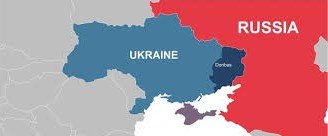
Ukrainian President Volodymyr Zelenskyy says the United States has tied future security guarantees to a dramatic concession: Kyiv must pull its troops out of the Donbas. The disclosure, reported by Reuters, exposes growing friction between Kyiv and Washington as negotiations over ending the war stall. Zelenskyy warned the demand risks weakening Ukraine’s defences and handing Russia a strategic advantage in eastern Europe. Washington pressure mounts as talks stall Zelenskyy said the proposal reflects a broader shift in strategy by US President Donald Trump. “The Middle East definitely has an impact on President Trump and his next steps,” Zelenskyy said, adding that Washington appears to be applying increasing pressure on Ukraine rather than Moscow. According to the Ukrainian leader, the United States is ready to formalise high-level security guarantees — but only if Ukrainian forces leave their positions in the contested Donbas region. Kyiv warns withdrawal would hand Russia the battlefield The demand strikes at the heart of Ukraine’s defensive strategy. Zelenskyy said abandoning the region would expose Ukraine and Europe to greater risk by giving Russia stronger defensive positions. Military analysts say Moscow still faces a long and costly fight to capture the remaining Ukrainian-held parts of Donbas. The region includes a chain of heavily fortified cities known as the “Fortress Belt”, designed to slow or halt Russian advances. Negotiations stuck on the core question: territory Talks mediated by Washington have produced limited progress in 2026, mainly around mechanisms to monitor a possible ceasefire. But the ceasefire itself remains out of reach. Russia continues to demand that Ukraine surrender the remaining parts of Donbas still under Kyiv’s control — a condition Ukraine has repeatedly rejected. The US has floated the idea of turning the area into a free economic zone, but details remain vague and politically sensitive. Zelenskyy rejects land-for-peace trade Zelenskyy made clear Ukraine will not trade Donbas territory for peace or concessions elsewhere. He argued Moscow may temporarily hold some occupied areas but insisted the long-term goal remains their liberation. Any final deal on borders, he added, will require direct talks between national leaders — the only forum capable of deciding Ukraine’s territorial future. Security guarantees in exchange for Donbas: Zelenskyy reveals harsh US condition
-
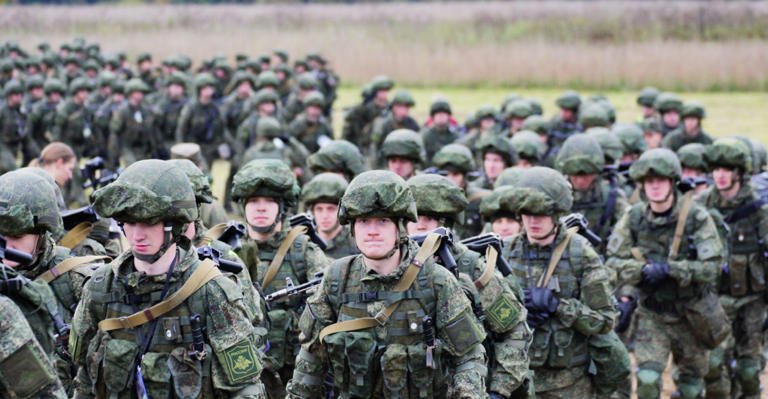
A prominent Russian military blogger has claimed that up to nine out of ten Russian soldiers killed in Ukraine die before even reaching the front line — a stark illustration of how drones are reshaping the battlefield. The claim comes as Ukraine estimates Russia has suffered around 920,000 killed or seriously wounded since the invasion began. In the past 24 hours alone, Kyiv says Russian forces lost more than 1,200 personnel. Drone war turns the battlefield into a kill zone According to Russian war blogger War Correspondent Kotenok, most casualties occur while troops are still advancing toward the line of contact. “Eighty to ninety percent of personnel losses happen before reaching the front,” he wrote on Telegram. “Eight or nine out of ten soldiers are killed on the way, without ever engaging the enemy or even seeing them.” He attributes the losses largely to Ukrainian first-person-view attack drones, which hunt soldiers and vehicles from the air. Ukraine’s drone units punch far above their weight Ukraine’s unmanned forces say they are responsible for a huge share of Russian casualties despite being a small part of the military. Robert “Madyar” Brovdi, commander of Ukraine’s drone forces, told The Economist his units account for more than a third of Russian losses while representing just 2% of Ukraine’s armed forces. The result is a battlefield where Russian infantry can be targeted long before they reach Ukrainian positions. Front line barely moves despite staggering losses The brutal attrition has produced almost no strategic breakthrough. Analysts say the front has largely frozen into grinding, small-scale clashes. The Institute for the Study of War estimates Russia captured just 4,831 square kilometres in 2025 — roughly 0.8% of Ukraine’s territory. Kotenok described the front as a strip of “localized tactical movements,” with daily advances sometimes measured in mere hundreds of metres. Russia pushes new offensive despite warnings Despite the heavy losses, analysts say Moscow has launched a new spring-summer offensive aimed at Ukraine’s heavily fortified “Fortress Belt” in Donetsk. The Institute for the Study of War predicts any gains will likely be limited and achieved at enormous cost. Russian officials are already preparing the public for slow progress. One State Duma lawmaker said advances toward Sloviansk and Kramatorsk will be deliberate — acknowledging that, in this war, speed comes with a deadly price. Up to 9 out of 10 Russian soldiers killed before even reaching line of contact, Russian blogger claims
-
A British family who moved to Dubai chasing sunshine, success and a dream lifestyle are now preparing to leave it all behind. The Croydon couple say the glittering city began to feel “plastic and not real” — and missile strikes near the region proved the final straw. Jason Kwao, 29, and his wife Sumekka Selliah-Kwao, 28, relocated to Dubai in December 2023 hoping to build a business and raise their children in a warmer climate. But less than three years later, the dream has faded. Now the pair are seriously considering a dramatic new move to Ghana instead. The family had settled in the Dubailand area of the Emirati city, living what many would consider the expat dream. Their home was a three-bedroom villa with a private pool close to a sandy bay. For a time, life appeared to be exactly what they had imagined. But behind the luxury surroundings, Jason says something crucial was missing. “The city we imagined our family’s future in started to feel plastic and not real,” he explained. The couple have now placed their belongings in storage and temporarily returned to the UK. Their trip back was initially prompted by tragedy — the death of Jason’s brother, Joshua Kwao, who died aged 30. But their return has also forced them to reconsider whether Dubai is really the place they want to call home. Jason admits they may never book those return flights. “When the missile strikes started, we could hear a few loud bangs and there was a quiet tension in the city,” he said. While his brother’s death was the main reason they left, the sense of unease combined with deeper doubts about life in Dubai pushed the family toward a possible permanent change. Jason said the city places heavy emphasis on money, business and transactions. “There is a lot of focus on business, money and ‘what can you do for me?’,” he explained. “That’s not how I want to raise my children.” Before moving abroad, Jason had built a successful career in the UK. After leaving university he began buying homeware products directly from warehouses and reselling them on Amazon. He later joined an agency managing higher-value accounts and earned about £8,000 per month before tax. Because his work was remote, he and Sumekka — who was pregnant at the time — decided to relocate to Dubai for the lifestyle and business opportunities. Soon after arriving, the couple launched their own venture. In January 2024 they co-founded a company called Intermast, investing all their savings to get the business off the ground. As the firm grew, they recruited staff and worked relentlessly to expand it. “It was hard at first,” Jason said. “As soon as money came in it would be going out.” Expenses quickly piled up — hospital appointments, residency applications and equipment for their business. Eventually their efforts paid off. The couple secured the luxurious villa where they raised their children, Sofia Amari, now five, and one-year-old Amias. Yet despite their success, Jason increasingly questioned whether Dubai was the right environment for family life. “In Dubai, it’s all about work and very transactional,” he said. Earlier this year the family embarked on an extended trip to explore other cultures and rethink their future. They travelled through Tanzania, Ghana, the Netherlands, Switzerland and the UK. During that journey, Jason admits he already felt uncertain about returning to Dubai. His wife still loved the city, but he was beginning to feel differently. “We said if we were supposed to move, we’d get a sign,” he recalled. Then two major events followed: his brother’s death and the outbreak of war that brought missile strikes close enough to hear in the city. Those moments deepened their doubts. For now, the family is staying in Croydon while Jason arranges his brother’s funeral and considers what comes next. One destination, however, has captured their hearts. After spending a week in Ghana during their travels, the couple say they fell in love with the country’s sense of community and outlook on life. Jason believes the experience changed how he thinks about raising his children. “In Africa, you see people with nothing who can still be happy and celebrate life,” he said. For him, the contrast with Dubai’s relentless focus on work was striking. He says he wants his children to grow up learning kindness and love regardless of wealth. “It takes a village to raise a child,” he said. And now he hopes to find that village. Jason insists he does not hate Dubai and still sees it as a beautiful place. But returning after months of travelling made the differences impossible to ignore. “Dubai is almost perfect,” he said. “But there are cracks.” Coming back, he added, the city simply felt different. “It felt almost plastic and not real.” To Jason, Dubai now feels more like a place to build wealth than build lifelong friendships. And for his family, that realization may mean the end of their expat chapter there. British expats ditch living in Dubai because it feels 'plastic and not real'

-
Starved Teen, No Crime: Israeli Judge Halts Probe Into Palestinian Prison Death An Israeli judge has closed the investigation into the death of a Palestinian teenager in custody despite evidence he was starved, according to a newly unsealed court ruling that is fuelling fresh scrutiny of prison conditions. The case centres on 17-year-old Walid Ahmad, the first Palestinian minor reported to have died in Israeli detention during the current war period. His family say he entered prison healthy. Six months later he collapsed and died. Autopsy points to starvation — but no criminal cause found An autopsy report cited severe malnutrition and suggested starvation was likely the leading factor in Ahmad’s death. Yet the judge overseeing the inquiry ruled the findings were not enough to establish a definitive cause. In the decision, Judge Ehud Kaplan acknowledged the teenager had apparently been starved but said the evidence failed to prove a direct causal link to his death. Without that legal threshold, he concluded, no crime could be determined and the investigation had to end. Case unsealed after media challenge The ruling remained hidden until Israeli newspaper Haaretz successfully petitioned to lift a gag order. The decision itself is still largely sealed, with only key passages released. In Israel’s legal system, judges can supervise investigations into deaths in custody and determine whether criminal wrongdoing occurred. They can order charges — or halt the probe entirely, as happened in Ahmad’s case. Arrested in a dawn raid, dead six months later Ahmad was arrested during a pre-dawn raid on his home in Silwad in the occupied West Bank in September 2024. Israeli authorities accused him of throwing stones at soldiers. His lawyer said repeated requests to visit the teenager in prison were denied. Ahmad died in March 2025 while awaiting another court hearing. Medical report reveals severe neglect The doctor who observed the autopsy reported extreme malnutrition along with signs of colitis and scabies. Prison medical records cited in the report indicated Ahmad had complained for months about inadequate food. Former detainees and rights groups say such conditions are widespread, describing overcrowding, poor sanitation, limited medical care and outbreaks of disease inside Israeli detention facilities since the war began in October 2023. Family still fighting for answers — and a body Ahmad’s father says Israeli authorities are still holding his son’s body, leaving the family unable to bury him. He has petitioned the courts to have the remains returned. “What is happening in Israeli prisons is a real tragedy,” he said. “There is no value for life.” Israeli judge closes case of Palestinian teen's death in prison despite evidence of starvation

-
US president Donald Trump vetoed an idea by Israeli prime minister Benjamin Netanyahu last week to call on Iranians to take to the streets in protest at their government, according to a report. “Why the hell should we tell people to take to the streets when they'll just get mowed down,” Mr Trump told him during their call, according to Axios, which cited a US source. Mr Netanyahu had claimed in the call that the Iranian regime was in disarray and that there was a window of opportunity to further destabilise it, a US official and an Israeli source told Axios. But Mr Trump expressed concern that such a call would lead to a massacre. Trump ‘rejected Netanyahu’s idea to call for Iranian uprising’
-
A Pentagon prayer service has ignited fierce debate after Defense Secretary Pete Hegseth delivered a stark wartime plea — asking that “every round find its mark” against America’s enemies. The extraordinary moment unfolded Wednesday during Hegseth’s monthly Christian worship gathering inside the Pentagon. It was the first service since the Iran war began — and the tone was unmistakably combative. Pete Hegseth prays for violence 'against those who deserve no mercy' 27. You will not post any copyrighted material except as fair use laws apply (as in the case of news articles). Only post a link, the headline and three sentences from the article.

-
Ukraine's partisans disable key rail hub near Luhansk, Russian supply lineThe partisan group ATESH has carried out another successful sabotage operation near the temporarily occupied Luhansk. Agents disabled a railway hub, leaving a portion of the occupying forces without supplies, according to the ATESH Telegram channel. According to ATESH, this railway line serves as a critical supply artery for Russian army units on the Kupiansk and Lyman directions, where the most intense fighting is currently taking place. “Disabling the relay cabinet has blocked traffic on this section. The trains did not arrive on time - frontline units were left without planned ammunition and spare parts resupply. This directly limits their offensive capabilities,” the partisans added. Other ATESH sabotage operations On March 15, it was reported that ATESH partisans destroyed a transformer in Sievierodonetsk that powered the headquarters of the 123rd Artillery Brigade of the Russian Armed Forces. As a result of the power outage, communication systems and equipment failed, leaving the unit unable to coordinate actions or issue and receive orders. Ukraine's partisans disable key rail hub near Luhansk, Russian supply lines hit
.thumb.jpg.3ee24d9400fb02605ea21bc13b1bf901.jpg)