
richard_smith237
Advanced Member
-
Joined
-
Last visited
Everything posted by richard_smith237
-
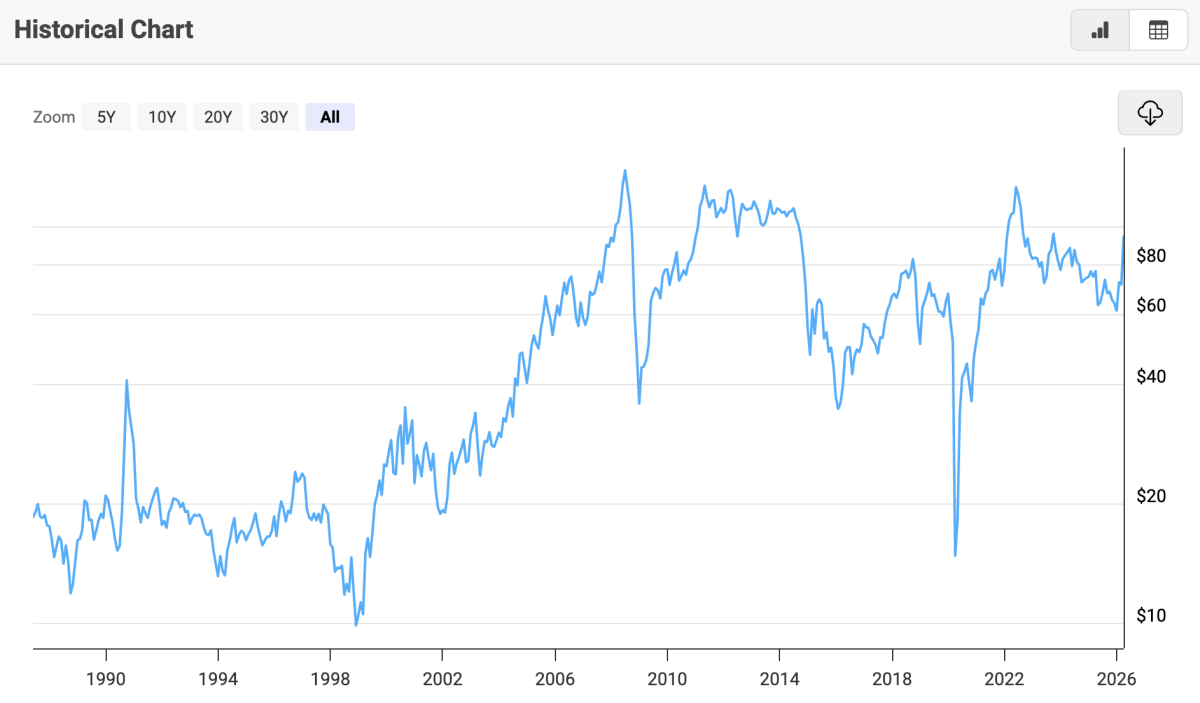
Yes we know you are slow. Price as of 12 March 9:21 Thai time By all means, don't let knowledge get the way of your confidence... 30 Year of Brent Crude:
-
Air-strike after air-strike... no wonder he's hopping mad... not to worry, Eid al-Fitr is soon... bet he secretly gets legless...
-
You seem to have mastered the tone of authority, without the inconvenience of depth !!!... Its a different model - Israel has conscription - they don't have a choice... But go ahead - extend your hatred of 'everything' Israel with that very broad sweeping brush and complete disregard for intellectual balance.
-
That changes the narative somewhat - if the customer didn't like the 'decor' - he can make the choice to leave. In this case - the shop owner has every right not to serve if the customer is being difficult. If I see a restaurant that has Posters of Osama Bin Laden, or Hitler (for examples) I'd simply choose not to spend my money there - its that simple - no need to escalate.
-
I think thats applying too much credit to the owner... IMO the dumbed down thought process was simply... "Oh, Israel, people / I don't like Israel - get out"... Its simple discrimination - the customer may not even agree with the policies of his government - I don't expect to be treated poorly because the way my government behaves, or the way other Brits behave.
-
So as an outsider, what is your view on that ???... Intelligent comments I mean.
-
Its impossible to underestimate you - I should have known better than to post in one of your threads.
-
Seems like a loaded question. All the power outages we encounter in Bangkok occur during power storms when a transformer blows - usually once or twice per year for brief intervals.
-
Its good that you recognise one group has repeatedly had their land stolen and subjected to inhumane treatment over millennia: 722 BCE - The Neo-Assyrian Empire conquers the Kingdom of Israel and deports large parts of the Israelite population - the “Ten Lost Tribes”. 586 BCE - The Neo-Babylonian Empire destroys Jerusalem and deports Jews from the Kingdom of Judah during the Babylonian Exile. 70 CE - The Roman Empire destroys Jerusalem after the First Jewish–Roman War, killing and dispersing large parts of the Jewish population. 115–117 CE - Jewish communities across the Roman world are crushed during the Kitos War, causing further displacement. 135 CE - After the Bar Kokhba Revolt, Rome expels many Jews from Judea and renames the province Syria Palaestina to weaken Jewish identity with the land. 1099 CE - During the First Crusade, Crusaders capture Jerusalem and massacre or expel Jewish and Muslim inhabitants. 1929 - The 1929 Hebron Massacre results in the killing or expulsion of Jews from Hebron, ending a community that had existed there for centuries. 1936–1939 - During the 1936–1939 Arab revolt in Palestine, Jewish communities in several mixed towns are forced to evacuate due to violence. 1948 - During the 1948 Arab–Israeli War: - Jews are expelled from the Old City of Jerusalem by Jordan. - Jewish communities in Gush Etzion are destroyed and survivors expelled or captured. 1948–1970s - Roughly 850,000 Jews leave or are expelled from Arab states following Israel’s creation, including: - Iraq, Egypt, Yemen, Libya, Morocco, Syria - Many of these refugees relocated to Israel. I criticised discrimination - nothing more. The Israeli in question did nothing wrong; he was simply asked to leave a restaurant because he happened to be born in the wrong country. That is the definition of discrimination. If the same thing happened to someone from Zimbabwe or India, you would be crying racism without hesitation. The pro-Palestine virtue signalling is charming in its way, but ultimately rather tiresome. That said, I’m glad you’ve chosen to end the discussion. You seem committed to your current level of understanding, though it is admirable that you chose to speak out in the absense of knowledge, which makes It difficult for anyone to underestimate you. For that reason it’s probably best I don’t engage in a battle of wits with someone so comprehensively unarmed. Though, purely out of curiosity as an observer - what exactly is your view on intelligence?
-
Let’s face it, outrageous atrocities have been carried out by both sides. The “they did it first” argument doesn’t really cut it. The issues, the violence, the attacks, the retaliation, the inhumanity - it’s all far more complex and nuanced than a forum discussion can coherently or succinctly deal with. But this particular situation isn’t about geopolitics - it’s about discrimination. Asking someone to leave a restaurant purely because of their nationality is discrimination. Nothing more, nothing less.
-
If denying service to Israelis is acceptable, then by the same logic it would also be acceptable to kick out Nigerians, Filipinos, Australians, Americans - anyone the restaurant decides. Most people would rightly call that discrimination.
-
Yes all without one independently corroborated fact. That kind of response is exactly the point I was making. It’s a classic debate tactic - not engaging with the argument itself, but dismissing it with a quick throwaway line designed to sound authoritative while avoiding the substance entirely. You see the same handful of one-liners over and over: “Source?” “Citation needed” “Post a link” “That’s been debunked.” “Fact check?” “Is that peer reviewed?” “Provide evidence” “That’s misinformation” “Where did you get that from?” “Show me the proof” They’re simply ways to try and score a point without doing the work of engaging with the reasoning or evidence behind it. Serious discussions about complex geopolitical events rarely come neatly packaged in a single hyperlink or a two-line citation. They involve pulling together multiple sources, historical context, policy decisions, and strategic analysis. Reducing that to “post a link or it didn’t happen” isn’t debate - it’s just a way to shut down conversation without contributing anything meaningful. If there’s a specific point you think is wrong, challenge it directly and explain why. That’s how debates work. But dismissing an entire argument with a one-line slogan is exactly the kind of intellectual laziness that turns serious discussions into comment-section point scoring. Edit: Unless I was mistaken - and your response was based out of sarcastic humour to post in the the exact manner I'd levied criticism at - in which case +1 at the humour !!!!
-
+100 !!.. Outstanding summary - though I suspect for some it will unfortunately fall straight into the TLDR category, which is a shame given the thought and effort that clearly went into putting together such a well-structured response. It does get exhausting having to constantly rebut these dumbed-down, weaponised one-liners that try to compress complex events into simplistic bullet points. Properly addressing issues like this requires a layered, thought-through response, and that inevitably takes more than a lazy one-line retort. But that effort is rarely matched - and not many seem willing to put in the work required for an intellectually honest discussion. The reality is that issues like this are messy, complex, and full of nuance. Yet they’re repeatedly repackaged into neat anti-Trump jabs or partisan talking points rather than being examined on their actual merits. This makes me wonder - if Trump weren’t involved at all, would the same voices be quite so quick to score political points, or might there be a more serious attempt to debate the facts and grapple with the complexities of what’s actually happening.
-
Good info - so more and more information is piling up that the Missile that hit the girls school was fired by the US Military. The evidence now increasingly points to the school strike having been caused by a US missile, and if that is confirmed then the US should acknowledge it plainly and of course apologise to the Iranian people and the world. But there is still a difference between a catastrophic targeting failure and deliberately bombing a school full of children. So what do people expect next ??.. The answer is not to pretend the tragedy did not happen, nor to abandon the fight entirely - it is to investigate properly, fix whatever failed, and make sure it never happens again. The US is fighting the IRGC and the regime, just as Iran claims to be targeting US military assets in the Gulf - yet in both cases civilians are the ones who end up paying the price. A Bahraini lady died last night when a drone attack was carried out on a residential tower, in a residential area (it is reported that 13 US Military personnel were staying there - photos show them in the lobby).
-
Yes, there is an element of hypocrisy in the global nuclear order - Israel never signed the NPT and possess nuclear weapons. But that reality dates back decades and is part of the world as it already exists. The question now is not whether the past was perfectly fair, but whether allowing additional nuclear states - especially in one of the most volatile regions on earth - makes the world safer or far more dangerous. Iran enriching uranium to ~60% is already far beyond the 3-5% used for civilian power, and most of the technical work required to reach weapons-grade (~90%) is already done at that point. At the same time, Iran’s leadership and senior officials have repeatedly used rhetoric about the elimination of Israel and Iran openly funds and arms regional proxy groups such as Hezbollah and Hamas, which are already engaged in conflict with Israel. That combination - advanced enrichment capability, open hostility toward a neighbouring state, and a network of armed proxies across the region - creates a far higher escalation and proliferation risk than the nuclear status quo that has existed for decades. If Iran acquires nuclear weapons, it is widely expected that Saudi Arabia, Turkey, and Egypt would quickly pursue them as well, turning the Middle East into a multi-nuclear region with several rival powers and active conflicts. So yes, the global nuclear order is imperfect and historically messy - but the fact that it isn’t perfect doesn’t mean allowing more nuclear powers in an already unstable region is a sensible or safe outcome. The aim of non-proliferation isn’t to rewrite history - it’s to stop the number of nuclear-armed states from continuing to grow. The “it’s not fair” argument doesn’t really work - it’s a bit too schoolyard for a serious discussion. The world we have today isn’t perfectly fair, but that doesn’t mean we should make it more dangerous by allowing further nuclear weapons.
-
Thats getting a bit silly - the two are not comparable.
-
The IAEA has not stated that Iran is not developing nuclear weapons. What it has said is that it does not currently have evidence of an active weapons programme. That is not the same thing as saying one does not exist. In fact, the IAEA has repeatedly stated that it cannot fully verify the nature of Iran’s nuclear programme, largely because inspectors have not been granted full access and the agency has lost what it calls “continuity of knowledge” over some nuclear material and facilities. What has been confirmed is that Iran has enriched uranium (U-235) to around 60%. To put that into context: - Civilian nuclear power reactors typically use uranium enriched to around 3-5%. - Under the 2015 JCPOA nuclear agreement, Iran agreed to limit enrichment to 3.67%. - Weapons-grade uranium is roughly 90% enrichment (a short technical step). Once enrichment reaches 60%, most of the technical work required to reach weapons-grade has already been done. There is no meaningful civilian application for uranium enriched to 60%, and Iran is currently the only non-nuclear-weapon state producing uranium at that level. The IAEA has also reported that Iran possesses hundreds of kilograms of uranium enriched to 60%, material that could theoretically be further enriched to weapons-grade relatively quickly. So the situation is not that the IAEA has “cleared” Iran of pursuing nuclear weapons. The reality is that the watchdog cannot verify what Iran is doing, while at the same time Iran is producing enrichment levels that far exceed civilian needs and violate the limits it previously agreed to. That combination alone is enough to raise serious concern about intent and capability - meanwhile your comment was deliberately over simplified and dumbed to to the point of wilful ignorance.
-
That seems fair enough. Trump has at least been candid in saying he does not yet know enough about the incident, rather than making definitive claims without the facts. He also stated that whatever the investigation ultimately finds, he is prepared to accept the outcome. For now, the position appears to be an initial denial until the results of an official investigation establish otherwise.
-
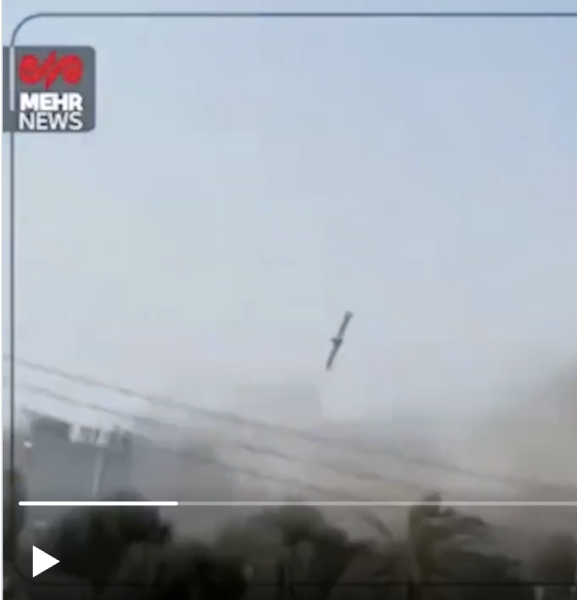
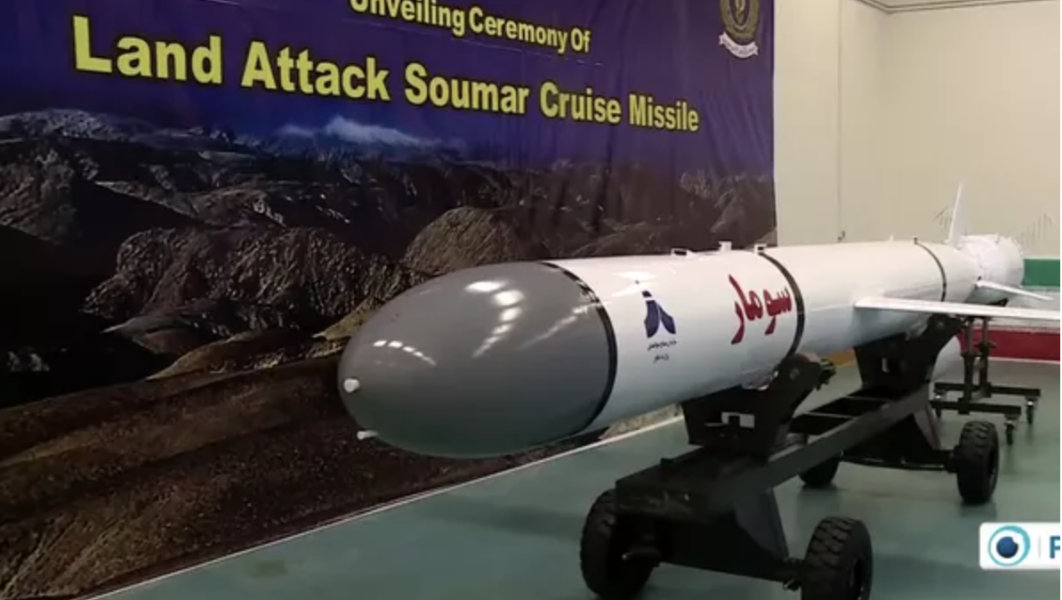
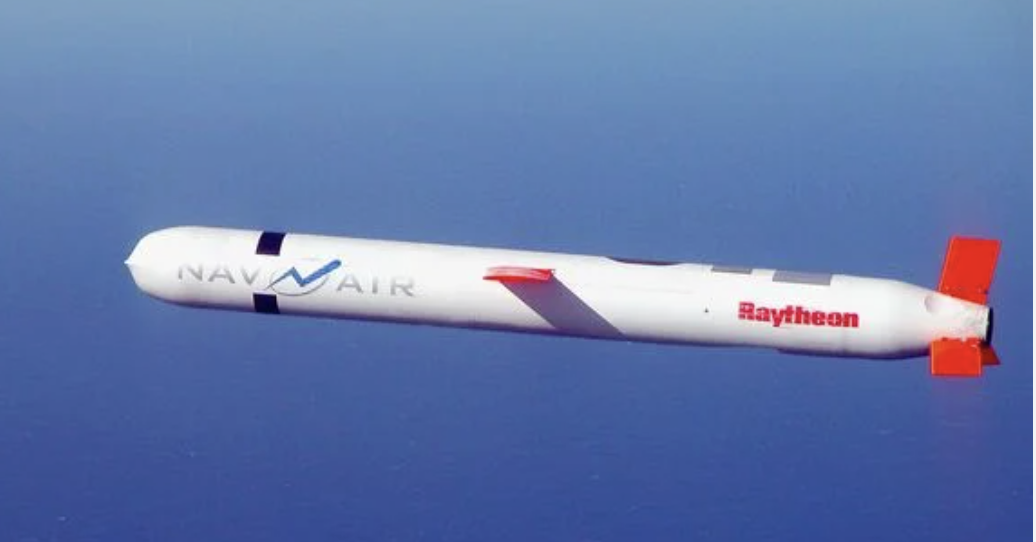
There are only four frames of video showing the missile, and the image quality is too poor to determine whether it is a Tomahawk or any other cruise missile. Many cruise missiles share very similar shapes - including Iran’s Soumar - so visual identification from such limited footage is highly uncertain. While many experts are focusing on missile identification, I suspect much of this is little more than educated guesswork based on circumstantial factors rather than definitive evidence. If the United States intends to investigate the incident properly, it should be able to determine the answer with certainty. Modern cruise missiles are tracked throughout their flight profiles, so the launch and trajectory data should exist. As I mentioned earlier, mistakes do happen. Missiles are not infallible - guidance can be disrupted by jamming, navigation errors, or even deflection during interception attempts. For the United States, the key issue is credibility. If a mistake occurred, credibility is best preserved by acknowledging it, explaining it, and addressing it. That approach maintains trust far more effectively than issuing a denial that few people find convincing. Ultimately, the truth matters more for U.S. credibility than maintaining thin plausible deniability. By now, tracking data could - and arguably should - have been presented. Given the timing of strikes and the surrounding expert commentary, many people already assume the missile was likely American. The available video footage, however, proves only one thing with confidence: that a missile was involved.
-
That Bellingcat analysis is excellent, but I’m not convinced the missile type can be determined from the imagery alone. The Tomahawk and the Iranian Soumar are visually very similar - both are turbofan-powered cruise missiles with comparable airframes derived from related design lineages. From four frames of a grainy video, there simply isn’t enough detail to confidently distinguish between them. Where the argument becomes more persuasive is through contextual evidence rather than the video itself. Launch windows, approximate flight times, and the broader timing of strikes in the area start to provide a more coherent picture. It’s also plausible that a missile could have impacted off-target. Cruise missiles rely on a mix of GPS, inertial navigation, and terrain-matching systems, all of which can be degraded in an environment with electronic warfare or GPS interference. That possibility becomes more relevant alongside of reports of strikes on nearby buildings. As far as attacking a clinic - as you questioned, there may have been ground intelligence identifying a specific target in the vicinity. As for the school building itself, there appears to be several independent verification methods supporting the conclusion that it was a school - including geolocation of the site, pre-strike satellite imagery showing an educational facility, and post-strike footage with classrooms, desks, and school materials in the debris. What remains unclear, however, is intent. At present, there is no convincing evidence that a school would be deliberately selected as a target. In the absence of such evidence, the more plausible explanations remain targeting error, guidance disruption and the presence of a nearby objective believed to be of military significance.
-
Understood - but I don't know 'how' they can identify the weapon as a Tomahawk from 4 frames of poor quality imagery - its impossible to tell the difference from a Tomahawk or an Iranian Soumar missile unless photography is clear. I think that is far stronger evidence than the imagery - which IMO shows an image of cruise missile, which is of insufficient quality to give a clear identification.
-
Trevor Ball and Chris Cobb-Smith may well be experienced weapons analysts, but expert opinion is still opinion based on the available imagery, and the imagery in this case is far from ideal. The identification hinges on recognising a Tomahawk cruise missile in a short, grainy video clip. But cruise missiles tend to follow very similar aerodynamic designs - long cylindrical body, mid-mounted wings, rear stabilisers. Iranian missiles such as the Soumar follow the same basic layout and at a glance can look remarkably similar to a Tomahawk. So the question becomes: how reliable is that identification from the footage shown? Even in clear photographs, distinguishing between different cruise missile models can require seeing specific features - wing geometry, intake position, tail configuration, markings. In a low-resolution video filmed at distance, many of those identifying details are simply not visible. None of this means the experts are necessarily wrong. But it does mean their conclusion should be treated as an interpretation rather than definitive proof - could you tell the difference between the Tomahawk and Soumar or Hoveizeh - side by side - IMO it would difficult to even differentiate the Paveh cruise missile imagry of that quality (google them and see what you think). It’s also reasonable to ask whether analysts commenting in a media context are bringing any institutional, political, or professional biases into their interpretation - something that happens in virtually every conflict. In the end, we rely on the experts, but we should be capable of deciding if their commentary is completely reliable. Look at the images yourself and ask a simple question: could you confidently tell the difference between a Tomahawk and an Iranian Soumar missile from a grainy video clip? If the answer is no, then the certainty being presented in some reports may be stronger than the evidence actually supports. I think more than any imagery - tracking information would be reliable. If an investigation ultimately shows that the strike can be traced back to a U.S. launch platform, then the United States should simply acknowledge it, explain what happened, and apologise. The tragic loss of that many children is obviously terrible optics and Iran will exploit it heavily in the information war, but that is the reality of conflict. Wars are chaotic, and even highly precise weapons can lead to tragic mistakes. The important thing is credibility. If evidence clearly shows the strike originated from U.S. forces, the responsible response is transparency - explain the intended target, explain what went wrong, and accept responsibility if an error occurred. That is far more credible than allowing competing narratives and speculation to fill the vacuum. Modern cruise missiles - whether U.S. Tomahawks or Iranian systems like the Paveh are designed for precision strikes, but even precision systems can fail or hit unintended structures in dense environments. IMO the real issue is not pretending mistakes are impossible. It’s how governments respond if a mistake is proven. Owning it, explaining it, and correcting it preserves credibility far better than denial in the face of clear evidence. The truth here is more important to the USA and Western world than it is Iran - IMO.
-
Over the last decade the UK government has effectively knee-capped the domestic oil and gas sector through policy uncertainty, licensing delays, windfall taxes and a political narrative that treats North Sea production as something to be phased out rather than strategically managed. The result? - Declining domestic production....Greater reliance on imported gas...Exposure to global LNG markets and geopolitical shocks... Meanwhile Norway, which kept developing its oil and gas resources, is laughing all the way to the bank as Europe depends on its supply. And over in the corner France is quietly smirking with a largely nuclear electricity system that shields it far more from gas price spikes. The irony is obvious: Britain still needs gas for heating, power generation and industry. If we don’t produce it ourselves, we simply import it - often with higher emissions and higher prices. Instead the UK Government seems to prefer slogans over sound policy and has ignored the need for reliable domestic supply, diversified infrastructure and enough storage to ride out global disruptions. Right now the UK is discovering what happens when ideology outruns energy reality.
-
The phrase “body of evidence” is doing a lot of heavy lifting here. What we actually have is a video clip and a series of interpretations built around it. That’s not the same thing as conclusive proof. First, the missile identification. The claim is that it’s a Tomahawk, but from the footage shown the missile is only visible briefly and at distance. Cruise missiles tend to follow a very similar aerodynamic layout - long cylindrical body, small wings, rear fins. Iranian missiles such as the Soumar look remarkably similar. From the quality of the video alone, distinguishing one from the other with certainty is far from straightforward. Second, the impact sequence. The footage appears to show a strike on the naval base, while the school is seen in the background already producing smoke and dust. That doesn’t actually establish what hit the school, or even whether the same strike sequence caused the damage. Third, verification of the impact site itself. Satellite imagery showing damage to buildings tells us that something exploded in that area, but it doesn’t identify the weapon used, the direction of approach, or whether the damage came from a direct hit, a deflection, or debris from an intercepted missile. So at this stage we have analysis, interpretation, and expert opinion built around limited video and imagery. That may eventually prove to be correct, but it is not the same as verifiable evidence. To be clear, I’m not claiming the United States could not have made a mistake. In war, tragic errors do happen. But describing this as a definitive “body of evidence” goes well beyond what the currently available footage actually demonstrates. At the moment it looks far more like a series of assumptions built around incomplete visual material than a conclusive reconstruction of what happened.
-
Grossi’s statement has been quoted in a way that leaves out the important context. What he actually said was that there is no evidence of a structured nuclear weapons programme, which is not the same thing as saying there is no nuclear risk. At the same time, the IAEA has confirmed that Iran enriched uranium to around 60% U-235 and accumulated significant quantities of it. Under the 2015 nuclear agreement (JCPOA), Iran agreed to limit uranium enrichment to a maximum of 3.67% U-235. That level of enrichment is far beyond the 3–5% typically used for civilian nuclear power and technically much closer to weapons-grade (~90%). Grossi has also repeatedly warned that inspectors have had reduced access and limited monitoring, meaning the agency cannot fully verify the peaceful nature of the programme. So quoting the “no evidence of a weapons programme” line on its own is misleading - the broader picture he described is precisely why the programme continues to raise serious concern.