Sunmaster
Advanced Member
-
Joined
-
Last visited
Everything posted by Sunmaster
-
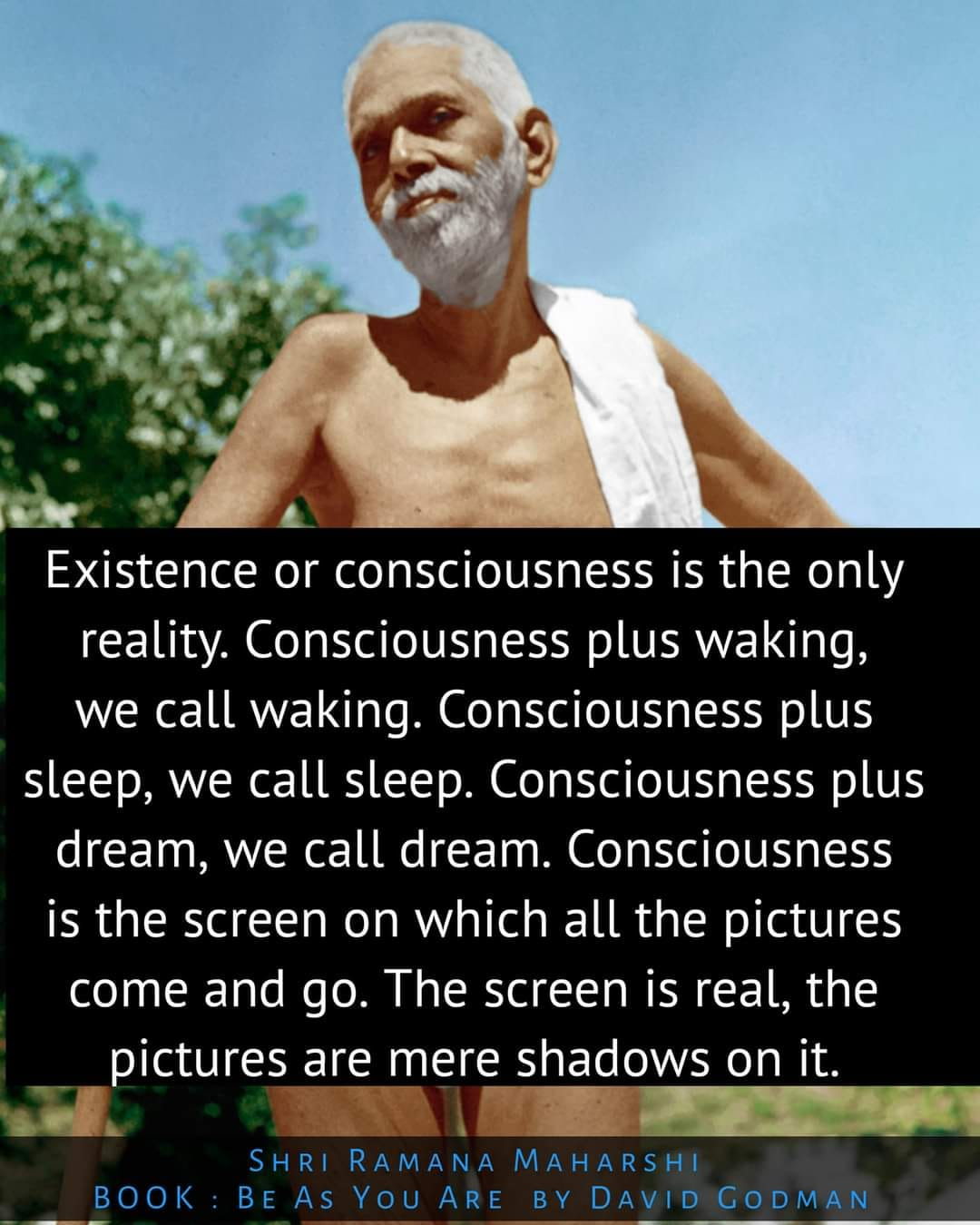
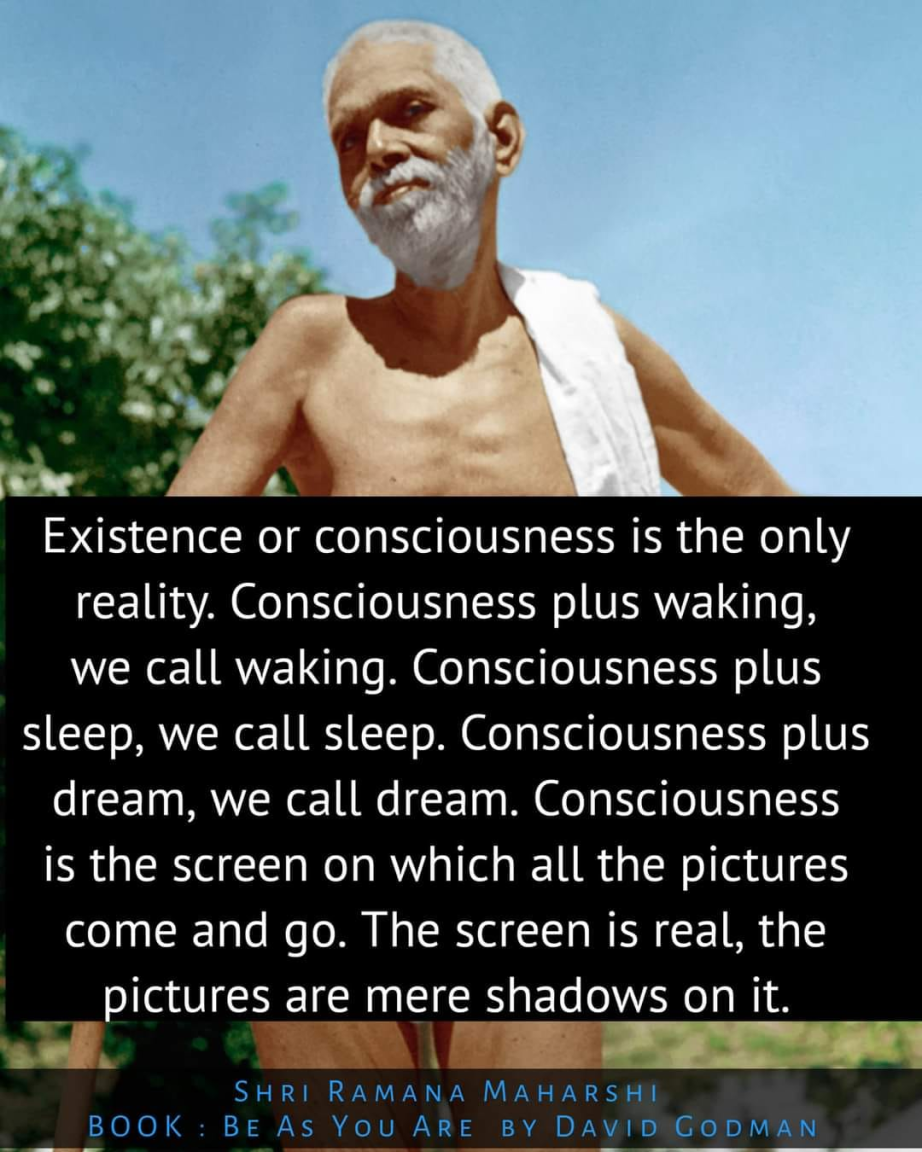
I guess it depends on your definition of God then. I cannot conceive of something separate from God, least of all the material world. How do you know whether you are part of God or just imagining your life? Good question! I think both options are correct. We are part of God AND we are creating our lives by shining the light of our consciousness and illuminating the world around us. Nothing and nobody can create it for us. We are like the projector in a cinema, bringing images to life on the unchanging silver screen of the Divine Consciousness. We believe the images to be true, we cry during sad scenes, we laugh during funny scenes, but when the film ends, what is left? Only the silver screen remains. How do we know that? By stepping back and not attaching ourselves to the ever-changing stories. By becoming dispassionate observers. Only then do we have the choice whether to play along and act as if the film were real, or simply observe the scenes in the full knowledge that they are just temporary projections.
-
These are 4D questions (space and time) that make no sense when related to something that transcends 4D. Something that has a beginning in time is by its own nature temporary. First it wasn't there, then it appeared, finally it will disappear again. If something is temporary, it is not God, but only a manifestation of God. God is the principle that is unaffected by time.
-
If God is defined as the ultimate principle of existence, the Ground of All Being....then logic would dictate that there is nothing outside of God or independent of God. There is nothing that isn't God. If there were, then there would be something besides God, which in turn would mean that God is not the all-pervading, all-powerful principle we ascribe to it. But the first part of your sentence is correct. The material body, including the brain with all its functions is a way for consciousness to interact with the material world.
-
Let's have a quick look at quantum theory. It's a very complicated theory and only a handful of people in the world understand the full scope of it, and even those people admit that their knowledge of it is sketchy or incomplete. Then you have a myriad of amateur physicists who kind of grasp the overall idea behind it, because the first group dumbed it down enough so that the masses would understand. They use analogies and examples to get complex concepts across. Finally, you have a third group of people who have no idea whatsoever, but like to parrot big words so that others may think they actually know what they're talking about. One theory....many interpretations and understandings of the theory. Those who know are few, those that don't know are many. The clarity/intelligence/level of development of the interpreter defines how well the original theory is understood and implemented. The same principle applies to religious/spiritual knowledge. You have a few people who know what they're talking about (Buddha, Adi Shankara, Teresa of Avila just to name a few). But since what they are talking about can't really be put into words due to its ineffable nature, they have to come up with analogies, images or stories to convey a better understanding for those who didn't have a direct experience. Then you have the believers, who kind of get the idea behind, but because their understanding is limited, they tend to distort those teachings by mixing them with less enlightened information. Finally, you have the group with a minimal understanding who will accept anything proposed without further inquiry (those that take the bible literally for example). One theory....many interpretations and understandings of the theory. Those who know through direct experience are few, those that don't know are many. The clarity/intelligence/level of development of the interpreter defines how well the original theory is understood and implemented. So, who is to blame for the faulty information that pervades the masses? Do you blame the theory or those who interpret the theory? What is the solution? Certainly not going from door to door trying to enlighten people. I think the solution is to gain a deeper understanding by ourselves, so that one day WE may become one of the few who understand. This, I believe, is the best course of action. Don't care yourself with what others believe or don't believe, but try to further your own understanding. This is yet another unverified and unproven belief that people take as a "scientific" fact. Any serious and honest neuroscientist will tell you that they simply don't know how consciousness is formed. Sure, on one level it is a wonderful interplay between atoms and electromagnetism, yet it is so much more than that.
-
It truly is sad. It's also sad that most people only know religion(s) by looking at the surface, picking out the obvious incongruencies and shortcomings, and because of that, never manage to see the hidden beauty of the less obvious spiritual teachings. There are parts in major established religions that focus less on dogma and ritual, and instead focus on direct experience. See Sufism in Islam or Christian Mysticism. When you ridicule religions as a whole (Christianity in your example), you also dismiss these other realities. I think that's even more sad.
-
The most simple and fundamental truth there is. Consciousness is all there is. It's up to us to investigate it. No books, no religions, no science needed. All you need is right here, right now: your own consciousness.
-
Yes, but with the difference that I don't accept (believe) those ancient answers merely due to a lack of a better (scientific) answer. I see truth in them because I verified and validated them on my own. That's the scientific process at work here: you take the theory, apply the parameters, you come to a set of conclusions, you double check your conclusions with other people's findings and thus confirm whether the theory is valid or not. Why then would I want to wait for established science to maybe confirm that at some undefined time in the future? Like you say, life is too short to wait for others to confirm what I can confirm by myself.
-
I think these are very subjective and personal questions. Why should I expect science to answer them for me? What can science tell me about my own dreams? What does science know about my childhood trauma and what is needed to resolve it? Does it have a magic pill to make it all go away? Where has this pill been for the past 30 years? The hard sciences don't concern themselves with these intangible questions. The soft sciences (psychology, sociology...) try to tackle them with mixed results. But why stop at these 2, when there are other sources that have explored these questions from the beginning of time, have been verified and peer tested throughout history and are as valid today as they were thousands of years ago? Why? Because our science doesn't quite know how to handle them? Because they don't fit in the accepted dogma of what is possible/real and what isn't? Is that a good enough reason to just ignore all that wealth of knowledge?
-
Absolutely, so true. Coincidentally, I woke up this morning with a small leftover from a dream, so I tossed it around a little in my head until it sort of came to a logical conclusion. In the dream I was teaching my nephew about an ice cream cup. I said that most people only see the most evident attributes of this cup. Is it full with ice cream or empty. They see the color and the shape. Their action will be based and therefore limited on only those bits of information. But there are many other attributes that are not so evident, like...what is it made of? Is the material recyclable? Is it rare and valuable? Is it soft and malleable or hard and fragile? Is it hot or cold? How does it smell? Is it a throwaway cup or is it a family heirloom? Where and how was it made? If you know all these bits of information, your actions will be much more precise and effective. Knowledge is power, right? While thinking about this dream, I made the connection to our lives. Most people see themselves as a separate biological machine and accept this as a fact and the only truth. However, how many more bits of information would come to light if only we could scrutinise ourselves a bit more. Why do we act the way we act? What triggers that negative emotion? Which memory feels painful and why? What is that dream trying to tell me? As with the example of the ice cream cup, increased knowledge will allow us to fine tune our behaviour, making it more effective and beneficial. This principle then should be applied to all parts of our existence, to religious dogma, to scientific dogma, and I would say most importantly, to ourselves. We say "This is my personality, my identity". But they are just objects here. Who or what is that which has a personality? Who is that subject that experiences this identity? Here is the problem with the limiting belief of the biological machine theory. It doesn't allow for further scrutiny since everything that is not measurable can not be included in the fact-finding process. It is automatically excluded because it doesn't fit in the given paradigm. But imagine how much information is lost due to this close mindedness?!
-
Interesting 👍
-
I feel like I should expand on my answer. I'm not against the Bible per se. I've never read it in full, but I'm sure there are important ethical and spiritual truths to be found there. The problem I see is that this valuable information is mixed in with and distorted by a lot of unnecessary and confusing fluff. That's why you get questions as to 'what is the best way to read it?'. I then ask myself, why waste time to sift out the good parts when there are plenty of other sources that get straight to the point and are crystal clear from the get-go? I understand that we all have our learning paths and time needed to digest the information. I spent decades reading all sorts of things and exploring spirituality from all kinds of angles. If I have to be honest with myself, all it really did was to make me realize that it only fed my intellect and didn't get me closer in understanding who I really am. It's one thing to say "I am an eternal being and the universe is full of love" because you read it somewhere and you believe it. It's a completely different thing when you actually experience it and therefore know it to be true. This is the point I will never tire of making: one moment of direct experience trumps a lifetime of reading. If reading the Bible brings you to practice (prayer, contemplation, fasting etc), then that's fantastic.
-
My recommendation on how to read the bible would be....don't read the bible. 😄 Sorry, couldn't resist. Seriously though, I said it jokingly, but I still mean it. One day you will grow out of it, still searching, still unsatisfied. What then? Will you look for another book?
-
Just one more thing that popped in my mind. A spiritual person (not strictly talking about religious people) recognizes that happiness is not dependent on external factors (sunsets, other people etc), but is a product of an internal attitude. It's that internal attitude or belief system that we try to sort out. Out with those beliefs that don't serve us, that hold us back, and replace them with beliefs that benefit us in a deeper, more satisfying and meaningful way.
-
I think that's an interesting point here. I don't have a clear idea yet, but I think it's worth exploring. Does the belief in an eternal soul give more meaning to one's life than the belief that we are biological machines? A person can live a perfectly content life without the belief in a God or Divine Force. He/she is perfectly capable of enjoying a beautiful sunset or a nice evening with friends and family. This person will think "I am here today and gone tomorrow, so I will try to make the best of it." The other person will look at the same sunset and the jolly gathering and equally enjoy them. They will think something like "I am here today and gone tomorrow. I'm so blessed to experience this. Thank you God* (*enter your preferred deity)". The fact that I believe in consciousness surviving the death of the body and in reincarnation, doesn't mean I can afford to sit back and do nothing. I wouldn't waste a nice sunset just because I think I will see many more in future incarnations. The fact that I believe that this world is an illusion, doesn't mean I feel I can do whatever I want without repercussions. I still wake up every morning and go out there, fulfill my duties, play the game and pretend it's real. It appears both can appreciate beauty and closeness. So, what's the difference? When do we really enjoy something? When do we experience true happiness? When we are truly in the present perhaps? That state seems to be independent on whether we believe in God or not. Right? Now, what if we could expand that feeling to not just rare moments, but make it a constant way of life? We would have to "be in the moment" at all times, or at least most of the time. How to do it? I think that's where the main difference lies. Every person, whether spiritual or not, will enjoy beauty, truth and goodness in those moments when they happen. They take us out of ourselves and put us in touch with something greater. The difference between a spiritual person and a biological machine is perhaps the degree by which we consciously seek and experience such moments. Those moments that make us plunge in the depths of our being, reconnecting us to that which we call the Ground of All Being, the Divine, God...or whatever you want to call it. And once you learn to enjoy all moments, even the most ordinary ones, as something special....that's when it becomes a constant state of being. Not sure if that answers your question. :-D
-
You are a conscious being, right? That's all the evidence you should ever need. You say you are the body: "I have this body. That's all I am." Let's see.... I(subject) have a body (object). We have 2 distinct things here. One is the material object (the body) and the other is the observer of that object (the subject). How can the object be the subject itself? It simply can't. The "I" consciousness is therefore not the body, nor the brain, which is just another object. Maybe you mean the "I" consciousness is a product of the mind then? "I have memories, thoughts, dreams, feelings, fears, hopes, beliefs. That's who I am". Again, we find mental objects (dreams, fears etc) and an observer of these objects. The subject can not be the object as they are 2 distinct entities. The observer (I) is watching these objects come and go. Feelings arise and leave. Memories are formed and fade away. Beliefs can change. They are all temporary, as in your Alzheimer example. The observer however is unperturbed. So, who or what and where is this "I" consciousness then?? If it's not the body nor the mind, where is this observer, this "I" consciousness? I would say, don't bother with finding out which deity is right or wrong. The only worthwhile question you should ask yourself is "Who am I?". All other answers are included within that one answer. No need for religion, deities, weird beliefs, or science for that matter. You are already equipped with consciousness and perfectly capable of answering that question without any intermediary whatsoever.
-
Is that one of the worst things though? lol I believe that consciousness lives on and it's just the body that breaks down. At the same time, I will grieve whenever a close person or a beloved pet passes on. The difference is that the grief doesn't overwhelm me and I can see it for what it is: a temporary feeling of loss. But this feeling is embedded in a much bigger "feeling" of acceptance and strength in the knowledge that whatever happens in this world, happens for a reason. Just because one believes, doesn't make him a saint impervious to doubt, fear, anxiety and sadness. Like everywhere, there a degrees in the realization of one's true Self.
-
Having doubts is good. The real problem is when one thinks he has the ultimate answer to the deepest questions in life and that answer then must apply to everyone else. This happens to believers and non-believers alike.
-
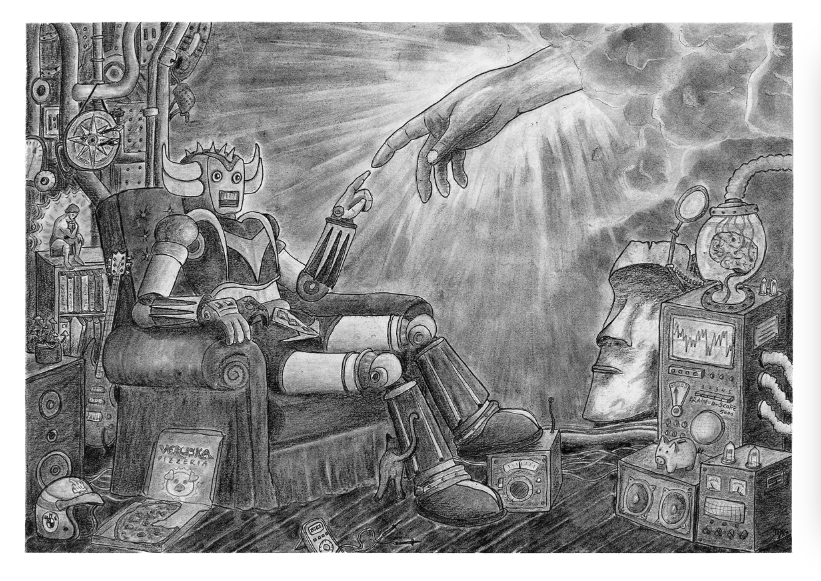
The robot is a loose interpretation of Goldorak, aka Grandizer Ufo Robot. A cartoon series I grew up with in the early 80s.
-
There is certainly some truth to this, but I think it barely scratches the surface of the issue. Accepting the thought that we are more than just biological machines is not just a backward evolutionary crutch that can be left behind thanks to some recent scientific discovery. Stress reduction is a welcomed byproduct of such a worldview, but definitely not the main goal. People believe because they need meaning in their lives. A meaning that goes beyond mere biological existence. Who am I? Why am I here? What is the meaning of all this? Why is there suffering? However advanced, science will never be able to answer these questions. It's neither its duty nor its goal. That's why people turn either to organized religion or perhaps seek a more personal relationship to the Divine. It's a fact that humans have a material body. It's NOT a fact that THAT is all we are. That is a belief like many others. If you like to limit yourself to a biological machine, no problem, but please don't apply your belief to the rest of us.
-
Yes, I promised a drawing to a close friend. It includes several things of his life and his beliefs. During one of our last conversations, he told me he believes that consciousness is a byproduct of the brain, which I completely disagree with, of course. :-) From there the idea with the brain in the 'brain-o-matic' machine, trying to extrapolate life's secrets.
-
Thank you, appreciate it. How have you been?
-
All the best Hummin!Out of curiosity, which posts grabbed your attention? What was the topic?Why is it pointless? You asked a question and I offered to answer it. Let's first get something out of the way and say what God is not. God is not an old guy sitting on a cloud or some far away heaven. God is not an elephant-headed deity. God is not an extraterrestrial being. And no, God is not a flying teapot or spaghetti monster either. What is God then? We can not really know God unless we become one with him/her/it and experience it directly. But even if we don't ever reach that point, we can still learn about God by looking at ourselves and ask ourselves a simple question: Who am ? Maybe you are tempted to say that you are the body. In that case we have to make an important distinction between the subject (the observer) and the object (that which is observed). We say "I have a body" or "My leg hurts". So, the body is the object and the I is the subject. This already proves that the object is not the subject, therefore the I can not be the body. Then you will probably say that the I is in the brain...in the mind. Again, we can say "I have this memory" or "I am tired/upset/happy". And again, we can distinguish the I (subject) from the memory (object)....and the I having the experience of being tired, upset etc. So, the real I (you) is not the body nor the mind. It is not the ego (insert your name here). It is the observer of the body-mind. Here is were it gets tricky. Spiritual wisdom says that the real "I", your true identity is beyond the body-mind. This identity, is in direct connection with God and if you are able to really know yourself, you will automatically know God. "Know thyself and you will know God". The how-to can be discussed if you're interested. To summarise: God is not someone or something out there, far away in the distance, nor far away somewhere in the future. It is here, right now, and you, me, everyone and everything are perfect expressions of it. The only thing that keeps us from realising this fact is our own limitation. But this limitation is not insurmountable. Sooner or later the tree will bear fruits, the flower will blossom. We can not force it, but we can provide the best circumstances and help the process by giving nutritious soil and clean water. In the same way, we can do a number of things to support the process of awakening. Your second question: What is it supposed to do? Exactly what it is doing now. Writing these words, reading these words and everything in between, performing this cosmic dance. I hope this can be of value to you.