



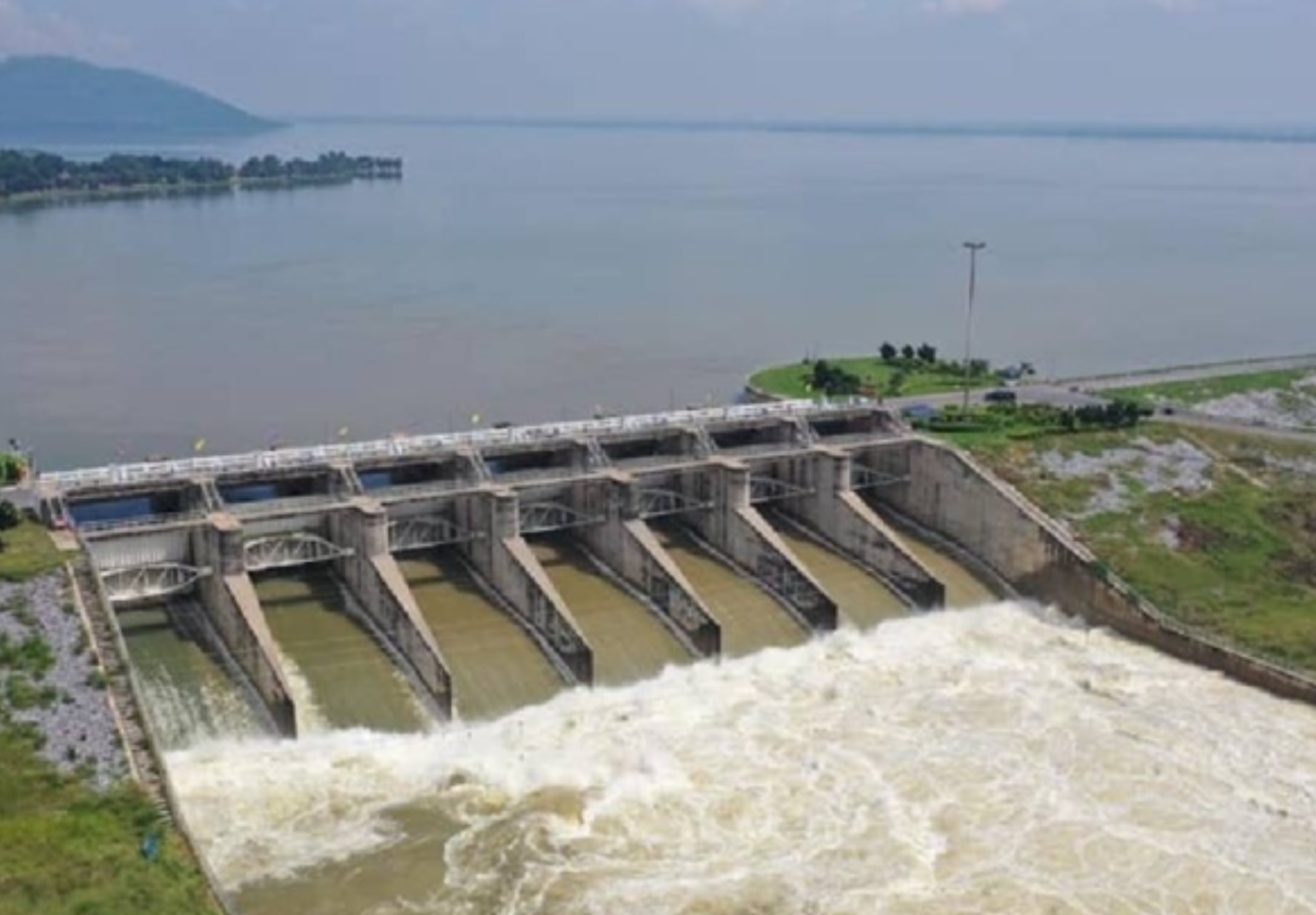

Thailand’s usable water reserves have dropped to 47 percent nationwide, with the central region facing the most severe conditions at just 40 percent, according to an April 14 report by the Office of National Water Resources. Total reservoir capacity stands at 63 percent, equivalent to 50,763 million cubic metres, while usable water is recorded at 26,662 million cubic metres. The figures highlight mounting pressure on water supplies as the dry season intensifies.
Get today's headlines by email 
Regional data shows uneven distribution of water levels across the country. The north holds 17,516 million cubic metres at 64 percent, while the northeast has 6,127 million cubic metres at 51 percent. The east is at 41 percent with 1,239 million cubic metres, the west remains relatively stable at 70 percent with 19,876 million cubic metres, and the south stands at 67 percent with 5,224 million cubic metres.
In the Eastern Economic Corridor, three key reservoirs remain above half capacity. Bang Phra reservoir is at 54 percent with 63 million cubic metres, Nong Pla Lai at 53 percent with 86 million cubic metres, and Prasae at 62 percent with 184 million cubic metres. These levels are being closely monitored due to their importance for industrial and domestic use in the region.
Water quality remains within acceptable standards. For consumption, the Chao Phraya River at the Samlae pumping station in Pathum Thani records salinity levels not exceeding 0.25 grams per litre. For agriculture, the Tha Chin River at Khlong Jinda in Nakhon Pathom, the Mae Klong River at Amphawa in Samut Songkhram, and the Bang Pakong River at Wat Bang Khang in Prachin Buri all remain below 2 grams per litre.
Authorities are continuing drought mitigation measures for the 2025 to 2026 dry season. The Department of Royal Rainmaking and Agricultural Aviation is carrying out operations to assist affected agricultural areas and replenish reservoir supplies. Target areas include Tha Takiap district in Chachoengsao, Phanat Nikhom in Chon Buri, Bang Saphan Noi in Prachuap Khiri Khan, and Sawi in Chumphon.
Amarin reported that additional efforts are underway in southern peat swamp areas, including Pa Phru To Daeng, Pa Phru Bacho Mai Kaen in Narathiwat and Songkhla, and Pa Phru Khuan Khreng in Nakhon Si Thammarat. These operations aim to reduce hardship for farmers and strengthen national water security as dry conditions persist.
Join the discussion? 
Already a member? 
 Adapted by ASEAN Now Amarin 15 Apr 2026
Recommended Comments
Create an account or sign in to comment