
Skip to content
View in the app

A better way to browse. Learn more.

ASEAN NOW

A full-screen app on your home screen with push notifications, badges and more.

To install this app on iOS and iPadOS
  1. Tap the Share icon in Safari
  2. Scroll the menu and tap Add to Home Screen.
  3. Tap Add in the top-right corner.
To install this app on Android
  1. Tap the 3-dot menu (⋮) in the top-right corner of the browser.
  2. Tap Add to Home screen or Install app.
  3. Confirm by tapping Install.

Thailand's sex industry and criminalisation costs

Thailand's sex industry is illegal under the 1996 Prevention and Suppression of Prostitution Act, but an analysis on 23 July argues that it remains deeply embedded in the country's tourism economy, supporting hotels, bars, restaurants, taxis and other businesses.

For foreigners living in or visiting Thailand, the issue is relevant well beyond the country's red-light districts. Nightlife spending by overseas visitors can flow through many ordinary tourism services, while the criminal status of sex work leaves workers without many of the protections, healthcare routes and welfare support available to formally registered employees.

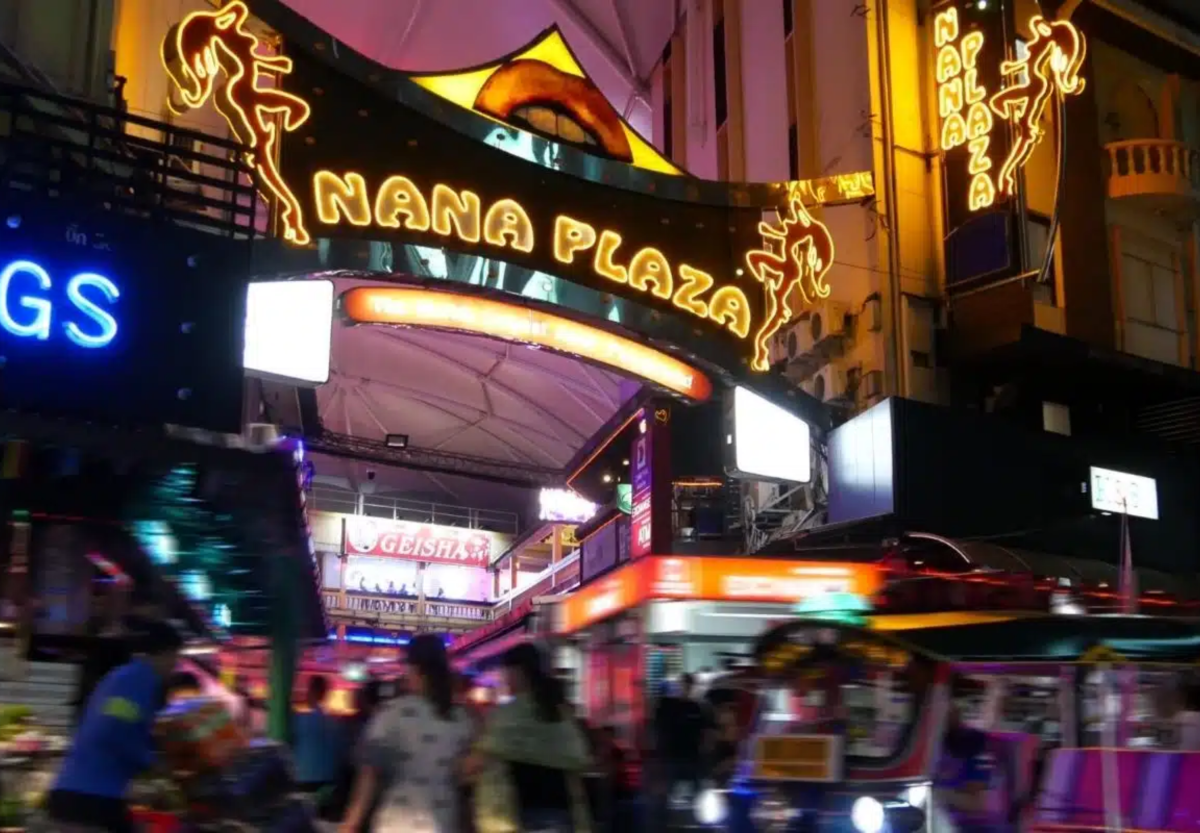
The 1996 law makes prostitution illegal when it is carried out "openly and shamelessly" or "causes nuisance to the public". Yet areas such as Nana and Soi Cowboy in Bangkok, and Pattaya's nightlife districts, remain highly visible to visitors.

A trade once regulated by the state

Prostitution existed in Thailand during the Ayutthaya period, from 1351 to 1767, when it was a legal profession regulated and taxed by the government. Workers were required to undergo periodic health checks.

During King Mongkut's reign, from 1851 to 1868, so-called protection houses were established for women wanting to leave the trade. The homes provided education intended to help them find work elsewhere.

After slavery was abolished in 1905, many women who had been bought as concubines entered prostitution. The Contagious Diseases Prevention Act of 1908 legalised the practice and offered medical support to workers.
IMG_8157.png

The presence of Japanese troops during the Second World War, followed by American servicemen during the Vietnam War, accelerated the industry's growth. The trade shifted from serving mainly Thai elites to a mass commercial enterprise estimated to employ 400,000 women.

Thailand later criminalised prostitution through the 1960 Prostitution Act and 1966 Entertainment Places Act, following pressure from the United Nations.

More than the price paid to a worker

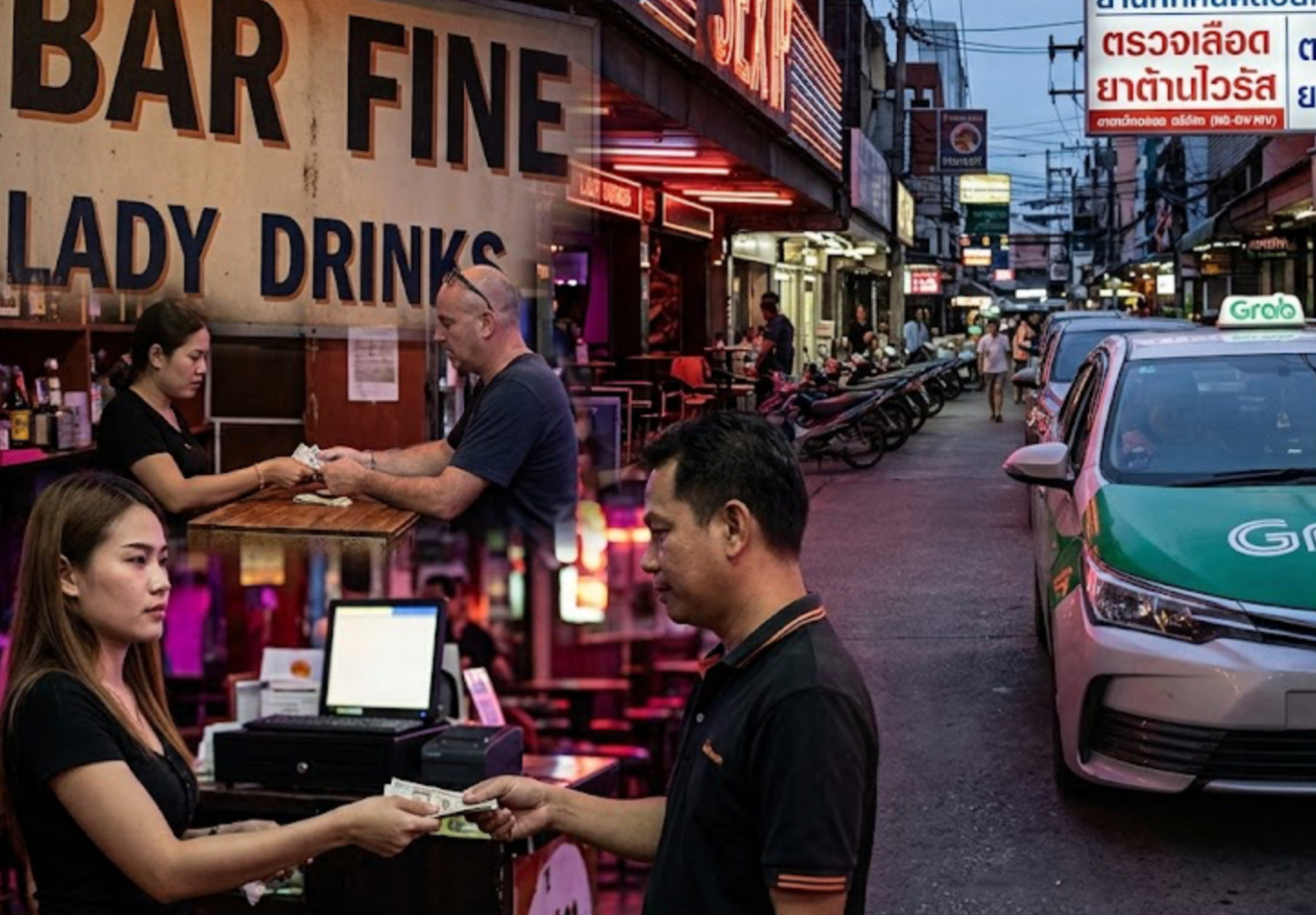
Transactions in entertainment venues do not always involve direct payment for sex. Customers may buy "lady drinks", allowing them to sit, talk and be entertained by performers.

If a customer wants an entertainer to leave early, they normally pay a "bar fine" to compensate the establishment for lost earnings. Any later arrangement for sexual services is separately negotiated between the customer and worker.

A night with a sex worker in Bangkok costs upwards of 2,000 baht, depending on the venue. An estimated 3.2 million foreign visitors engaged in sex tourism in 2022, latest data and that the industry contributed an estimated 1.1 trillion baht to Thailand's GDP.

The trillion-baht estimate cannot represent only money handed directly to workers. If it did, the average visitor involved in sex tourism would have paid for around 137 encounters - an implausible result.

Instead, the figure is said to reflect the broader spending generated by those visitors: hotels, restaurants, domestic flights, ride-hailing services, bars and retail businesses.

In Bangkok's Nana district, an American tourist identified as Alan, whose name was changed reported that He estimated that his two-week Thailand trip would cost US$1,200 for hotels, US$250 for Grab taxis, US$600 for food, US$200 for domestic flights and about US$1,500 for entertainment and nightlife. He did not answer when asked whether that total included sexual services.

His companion, named as Ploy, also a changed name, said she came from Isaan and had two children living with her mother. Her mother was ill and needed money for hospital bills.

Ploy said she had worked in Nana for two years after previously working in Pattaya. She budgeted 20,000 baht a month for all expenses, including 7,000 baht rent for a room near Nana.

Covid exposed the gap in support

The Covid-19 shutdowns showed how dependent tourism-linked businesses were on overseas visitors. Pattaya received nine million foreign visitors in 2019, contributing about 300 billion baht to the economy, the analysis says.

If one quarter of that visitor spending went on hotels, Pattaya hotels alone would have received 75 billion baht in a year. But occupancy and revenue per available room fell sharply in 2020.

The government offered SME soft loans and low-interest financing to help hotels remain open. Its We Travel Together scheme subsidised 40 to 50% of domestic travellers' hotel bills.

During the pandemic, the share of Pattaya visitors described as domestic rose from 21% to 94%. Restaurants also received support through a programme covering up to 50% of food purchases, although alcohol was excluded.

Under the No One Left Behind programme, eligible bar and restaurant employees could receive payments of up to 5,000 baht a month. Taxi drivers transporting visitors were also among groups able to benefit, but sex workers were not eligible, according to the report.

The World Health Organisation found that around 66% of Thailand's sex workers could not cover daily necessities during the pandemic, while 18% became homeless. Some 80% said they could not receive, or were ineligible for, government financial assistance.

Many workers could not be registered under the Social Security System because the trade is illegal. Workers registered with the system were entitled to 62% wage compensation for three months at the beginning of the pandemic.

Access to sexual health services was also reduced as STI testing centres became Covid testing facilities. In 2016, about 22.7% of street-based sex workers were reported to be living with HIV, while access to antiretroviral therapy became more difficult during the pandemic because of reduced clinic hours, movement restrictions and concerns over attending healthcare facilities.

Reform plans remain unresolved

Legalisation or decriminalisation was debated nationally in November 2003, when then-prime minister Thaksin Shinawatra held a high-profile discussion but made no formal decision.

In 2024, then-prime minister Paetongtarn Shinawatra suggested formalising some prostitution in a taxable entertainment complex. The proposal was initially approved in January 2025, but was withdrawn six months later amid public controversy and moral objections.

If one million tourists paid 1,500 baht in bar fines and the government levied a 20% tax on profits after expenses, it could collect hundreds of millions of baht from bar fines alone. Taxing drinks and services could potentially raise more than 10 billion baht a year.

Formalisation could allow workers access to healthcare and social security, funded partly by the system's 1.5% employee salary contribution. It says legal pathways could make it easier for victims of abuse, trafficking and child exploitation to seek help.

IMG_8158.png

Pictures courtesy of Thaiger

Join the discussion? Create account. orange.png


image.png

24 July 2026

User Feedback

Recommended Comments

ikke1959 Diamond Member

ikke1959

Advanced Member

Prostitution is as old as mankind. Thailand is known for its sexindustry which brought the country properity. Jow on earth is it still illegal than? There should be laws to protect sexworkers, and a law that makes it legal, but of course from a certain age and with mutual consent. Although there was a try a few years back i am still confused that a government changed that law again as people had moral problems with it. I believe those who objected the law are deeply involved in this illegal business and regulations or laws would cost them their freedom and partly profits. But the sex workers need protection and rights too. There is a raid going on foreign illegal businesses, but now in fact the sex industry us very illegal too and should be shutdown, asalthough i know it will not happen as it is a big drive for thr Thai economy. No sex industry is the death of the tourist sector too.

Celsius Diamond Member

Celsius

Members
1 hour ago, redwood1 said:

They are going to need to build some big prison to put millions of tourists, loads of expats and untold numbers of Thais in prison for taking part in the flesh trade...

There are these things in Thailand called inactive posts

flaming dragon Gold Member

flaming dragon

Advanced Member

A massive deflection from the fact that 99 percent (?) of the transactions are Thai on Thai and that's where the young girls cut their teeth. As one poster commented millions of new inmates would have to be housed.

More G7 IMF World Bank brown nosing.

bendejo Diamond Member

bendejo

Advanced Member

Here comes the "punter's visa" which includes a 100b/day fee (collected up front) allowing the tourist to engage in professional encounters.

Smokey and the Bandit Gold Member

Smokey and the Bandit

Advanced Member
14 hours ago, redwood1 said:

They are going to need to build some big prison to put millions of tourists, loads of expats and untold numbers of Thais in prison for taking part in the flesh trade...

I would say putting 10-20-30 million people in prison would be about right.....

"and untold numbers of Thais in prison for taking part in the flesh trade..."

Indeed, that number will include many of the RTP and Judiciary!

Zimar Explorer Member

Zimar

Member

Legalize it, Tax it, require health checks and make it a service industry profession. Sex is as old as mankind, sex exists in any relationship, whether legally monogamous or not. You will pay for it one way or another. Being legally or religiously committed to each other doesn't change the description of sex.

Legal and religious marriages only benefit the preacher and the politician.

J Branche Gold Member

J Branche

Advanced Member

Quote

"Formalisation could allow workers access to healthcare and social security, funded partly by the system's 1.5% employee salary contribution."

The girl's salary, bar fines are Taxable correct? Then she has access to healthcare already. No need to contribute more.

The hardest part is regulating and enforcing a cash transaction between two or more consenting adults.

The accounting and fraud would be a nightmare

Thingamabob Diamond Member

Thingamabob

Advanced Member

Not surprising that it was pressure from the UN which ended Thailand's previously sensible approach to prostitution.

Legal Lifeline Silver Member

Legal Lifeline

Forum Sponsor

I did not know there was any prostitution in Nana

I go there a lot as the girls there all say I am a handsome man

Am I missing something?

Jeff the Chef Diamond Member

Jeff the Chef

Advanced Member
1 minute ago, Legal Lifeline said:

I did not know there was any prostitution in Nana

I go there a lot as the girls there all say I am a handsome man

Am I missing something?

A visit to an Opticians, and a mirror, perhaps.

riverhigh Silver Member

riverhigh

Advanced Member

"Analysis on 23 July argues that it remains deeply embedded in the country's tourism economy, supporting hotels, bars, restaurants, taxis and other businesses. An estimated 3.2 million foreign visitors engaged in sex tourism in 2022, latest data and that the industry contributed an estimated 1.1 trillion baht to Thailand's GDP."

The real problem for the Thai government is how do you replace 1.1 trillion baht removed from the economy. You can talk about Thai morality and image till the cows come home, but until you come up with a realistic alternative nothing of subtstance will happen.

Legal Lifeline Silver Member

Legal Lifeline

Forum Sponsor
14 minutes ago, Jeff the Chef said:

A visit to an Opticians, and a mirror, perhaps.

Cruel- but probably very true unfortunately

riverhigh Silver Member

riverhigh

Advanced Member

"Legalisation or decriminalisation was debated nationally in November 2003, when then-prime minister Thaksin Shinawatra held a high-profile discussion but made no formal decision. In 2024, then-prime minister Paetongtarn Shinawatra suggested formalising some prostitution in a taxable entertainment complex. The proposal was initially approved in January 2025, but was withdrawn six months later amid public controversy and moral objections."

The above just shows how difficult it is to implement reform. Even when reform is desparately needed there will be vocal minortiy groups who will impose their beleifs on others at all costs. These vocal groups have zero tolerance for diffeing view points. Recent beating up of a Thai male under psychiatric tratment for posting "naught words" on social media would be a good example.


Plan B Apprentice Member

Plan B

Member

Prostitution is of religious origin,

preserved and encouraged for many centuries not as a shame,

but as a virtue, hailed by the Gods themselves.

It seems that the origin of prostitution must be sought mainly in religious customs and in religion itself, the great preserver of social tradition.

The most characteristic example is that recorded by Herodotus, in the fifth century BC, in the temple of Miletus, of the Babylonian Aphrodite, where every woman, once in her life, had to come and be given to the first stranger, who would throw a coin into her belly, in order to worship the goddess.

Many similar customs existed in other parts of western Asia, in northern Africa, in Cyprus, and on other islands of the eastern Mediterranean.

The rise of Christianity as a political force produced little change in policy.

The principal fathers of the church tolerated prostitution.

We find brothels under municipal protection in the thirteenth century.

They constituted a kind of public service, their managers being considered almost civil servants.

Pope Clement II Issued a bill on prostitutes that they would be tolerated, provided they paid a certain amount of their income to the Church.

Pope Sixtus IV was more practical. From a single brothel, which he had built himself, he was receiving an income of 20,000 ducats...

ikke1959 Diamond Member

ikke1959

Advanced Member
16 minutes ago, riverhigh said:

"Legalisation or decriminalisation was debated nationally in November 2003, when then-prime minister Thaksin Shinawatra held a high-profile discussion but made no formal decision. In 2024, then-prime minister Paetongtarn Shinawatra suggested formalising some prostitution in a taxable entertainment complex. The proposal was initially approved in January 2025, but was withdrawn six months later amid public controversy and moral objections."

The above just shows how difficult it is to implement reform. Even when reform is desparately needed there will be vocal minortiy groups who will impose their beleifs on others at all costs. These vocal groups have zero tolerance for diffeing view points. Recent beating up of a Thai male under psychiatric tratment for posting "naught words" on social media would be a good example.


Reforms only can be done, if you change the mindset of people. Thailand is not willing to improve the mindset, as we all know that traditional clothing is being promoted in schools on a day of the week, all kind of activities, etc. also the idea that foreigners are rich, and many other things. But it is 21 st century, things are changing, cultures develop, and if the country stands still it will stay behind the rest. Progress is more than mobile and internet or electric cars. As long as Thai people hold to the 19/20 century thoughts, nothing can be changed. Educate the people is the start, but a danger for the ones in power

Jeff the Chef Diamond Member

Jeff the Chef

Advanced Member

Prostitution is defined as engaging, agreeing, or offering to engage in sexual conduct with another person in return for a fee. The specific legal definitions and implications can vary by jurisdiction.

2, or more people engaging in any sexual acts behind closed doors by consenting adults is private, and cannot be illegal as long as it is consensual by all parties concerned.

Negotiation is the key, then you pay the fee and take your pleasure, the oldest profession in the world.

Create an account or sign in to comment

Account

Navigation

Search

Search

Configure browser push notifications

Chrome (Android)
  1. Tap the lock icon next to the address bar.
  2. Tap Permissions → Notifications.
  3. Adjust your preference.
Chrome (Desktop)
  1. Click the padlock icon in the address bar.
  2. Select Site settings.
  3. Find Notifications and adjust your preference.