



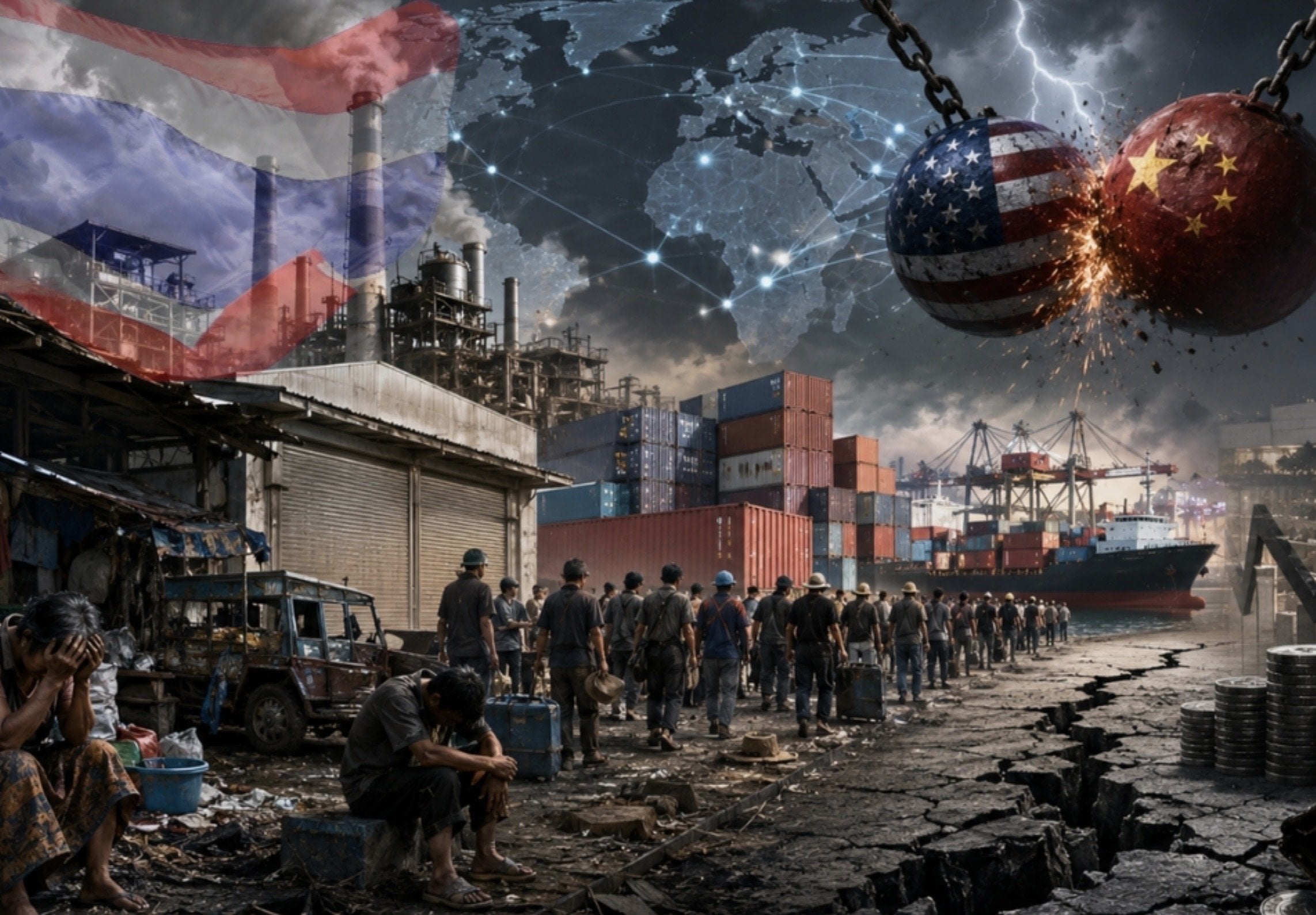

Thailand's economy faces mounting pressure from global trade tensions, higher energy and shipping costs, and an influx of lower-priced Chinese goods, according to an analysis published on 30 July 2026.
The analysis argues that the effects are now reaching workers, farmers and small businesses, as companies cut costs, reduce operating hours and close unprofitable production lines or branches.
Political parties are meanwhile competing over the annual budget and short-term cash-distribution proposals aimed at stimulating the economy and retaining support among lower-income voters.
Pressure on factories and household incomes
The analysis cites data from the Fiscal Policy Office and leading research bodies as indicating a worrying outlook for Thai GDP growth in 2026. It identifies Middle East tensions as a major driver of higher global energy and freight costs.
It also points to the US-China tariff dispute, saying excess Chinese production is being sold into Thailand at low prices, placing pressure on domestic manufacturers. Small and medium-sized factories are said to be increasingly unable to absorb their costs, leading some to shut down.
According to feedback from business operators reported by the Bank of Thailand, large companies are moving towards "lean organisation" strategies to protect profits. These can include consolidating production lines, closing loss-making branches, cutting working hours and laying off staff.
Daily-paid workers and farmers reliant on spending linked to the industrial sector are among those most exposed when activity slows, the analysis says.
Low inflation can mask weak demand
It describes what it calls "technical deflation" in the cost-of-living dimension. Despite higher external energy costs, domestic core inflation is reportedly growing by less than 0.5 percent.
It argues this is not simply because goods have become naturally cheaper, but because many consumers have less money to spend. Market traders and neighbourhood shops are said to be lowering prices to preserve sales and compete for the limited cash available to working households.
The central problem, it says, is a continuing decline in purchasing power at the grassroots level rather than external shocks alone.
Cash handouts face fiscal constraints
The government policy described as "Thai Chuai Thai Plus" is presented in the analysis as an attempt to inject short-term funds into the economy. However, it argues that cash handouts may offer only temporary relief and cannot shield lower-income households from wider trade-war pressures on Thai production.
It also highlights public debt approaching 66.4 percent of GDP and the risk that the 2027 national budget could be delayed or poorly targeted.
The analysis concludes that longer-term measures are needed to protect Thai industry from foreign competition and improve workforce skills as global manufacturing locations shift. How the government handles those issues could become a significant political test before the next election.
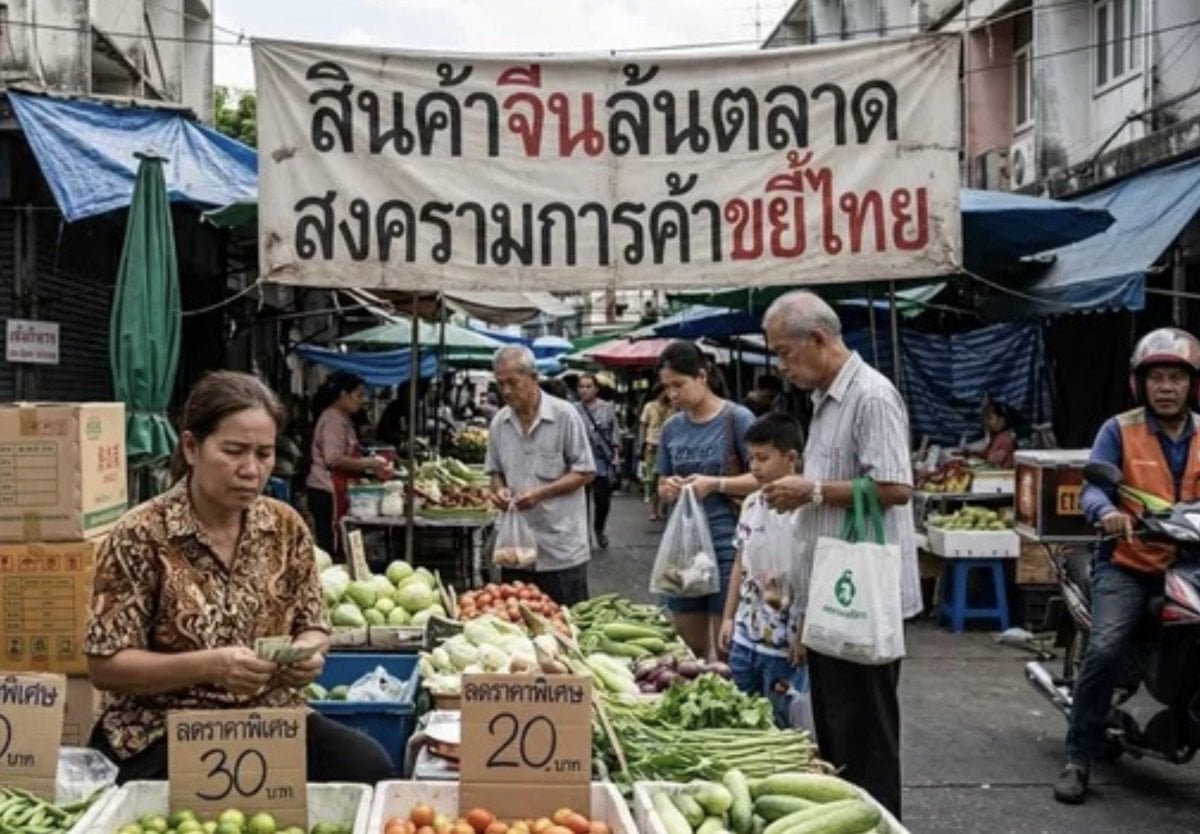
Picture courtesy of SiamRath
Join the discussion? 

2 August 2026
Recommended Comments
Create an account or sign in to comment