



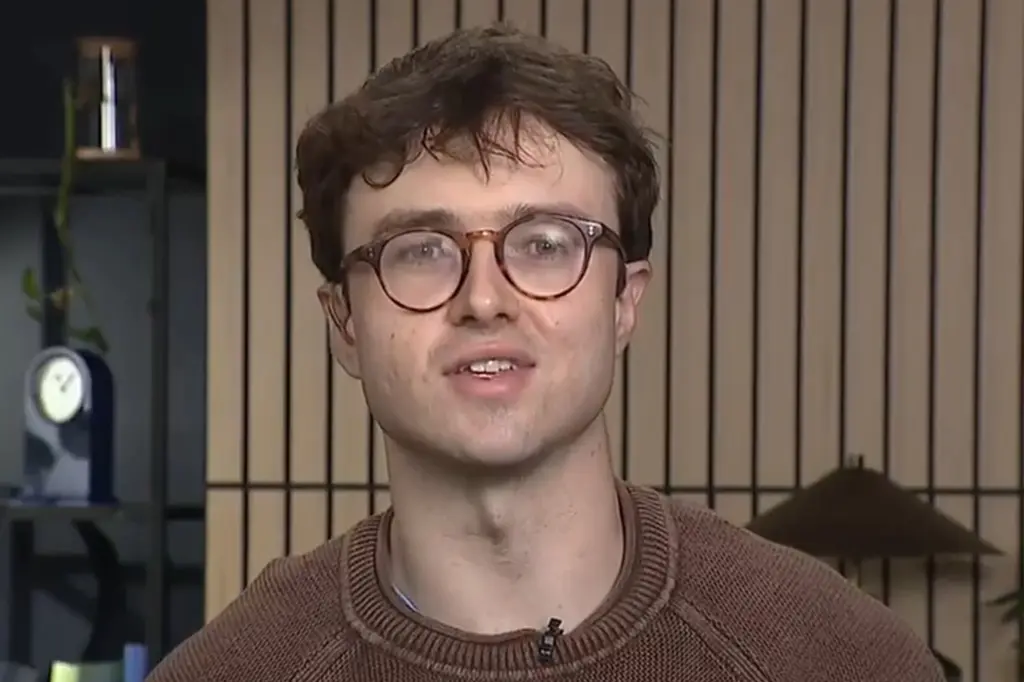

An ex-Anthropic artificial intelligence researcher has told the BBC that people working on AI systems were “genuinely frightened” by how quickly the technology is advancing and what it could mean for humanity.
Jacob Coxon, 27, who previously worked at OpenAI before joining Anthropic, made the comments after posting a resignation statement that urged the industry to slow down. Speaking to BBC journalist Laura Kuenssberg, he said the pace of progress posed an urgent risk.
“If we don't slow down at the current rate of progress, there is a strong chance that we could all die in the immediate future,” Coxon said in the interview.
Coxon's Resignation And Warning
Coxon’s resignation comes as safety concerns have intensified across the AI sector, including from senior figures inside the industry.
Anthropic chief Dario Amodei published an essay arguing that companies should slow development and take steps to reduce risk. Coxon said the proposal for a slowdown had support because many researchers see themselves trapped in a competitive race.
“The people who work at these companies are completely serious when they ask for regulation because they find themselves trapped in a race,” he said. “And they're scared of the outcomes of that race.”
RELATED
Anthropic Blocks AI Use That Could Aid Bioweapons
He added that any slowdown would need to be co-ordinated internationally, naming China as a key part of avoiding what he described as an “international scale” race.
Coxon also said he believed staff were struggling to understand what an “AI apocalypse” would look like, and pointed to scenarios raised by Amodei, including the risk of coordinated bots operating like a supercomputer that could take control of the internet.
Asked about how quickly such dangers could emerge, Coxon said the scenario could be realistic within six months to a year.
Industry Moves Toward Slower, Regulated Development
Amodei said the technology itself would continue to be developed, but argued that the risks were “serious” and that companies and governments needed time to address them.
The idea has found backing from bosses of two rival firms. Sam Altman, head of OpenAI, and Elon Musk, who runs xAI, both said they agreed with Amodei’s call for industry-wide deceleration, regulation, and independent monitoring of model development.
Altman later cautioned against what he called an “ill-advised moment” for a new initial public offering, citing safety issues, in an interview with Fortune published on Friday.
Anthropic, which is reportedly preparing for a potentially record-setting IPO, said it would not comment on the wider debate over Coxon’s departure. Instead, the firm responded to the criticism of its safety posture and its pace of progress.
Responses From Anthropic, Rival Executives And Critics
In a statement to BBC News, an Anthropic spokesperson said the company had long acknowledged that AI could deliver “enormous benefits” alongside “unprecedented risks”. The spokesperson said Anthropic continued to build models with strong safeguards.
The company also said it had pioneered research into how AI models work, describing itself as the first to publish a framework for mitigating risks linked to development. It said it “aggressively” tests its models and publishes the findings to aid scrutiny and prevent incidents of “AI misalignment”.
Anthropic added that it believed the world would benefit from a “lawful, verifiable” approach that would allow the industry to pace releases of powerful models.
Outside the industry, Coxon’s warnings drew scepticism as well. Clement Delangue, chief executive of Hugging Face, questioned the framing of Coxon’s claims, posting on X that asking about AI extinction risk was like asking an air-conditioning technician about climate change.
Delangue later said after Amodei’s essay was published on Saturday that he was willing to help with solutions linked to the slowdown proposal.
Jensen Huang, CEO of Nvidia, also discussed Coxon’s comments at a conference hosted by Goldman Sachs last week, multiple people present told the BBC. They said Huang dismissed the claims as untrue. Huang has previously said that warnings that AI would end humanity were “complete nonsense”.
Industry figures have also suggested that some dire warnings could be intended to generate publicity or prompt regulation that could entrench existing players. Others have argued Anthropic may be seeking regulatory pressure that would reduce competition, potentially leaving it and OpenAI as a dominant pair.
Wider Safety Alarm In AI Research
Coxon said fears among peers could extend to the next two years. He said some researchers were “planning what to do with their lives” and that some were considering buying land because of instability driven by rapid progress.
At the same time, he said he remained optimistic that AI could improve lives, pointing to benefits such as solving diseases.
Coxon’s comments have been shared widely online, including by Anthropic scientist Evan Hubinger, who wrote on X that he agreed and said he personally thought there was more than a 10% chance of AI killing all humans within the next decade.
Leading AI figures have raised concerns for years, including in 2023 when the heads of OpenAI, Google DeepMind and Anthropic warned about safety threats. The warnings have intensified in recent weeks as new models have demonstrated stronger capabilities that creators may struggle to control.
In April, Anthropic said it was withholding its Mythos model from public use because it could independently escape a testing environment known as a sandbox. OpenAI has said it paused parts of its Astra model’s development, citing cybersecurity concerns.
Join the discussion? 

13 September 2026
Recommended Comments
Create an account or sign in to comment