



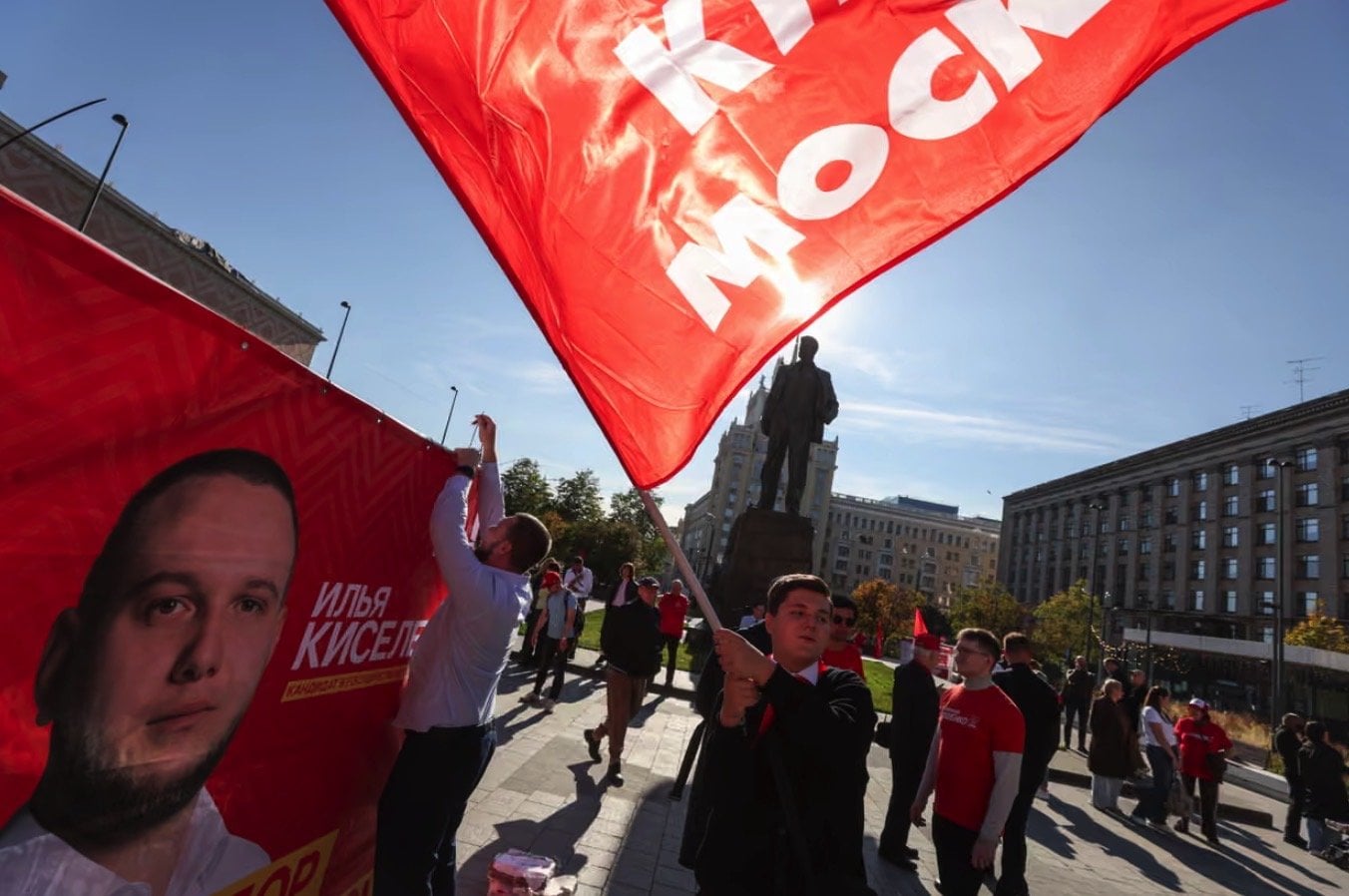

Russians began a three-day vote on Friday to choose a new State Duma in a tightly managed election with limited competition and no clear prospect of a change in the balance of power.
Vladimir Putin’s United Russia party is expected to extend its long-standing control of parliament, a position it has held for 23 years. Polling closes on Sunday, with results due to be announced after ballots finish. Alongside United Russia, several parties that are allowed to take part are expected to operate as loyal “systemic opposition”, backing the Kremlin on key issues.
War-Driven Anxiety Shapes the Vote
The election is being held against the background of the full-scale invasion of Ukraine, which began in 2022, and a war that has increasingly affected daily life for many Russians. Over the summer, Ukrainian drones struck oil refineries, factories and logistics hubs across Russia, according to the article’s details.
While the outcome is widely viewed as predictable, the timing is more sensitive because the war remains a dominant concern for households. Opinion polling has pointed to growing unease about the direction of the fighting and what might come next.
In that context, authorities have also tightened the political environment further. Last month, they barred Yabloko, a liberal anti-war party, from the ballot—removing the only force that openly challenged the invasion.
Systemic Opposition Offers Limited Choice
With Yabloko excluded, the remaining contenders include several other parties, ranging from Communists to the far-right Liberal Democrats. These groups criticise the authorities at the margins but are expected to fall in line with United Russia on issues that matter to the Kremlin.
For years, these parliamentary campaigns have been used as a safety valve for discontent, giving voters an outlet that does not threaten the ruling party’s dominance. But this year’s contests have been unusually muted even by Russian standards, with candidates largely avoiding campaigning or discussing sensitive topics.
Farida Rustamova, a political analyst and founder of the independent Vlast newsletter, said: “In most elections, candidates compete for attention. In Russia this year, many are doing the opposite.” She added that few sought to enter the spotlight or raise matters that could be treated as sensitive.
She also described televised debates held in half-empty studios when some politicians failed to attend, producing awkward clips that circulated online. United Russia’s campaign materials have relied heavily on low-budget AI and have not featured slogans or promises that have stood out.
A person close to the Kremlin, speaking anonymously, said the Kremlin was keeping the election subdued, adding that it did not want the campaign to surface difficult issues or prolong the process.
Kremlin Links Voting to Unity and Legitimacy
Analysts said the muted tone serves a practical purpose: discouraging turnout among disaffected or independent-minded voters while ensuring supporters of the ruling party turn up.
Vladimir Gelman, a professor of Russian politics at the University of Helsinki, said another aim was to provide continued legitimacy for the Kremlin and reinforce the impression that there is broad public consent behind both the political system and the war. Even though the elections are not free or fair, he said they remain a source of legitimacy.
In a televised address before the vote, Putin linked participation in the election to the war in Ukraine, presenting voting as a sign of unity under outside pressure. He said that people’s “choice and your will” would demonstrate that millions support the soldiers and that Russians are “a united people” bound by shared values and love for their homeland.
Putin secured another six-year term in the 2024 presidential election, with genuine opposition barred from the ballot, extending his rule until at least 2030.
Mobilisation Rumours Cast Longer Shadow
For many Russians, the immediate significance of the Duma election is less about seats and more about what happens afterwards. With Moscow’s troops making limited progress in Ukraine at high cost, rumours of another large-scale mobilisation have spread.
There is concern that once the election is over and a compliant Duma is installed, the Kremlin may move faster on unpopular measures it has previously avoided. The anxiety has already led some young men to leave Russia, seeking to wait out any new draft. The situation has drawn comparisons with September 2022, when hundreds of thousands fled after Putin announced the first wartime draft.
A person close to the Kremlin said several friends had sent their sons abroad in recent weeks, suggesting that even people with access to official information were not sure what would follow the voting.
In recent weeks, Putin has twice rejected claims that a new mobilisation is imminent, but reassurances have not prevented some men from acting. Dmitry, who travelled to Yerevan in Armenia last week, said he would wait a few weeks after the election, adding that the risk of mobilisation was too high to ignore.
Join the discussion? 

18 September 2026
Recommended Comments
Create an account or sign in to comment