





Prime Minister Anutin Charnvirakul has instructed governors across Thailand to act quickly against foreign nationals who break the law, exploit Thais or engage in what he described as undesirable behaviour.
Speaking at the Interior Ministry at about 8.30am on 17 September, Anutin said foreigners who earn an honest living, respect Thai law and do not take advantage of local people remain welcome. He specifically mentioned Phuket and Surat Thani, but said similar action was needed nationwide.
Deportation action without delays
For foreigners living in, investing in or visiting Thailand, the immediate message is not a change to legal immigration status or visa rules, but a tougher enforcement approach where authorities believe there is evidence of wrongdoing.
Anutin told governors and district chiefs to stop handling cases one at a time and use their full legal powers. He said he had signed an Interior Ministry deportation announcement and that officials should act immediately when a case met the criteria.
He told provincial authorities not to delay an expulsion because of uncertainty over the cost of an air ticket. Provinces could pay first and later arrange reimbursement, he said.
"If their conduct is undesirable, there is only one option: leave. That is all," Anutin said, adding that appeals would not be a problem.
He said keeping offending foreigners in Thailand for legal proceedings could leave the authorities responsible for food, water and accommodation, whereas deportation would remove them from the country.
Focus on land, nominees and illegal work
Anutin ordered closer monitoring of offences involving foreign nationals, including the use of Thai nominees, landholding, fraudulent business activity, working without permits and using Thailand as a base for crime.
He said the cases did not concern one nationality alone, referring to foreign nationals from Asia, the Middle East, Central Asia, Europe and Africa.
The prime minister also told governors to investigate premises displaying signs barring Thai people from entering. Thai people should generally be able to enter establishments across the country, he said, with private residences the exception.
Even then, he said a private homeowner should not display a sign saying Thai people were not welcome. Anyone prepared to erect such a sign should face closer scrutiny for other possible offences, he added.
Religious sites and cemetery request
Anutin also raised concerns about foreign nationals establishing religious sites without approval, saying such places must respect Thai society and culture.
Referring to a recent request to establish a private cemetery, he said: "If they are going to die, they should go die back home, not here."
He also said a business licensed as a restaurant could not operate a religious site inside the premises. Thailand remained willing to welcome tourists and investors where the relationship benefited both sides, he said, but spending money in the country did not give anyone the right to exploit others or carry out illegal activities.
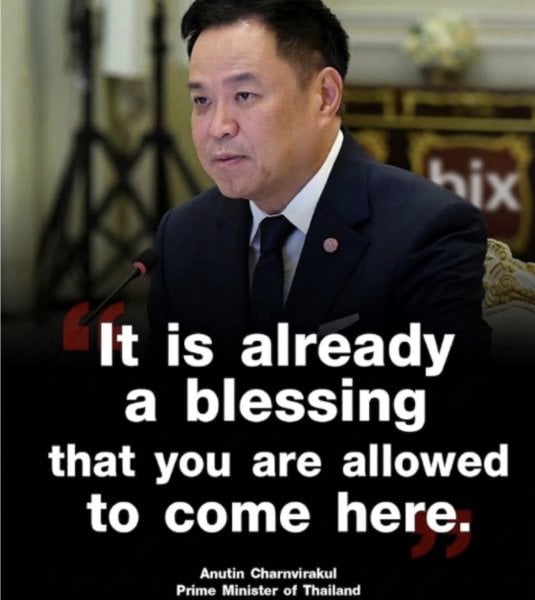
Picture courtesy of Khoasod
Join the discussion? 

18 September 2026
Recommended Comments
Create an account or sign in to comment