



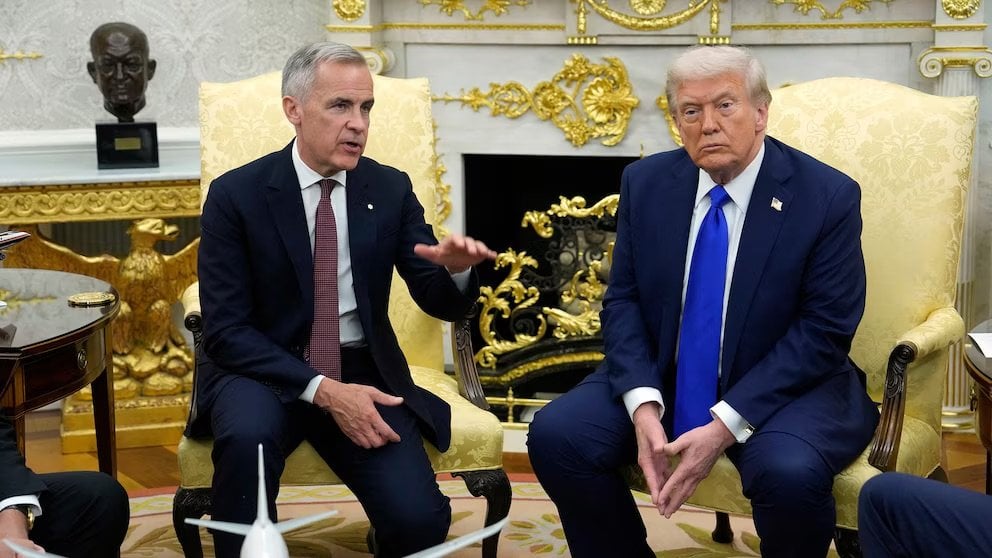

Trump’s 50% tariffs on some Canadian goods are taking effect early on Saturday after the United States and Canada failed to agree a trade deal, according to senior officials in the Trump administration.
The new measures, which cover dozens of products ranging from hockey sticks to wine, began at 12:01 a.m. ET on Saturday. The tariffs were set in motion following the breakdown of negotiations over the terms of access to the US market.
US Says Canada Walked Away From The Terms
Both sides blamed the other for the talks collapsing.
Jamieson Greer, the US Trade Representative, said Canada declined to finalise an agreement “under the terms agreed earlier this week”. She cited “new demands” and what the US described as walk-backs of prior commitments.
Greer also pointed to Canada’s continued retaliation against the United States, including restrictions she said amount to prohibitions on certain American goods and services.
Canada Suspends Talks, Pledges Matching Tariffs
Late on Friday night, Canadian Prime Minister Mark Carney said Canada would suspend the trade negotiations with the United States. He said the decision followed “last-minute changes” to the US proposals that he described as “unfair” and “uneconomic”.
Carney said the 50% tariff would apply to roughly $28 billion of Canadian exports to the United States. Canada plans to match the US levies “dollar for dollar”.
The tariff action comes days after Trump delayed an earlier deadline while talks continued between the two governments.
Expected Impact And Affected Product List
Administration officials said exemptions on key goods are expected to limit the impact, with the tariffs forecast to affect only a fraction of US imports from Canada despite the size of the overall package.
The list of covered products includes items in the food and drink sector, such as dairy products, honey, whey protein and molasses. It also includes alcoholic beverages including whiskey and vodka.
The measures follow weeks of tariff actions by Trump targeting 60 trading partners, including the European Union. Those broader steps were part of efforts to rebuild duties after earlier levies were struck down by the US Supreme Court.
US Offers, Steel And Pipeline Mentioned
Earlier this week, Trump said he had a “very good conversation” with Carney and suggested a preliminary understanding had been reached. He said Canadian tariffs on American agricultural goods would become “non-existent”, claiming the changes would reduce those charges down to zero.
When asked later whether any deal would cut tariffs on Canadian steel and aluminium, Trump said the administration was “looking at that”.
On Tuesday, the US Trade Representative’s office posted on X after Trump’s comments, describing elements it said would be included in a final agreement. It said the package would cover comprehensive market access for US goods, commitments on economic security, alignment on digital trade, and provisions aimed at protecting the US market and workers, alongside steps involving Canada.
Trump also suggested earlier negotiations could include renewed efforts to pursue the Keystone XL Pipeline, despite its cancellation in 2021.
Tariffs Under USMCA, Section 338 Basis
Unlike some previous US tariff actions, the new levies on Canada are described as applying to products that comply with the US-Mexico-Canada Agreement, or USMCA. Officials said exemptions remain significant, leaving out some major imports such as oil, gas and potash.
Trump said the tariffs would be imposed under legal authority in section 338 of the Tariff Act of 1930. That provision allows the president to apply tariffs up to 50% for countries found to have discriminated against the US relative to how they treat other nations. The authority has not been used before, according to Abigail Watt, an economist at UBS, who said in a memo shared with ABC News that the move lacks judicial precedent.
Join the discussion? 

22 August 2026
Recommended Comments
Create an account or sign in to comment