




The United States has instructed its embassies and consulates worldwide to launch coordinated campaigns to counter what officials describe as hostile foreign propaganda.
Get today's headlines by email 
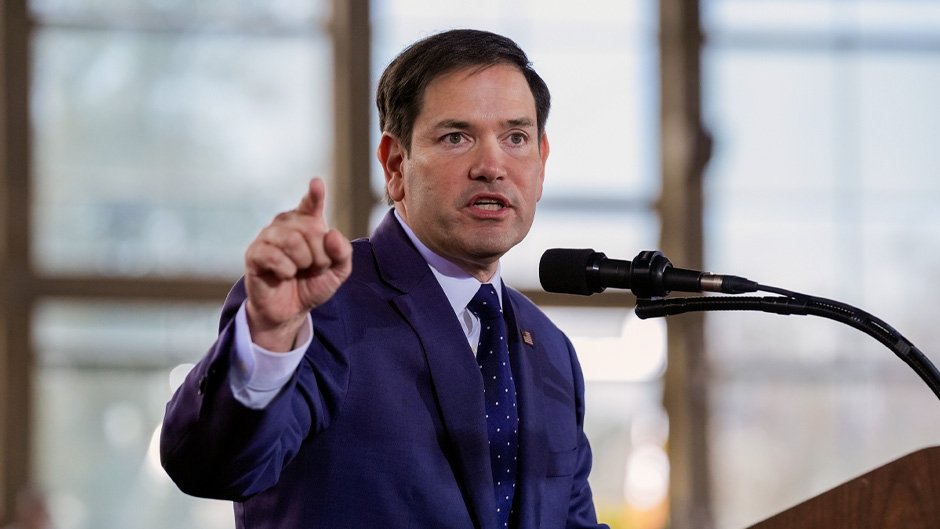
A diplomatic cable signed by US Secretary of State Marco Rubio outlines a strategy aimed at challenging disinformation campaigns that Washington says threaten American interests abroad. The document calls on diplomatic posts to use public messaging, digital platforms and partnerships with local figures to counter narratives seen as damaging to the United States.
Diplomatic order targets foreign influence
The directive comes during heightened geopolitical tensions. The United States is currently engaged in conflict with Iran, while officials say influence campaigns linked to Russia and China continue to target US allies across Europe, Asia and Latin America.
Five goals for embassy messaging
The cable sets out five priorities for diplomatic missions: counter hostile messaging, expand access to reliable information, expose adversaries’ behaviour, amplify local voices supportive of US interests, and promote what the document describes as “America’s story”.
Embassy staff are encouraged to work with academics, community leaders and social media personalities to help spread these messages. The approach aims to make pro-US narratives appear rooted in local communities rather than centrally directed from Washington.
According to the cable, foreign propaganda campaigns often attempt to blame the United States for global crises, create divisions among allied countries and advance political narratives that undermine American economic interests and democratic systems.
Officials warn such campaigns frequently rely on digital networks, state-controlled media and organised online influence operations.
Cooperation with military information units
The directive also encourages closer coordination between embassies and a US military unit responsible for information campaigns known as Military Information Support Operations, which operates under the United States Department of Defense.
The unit, previously known as psychological operations or PsyOps, runs communication campaigns designed to influence perceptions and behaviour in support of military objectives.
Direct collaboration between State Department public diplomacy efforts and military information operations has historically been limited. Earlier initiatives to counter foreign disinformation were largely managed through civilian programmes.
One such effort, the Global Engagement Center, previously coordinated US government responses to foreign propaganda but lost funding shortly before the return of Donald Trump to the presidency.
Other programmes have also been dismantled. The Federal Bureau of Investigation shut down its foreign influence taskforce, while the State Department closed the Counter Foreign Information Manipulation and Interference hub.
Role for Musk’s platform X
The cable also highlights the social media platform X as a tool for countering misinformation. The document praises the platform’s Community Notes feature as a crowdsourced system that allows users to add context to misleading posts.
X is owned by entrepreneur Elon Musk, who has held an advisory role in the administration through the Department of Government Efficiency initiative.
The endorsement comes as regulators in the European Union continue to investigate the platform. Authorities recently issued a large fine under the bloc’s Digital Services Act and launched additional probes into its recommendation systems and artificial intelligence tools.
Expanding US information outreach
The directive also tells embassies to make US-funded aid programmes more visible, instructing diplomatic posts to ensure projects are clearly branded so foreign audiences recognise American support.
Embassies are encouraged to expand the distribution of international news and independent analysis translated into local languages, particularly in countries where officials say media environments restrict access to outside reporting.
More than 700 “American Spaces” — cultural centres, libraries and exchange hubs funded by Washington — are expected to support the effort. The centres will promote access to uncensored information and present themselves as zones supporting free expression.
oin the discussion? 
Already a member? 
 Adapted by ASEAN Now. Source 31 March 2026
Recommended Comments
Create an account or sign in to comment