




US officials assess that a Chinese invasion of Taiwan next year is increasingly unlikely, even though Chinese President Xi Jinping has ordered the military to be ready by 2027 to take the democratically governed island by force, if needed, according to people familiar with the assessment.
2027 Readiness And Next-Year Prospects
The officials said delays in China’s military readiness, linked to the Chinese Communist Party’s anti-corruption drive, are a key factor. They also said Beijing may be looking to wait for the outcome of Taiwan’s 2028 election before deciding on further steps.
The view represents a significant update to how US officials have long understood Xi’s intent, with 2027 treated by many in Washington as a potential window for preparedness to seize Taiwan. The People’s Liberation Army is to mark its founding centenary in 2027. China has never confirmed publicly that it has a 2027 readiness order, and has not ruled out the use of force, while describing reunification plans as driven by “peaceful development” of cross-strait relations.
In March, the US intelligence community said in its annual threat assessment that China did not, at that point, have a plan to invade Taiwan next year and still preferred to gain control without force if possible. The Pentagon declined to comment. China’s embassy in Washington and Taiwan’s representative office did not immediately respond to a request for comment.
Election Calculations And US Politics
US officials said Beijing may see force as more plausible in 2028 and beyond, particularly if Taiwan’s ruling Democratic Progressive Party (DPP) wins a fourth consecutive term. They added that the risk could rise further if current president Lai Ching-te is re-elected.
One US official, speaking on condition of anonymity, said: “If that happens, I think 2028 becomes pretty sporty.”
Taiwan’s DPP promotes an identity separate from China, a position that Beijing rejects. Taiwan says only its people can determine the island’s future, while China regards Taiwan as part of its territory.
On the role of the United States, officials offered mixed views. Some said China could also look at the 2028 US presidential election, including voter attitudes towards military action abroad. But one current US official said Beijing viewed both Democrats and Republicans as broadly aligned on Taiwan, adding that any election impact was less decisive than it might have been 15 years ago.
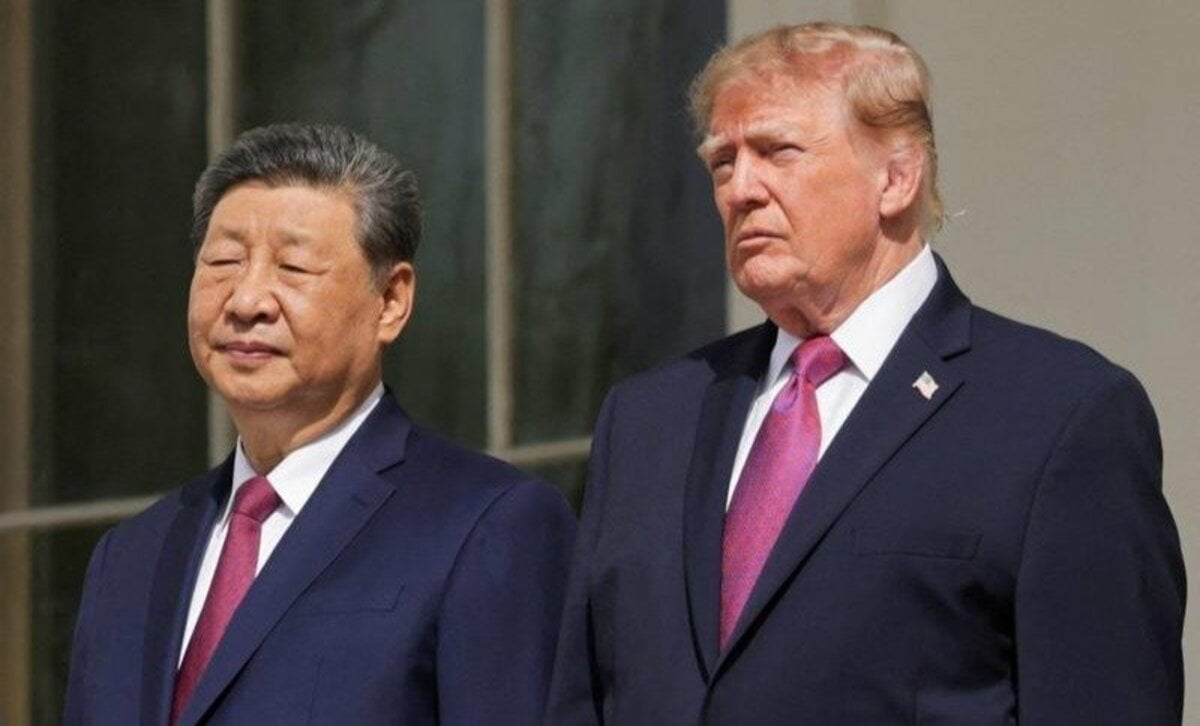
During his presidency, Donald Trump played down the prospect of an invasion, saying last year that Xi told him China would not invade while he was in office. After hosting Xi in Washington last week, Trump said the Taiwan issue came up and that Xi understood his position. China lists Taiwan as its most important issue, linked to sovereignty and territorial integrity, and has urged an end to US arms sales to Taiwan.
Since Trump’s trip to Beijing in May, he has delayed approval of a new arms package worth about $14 billion, describing it as a “negotiating chip”. For years, the US approach has focused on arming Taiwan so it can delay Chinese forces long enough for the United States and others to come to its aid.
Anti-Corruption Drive And Military Readiness
The officials said Xi has not dropped the goal for the People’s Liberation Army to have capabilities to take Taiwan by force by next year. They added that the military did not achieve as much as planned in the previous year, partly because of the anti-corruption campaign.
Since Xi took power in 2012, the crackdown has swept across parts of China’s bureaucracy, including the armed forces. In recent years, it affected the PLA, leaving only two active members on the formerly seven-strong Central Military Commission, including Xi as chair, after investigations and expulsions.
They also said Chinese military exercises in the past year were smaller and less threatening than in earlier years, with some signs of adjustments in readiness. While exercises picked up again this year, one official suggested Chinese military leaders were dissatisfied with their preparedness.
The official said China appears to have drawn lessons from the wars in Iran and Ukraine, including the need to act quickly once an invasion starts and to avoid a drawn-out conflict. They added that more work remained, describing numerous elements as not yet in place for what they said would be the most difficult operation any military has attempted since the Allied landings in Normandy.
Join the discussion? 

1 October 2026
Recommended Comments
Create an account or sign in to comment