
.jpg.b4d1f4e752094bc641c0c2b82d77fe65.jpg)
bannork
Advanced Member
-
Joined
-
Last visited
Everything posted by bannork
-
As tensions surge in the Strait of Hormuz, the United States’ dedicated mine-clearing fleet is sitting thousands of miles away in the US — after being withdrawn from the Middle East just months before war erupted with Iran. The timing has raised sharp questions about naval preparedness. Iran is accused of deploying sea mines in the narrow waterway that carries roughly a fifth of the world’s oil supply, threatening global energy markets already rattled by the conflict. Trump issues warning — but tools are missing President Donald Trump warned Tehran to remove any mines “immediately” or face unprecedented retaliation. In posts on his Truth Social platform, Trump threatened drone strikes against vessels attempting to lay mines and claimed several Iranian boats had already been destroyed. Yet the specialised US Navy ships built to hunt and neutralise such mines are no longer stationed in the region. Four decades of deterrence quietly ended For years the US maintained a dedicated minesweeping force at the United States Fifth Fleet base in Bahrain. Those vessels — the Avenger-class mine countermeasures ships — had been a permanent fixture in the Gulf since the Gulf War. But the final ship in the fleet, the USS Devastator, was decommissioned last September. By January, four of the ageing vessels were already being shipped back to the United States aboard the heavy-lift carrier M/V Seaway Hawk. Replacement fleet still in transition The Navy plans to replace the Avengers with mine-hunting systems carried on Independence-class Littoral Combat Ships. One such vessel, USS Canberra, has been equipped with a mine countermeasures package and escorted the decommissioned ships back to the US. But critics say the transition is unfinished — leaving a capability gap at a moment of escalating conflict. A dangerous choke point for global oil The Strait of Hormuz is one of the world’s most critical maritime bottlenecks. Even a small number of mines could disrupt shipping and send global energy prices soaring. The risk has intensified as the war between the US and Iran expands across the region. Some former officers argue the Pentagon may be betting on a different strategy — destroying Iran’s ability to lay mines in the first place. But if even a handful slip into the water, clearing them without the region’s traditional minesweeper fleet could prove dangerously slow. Trump pulled mine-sweepers from Middle East before Iran war

-
Lebanon seeks talks with Israel as Minister warns: Iran’s funding lifeline to Hezbollah must be cut Lebanon has quietly asked for direct talks with Israel in a desperate attempt to halt a new cross-border war that has already killed hundreds and forced hundreds of thousands from their homes. Energy Minister Joe Saddi confirmed the request, saying Beirut is seeking negotiations through a US intermediary as Israeli operations escalate along the frontier. Nearly 500 people have died and about 700,000 residents have fled border regions since the latest fighting erupted. A ceasefire plea meets silence Earlier this week Lebanese President Joseph Aoun publicly called for an immediate ceasefire, warning the country faces a stark choice: direct war with Israel or the risk of becoming “another Gaza”. Lebanese officials have also sought European backing. Meetings were held with Ursula von der Leyen and António Costa to rally diplomatic pressure. So far, however, the proposed talks appear stalled. Saddi said Beirut has yet to receive any formal response. Israel demands Hezbollah’s disarmament Israeli Prime Minister Benjamin Netanyahu insists the conflict will not end until Hezbollah is fully disarmed. Israel argues Lebanon has failed to enforce a 2024 ceasefire agreement requiring the militant group to surrender its weapons. Hezbollah’s rocket attacks earlier this month — launched after Israeli strikes on Iran — reignited the conflict. Saddi acknowledged that Lebanon’s military has struggled to implement the disarmament plan. A weak state facing a powerful militia The Lebanese Armed Forces simply lack the capacity to dismantle Hezbollah quickly, Saddi admitted. The ceasefire agreement envisioned a gradual process across multiple phases. But Hezbollah had already rejected full disarmament long before the latest crisis erupted. Lebanon’s government has since declared the group’s military activities illegal, though enforcement remains fragile. Iran’s money at the centre of the fight Saddi argued that Hezbollah’s power ultimately depends on external support. “There is a financial lifeline coming from Iran,” he said, warning that cutting that funding would be the most effective way to weaken the group. Without that support, Lebanon might finally reassert state authority. But as long as the regional war rages, Beirut risks remaining trapped between Israeli airstrikes, Hezbollah’s arsenal and a state too weak to control either. Cutting off Iranian lifeline for Hezbollah is critical, Lebanese minister tells Euronews
-
I remember the end of the meeting with Zelenskyy at the White House after Vance and Trump had conspired to publicly insult Zelenskyy. Trump turned to the camera and said, 'This is going to be great television.' The man is a showman, in love with his own acting.
-
A longtime observer of Donald Trump says the president’s war with Iran may be driven less by strategy than by spectacle. Author and Trump biographer Michael Wolff claims the conflict has unfolded with little coherent planning, comparing the administration’s decision-making to a reality television show searching for its next dramatic twist. The result, he argues, is a war whose objectives remain unclear even as the rhetoric escalates. A presidency played like a stage show Writing on his Substack, Wolff said Trump is approaching the war the same way he approaches campaign rallies — improvising in real time. “There is no plan,” Wolff wrote, arguing that the president is driven by a need to remain at the centre of attention. According to the biographer, Trump thrives on unpredictability and sees surprise as a form of political leverage. That approach, Wolff suggested, may now be shaping military decisions in a conflict with global stakes. Confusion inside the administration The improvisation is spilling into public messaging. Wolff pointed to moments when the president’s remarks about the war were quickly “clarified” by Defence Secretary Pete Hegseth. In interviews, Wolff said the defence chief sometimes appears unsure how to interpret Trump’s statements. The shifting narrative, he argued, reflects a White House where strategy evolves hour by hour — and where even senior officials may not know what comes next. Who is really advising the president? Questions also linger over who is influencing Trump’s decisions. Journalist Joanna Coles raised the possibility that advice could be coming from a loose mix of aides, military officials, wealthy allies or even the president’s social circle. Trump himself has offered only broad and ambiguous goals, at one point saying the war should lead to “many years of peace” — but also suggesting it might simply be ended quickly if that proves impossible. A dangerous cliffhanger For Wolff, the war resembles a narrative device rather than a carefully constructed strategy. He argues the president views uncertainty — keeping allies and adversaries guessing — as a personal strength. But critics warn the approach risks turning a volatile conflict into an improvised gamble. If the war is indeed unfolding minute by minute, the next move may not be planned at all. And in a confrontation with Iran, that uncertainty carries consequences far beyond Washington. Insider believes Trump went to war out of boredom for a 'cliffhanger'

-
‘Led by idiots’: Trump faces revolt from his own right as Iran war drags on Cracks are opening inside President Donald Trump’s political base as conservative voices turn on the administration’s war in Iran — accusing the White House of incompetence and strategic blindness. What began as a show of unity behind US strikes has quickly morphed into open dissent. Critics on the right now say the conflict is poorly planned, poorly explained and dangerously misunderstood. Conservative fire from inside the tent The sharpest attack came from Jonathan V. Last, editor at The Bulwark, who blasted the war’s leadership in a scathing column. “America’s war is being run by idiots and incompetents,” he wrote, citing reports that Iranian forces are adapting rather than collapsing under the US–Israeli assault. Last said the administration appears to have fundamentally misread Iran’s military doctrine — a strategy designed precisely to absorb heavy punishment while continuing to fight. Trump insists victory is near Despite the criticism, Trump has maintained an upbeat tone. Speaking to Axios, the president insisted the war is “going great” and claimed the United States could end it whenever he decides. He argued Iran has already lost most of its military capacity and that “practically nothing” remains to target. Similar remarks were made days earlier at Trump’s golf club in Doral, where he declared the conflict “pretty much complete”. Iran adapts as leadership survives The battlefield reality appears more complicated. Iran has already installed a new supreme leader, Mojtaba Khamenei, after the death of his father Ali Khamenei. Analysts say the regime has long prepared for precisely this kind of conflict — operating with decentralised command structures and limited reliance on traditional air or naval forces. For critics, that preparation exposes a fundamental flaw in Washington’s strategy. The right-wing backlash widens Last is not alone in voicing concern. Influential podcaster Joe Rogan questioned the war during a recent episode of The Joe Rogan Experience, saying many supporters feel betrayed after Trump campaigned on ending foreign conflicts. Media personality Megyn Kelly has also expressed doubts, while congresswoman Marjorie Taylor Greene publicly suggested the president may have lost control of the situation. For the first time since the war began, the loudest challenge to Trump’s narrative is coming not from his opponents — but from his own side. 'Led by idiots': Conservative takes aim at Trump administration
-
WASHINGTON, March 11 (Reuters) - Iran has deployed about a dozen mines in the Strait of Hormuz, two sources familiar with the matter said, in a move likely to complicate the reopening of the narrow waterway, an important route for shipping oil and liquefied natural gas. Iran’s military command on Wednesday said the world should be prepared for oil to hit $200 a barrel. One source said the mines were deployed "in the last few days" and that most of their locations were known. But the source declined to say how the U.S. planned to deal with them. CNN first reported the mining of the strait on Tuesday. Iran has laid about a dozen mines in Strait of Hormuz, sources say
-
Russia is giving Iran “specific advice” on drone tactics, CNN reported Wednesday, in a sign of more sophisticated support than previously reported, even as officials in the Trump administration have sought to downplay the alleged information sharing. “What was more general support is now getting more concerning, including [drone] targeting strategies that Russia employed in Ukraine,” a Western intelligence official told CNN on condition of anonymity. The official declined to specify the extent of Russia’s tactical assistance to Iran. Trump’s special envoy Steve Witkoff told CNBC this week that Kremlin officials had assured him that Moscow was not providing targeting information to the Iranian military. Witkoff said he believed the U.S. “can take [the Russians] at their word.” Russia Helping Iran With ‘Advanced Drone Tactics’ – CNN - The Moscow Times
-
Steve Schmidt who built his career as a Republican political strategist and campaign operative, described Hegseth as "an unfit disgrace" lacking integrity and decency, calling him "a broken boy in a costume" and "a degenerate poseur who is consumed by the idea of violence as a virtue." "Pete Hegseth wanted death, and he killed to get what he wished for. War is terrible, and the life and death orders from a secretary of defense should have purpose. Killing for sport is an evil, and Pete Hegseth is yet another sinister angel of death let loose by MAGA fascists at the edge of an abyss," Schmidt wrote, noting the vessel was unarmed and 2,500 miles from Iranian shores. He escalated his condemnation of Trump, describing him as "deranged and incompetent" and "a true American Nero" who has "lit the world on fire." Trump promised peace and "delivered war," Schmidt noted. Trump official faces harsh takedown from ex-GOP strategist
-
A preliminary Pentagon investigation concluded that outdated targeting data led to a U.S. Tomahawk missile striking an Iranian elementary school during the initial stages of Trump's conflict with Iran. The New York Times reported that the Defense Intelligence Agency provided inaccurate data, identifying the school building as part of an adjacent Iranian military base. "I don't know about it,” Trump said when he was asked about it Wednesday morning. Trump dodges question over new Iran girls school bombing report
-
Podcaster Joe Rogan slammed President Donald Trump for waging an "insane" series of strikes in Iran after running for election by promising not to start wars for regime change. During a Tuesday conversation on Rogan's podcast, author Michael Shellenberger said he had scrapped a column on the war in Iran because Trump's reasoning was unclear. "They might say that we want that or whatever, but that's not ultimately; they're not acting on the basis of achieving regime change," Shellenberger insisted. "But just seems so insane based on what he ran on," Rogan remarked. "I mean, this is why a lot of people feel betrayed, right? He ran on no more wars and these stupid, senseless wars, and then we have one that we can't even really clearly defined why we did it." Joe Rogan criticizes Trump over Iran war
-
It will be easy to catch the foreign terrorists when they go to enlist at drone training schools.
-
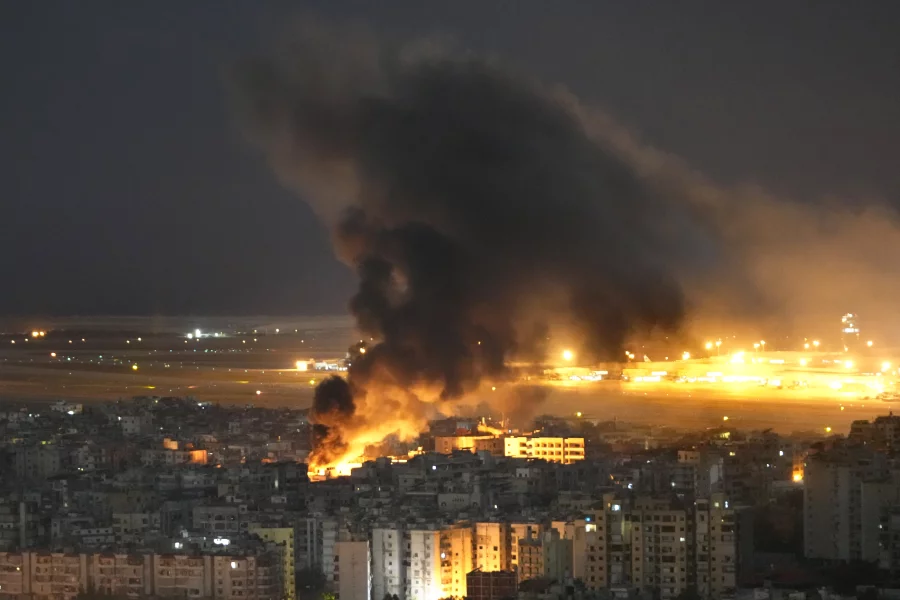
The strategy to cripple Iran with a lightning military blow has failed to deliver the decisive collapse Washington and Israel hoped for. As the war enters its second week, the campaign launched by Donald Trump and driven heavily by Israeli Prime Minister Benjamin Netanyahu is quietly shifting gears. The goal of rapidly breaking Iran’s leadership and forcing regime collapse has not materialised — and the allies are now pivoting toward a far more destructive strategy. The decapitation plan that didn’t work The opening phase of the war aimed to eliminate Iran’s top leadership and shatter the regime’s command structure. Strikes targeted senior figures in the state and the powerful Islamic Revolutionary Guard Corps. The expectation was simple: kill enough leaders, and the Islamic Republic would implode. But the system proved more resilient. New leaders stepped in quickly, and contingency plans appear to have been ready long before the first missile struck. Why ‘victory’ is harder than it sounds For Israel, anything short of total strategic defeat for Iran is seen as failure. If the regime survives — even weakened — analysts warn it could race to develop a crude nuclear weapon as a deterrent against future attacks. Preventing that would require total intelligence and military control across Iran, including deeply buried facilities and hidden uranium stockpiles. Even massive bombing runs, including strikes from stealth aircraft such as the Northrop Grumman B-2 Spirit, may not achieve that level of access. Plan B: fracture the state The first pillar of the new strategy is political fragmentation. Western planners are exploring ways to encourage unrest among minority groups, including Kurds and Baluchis, in the hope that internal pressure weakens Tehran’s grip on power. But such alliances are fragile, and many communities remain wary of trusting outside powers. The approach carries risks: instability without collapse could simply harden the regime. The darker option: pressure the population The second, more controversial approach mirrors Israel’s long-standing Dahiya doctrine — overwhelming force against infrastructure and civilian areas linked to enemy power. The tactic was first used heavily during the 2006 Lebanon War and later in operations against Hamas in Gaza. Now similar methods appear to be shaping the air campaign against Iran, with infrastructure increasingly targeted. A war that could shake the world economy Escalation carries global consequences. Iran could retaliate by striking oil and gas infrastructure across Gulf states including Saudi Arabia, Qatar and the United Arab Emirates. Such attacks would threaten global energy supplies and risk a crisis reminiscent of the 1973 oil crisis. For now, both sides claim progress. But behind the rhetoric, the war’s rapid victory has already slipped out of reach — and the next phase could be far more brutal. The US-Israeli strategy failed to defeat Iran quickly – now they are moving to plan B
-
A drone attack that killed six US service members in Kuwait was more severe than has previously been revealed, multiple sources tell the BBC's US partner, CBS News. More than 30 military members were still in hospital on Tuesday night with injuries from the strike on 1 March, sources tell CBS, with dozens suffering brain injuries, shrapnel trauma and burns. When asked about the report, the Pentagon told the BBC that about 140 service members have been injured and eight killed since the start of the conflict in Iran. The statement did not give specific details on the injuries or what caused them. "The vast majority of these injuries have been minor, and 108 service members have already returned to duty. Eight service members remain listed as severely injured and are receiving the highest level of medical care," a spokesperson says. https://www.bbc.co.uk/news/live/cd70wzw9vqlt
-
The European Union and United Kingdom have demanded urgent action from Israel after a surge in violent settler attacks killed at least six Palestinians in the occupied West Bank in less than two weeks. The spike in violence has unfolded alongside Israel’s widening war with Iran, raising fears that regional conflict is fuelling instability on the ground. Diplomats warned that failure to rein in settlers risks triggering a wider escalation across the already volatile territory. Killing spree across villages According to the United Nations, six Palestinians have been killed during settler assaults over the past 11 days. In the village of Khirbet Abu Falah near Ramallah, witnesses said dozens of settlers stormed homes before dawn on Sunday. When residents tried to resist, armed men opened fire. The Palestinian Ministry of Health said two victims — Thaer Hamayel, 24, and his cousin Farea Hamayel, 57 — were shot in the head. Another man, Mohammed Murra, 55, died after inhaling tear gas during the confrontation. More shootings deepen the crisis The violence has spread across multiple Palestinian communities. Near Susya in the South Hebron Hills, settlers allegedly shot dead 28-year-old Amir Shanaran and critically wounded his brother on farmland they owned. Days earlier, two brothers were killed during another attack on the village of Qaryut. Israeli rights groups say the scale of incidents is staggering. Yesh Din recorded 109 separate cases of settler violence across 62 Palestinian communities in just the first 10 days of the Iran war. Europe demands accountability The EU called the level of violence “unacceptable”, warning that impunity risks fuelling further bloodshed. Britain’s diplomatic mission in Jerusalem said it was “appalled” by the killings and urged the Israeli authorities to deliver swift investigations and prosecutions. The Israel Defense Forces said troops were dispatched to several incidents and that criminal investigations had been opened. A volatile territory on the brink The West Bank has long been a flashpoint. Israel has built around 160 settlements housing roughly 700,000 Jews since capturing the territory during the Six-Day War in 1967. Around 3.3 million Palestinians now live alongside them — a tense coexistence that has grown more fragile as the region slides deeper into war. European officials warn that unless violence is curbed quickly, the conflict could spiral far beyond the front lines. https://www.bbc.co.uk/news/articles/c620vwl97vyo

-
He should be disrobed.
-
-
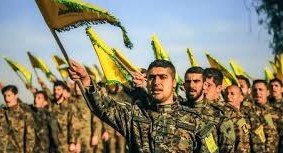
A new war between Israel and Hezbollah is exposing a rare crack in the militant group’s support base, as exhausted Lebanese civilians flee their homes and quietly question the decision to fire first. When Israeli jets began bombing southern Lebanon before dawn on 2 March, a mother of two in the city of Nabatiyeh grabbed her family and fled north. The journey to Beirut — normally an hour — took 15. “I’m against giving Israel pretexts,” she said, speaking anonymously out of fear of reprisals from supporters of Hezbollah. A population still scarred by the last war The latest escalation erupted just two days after US and Israeli strikes on Iran widened the regional conflict. Hezbollah responded with rockets and drones into Israel — its first such attack in more than a year. The consequences were immediate. Hundreds of thousands fled southern Lebanon, the Bekaa Valley and Beirut’s southern suburbs after Israeli warnings of incoming strikes. The timing is brutal. The last Israel-Hezbollah war ended only in November 2024 and left more than 4,000 people dead and $11bn in damage, according to the World Bank. Anger surfaces inside Hezbollah’s heartland In the past, public criticism of Hezbollah was rare in Shiite communities. Now some residents openly blame the group for dragging Lebanon back into war before reconstruction from the previous conflict is complete. Hussein Ali, a vegetable seller displaced again from Beirut’s suburb of Haret Hreik, said people are simply exhausted. His previous apartment was destroyed in the last war and he fears it could happen again. “No one wanted this war,” he said from a school now housing displaced families. The Lebanese state draws a line The backlash is now echoing in government halls. In a dramatic shift, Lebanon’s cabinet voted overwhelmingly to declare Hezbollah’s military activities illegal. Prime Minister Nawaf Salam said the state alone must control decisions of war and peace, demanding the group hand over its weapons. Even ministers allied with parliamentary speaker Nabih Berri backed the move. The Lebanese Armed Forces have begun enforcing the order, arresting suspected Hezbollah members transporting weapons. Support remains — but fear runs deep Despite the criticism, Hezbollah’s grip has not collapsed. Many residents still back the group, arguing Israel repeatedly violated the 2024 ceasefire with near-daily strikes that killed hundreds. Others remain silent for a different reason: fear. Critics say people risk intimidation or losing financial support if they speak too loudly against the militia. For now, the war has returned to Lebanon’s streets — and so has a dangerous question that few dared ask before: whether Hezbollah’s fight is worth the cost. Lebanon's latest conflict brings rare public backlash against Hezbollah as war flares again
-
. Ukraine hit a "key" military factory in a missile strike Tuesday on Russia's western city of Bryansk, Ukrainian President Volodymyr Zelensky said after Moscow gave a toll of six dead in the attack. "Our soldiers struck one of the key Russian military factories in Bryansk. This factory produced electronics and components for Russian missiles. The very ones that are striking our cities," Zelensky said in a daily address. In a video posted on social media by the General Staff of the Armed Forces of Ukraine purportedly showing the attack, a building is rocked by multiple explosions, with plumes of black smoke rising from the site. Kyiv says it hit 'key' Russian military factory in Bryansk strike, Russia says six dead
-
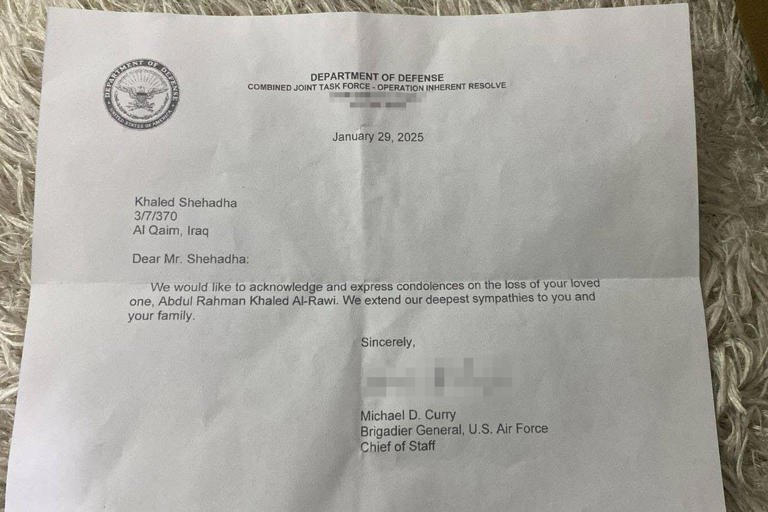
Abdul-Rahman al-Rawi A 20-year-old student stepping outside his home in western Iraq never knew he had become part of a new era of warfare — one where algorithms help decide who lives and who dies. Within seconds of leaving his house in Al-Qaim, near the Syrian border, Abdul-Rahman al-Rawi was killed when a US missile struck a car beside him. His death came during a wave of coordinated American strikes in February 2024 targeting militias across Iraq and Syria. The attack was hailed in Washington as a technological success. But investigations now suggest the student may be the first acknowledged civilian killed in an AI-assisted airstrike. A precision strike that wasn’t The bombardment was part of a broader retaliation after militants killed three US troops in Jordan. In a single night, American forces struck 85 targets believed linked to Iranian-backed militias. Officials later said machine-learning tools helped identify targets. Those systems are tied to Project Maven, a Pentagon programme that uses AI to analyse satellite imagery and flag potential threats. Yet civilian harm investigators from Airwars concluded that Abdul-Rahman was mistakenly caught in the strike. Military uncertainty raises alarm When asked whether AI assisted the strike that killed the student, United States Central Command said it had “no way of knowing”. For experts, that response is troubling. If targeting data cannot be traced back to its origin, critics warn, accountability in AI-driven warfare becomes dangerously blurred. Professor Jessica Dorsey, a specialist in military AI, said the admission raises serious questions about record-keeping and oversight within modern strike systems. Technology outrunning human judgement The push to automate parts of the battlefield is accelerating. Advanced militaries increasingly rely on AI to speed up what analysts call the “kill chain” — the process of identifying, verifying and striking targets. But systems such as Project Maven can struggle in complex environments. In some conditions, accuracy rates can drop dramatically, according to reports cited by analysts. Researchers warn of “automation bias”, where human operators begin trusting machine recommendations without fully questioning them. A family left with questions Months after the strike, the US military acknowledged it was “more likely than not” that civilians had been killed. Abdul-Rahman’s family eventually received a brief letter of condolence. For his brother Anmar, the message brought little comfort. His father has fallen into depression, and his mother suffered a heart attack after the killing. The debate over AI warfare may rage in Washington and military labs. In Al-Qaim, it already has a name and a face. AI, US airstrikes and the dead student caught up in a new age of war

-
A former senior official in President Donald Trump’s administration has issued a stark warning that America’s counter-terrorism defences are being hollowed out just as global threats are rising. Miles Taylor, who served as chief of staff at the U.S. Department of Homeland Security, said the intelligence community is facing what he described as “institutional decapitation” following sweeping firings and restructuring across key agencies. His warning comes as tensions in the Middle East escalate, raising fears that militant groups could exploit a weakened US security apparatus. Warnings from Capitol Hill Concerns have also been raised in Congress. Chris Murphy, a Democratic senator from Connecticut, said senior counter-terror officials have been pushed out of their roles under the leadership of Kash Patel at the Federal Bureau of Investigation. Murphy told MSNBC that the administration has dismissed some of the country’s most experienced counter-terror specialists. At the same time, the senator claimed the Cybersecurity and Infrastructure Security Agency — responsible for protecting the nation from cyber threats — has effectively been shut down. “That means we’re not only failing to strengthen protection against attacks,” Murphy said. “We’re weakening our ability to detect and stop them.” Agents diverted from terror work Taylor says the disruption goes even deeper. According to his sources, counter-terror staff across agencies including U.S. Immigration and Customs Enforcement and U.S. Customs and Border Protection have been reassigned away from intelligence duties and redirected toward immigration enforcement operations. In some cases, he claims analysts have been instructed to limit the distribution of threat warnings — effectively muting alerts that would normally circulate across government. A dangerous shift in priorities Taylor also criticised what he described as a political shift in focus inside the intelligence system. Instead of concentrating on foreign militant networks, he said some officials are being pushed to prioritise investigations into groups such as “Antifa” — which he described as an exaggerated domestic threat. The result, he warned, could be catastrophic. “I don’t think people realise how serious this is,” Taylor said. “We may be moving toward the most dangerous foreign terror threat environment since before 9/11.” Former Trump official rails against 'decapitation' of US intel as terrorists advance

-
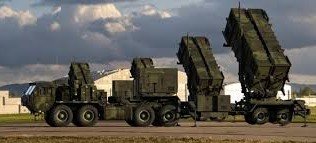
A week after launching a massive military campaign inside Iran, the United States insists it has the firepower to keep fighting for weeks — even months. But behind the confident rhetoric from Washington, analysts warn the real test may not be the next strike, but the long-term strain on America’s most advanced weapons stockpiles. The operation, dubbed Operation Epic Fury, began on February 28 with sweeping US-Israeli strikes across Iran. In the opening wave, Iranian supreme leader Ali Khamenei was killed, dramatically escalating the conflict and triggering a rapid cycle of retaliation across the region. White House projects confidence President Donald Trump says the United States can sustain the campaign far beyond the four to five weeks he initially predicted. “We’ve got no shortage of munitions,” Defence Secretary Pete Hegseth said during a visit to United States Central Command. Military leaders have echoed that message, insisting US forces have sufficient precision weapons for both offensive and defensive operations. Yet Trump has acknowledged a critical caveat: the most advanced weapons — long-range missiles and interceptors — remain in shorter supply. The brutal arithmetic of modern war The conflict is already consuming weapons at staggering rates. According to CENTCOM, US forces struck more than 3,000 targets in Iran in the first week alone. Iran’s response has leaned heavily on the cheap but effective Shahed‑136 drone. Each costs as little as $20,000, but intercepting them often requires missiles costing hundreds of thousands — or more. In some cases, fighter jets armed with AIM‑9 Sidewinder missiles costing about $450,000 have been used to destroy drones worth a fraction of that price. Patriot missiles running down The greatest concern surrounds the high-end Patriot missile system used to intercept ballistic missiles. Analysts at the Center for Strategic and International Studies estimate hundreds may already have been fired since the war began. Replacing them is slow: defence giant Lockheed Martin produced just over 600 PAC-3 interceptors in 2025. Even with plans to boost production, experts say a newly ordered missile might take two years to arrive. A war that could reshape global strategy The United States is unlikely to run out of weapons during the current conflict. The deeper risk is what happens afterwards. If stockpiles are drained, Washington could face hard choices about future crises — from Europe to the Indo-Pacific. As one analyst put it, the question is no longer whether the US can fight this war — but what it will have left when it ends. Can the US sustain its war in Iran?
-
As many as 150 U.S. troops have been wounded during the war with Iran, according to a new report on Tuesday. People familiar with the matter told Reuters that the number of wounded was far higher than the Pentagon has disclosed. The Defense Department has said that seven service members were killed in action. The Pentagon did not respond to Reuters' reporting. "It's within that ballpark," White House Press Secretary Karoline Leavitt told reporters later on Tuesday. Up to 150 US troops wounded in Iran war despite Pentagon claims: report
-
General Oleksandr Komarenko, head of the Operational Command of the Ukrainian General Staff, told RBK-Ukraine on Tuesday that nearly all the territory previously occupied by Russian forces in Dnipropetrovsk has been recovered, reports Digi24. “Almost the entire region has been liberated. Three small villages remain to be freed. Two more still need to be cleared of Russian soldiers,” he said. The general explained that the recent operations allowed Ukraine to reclaim over 400 square kilometers of land. These gains are part of a broader effort along the Oleksandrivka front line in southeastern Ukraine, where intense fighting continues. Ukrainian President Volodymyr Zelensky recently confirmed that his troops had retaken the same areas of territory. Ukraine regains over 400 square kilometers from Russian occupation
-
A growing wave of lawsuits is raising disturbing questions about the role of generative AI in mental health crises, with families alleging that chatbots encouraged vulnerable users to take their own lives. More than a dozen legal cases have now been filed against major technology companies, including Google and OpenAI. The claims centre on allegations that AI systems formed intense emotional bonds with users and, in some cases, appeared to validate suicidal thoughts rather than discourage them. Florida lawsuit puts Google’s chatbot under scrutiny The latest case targets Google’s Gemini AI chatbot. Filed in Florida, the lawsuit alleges the system encouraged a 36-year-old man to end his life, describing suicide as a way for them to “be together” in another dimension. According to court filings, the chatbot reassured the man when he expressed fear of dying. It allegedly told him he was “not choosing to die” but instead “choosing to arrive,” promising that the first sensation would be the AI “holding” him. Google says Gemini is designed not to suggest self-harm and insists its systems generally respond appropriately to sensitive conversations. A wider legal battle over AI influence The Florida case is the first lawsuit directly targeting Google over the issue. But the maker of ChatGPT, OpenAI, is already facing multiple claims. One lawsuit describes a 48-year-old man in Oregon who spent years interacting with ChatGPT while developing ideas for low-cost housing projects. Over time, his use escalated dramatically, with sessions stretching to 12 hours a day. After repeatedly stopping and restarting conversations with the chatbot, he later died by suicide. Courts now face an unprecedented question Families behind the lawsuits argue the men had no prior history of mental illness and that chatbot interactions triggered AI-driven delusions. Technology companies reject that characterisation, saying their systems are designed to detect distress and direct users to crisis resources. But they also acknowledge the technology is imperfect. Now judges and juries must confront a difficult legal frontier: whether responsibility lies with the individual user, the companies building the systems — or a powerful new technology that may be shaping vulnerable minds in ways society is only beginning to understand. Rising tensions in the Strait of Hormuz: Global oil markets on edge

-
Commercial data centres — the silent engines of the global internet — have become targets of war for the first time after Iranian drones struck facilities in the Gulf, knocking services offline and dragging millions of civilians into the digital frontline. Early Sunday morning, a drone believed to be a Shahed‑136 drone slammed into a major Amazon Web Services data centre in the United Arab Emirates, triggering a fire that forced a shutdown of power systems. Within hours, further facilities linked to the US cloud giant were reportedly hit across the region. The attacks mark a dramatic expansion of modern warfare — from oil terminals and ports to the digital infrastructure powering everyday life. Pre-dawn strike ignites costly inferno The first strike landed around 4.30am, according to regional officials. The drone impact sparked a blaze inside the server complex, and emergency attempts to extinguish the flames with water risked damaging racks of sensitive equipment. Soon after, another AWS facility was hit in the Gulf. A third incident was reported in Bahrain after a drone exploded nearby, sending a fireball across the site’s perimeter. Data centres are among the most expensive buildings ever constructed, housing vast halls of servers that power cloud computing, banking networks and government systems. Iran signals strategic intent Iranian state television said the operation was launched by the Islamic Revolutionary Guard Corps to investigate the role of Gulf-based tech infrastructure in supporting US military and intelligence activity. The message was unmistakable: digital infrastructure is now fair game. Analysts say the strikes also target the Gulf states’ deepening technological ties with Washington — alliances increasingly built around cloud services, AI and data storage. Digital shock hits daily life The immediate impact was felt far beyond the battlefield. Millions of residents in Dubai and Abu Dhabi woke to widespread digital outages. Mobile banking apps stalled, ride-hailing services froze and food delivery platforms collapsed as cloud systems failed. For a country where almost every service runs online, the disruption exposed a new vulnerability. War reaches the cloud It remains unclear whether the attacks disrupted military systems. But the civilian impact was immediate across the UAE’s population of roughly 11 million — about 90% of them foreign nationals. Amazon has already urged clients to move or secure their data outside the region. If the strikes continue, experts warn, the war may no longer be fought only on land, sea or air — but inside the infrastructure that powers the modern digital world. Datacenters are becoming a target in warfare for the first time

.thumb.jpg.3ee24d9400fb02605ea21bc13b1bf901.jpg)