



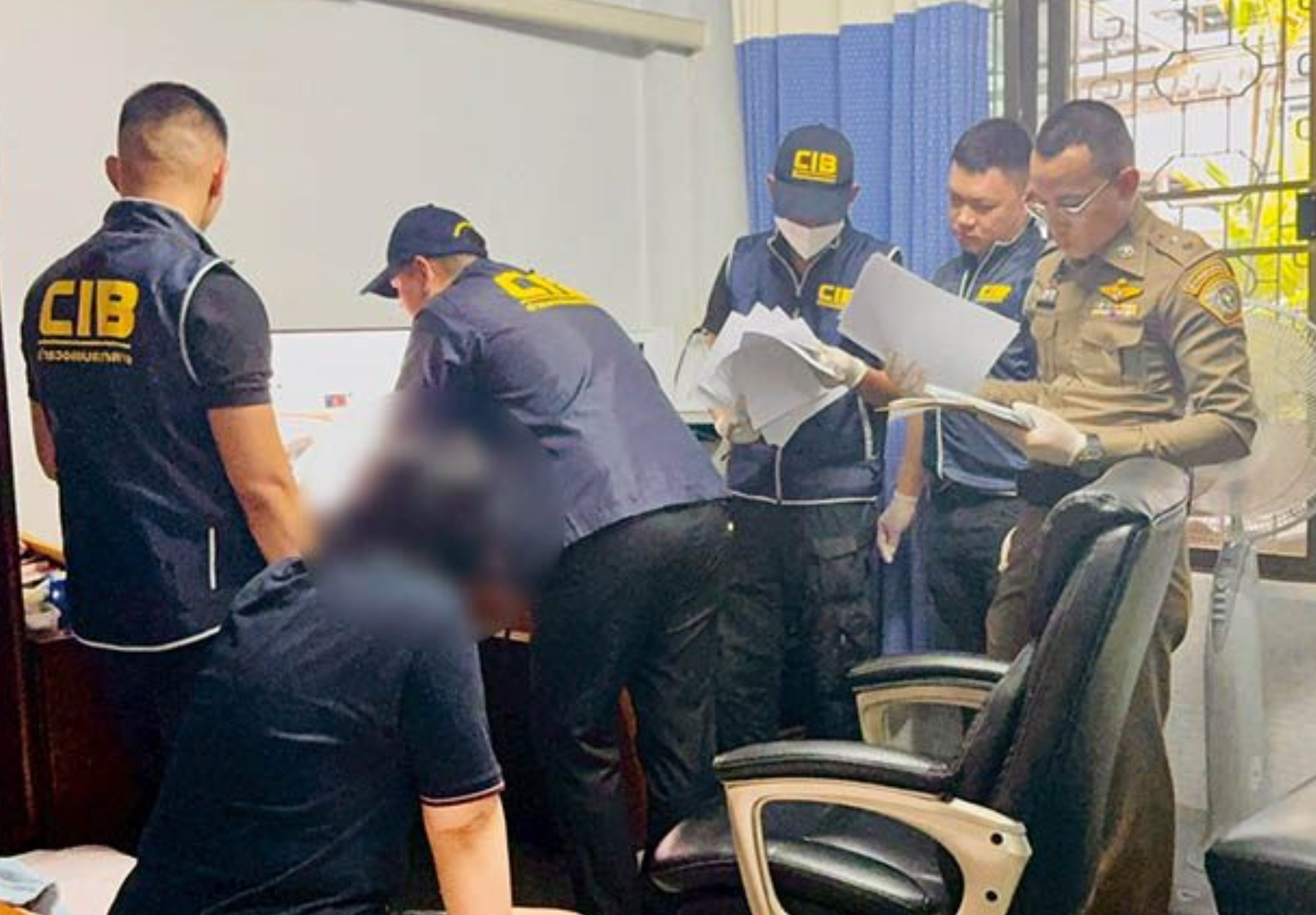

Police have arrested four suspects linked to an illegal online currency exchange operation that handled more than 1 billion baht in transactions within seven months. The Central Investigation Bureau (CIB) said the group operated without authorisation and warned the public of risks including fraud and frozen bank accounts.
Get today's headlines by email 
The arrests took place on 5 April 2026 following court-approved searches at a townhouse in Soi Sathu Pradit 15, Bangkok and a residence in Soi Phibun Songkhram 22, Nonthaburi. Officers seized a laptop, a mobile phone and a desktop computer as evidence.
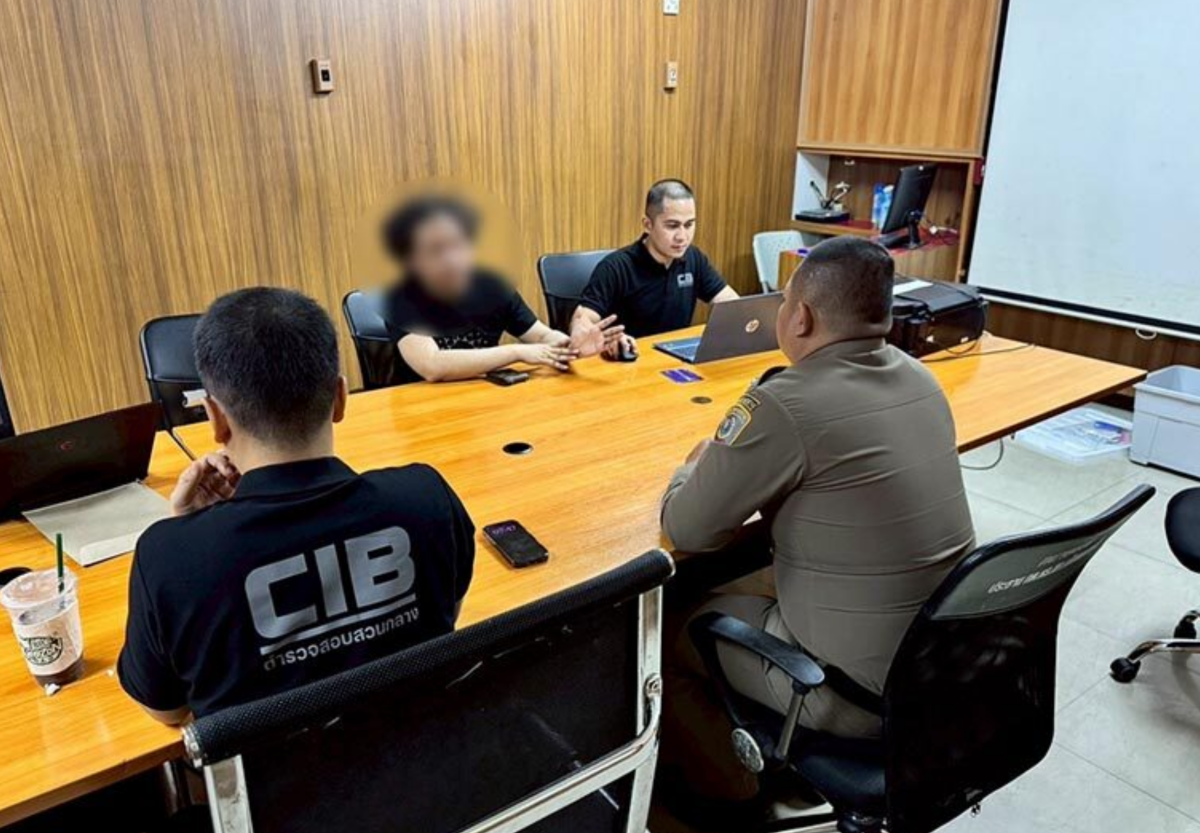
The suspects, all Thai aged between 30 and 37, were charged with operating an unauthorised foreign exchange and international money transfer business under the Exchange Control Act 1942. Police identified them only as Suporn, Kaona, Kannika and Alice, each had defined roles including management, account handling, and customer administration.
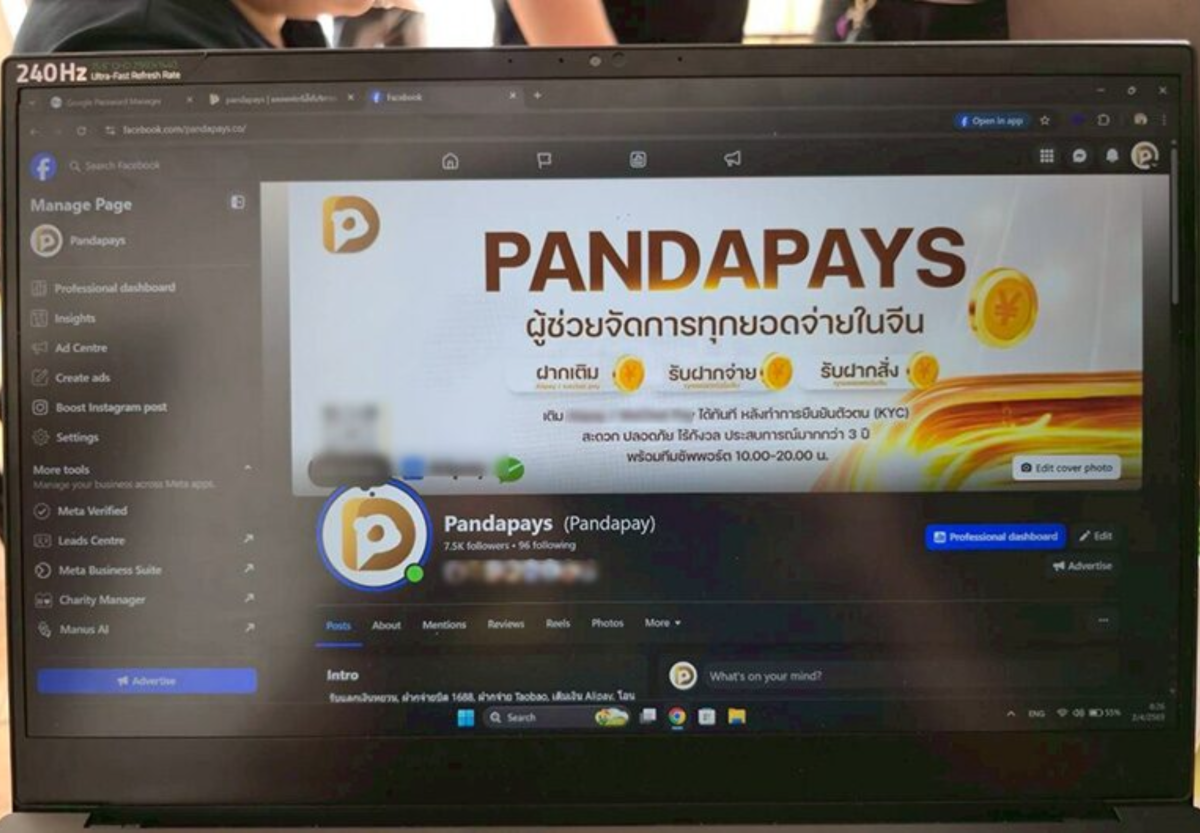
Investigators said the group ran an online platform called PANDAPAYS, advertising services via websites and social media. The platform offered yuan exchange, Alipay and WeChat top-ups, and payment services for Chinese e-commerce platforms including Taobao, Alibaba and Tmall.
Customers were required to register and complete identity verification before transferring Thai baht to a designated bank account. The suspects then transferred yuan to customers’ Alipay accounts, charging a margin of 0.10 to 0.15 baht per yuan.
Authorities found six bank accounts linked to the operation, with more than 1 billion baht circulating over seven months. At least 500 million baht was transferred onwards to digital asset exchanges to be converted into cryptocurrency.
Police said the operation was uncovered through efforts by the Anti-Online Scam Centre, which aims to dismantle financial networks used by scam gangs. Investigators confirmed that PANDAPAYS had never been licensed by the Bank of Thailand.
All four suspects reportedly confessed to running the service since late 2025, citing connections with Chinese nationals and demand from import businesses sourcing goods from China. Their client base included both individuals and corporate operators.
Police warned that using unlicensed exchange services carries significant risks, including financial loss and potential legal consequences. Authorities noted that such platforms are often used to launder proceeds from fraud and other illegal activities.
Khaosod reported that further investigation is ongoing to determine whether the suspects also violated the Payment Systems Act 2017 by handling payments on behalf of others. Officers said enforcement efforts will continue to target illegal financial networks.
Pictures courtesy of Khaosod
Join the discussion? 
Already a member? 
 Adapted by ASEAN Now Khaosod 6 Apr 2026
-
 1
1
-
 1
1
Recommended Comments
Create an account or sign in to comment