



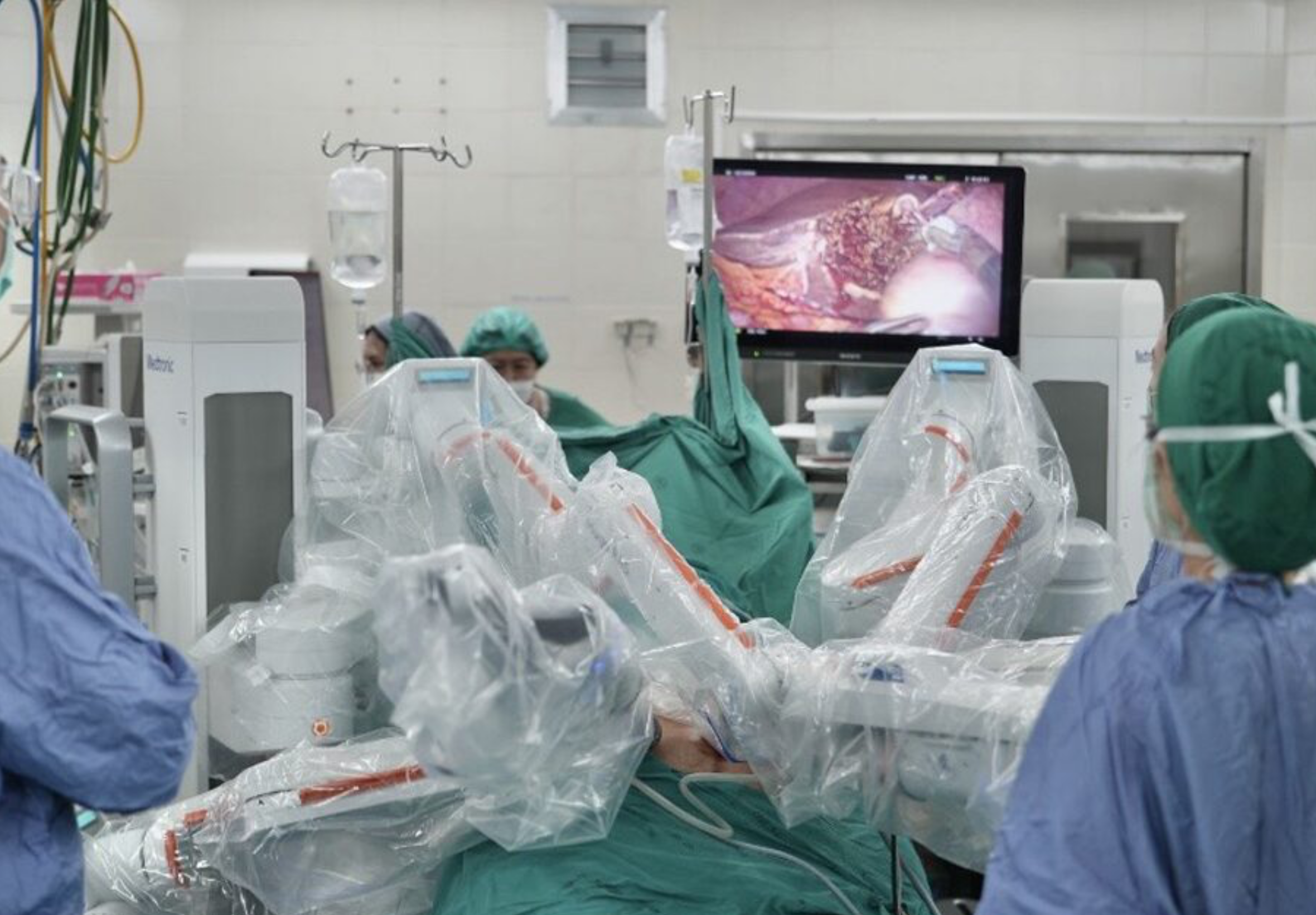

Chiang Mai University’s (CMU) Faculty of Medicine announced on May 27 that its surgical team had successfully carried out the world’s first living donor liver surgery using the HugoTM robotic-assisted surgery system. The breakthrough procedure involved removing the left lobe of a donor’s liver for transplantation into both child and adult patients at Maharaj Nakorn Chiang Mai Hospital.
Get today's headlines by email 
The university said the operation marked the first time anywhere in the world that the HugoTM robotic system had been used for living donor liver surgery. It was also the first use of robotic-assisted living donor liver surgery in Thailand, highlighting a major advance in liver transplantation and high-precision surgery in the country.
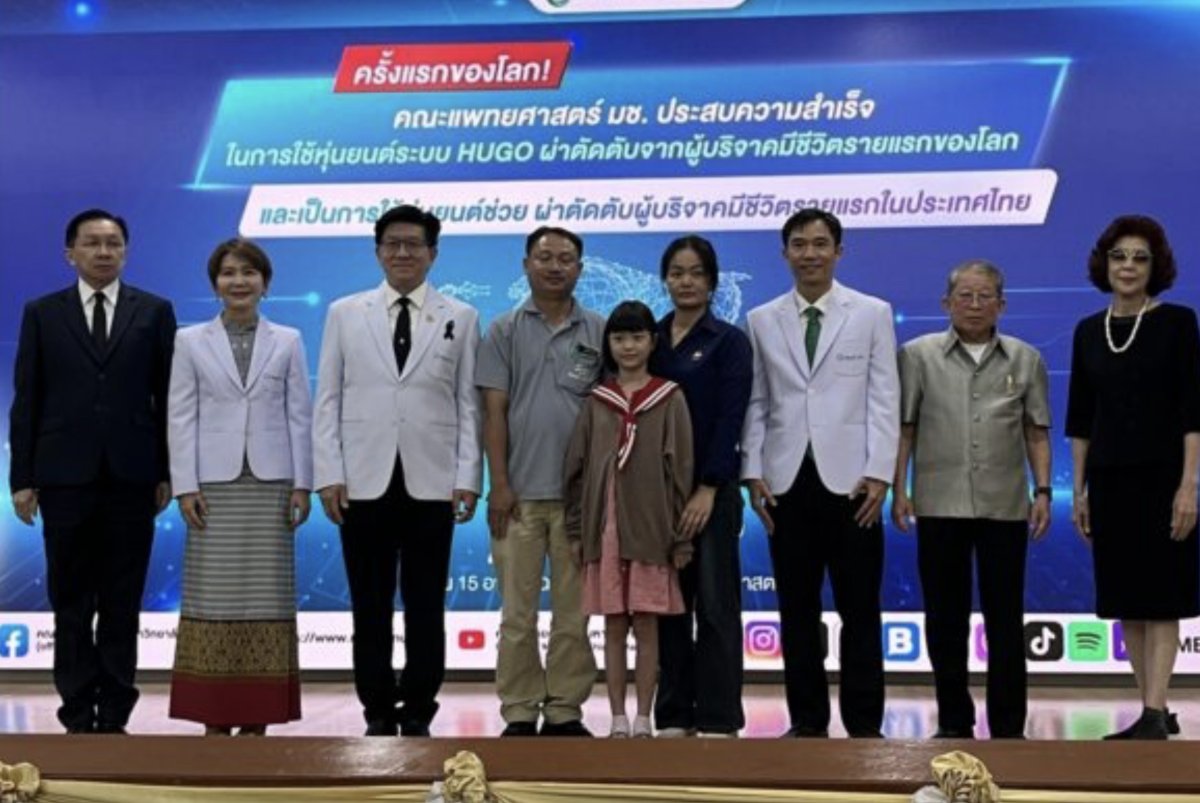
The first case involved a 40-year-old mother donating part of her liver to her nine-year-old daughter, who suffered from biliary atresia and had previously undergone Kasai surgery as an infant. The child later developed liver cirrhosis, portal hypertension and hepatopulmonary syndrome, which caused low blood oxygen levels and required home oxygen treatment.
Doctors used the HugoTM robotic-assisted surgery system to remove the donor’s left liver lobe before transplanting it into the child. During the press conference, the girl, identified as Kanyapha Panyanoy, thanked doctors and nurses for saving her life and said she hoped to become a doctor in the future. She also recalled telling her mother before surgery that she did not know if she would see her again afterwards.
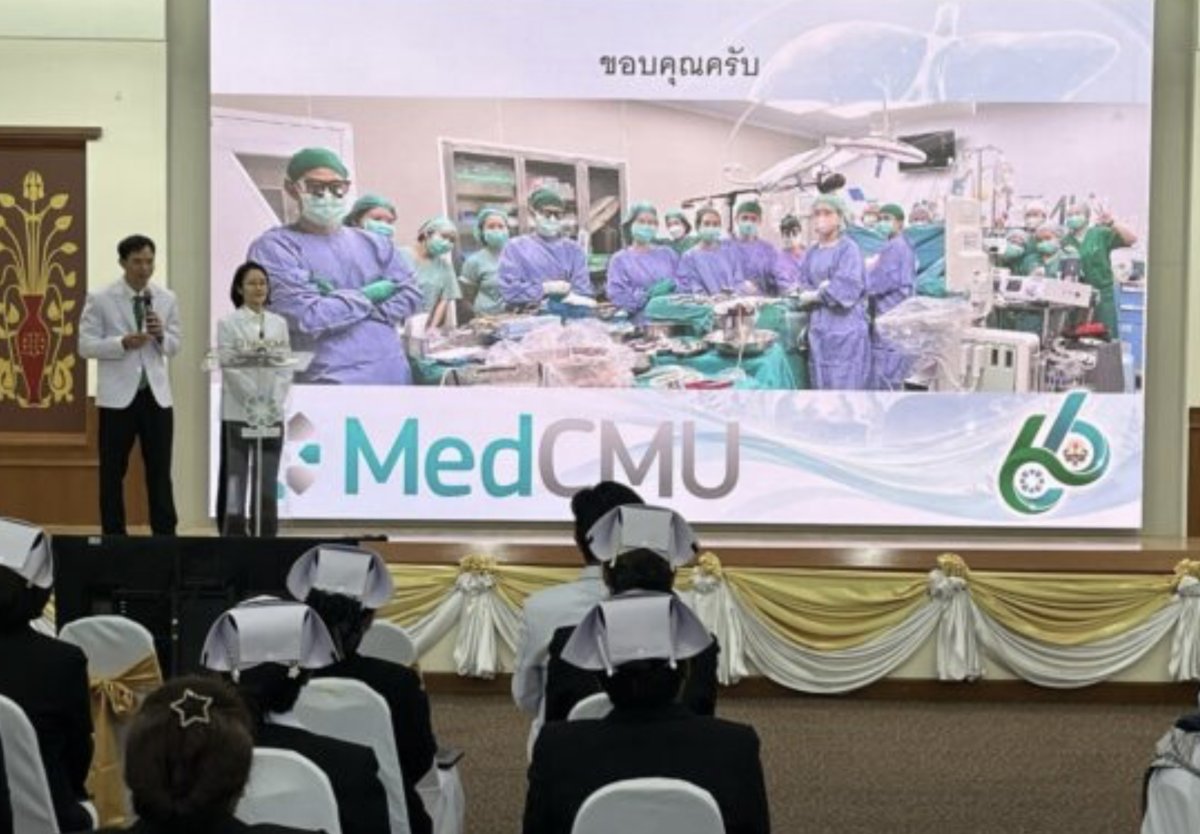
Picture courtesy of Khaosod
The second case involved a 27-year-old daughter donating part of her liver to her 61-year-old father, who suffered from liver cirrhosis and hepatocellular carcinoma. Surgeons again used the HugoTM system to remove the donor’s left liver lobe for transplantation, marking Thailand’s first robotic-assisted adult-to-adult living donor liver transplant using the technology.
Associate Professor Dr Sanhawit Chanrangsi said living donor liver surgery required the highest level of safety because donors were healthy individuals undergoing surgery to save another person’s life. He said the robotic system provided highly detailed three-dimensional imaging and greater precision when working around delicate liver blood vessels and bile ducts.
Associate Professor Dr Worakitti Lappisetphan said Maharaj Nakorn Chiang Mai Hospital was the only medical institution in Thailand with continuous experience in adult-to-adult living donor liver transplantation. He added that preserving the donor’s right liver lobe while removing the smaller left lobe could reduce the impact on donor recovery.
Khaosod reported that the Dean of the Faculty of Medicine Associate Professor Dr Narin Chotirotsanimit said the achievement coincided with the faculty completing 100 robotic-assisted operations across several medical specialties. He said the success demonstrated the capability of Chiang Mai University’s liver surgery team to apply advanced technology to highly complex operations and further strengthen Thailand’s standing in international medical innovation.
Join the discussion? 
Already a member? 
 Adapted by ASEAN Now Khaosod 28 May 2026
Recommended Comments
Create an account or sign in to comment