



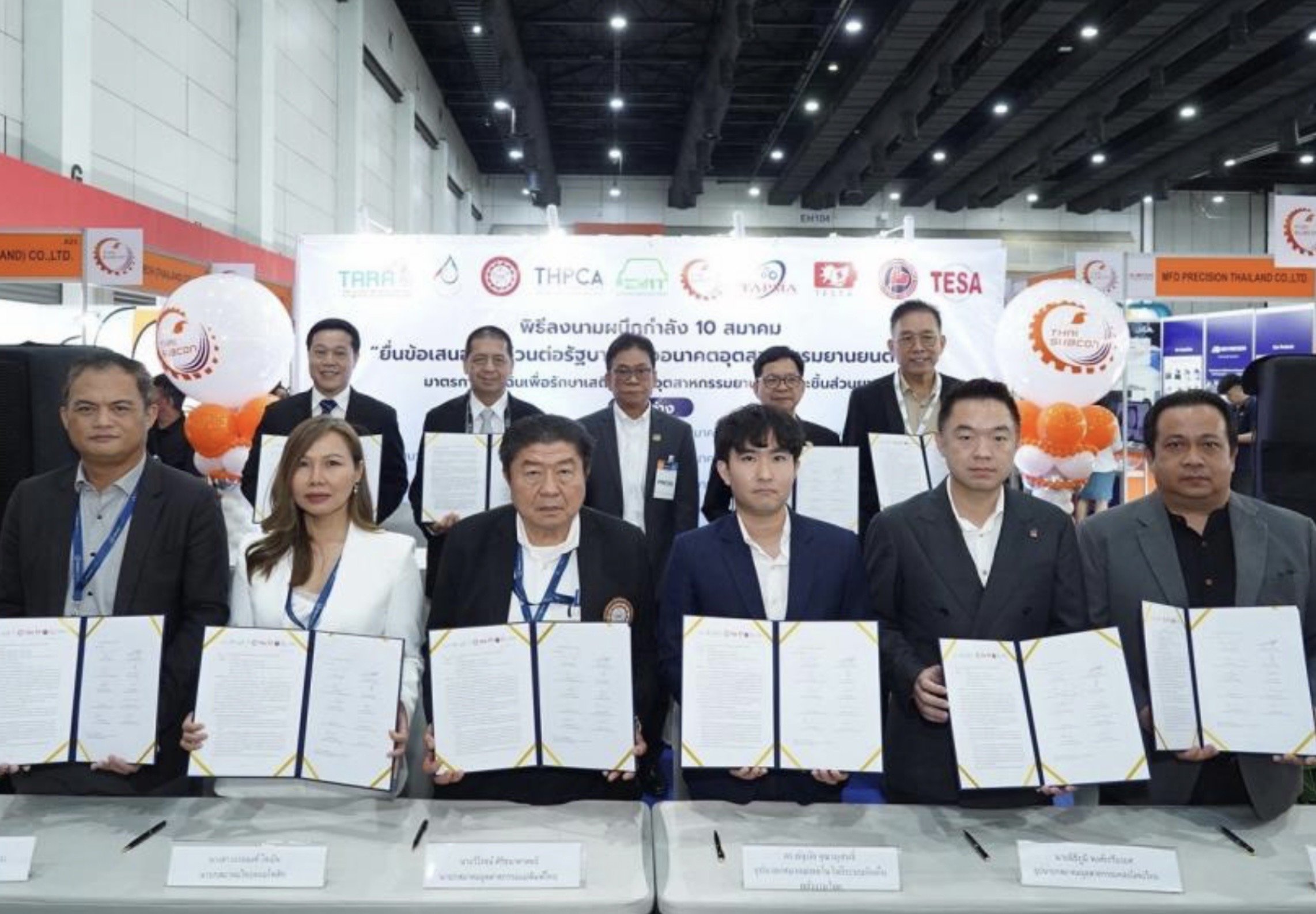

Ten Thai automotive and industrial organisations have jointly urged the government to introduce urgent policy measures to prevent a potential collapse in Thailand’s vehicle manufacturing sector as the country accelerates its transition to electric vehicles (EVs).
Get today's headlines by email 
The statement, led by the Electric Vehicle Association of Thailand(EVAT), was signed by representatives from 10 associations linked to the automotive, parts manufacturing, electronics, automation and energy technology sectors. Together, the groups represent more than 1,500 member companies.
The joint declaration was presented on 14 May during the Thai Subcon Activity Zone Hall 104 event at the Bangkok International Trade and Exhibition Centre (BITEC) in Bang Na, Bangkok. Industry representatives warned that Thailand’s automotive sector is entering a “critical turning point” as several carmakers increasingly shift towards importing fully assembled EVs from China under 0% import tax incentives instead of investing in domestic production.
The groups said the trend is already affecting Thai parts manufacturers, many of which are reportedly losing orders as demand weakens. They warned that the weakening of Thailand’s domestic supply chain could lead to what they described as an “industrial cliff” by 2030, when support measures under the EV 3.5 scheme expire and no longer require manufacturers to offset imports with local production.
In response, the organisations submitted eight urgent policy proposals to the government. These include reforming excise taxes to encourage local manufacturing, increasing local content requirements, promoting the use of Thai-made components, tightening Board of Investment (BOI) measures, strengthening checks on product origin claims, and supporting technology transfer and higher safety standards.
The industry groups stressed that the proposals are not intended to block imported EVs or increase costs for consumers. Instead, they said the measures are aimed at creating what they called “fair competition” between companies investing in manufacturing operations in Thailand and businesses relying primarily on imported finished vehicles.
Suroj Sangsnit, president of the Electric Vehicle Association of Thailand, said the recommendations were intended to preserve balance within the economy and protect Thailand’s long-term industrial competitiveness.
“This is not opposition to free trade, but maintaining economic balance and protecting the future of Thailand’s automotive industry from losing its competitive capability in the long term,” he said.
Mangeronline reported that the proposals are expected to add pressure on the government as Thailand attempts to position itself as a regional EV production hub while balancing foreign investment with the survival of domestic manufacturers and suppliers.
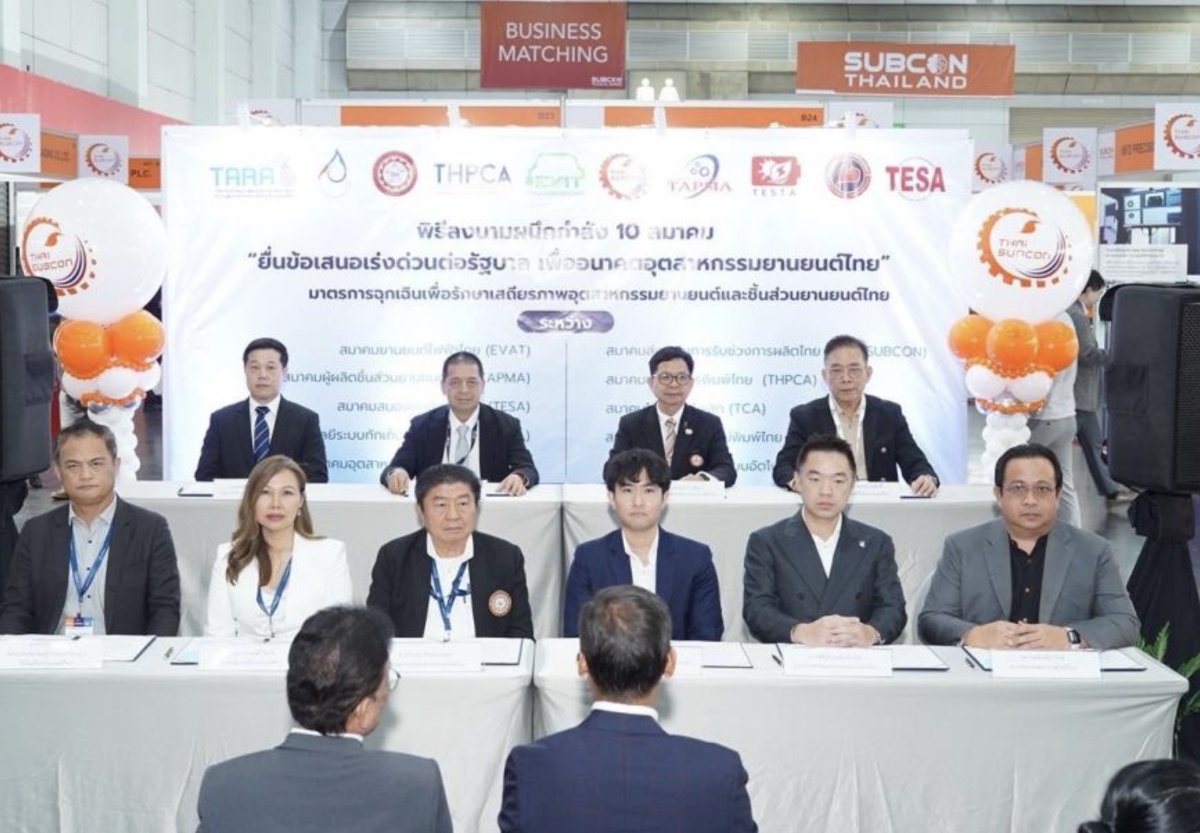
Picture courtesy of MGR
Join the discussion? 
Already a member? 
 Adapted by ASEAN Now MGRonline 16 May 2026
-
 1
1
Recommended Comments
Create an account or sign in to comment