





Thailand’s King Mongkut’s University of Technology North Bangkok (KMUTNB) has successfully launched its KNACKSAT-2 satellite into Earth orbit, marking a significant step in the country’s space technology development. The 3U CubeSat was deployed on 3 February 2026 from the International Space Station via Japan’s J-SSOD system operated by JAXA. The mission demonstrates Thailand’s growing capability to design, build and operate satellites largely using domestically sourced materials.
The launch ceremony took place at KMUTNB’s Technology Park, chaired by Professor Dr Thirawut Boonyasopon, President of the University Council. Senior university executives, project leaders, researchers and partner organisations attended as witnesses. KNACKSAT-2 was designed and developed by Thai engineers and students, using more than 98% locally sourced materials.
KNACKSAT-2 is a 3U CubeSat that operates as a multi-payload, ride-sharing satellite platform. It carries seven payload systems developed through collaborations between KMUTNB and seven partner organisations from Thailand and abroad, including agencies, universities and industry. The platform allows users to send individual payloads into space without building an entire satellite, reducing cost, time and technical barriers.
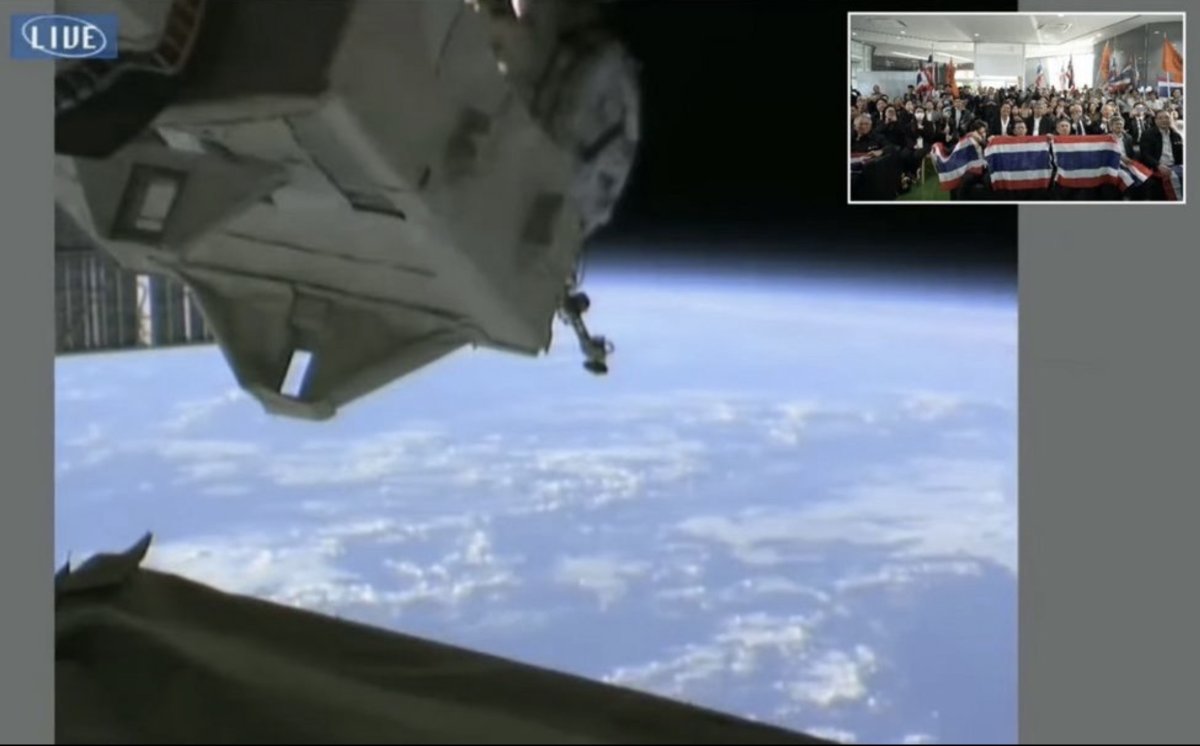
The project is led by KMUTNB through the International Academy of Space Technology for Economic Development (ISTED), in cooperation with NBSPACE Co Ltd. Japan’s Kyushu Institute of Technology provided environmental testing, safety verification and pre-launch readiness support. JAXA facilitated the launch from the ISS, ensuring compliance with international engineering and safety standards.
After deployment, KNACKSAT-2 will orbit Earth at an altitude of approximately 400 kilometres with an operational lifespan of around 18 months. The satellite can be controlled multiple times per day as it passes over Thailand and neighbouring countries. Payload data will be transmitted to ground stations and stored on cloud systems, with each partner granted secure and independent access.

Pictures courtesy of Naewna
Naewna reported that acting ISTED Director Dr Phongsathorn Saisujarit said the satellite’s main mission is to support IoT connectivity in areas where conventional cellular networks are impractical. He noted applications including maritime operations, agriculture, environmental monitoring, forest fire surveillance, national security and logistics. He added that locally developed satellite solutions can reduce reliance on costly foreign systems while building real-world case studies for training future aerospace engineers.

Key Takeaways
• KNACKSAT-2 is a Thai-developed 3U CubeSat launched on 3 February 2026 from the ISS via JAXA’s J-SSOD system.
• The satellite carries seven payloads under a ride-sharing model, using over 98% domestically sourced materials.
• The mission will operate for about 18 months, supporting IoT, research and workforce development in space engineering.

Adapted by ASEAN Now from Naewna 2026-02-05


Recommended Comments
Create an account or sign in to comment