



Skip to content
View in the app

A better way to browse. Learn more.

Thailand News and Discussion Forum | ASEANNOW

A full-screen app on your home screen with push notifications, badges and more.

To install this app on iOS and iPadOS
  1. Tap the Share icon in Safari
  2. Scroll the menu and tap Add to Home Screen.
  3. Tap Add in the top-right corner.
To install this app on Android
  1. Tap the 3-dot menu (⋮) in the top-right corner of the browser.
  2. Tap Add to Home screen or Install app.
  3. Confirm by tapping Install.

PM Visits Makkasan Rail Crash Site

Prime Minister Anutin Charnvirakul visited the scene of the fatal train and bus crash near Makkasan Airport Rail Link station in Bangkok late on 16 May, ordering authorities to prioritise treatment for the injured and speed up compensation for victims and their families.

Get today's headlines by email image.png

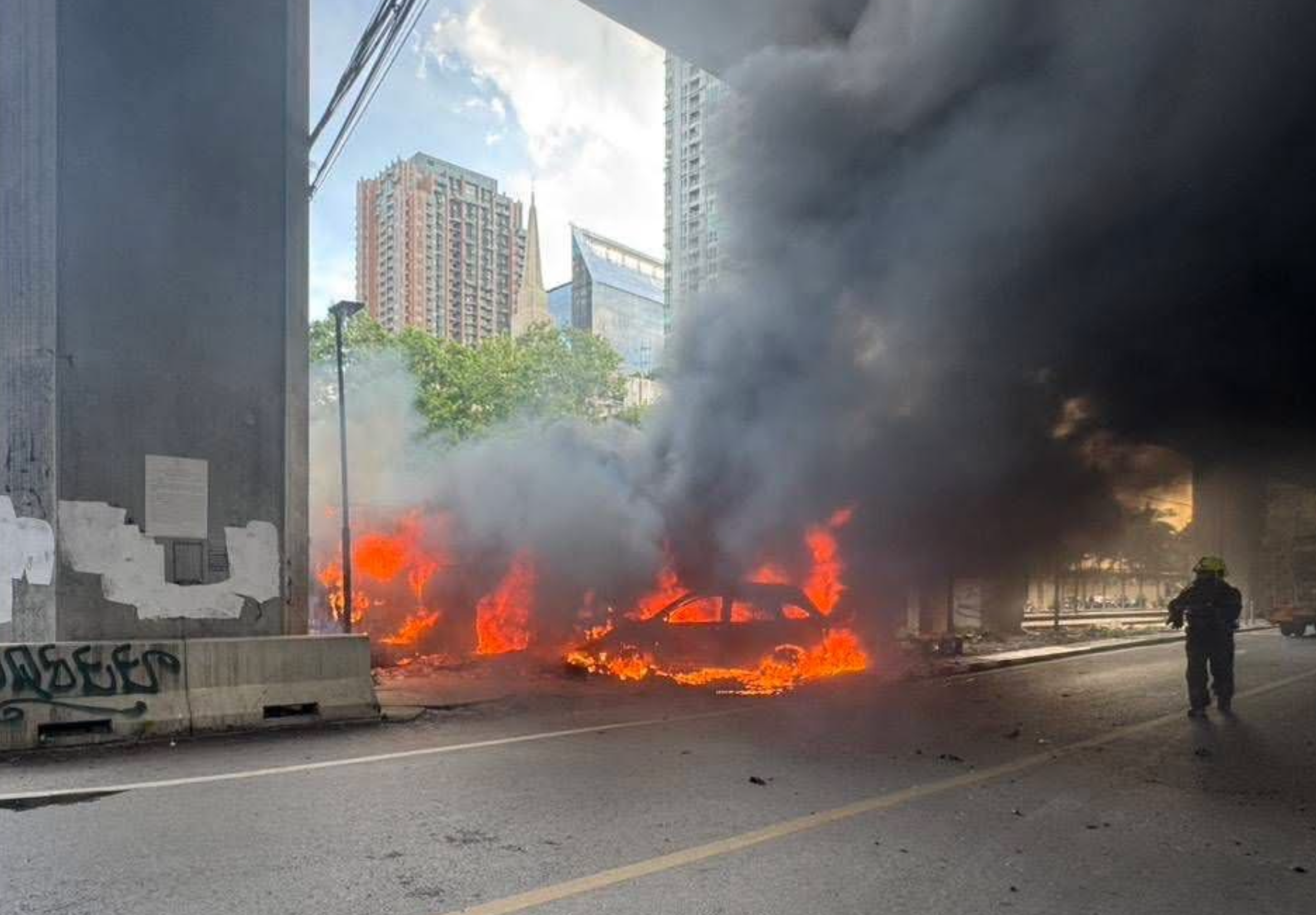
The collision between a train and a public bus on Route 206 left eight people dead and 35 injured. The crash happened near the Asoke-Din Daeng railway crossing and triggered a fire that engulfed the bus, prompting a large-scale emergency response.
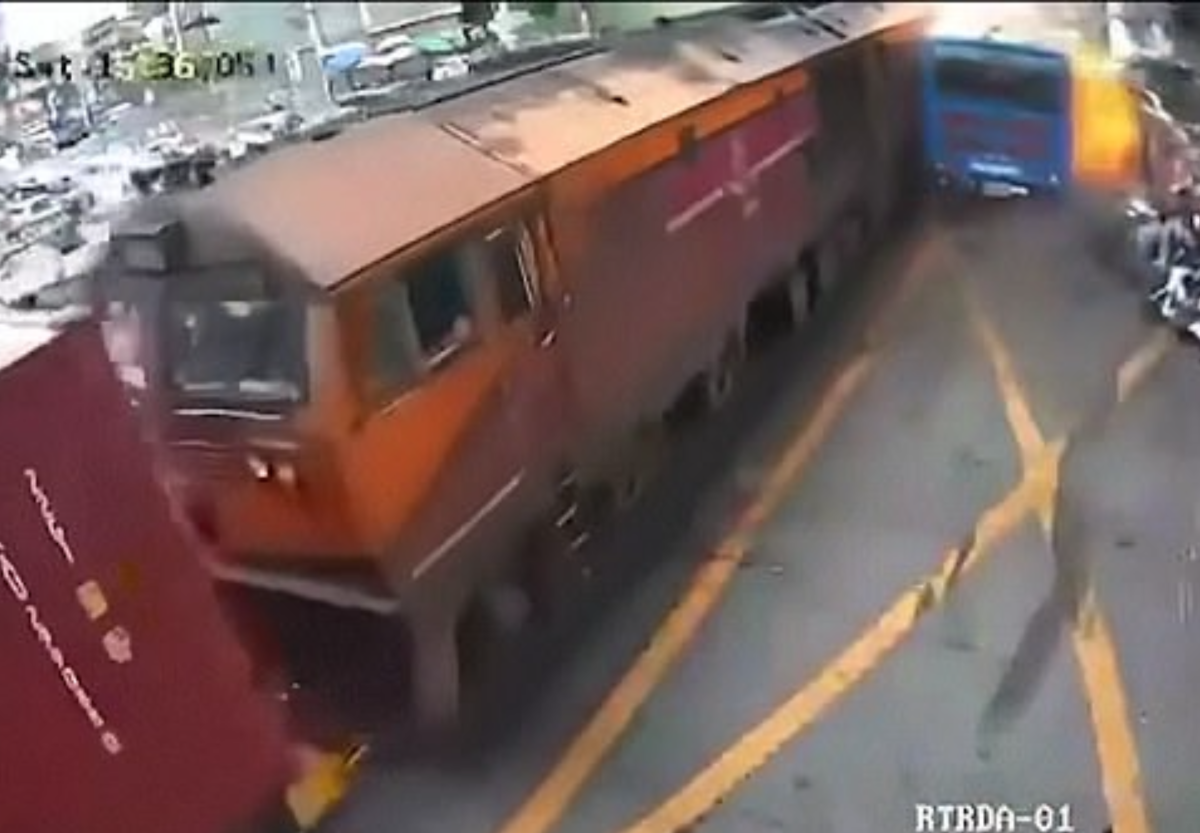
image.png

After completing an official visit to Phetchabun province, Anutin arrived at the scene at 21.55. He inspected the area alongside Deputy Transport Minister Siripong Angkasakulkiat and National Police Chief Pol Gen Kittirat Phanphet, who briefed him on the ongoing investigation and rescue operations.

The prime minister expressed condolences to the families of those killed and injured, stating that all hospitals and medical teams had been instructed to provide full treatment to survivors. He also ordered officials to accelerate identification procedures for the dead and deliver financial assistance to affected families as quickly as possible.
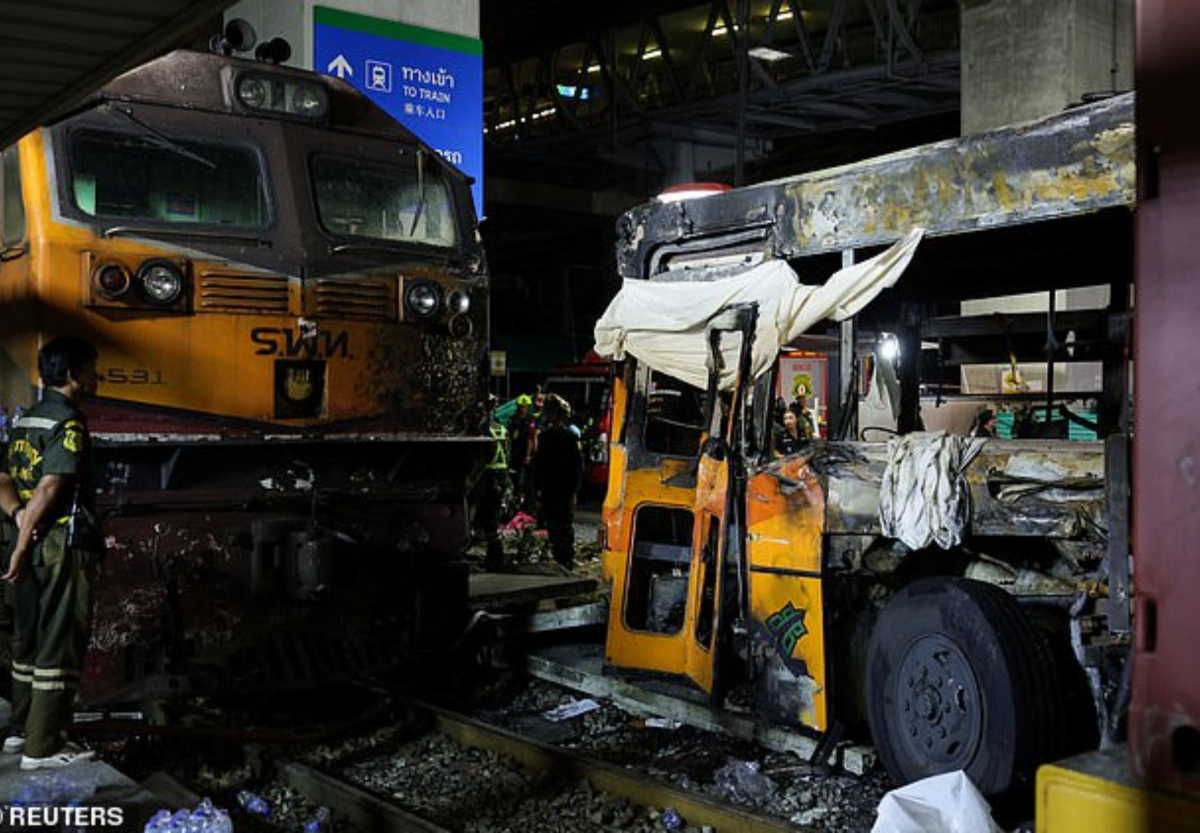
image.png

Anutin said that, after reviewing video footage of the crash, no vehicle should have been stopped across railway tracks under any circumstances. He questioned why no warning had been issued despite there being two railway crossings within one kilometre of each other in one of Bangkok’s busiest traffic areas.
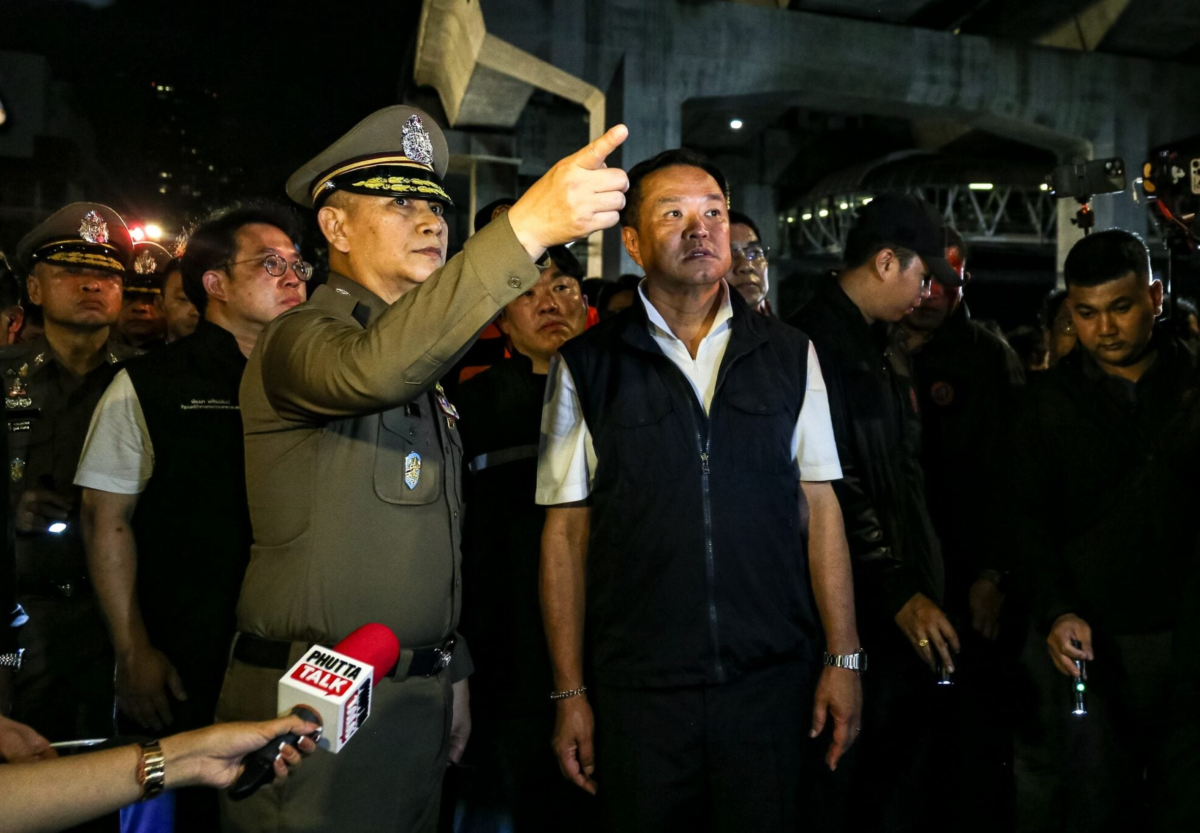
image.png

He also raised concerns over the train’s speed, noting that footage appeared to show no visible attempt to slow down before impact. The prime minister said investigators would need to determine what differed on the day of the crash compared with normal traffic conditions at the crossing.

National Police Chief Pol Gen Kittirat confirmed that investigators were examining whether both the train driver and the bus driver could face charges of negligence causing death. Police are reviewing CCTV footage, operational procedures and communications between railway staff, traffic police and crossing gate operators.
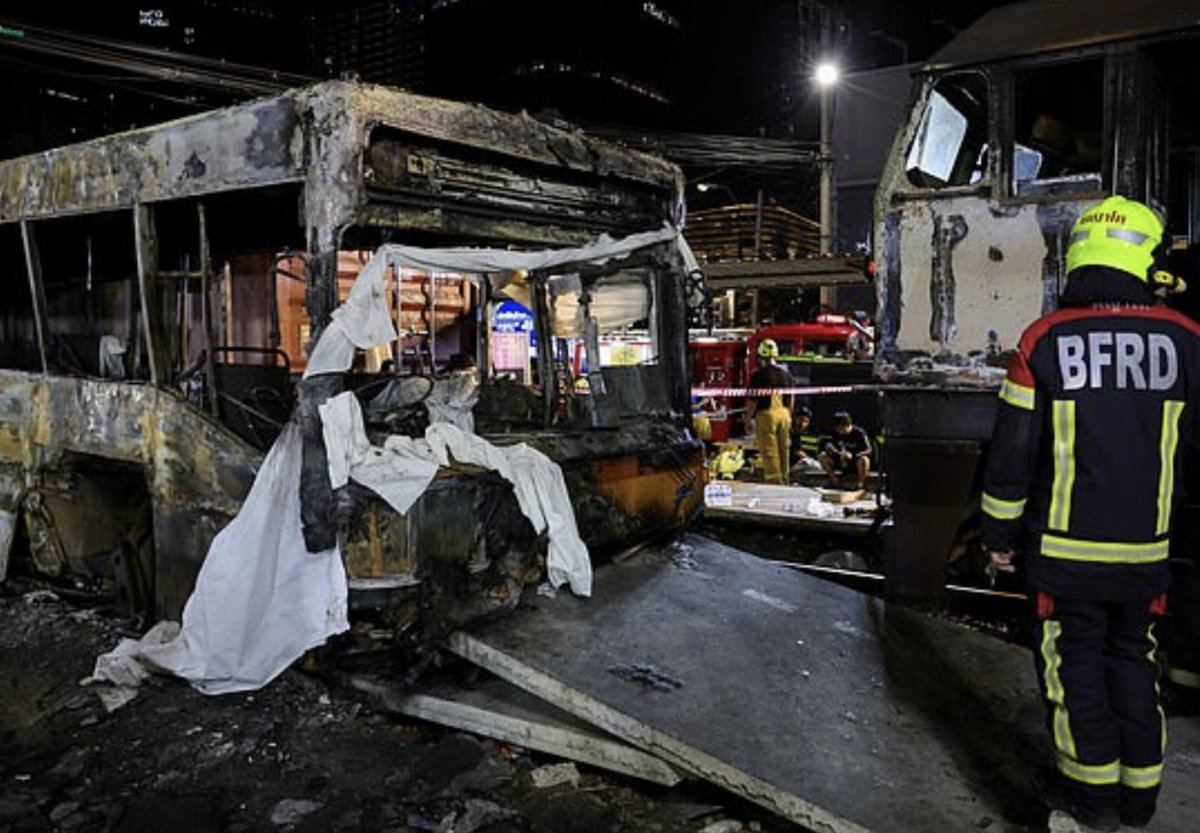
image.jpeg

Pictures courtesy of Daily News

Authorities confirmed that the bus had been stopped across the tracks before the collision. Kittirat said this behaviour could amount to negligence because drivers are legally required to keep clear of railway lines, regardless of whether warning barriers are open or closed.

Police are also checking the train’s black box data to determine whether it exceeded the 60 km/h speed limit and whether adequate warnings were issued to clear the crossing before the train arrived and if the train was cleared to proceed through the junction. The railway crossing operator has already been taken in for questioning.

Daily News reported that recovery crews spent several hours removing the burned-out bus, damaged train carriages and concrete debris from the scene. Bangkok Metropolitan Administration cranes assisted railway workers in reopening the road and rail line.

CCYV of the collision

The fire

The aftermath

Related story

Bus-hit-by-train-near-Rama-9-bursts-into-flames

Join the discussion? image.png

Already a member? image.png

image.png Adapted by ASEAN Now Nation 17 May 2026

User Feedback

Recommended Comments

MikeandDow Ruby Member

MikeandDow

Advanced Member

"Authorities confirmed that the bus had been stopped across the tracks before the collision. Kittirat said this behaviour could amount to negligence because drivers are legally required to keep clear of railway lines, regardless of whether warning barriers are open or closed.""

Why was this NOT enforced ??? do Thais even care!!! do thais know what the yellow lines in a box mean??? road safety in Thailand is Abysmal

JimHuaHin Platinum Member

JimHuaHin

Advanced Member

A preliminary observation from watching some of the video footage - the freight train was not going fast; the train was carrying a number of containers, which I assume (possibly incorrectly) were full. The momentum of the train was such that it would have needed several hundred metres of track to come to a stop.

As noted - this is only a preliminary observation from watching video footage

Georgealbert Star Member

Georgealbert

News Team

UPDATE

Rail Crossing Officer Charged Over Bangkok Crash

image.png

Picture courtesy of Amarin

Police have charged a railway crossing barrier operator with negligence causing death and serious injury following the train crash and fire that killed eight people near Makkasan Airport Rail Link station in Bangkok.

Investigators at Makkasan Police Station questioned the railway barrier control officer throughout the night after the collision involving a freight train, a Route 206 air-conditioned bus, private vehicles and motorcycles on Asok-Din Daeng Road.

On 17 May 2026, police confirmed the officer had been charged with “acting negligently causing death and serious injury”. Investigators said additional charges could follow once further witness interviews and evidence collection are completed.

The officer was released after questioning and was not detained in custody. Police said no other individuals had yet been formally charged in connection with the crash, but the investigation remains ongoing.

Thailand’s national police chief also commented on the crash, saying the bus driver could have acted negligently by stopping across the railway tracks. Officials said vehicles should never remain stationary on a live crossing.

Authorities continue to focus on identifying all contributing factors behind the crash, including traffic conditions, railway crossing procedures and emergency response measures. Support and compensation efforts for the families of those killed and injured are also continuing.

image.png Adapted by ASEAN Now Dailynews 17 May 2026

MikeandDow Ruby Member

MikeandDow

Advanced Member

"Authorities continue to focus on identifying all contributing factors behind the crash," Road safety education if you ask any thai what the yellow strips in a box pattern means you will not get an answer they simply do not know !!

sqwakvfr Platinum Member

sqwakvfr

Advanced Member

This is terrible. I was in the area last week. My favorite hotel, Mercure Atrium, is there. That intersection always looked jammed with traffic. The poor people on the bus had no escape. RIP.

khunPer Diamond Member

khunPer

Advanced Member

Based on the share videos it seems like, there is not light signal and no train crossing barriers working. The train seems to move at fairly low speed when reaching the intersection, but it of course could have started breaking esrlier, when the driver realize the intersection is blocked.

On the other hand it's little hard to see that the fault is by vehicles that stands still on the crossing, as they seems to have been blocked by other traffic and might have been driving into the intersection, because no train warning was in action. On the not blocked side on the road vehicles are moving — no barriers are down — so, the road users presumed it was save to cross.

Georgealbert Star Member

Georgealbert

News Team

UPDATE

Bus and Train Drivers Charged in Bangkok Crash

image.jpeg

Picture courtesy of Amarin

Police have charged both the bus driver and the freight train driver following the deadly level crossing crash in Bangkok that killed eight people and injured 32 others. The collision happened on 16 May at the railway crossing on Asok-Din Daeng Road in Huai Khwang district, near Makkasan station.

Authorities said freight train number 2126, travelling from Laem Chabang to Bang Sue, struck BMTA air-conditioned bus route 206 after the bus became trapped on the tracks in heavy traffic. The impact caused a major fire that engulfed the bus and damaged several nearby vehicles.

Police at Makkasan station confirmed that charges of reckless driving causing death and serious injury had been filed against Sayomporn Suankul, 46, the bus driver, and Lapit Thongboon, 56, the train driver. Investigators said additional charges could follow once witness interviews and evidence collection are completed.

Bangkok governor Chadchart Sittipunt said the crossing barriers could not be lowered because vehicles had stopped across the railway tracks. He noted that traffic laws prohibit vehicles from stopping on level crossings or within five metres of them.

The crash has triggered widespread debate over rail crossing safety and emergency response procedures. Online discussion intensified after social media posts claimed there was a radio warning sent to the train driver before the collision occurred.

According to claims circulating online, station staff allegedly warned the train crew by radio, that traffic congestion at the crossing was severe and that a red flag emergency stop signal had been issued before impact. CCTV (below) suggests that a red flag was initially raised, by lowered as the train approached.

The State Railway of Thailand and other transport authorities have not officially confirmed the authenticity of the alleged radio communications or whether emergency procedures were followed correctly and if the officer on duty believed the train was slowing to stop.

Forensic teams have completed examinations on all eight bodies recovered from the scene, along with three additional body parts found in the wreckage. Major General Wirun Supasinghsiripreecha, commander of the Police General Hospital’s Institute of Forensic Medicine, said the victims suffered extensive burns, making visual identification and fingerprint analysis impossible.

Officials are now relying on DNA testing to confirm identities. Relatives have begun providing DNA samples, with four families already participating in the process. Authorities expect preliminary DNA results on 18 May and hope to formally confirm the identities of all victims by 19 May.

The Ruamkatanyu Foundation said it would transport victims’ bodies back to their home provinces free of charge once identification procedures are complete. Families have also been asked to provide photographs or identifying information that may assist investigators.

The investigation remains ongoing as police continue gathering evidence from train staff, transport officials and witnesses. Authorities are also expected to review safety measures at Bangkok level crossings following one of the capital’s deadliest rail accidents in recent years.

image.png Adapted by ASEAN Now Amarin 17 May 2026

josephbloggs Diamond Member

josephbloggs

Advanced Member
37 minutes ago, Georgealbert said:

UPDATE

Bus and Train Drivers Charged in Bangkok Crash

image.jpeg

Picture courtesy of Amarin

Police have charged both the bus driver and the freight train driver following the deadly level crossing crash in Bangkok that killed eight people and injured 32 others. The collision happened on 16 May at the railway crossing on Asok-Din Daeng Road in Huai Khwang district, near Makkasan station.

Authorities said freight train number 2126, travelling from Laem Chabang to Bang Sue, struck BMTA air-conditioned bus route 206 after the bus became trapped on the tracks in heavy traffic. The impact caused a major fire that engulfed the bus and damaged several nearby vehicles.

Police at Makkasan station confirmed that charges of reckless driving causing death and serious injury had been filed against Sayomporn Suankul, 46, the bus driver, and Lapit Thongboon, 56, the train driver. Investigators said additional charges could follow once witness interviews and evidence collection are completed.

Bangkok governor Chadchart Sittipunt said the crossing barriers could not be lowered because vehicles had stopped across the railway tracks. He noted that traffic laws prohibit vehicles from stopping on level crossings or within five metres of them.

The crash has triggered widespread debate over rail crossing safety and emergency response procedures. Online discussion intensified after social media posts claimed there was a radio warning sent to the train driver before the collision occurred.

According to claims circulating online, station staff allegedly warned the train crew by radio, that traffic congestion at the crossing was severe and that a red flag emergency stop signal had been issued before impact. CCTV (below) suggests that a red flag was initially raised, by lowered as the train approached.

The State Railway of Thailand and other transport authorities have not officially confirmed the authenticity of the alleged radio communications or whether emergency procedures were followed correctly and if the officer on duty believed the train was slowing to stop.

Forensic teams have completed examinations on all eight bodies recovered from the scene, along with three additional body parts found in the wreckage. Major General Wirun Supasinghsiripreecha, commander of the Police General Hospital’s Institute of Forensic Medicine, said the victims suffered extensive burns, making visual identification and fingerprint analysis impossible.

Officials are now relying on DNA testing to confirm identities. Relatives have begun providing DNA samples, with four families already participating in the process. Authorities expect preliminary DNA results on 18 May and hope to formally confirm the identities of all victims by 19 May.

The Ruamkatanyu Foundation said it would transport victims’ bodies back to their home provinces free of charge once identification procedures are complete. Families have also been asked to provide photographs or identifying information that may assist investigators.

The investigation remains ongoing as police continue gathering evidence from train staff, transport officials and witnesses. Authorities are also expected to review safety measures at Bangkok level crossings following one of the capital’s deadliest rail accidents in recent years.

image.png Adapted by ASEAN Now Amarin 17 May 2026


Wow. He just held his red flag out for a few seconds when the train was still some distance away then nonchalantly turned around and put his flag away.

I was worried he was being made an easy scapegoat, but it really does look like he failed in his duties when he knew the junction wasn't clear. He just assumed the train had seen his little flag from that distance and would naturally stop. Then again maybe that's what normally happens? At that junction trains often have to stop to wait for the traffic to clear.

Front Row Advanced Member

Front Row

Member
1 hour ago, khunPer said:

On the other hand it's little hard to see that the fault is by vehicles that stands still on the crossing, as they seems to have been blocked by other traffic and might have been driving into the intersection, because no train warning was in action. On the not blocked side on the road vehicles are moving — no barriers are down — so, the road users presumed it was save to cross.

I thought it was only the Thais who didn’t understand or adhere to a basic driving rule. You never, ever stop on railway tracks.

Rams86 Gold Member

Rams86

Advanced Member
7 minutes ago, Front Row said:

I thought it was only the Thais who didn’t understand or adhere to a basic driving rule. You never, ever stop on railway tracks.

The bus driver may've been forced to stop on the train tracks because the driver of the vehicle in front of him let him hang out to dry.

OldHand2541 Explorer Member

OldHand2541

Member

The train track was straight, long before the accident. Should had seen the bus and traffic ahead, and possibly reduced speed, long before impact.

Neglience.

MikeandDow Ruby Member

MikeandDow

Advanced Member
9 minutes ago, Rams86 said:

The bus driver may've been forced to stop on the train tracks because the driver of the vehicle in front of him let him hang out to dry.

Basic road safety When approaching a marked box section (such as a yellow criss-cross junction), only enter if your exit lane or road is completely clear.

The bus driver Should NOT have entered the marked box section

Captain Flack Star Member

Captain Flack

Global Moderator

Post breaking forum rules removed.

@Screaming rule 14. You will not post slurs, degrading, or overly negative comments directed towards Thailand, Thai people, Thai culture,Religion, Thai institutions such as the military, judicial or law enforcement system, or specific locations within Thailand.

ronnie50 Platinum Member

ronnie50

Advanced Member

I actually thought the train was going too fast. All the train drivers must know what a messy intersection that is. But there's likely lots of blame to go around here. That intersection, as I mentioned in another post, has among the worst traffic jams in Bangkok.

Front Row Advanced Member

Front Row

Member
32 minutes ago, Rams86 said:

The bus driver may've been forced to stop on the train tracks because the driver of the vehicle in front of him let him hang out to dry.

If you can’t get completely across the railroad tracks and clear the area, then you don’t proceed until you can. End of story.

It’s the same procedure in many large cities when it comes to traffic intersections. You don’t go halfway and then have to stop. Perhaps you’ve heard the term “don’t block the box”.

ronnie50 Platinum Member

ronnie50

Advanced Member
4 minutes ago, Front Row said:

If you can’t get completely across the railroad tracks and clear the area, then you don’t proceed until you can. End of story.

It’s the same procedure in many large cities when it comes to traffic intersections. You don’t go halfway and then have to stop. Perhaps you’ve heard the term “don’t block the box”.

Not disageeeing with you. But if you've ever driven through that intersection and the lead up to it (Asok-Petchnuri Road) you'll see that it is bumper to bumper with cars and motocycles and delivery vehicles taking every inch they can get. There are other slip roads converging in the same area..

Front Row Advanced Member

Front Row

Member
42 minutes ago, ronnie50 said:

Not disageeeing with you. But if you've ever driven through that intersection and the lead up to it (Asok-Petchnuri Road) you'll see that it is bumper to bumper with cars and motocycles and delivery vehicles taking every inch they can get. There are other slip roads converging in the same area..

Understood and agree.

It’s a bit like stopping for pedestrians in the crosswalks. It’s common knowledge and plain common sense as well as being the law. But there’s zero education, training, or enforcement.

richard_smith237 Star Member

richard_smith237

Advanced Member
22 minutes ago, ronnie50 said:
28 minutes ago, Front Row said:

If you can’t get completely across the railroad tracks and clear the area, then you don’t proceed until you can. End of story.

It’s the same procedure in many large cities when it comes to traffic intersections. You don’t go halfway and then have to stop. Perhaps you’ve heard the term “don’t block the box”.

Not disageeeing with you. But if you've ever driven through that intersection and the lead up to it (Asok-Petchnuri Road) you'll see that it is bumper to bumper with cars and motocycles and delivery vehicles taking every inch they can get. There are other slip roads converging in the same area..

The “gridlock” was - and always is - caused at that junction by the excessive volume of vehicles entering Asoke Road turning southbound from Kamphaeng Phet 7 (from the east). There is no effective junction control, merely a chaotic mêlée of traffic forcing its way through.

If drivers attempted to proceed strictly in accordance with the rules, no movement whatsoever would be possible, as every available space is aggressively contested - just like every other junction on the crowded Bangkok streets, including plenty of other railway crossings where we see videos of motorcyclists and cars driving through, even as the barriers are coming down, often with motorcyclists riding 'around' the barriers !

This crossing has long been recognised as a notorious black spot and has been repeatedly reported by local residents - with 4 lanes of traffic turning left and merging into a road with 4 lanes of traffic - If the Petchaburi Rd / Asoke Junction is backed up by traffic lights and / or gridlock the back-log jams and gridlocks Kamphaeng Phet 7 / Asoke road - this gridlock is a daily occurrence.

In this instance, the audible warning system was functioning, yet the barriers were not lowered to physically block the traffic. Despite the warning sounding continuously, motorists ignored it entirely.

Accordingly, it has been reported that:

A) The bus driver - along with numerous other motorists - crossed the railway tracks while the audible warning had already been sounding for several minutes beforehand.

B) It is reported that the train driver was radioed and instructed to stop, but failed to do so.

C) The barrier operator (or equivalent controller) failed to lower the barriers across the road. It has also been reported that the individual normally responsible for this duty was absent that day, with other personnel covering the role, potentially contributing to the failure.

D) A signalman further up the track failed to properly “red-flag” the train, displaying the warning flag too early and too briefly, not holding it in view long enough for the train driver to see it.

Multiple human failures and an issue / risk that was widely known.

This is not the first video of traffic backing-up across level crossings in Bangkok.

The other high-risk spot I've observed in Bangkok is at the Petcharburi-Urupong-Yommarat junction (crossing).

MikeandDow Ruby Member

MikeandDow

Advanced Member
8 minutes ago, richard_smith237 said:

The “gridlock” was - and always is - caused at that junction by the excessive volume of vehicles entering Asoke Road turning southbound from Kamphaeng Phet 7 (from the east). There is no effective junction control, merely a chaotic mêlée of traffic forcing its way through.

If drivers attempted to proceed strictly in accordance with the rules, no movement whatsoever would be possible, as every available space is aggressively contested - just like every other junction on the crowded Bangkok streets, including plenty of other railway crossings where we see videos of motorcyclists and cars driving through, even as the barriers are coming down, often with motorcyclists riding 'around' the barriers !

This crossing has long been recognised as a notorious black spot and has been repeatedly reported by local residents - with 4 lanes of traffic turning left and merging into a road with 4 lanes of traffic - If the Petchaburi Rd / Asoke Junction is backed up by traffic lights and / or gridlock the back-log jams and gridlocks Kamphaeng Phet 7 / Asoke road - this gridlock is a daily occurrence.

In this instance, the audible warning system was functioning, yet the barriers were not lowered to physically block the traffic. Despite the warning sounding continuously, motorists ignored it entirely.

Accordingly, it has been reported that:

A) The bus driver - along with numerous other motorists - crossed the railway tracks while the audible warning had already been sounding for several minutes beforehand.

B) It is reported that the train driver was radioed and instructed to stop, but failed to do so.

C) The barrier operator (or equivalent controller) failed to lower the barriers across the road. It has also been reported that the individual normally responsible for this duty was absent that day, with other personnel covering the role, potentially contributing to the failure.

D) A signalman further up the track failed to properly “red-flag” the train, displaying the warning flag too early and too briefly, not holding it in view long enough for the train driver to see it.

Multiple human failures and an issue / risk that was widely known.

This is not the first video of traffic backing-up across level crossings in Bangkok.

The other high-risk spot I've observed in Bangkok is at the Petcharburi-Urupong-Yommarat junction (crossing).

As you said human failure !! thais do not comply to road safety rules this is a fundamental error and not easily fixed !! but statements like this from a government official can by sacking the guy "Bangkok Mass Transit Authority director Kittikarn Jomduang Jaruwornpolkul said the bus became stranded on the tracks after stopping at a red traffic light during heavy congestion. He described the crash as an unavoidable situation caused by backed-up traffic preventing the bus from moving clear of the crossing.“

Rams86 Gold Member

Rams86

Advanced Member

In other words another Thai TFU that caused the unfortunate loss of lives.

ronnie50 Platinum Member

ronnie50

Advanced Member
27 minutes ago, richard_smith237 said:

The “gridlock” was - and always is - caused at that junction by the excessive volume of vehicles entering Asoke Road turning southbound from Kamphaeng Phet 7 (from the east). There is no effective junction control, merely a chaotic mêlée of traffic forcing its way through.

Agree. Not sure if you've noticed there actually is a traffic light for that junction. But it is never used. Just flashes yellow. Hence the uncontrolled chaos

richard_smith237 Star Member

richard_smith237

Advanced Member
9 minutes ago, ronnie50 said:

Agree. Not sure if you've noticed there actually is a traffic light for that junction. But it is never used. Just flashes yellow. Hence the uncontrolled chaos

Indeed - I also wonder whether the traffic lights on the 'southbound' lanes of Asok road were active.

(Note: the bus that was impacted by the train - was stationary on the over the crossing on the Southbound lane of Asoke Road).

Screenshot 2026-05-17 at 14.32.39.png

Georgealbert Star Member

Georgealbert

News Team

Asok Rail Crossing Crash Exposes Bangkok Planning Failures

richard_smith237 Star Member

richard_smith237

Advanced Member

It should not take a tragedy such as this to expose the failures of Bangkok’s traffic planning. A simple drive through the city is enough to reveal the systemic weaknesses to anyone accustomed to driving in a developed nation.

The first and most obvious issue is that Thailand’s driving culture is fundamentally flawed and requires a significant cultural shift.

At almost every junction, gridlock is effectively self-inflicted. Drivers routinely follow one another through red lights and block box junctions, preventing cross-traffic from moving when its signal changes. Once one junction becomes obstructed, congestion rapidly cascades outward, creating gridlock across surrounding roads. Drivers then force their way forward out of fear of being trapped by traffic lights with excessively long cycles, resulting in an endless chain reaction of obstruction and delay.

One relatively simple improvement would be faster traffic-light cycling, combined with far stricter enforcement against drivers who ignore signals or block junctions. That alone would begin to remove the sense of “panic driving” created by excessively long signal phases. In many cases, traffic-flow monitoring has already demonstrated that junctions with shorter, more frequent cycles actually move a greater volume of traffic than those held on prolonged sequences.

There have also been repeated announcements regarding the introduction of city-wide AI traffic monitoring and adaptive flow-control systems. Yet, despite the promises, the public has seen very little evidence of these systems operating effectively in practice.

chickenslegs Diamond Member

chickenslegs

Advanced Member

I'm sure that lessons will be learned and tomorrow we will not see any vehicles entering the box junction without a clear exit.

It will be great to see no cars or buses stationary on the railway tracks.

/S

richard_smith237 Star Member

richard_smith237

Advanced Member
10 minutes ago, chickenslegs said:

I'm sure that lessons will be learned and tomorrow we will not see any vehicles entering the box junction without a clear exit.

It will be great to see no cars or buses stationary on the railway tracks.

/S

(sarcasm noted !)

They will do exactly what they did after the death of Dr. Waralak Supawatjariyakul, the ophthalmologist killed at a zebra crossing in 2022 - paint more lines on the road and declare the problem addressed.

Then, just as they did after schoolchildren were burned to death on Bang Na-Trat Road in 2024, there will be another round of highly publicised “crackdowns”, media statements, and temporary displays of concern.

After that, almost nothing will change.

There will be no meaningful evolution in infrastructure, enforcement, or driver behaviour. No lasting lessons will be learned. The same dangerous habits will continue to repeat themselves, enabled by weak enforcement, inconsistent policing, and institutional apathy - allowing entirely preventable tragedies to happen again and again.

Georgealbert Star Member

Georgealbert

News Team

UPDATE

Train Driver Fails Drug Test After Bangkok Crash

jacko45k Star Member

jacko45k

Advanced Member
19 hours ago, MikeandDow said:

"Authorities continue to focus on identifying all contributing factors behind the crash," Road safety education if you ask any thai what the yellow strips in a box pattern means you will not get an answer they simply do not know !!

Seems to be a general situation as lane markings also appear to have little meaning.

Create an account or sign in to comment

Account

Navigation

Search

Search

Configure browser push notifications

Chrome (Android)
  1. Tap the lock icon next to the address bar.
  2. Tap Permissions → Notifications.
  3. Adjust your preference.
Chrome (Desktop)
  1. Click the padlock icon in the address bar.
  2. Select Site settings.
  3. Find Notifications and adjust your preference.

