



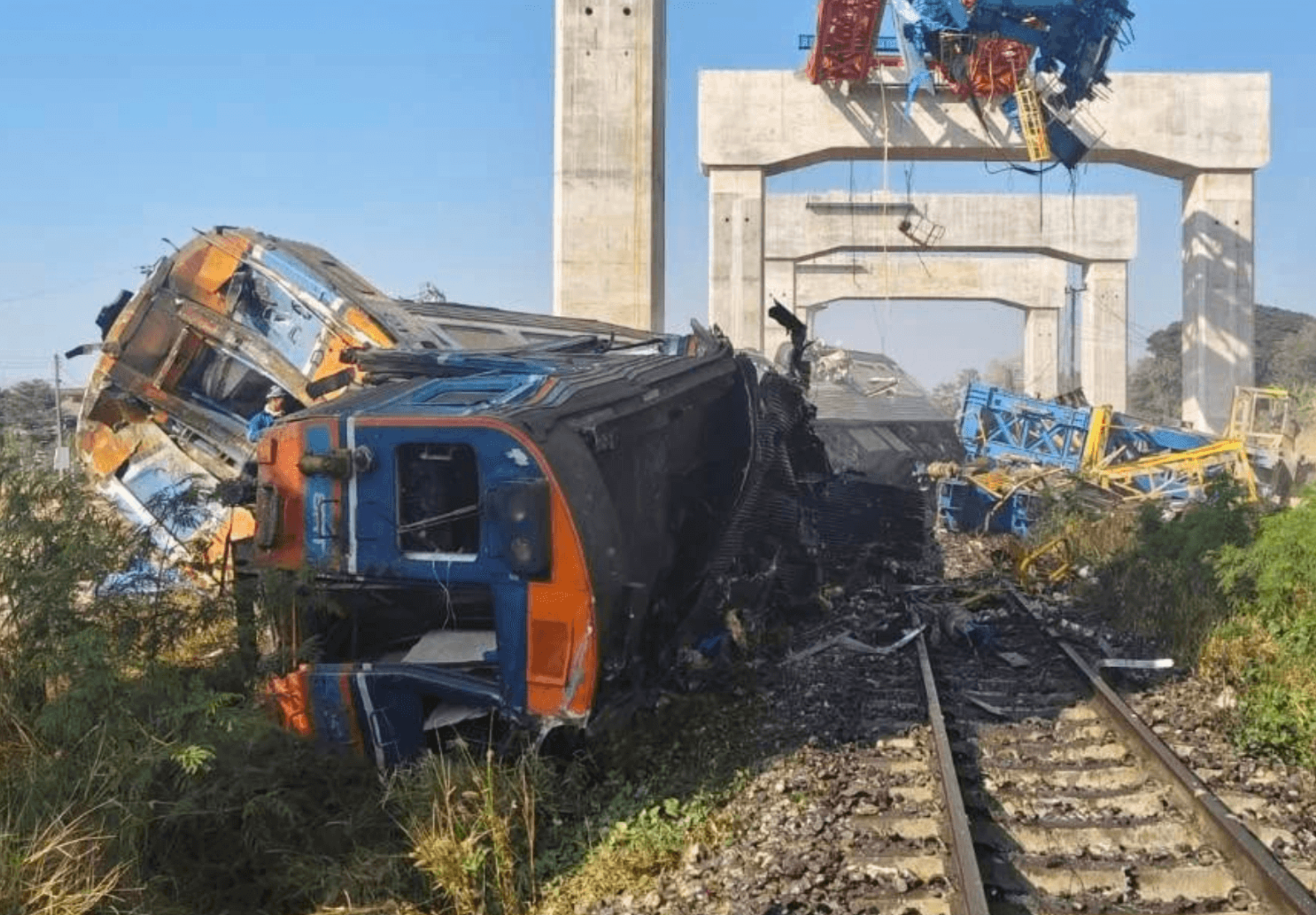

Thai transport officials have concluded that the crane collapse which struck a passenger train in Si Khio, Nakhon Ratchasima, was not an accident but the result of multiple engineering and safety failures during construction work on the high-speed rail project.
Get today's headlines by email 
The findings were announced on 26 May 2026 by Jirapong Thepphitak, Deputy Permanent Secretary of the Ministry of Transport and chairman of the fact-finding committee. The collapse happened on 14 January 2026 at 9.15am when a Launching Gantry crane fell onto Special Express Train No. 21 travelling from Krung Thep Aphiwat Central Terminal to Ubon Ratchathani between Nong Nam Khun and Si Khio stations.
Authorities said 31 people were killed in the disaster. Investigators spent 45 days examining the site, inspecting physical evidence, testing materials, analysing steel components with electron microscopes and producing engineering simulations to determine the cause of the collapse.
The committee found that the Launching Gantry, used to install large concrete segments, was operated in breach of engineering procedures and safety regulations on the day of the incident. Investigators said excessive load pressure was placed on the front support point, damaging structural components and causing the crane to collapse onto the railway line while the train was passing underneath.
The report also identified serious failings in site supervision and safety management. Investigators found construction teams had failed to obtain mandatory railway closure permission, known as ‘Window Time’, before carrying out work. The committee also cited unauthorised operations, inadequate equipment inspections and inconsistent on-site monitoring.
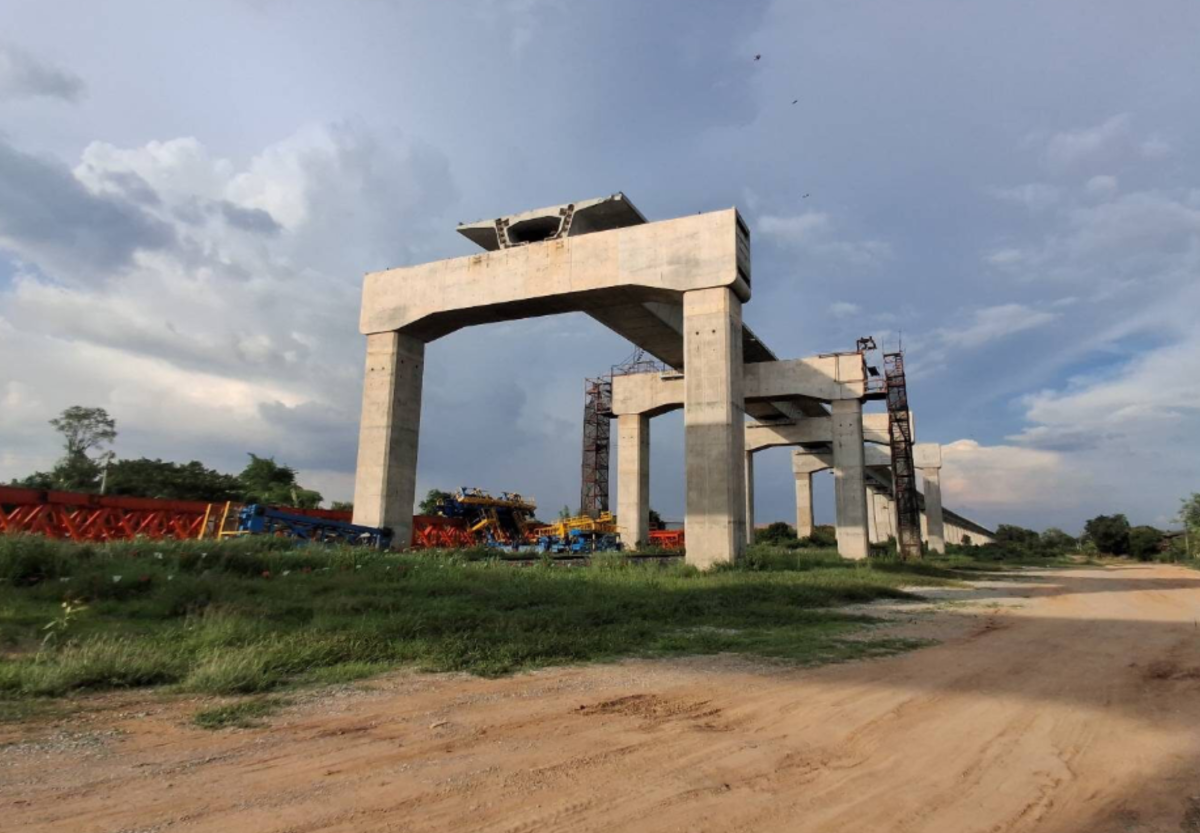
Piyapong Jiwatkulpaisan, Director-General of the Department of Highways, and Anan Phonimdaeng, acting governor of the State Railway of Thailand, joined the briefing. Officials said construction work on the project would continue under stricter safety controls and enhanced oversight measures.
The State Railway of Thailand said all work near active rail lines would now require written ‘Window Time’ approval before operations begin. Advance and retrospective work approvals will also be abolished, with supervising consultants required to approve work daily using photographic evidence from construction sites.
Rail authorities said engineers and safety officers must remain on site throughout operations, with work suspended immediately if standards are breached. Independent third-party specialists will inspect every Launching Gantry crane in use across the project, including structural, lifting and hydraulic systems.
Officials also announced new safety measures including real-time monitoring systems, tilt sensors, tension monitoring and CCTV cameras fitted to all major machinery. PT Bar steel supports will be replaced after no more than 60 uses and will be banned from reuse.
Amarin reported that the railway authority is also compiling details of damage to infrastructure, railway operations and property as part of ongoing legal and contractual action against those responsible.

Pictures courtesy of Amarin
Related story
Multiple-deaths-after-crane-collapses-onto-passenger-train
Join the discussion? 
Already a member? 
 Adapted by ASEAN Now Amarin 27 May 2026
Recommended Comments
Create an account or sign in to comment