



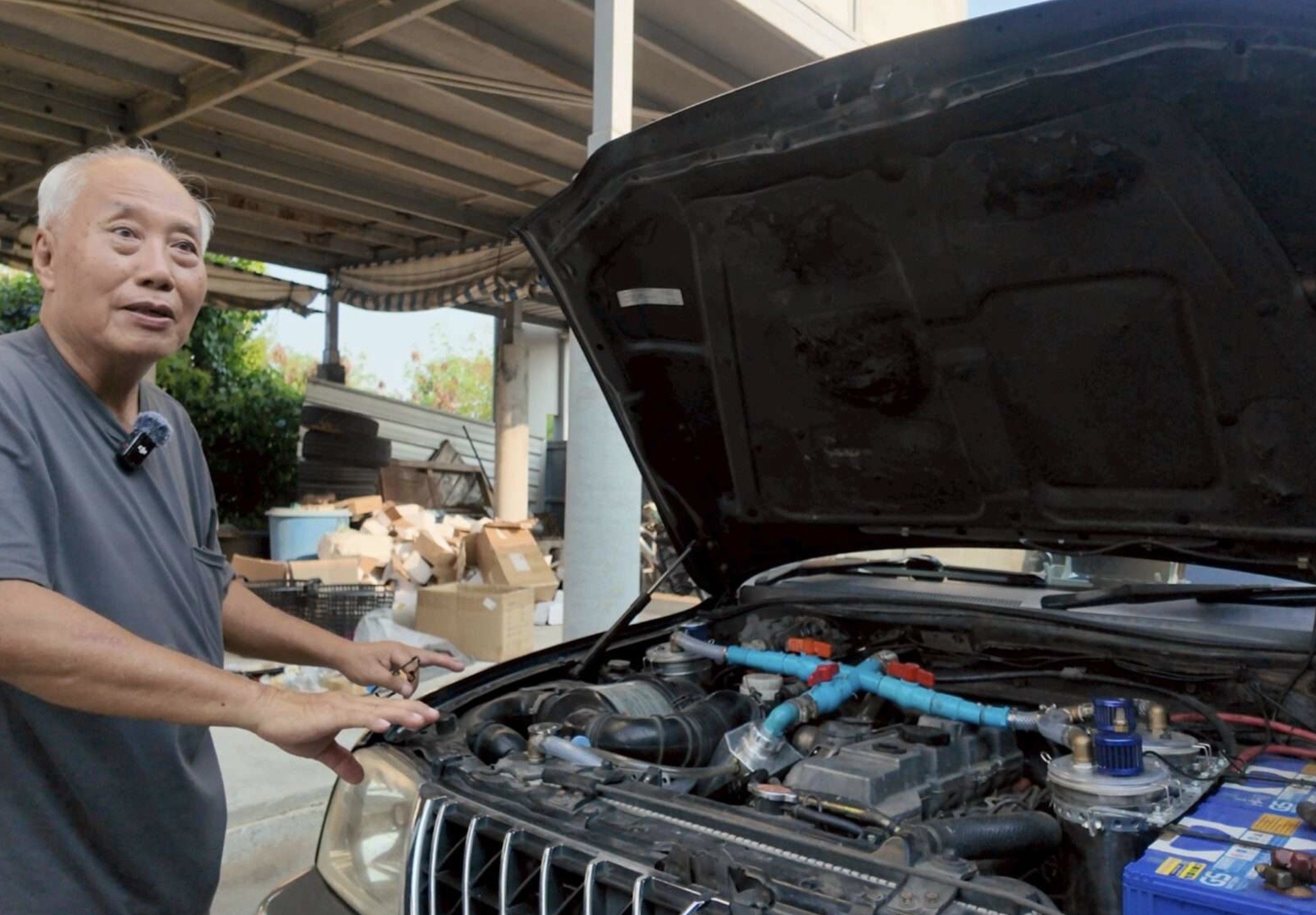

A Thai inventor and a retired architect are promoting an “Aquaboost” water-powered vehicle device in Pathum Thani, claiming it can reduce fuel consumption by 10 to 30 percent amid rising global oil prices. The system, installed in a vehicle’s engine bay, is said to improve performance while lowering emissions, offering potential relief to motorists affected by the ongoing energy crisis linked to Middle East conflict.
Get today's headlines by email 
The device is being installed at a private residence in Khlong Luang district, where 76-year-old Prasert Nipatkusol, known as “Uncle Sert Khlong Si”, operates a small workshop. He said installations take about three hours and can be fitted to petrol, diesel, NGV, or LPG engines without modifying the vehicle interior. Costs typically start at 6,500 baht for two sets, with additional units priced at 3,000 baht each.
Prasert, a former architect and graduate of King Mongkut’s University of Technology Ladkrabang, said he became interested in fuel-saving solutions after retirement. He discovered the concept online and later partnered with the device’s developer, Phumin Rasmi, who previously installed systems at customers’ homes. The pair began offering installations more formally in late 2025, with a revised version introduced in February 2026 that uses electricity to generate heat for improved efficiency.
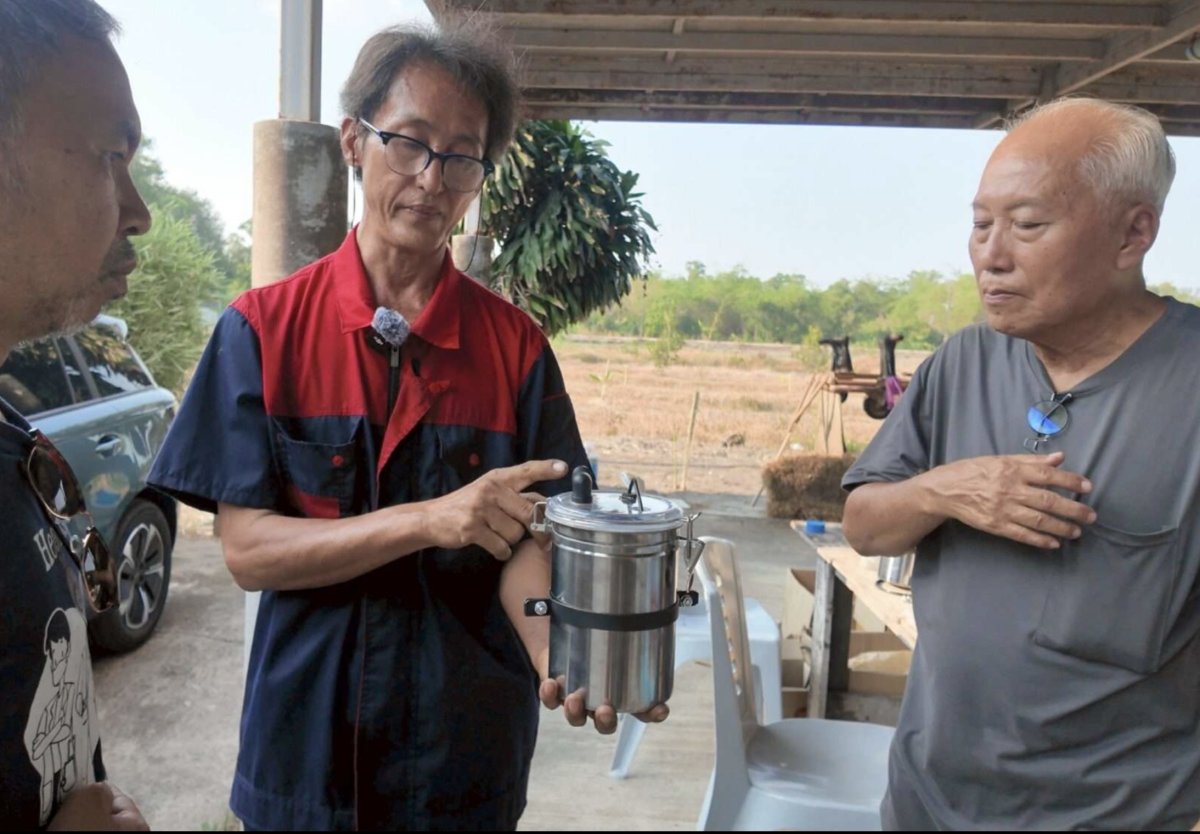
According to Prasert, vehicles fitted with the system show noticeable improvements in acceleration, smoother engine operation and reduced exhaust smoke. He estimates fuel savings of at least 10 percent, depending on factors such as vehicle condition, load, and driving behaviour. He added that the device requires refilling with water roughly every six hours and that failure to do so does not damage the engine but temporarily stops the system’s effect.
Picture courtesy of Thaitabloid
Phumin Rasmi, who holds a vocational diploma in automotive engineering and previously worked at an energy plant in Rayong, said the device works by converting water into vapour and introducing it into the engine’s intake manifold. He explained that high engine temperatures cause a reaction that separates hydrogen from oxygen, generating energy while lowering engine heat.
He also claimed the process leads to more complete combustion, reducing carbon dioxide emissions and particulate pollution. “The innovation is currently only one percent developed,” he said, adding that further funding could enable development towards vehicles powered solely by water.
The inventor said he has patented the full process and intends to keep the technology in Thailand rather than selling it abroad. He hopes to establish a manufacturing base and expand installation capacity nationwide, citing growing interest from motorists across the country.
Prasert said the workshop can currently handle a maximum of three vehicles per day due to manpower constraints. To scale operations, he plans to train mechanics from local garages, charging for training while supplying equipment at 2,500 baht per set. He said trained partners could either serve local customers or receive referrals from the central operation.
While the claims of improved fuel efficiency and reduced emissions may attract attention during a period of high fuel costs, no independent verification or regulatory assessment of the technology was mentioned. The device’s broader adoption may depend on further testing, investment and potential government support.
Thaitabloid reported that the developers aim to expand their network and refine the technology, with the long-term goal of integrating the system into vehicles at the manufacturing stage. They also expressed ambitions to export the product globally while generating domestic employment.
Join the discussion? 
Already a member? 
 Adapted by ASEAN Now Thaitabloid 18 Apr 2026
-
 2
2
Recommended Comments
Create an account or sign in to comment