



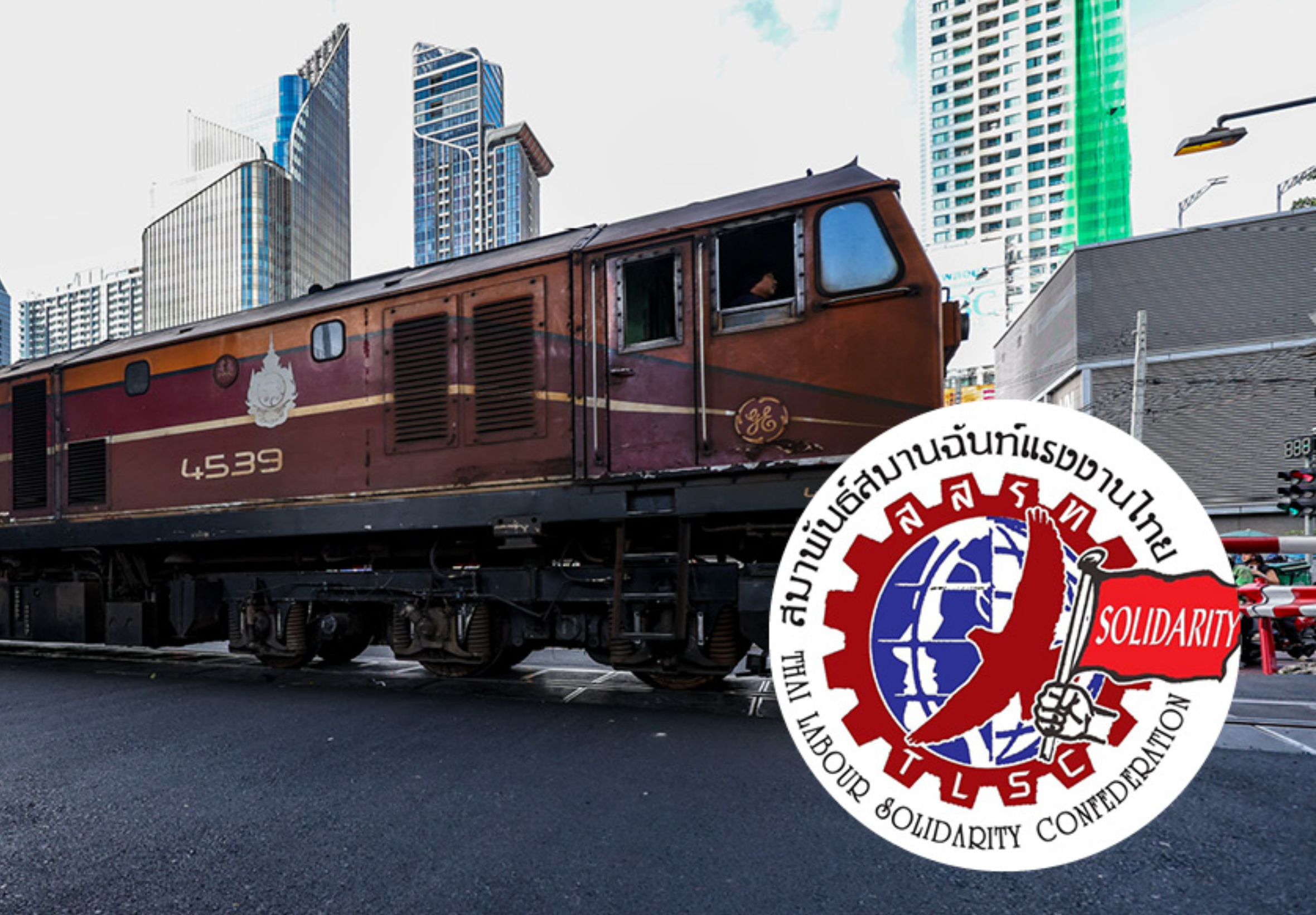

Thailand’s Thai Labour Solidarity Confederation, has called on the government to overhaul the country’s rail system following the deadly train crash at the Asok-Din Daeng rail crossing in Bangkok on 16 May. The collision between a freight train and a passenger bus left eight people dead and more than 30 injured, prompting renewed scrutiny of long-standing structural problems within the State Railway of Thailand (SRT).
Get today's headlines by email 
In a statement issued on 20 May, the federation said the tragedy must not become “just another short-lived public outcry” and urged authorities to pursue comprehensive rail reform to improve safety and make rail transport the country’s main transport system. The group criticised senior officials and politicians for commenting publicly after disasters without fully understanding the issues or accepting responsibility, before allowing public attention to fade.
The federation said the crash should not be blamed solely on rail crossing staff, the bus driver, or reports of drug use by a train driver. Instead, it argued that the government must address wider systemic failings involving law enforcement, policy, staffing, technology, equipment and public awareness campaigns through cooperation between state agencies, labour unions, local authorities and academics.
The statement also highlighted long-standing financial and operational problems facing the SRT. According to the federation, the railway operator faces operating costs of 3.20 baht per passenger kilometre while government policy permits fares of only 24 satang. Although the law requires the state to compensate the difference, the group said payments have been heavily delayed.
As of September 2025, the government reportedly owed the SRT around 320 billion baht in compensation payments. The federation said this had forced the railway authority to borrow money to maintain liquidity while paying more than 5 billion baht annually in interest costs.
The statement further noted that the average age of locomotives has reached 40 years. It also pointed to staffing shortages linked to a 1998 cabinet resolution limiting new recruitment to only 5 percent of retiring staff, reducing the workforce from 20,000 employees to about 8,000 today.
The federation declared its support for expanding rail transport as a national strategic priority but opposed proposals to ban train services from entering inner Bangkok. It argued that such measures would increase travel costs for low-income residents, students and commuters. The group also opposed any closure of Bangkok Railway Station, better known as Hua Lamphong.
The Standard reported that the organisation expressed support for railway workers and the State Railway Workers’ Union of Thailand, saying any employees found guilty of wrongdoing should face legal action. However, it warned against treating all railway staff and the SRT itself as “defendants in the eyes of society”.
Bus-hit-by-train-near-Rama-9-bursts-into-flames
Train-driver-fails-drug-test-after-Bangkok-crash
Train-driver-at-controls-before-Bangkok-crash
Join the discussion? 
Already a member? 
 Adapted by ASEAN Now TheStandard 21 May 2026
Recommended Comments
Create an account or sign in to comment