



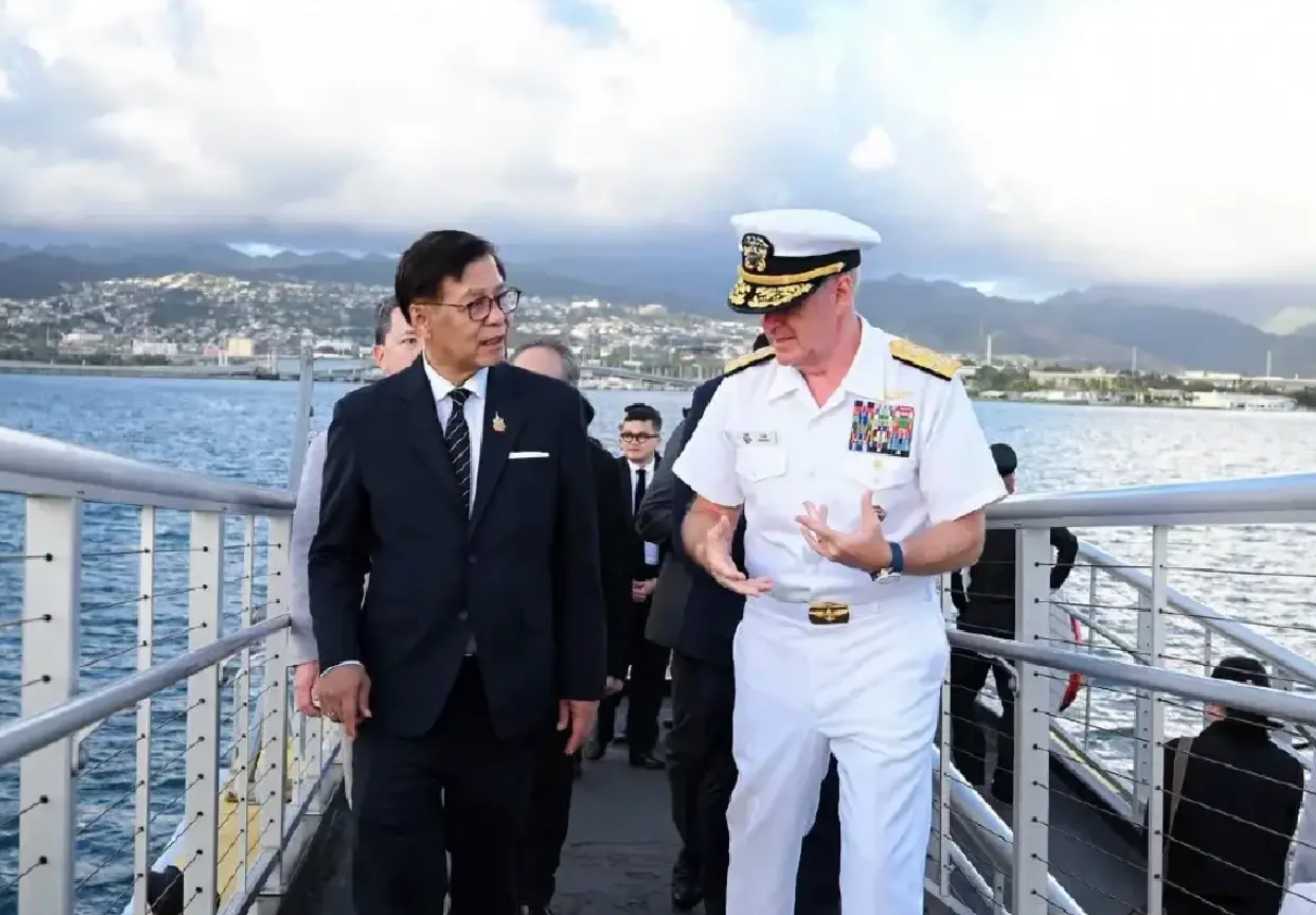

Thailand has reaffirmed that it will not choose sides in the strategic competition between the United States and China, instead pursuing security cooperation with both countries based on its own national interests. The policy includes strengthening its long-standing alliance with the United States while continuing defence and security engagement with China.
Get today's headlines by email 
Deputy Prime Minister and Minister of Foreign Affairs Sihasak Phuangketkeow outlined the approach during a visit to Hawaii, where he met the commander of US forces in the Pacific. Discussions covered regional security, bilateral cooperation, Thailand’s military modernisation plans and efforts to tackle emerging threats such as cybercrime.
Sihasak said Thailand remains the United States’ oldest treaty ally in the region, but stressed that closer security cooperation with Washington should not be viewed as taking sides. He said Bangkok would continue to work with both the US and China, placing Thailand’s own security interests first.
He explained that security ties with the United States date back many years, particularly during the Cold War, but said changing global conditions required cooperation to be modernised to address new challenges. According to Sihasak, the policy is not directed against any country but is intended to ensure Thailand is prepared for future security risks.
The minister said Thailand also believes regional security should be based on international rules and an open regional order that includes all countries without excluding any nation.
Talks in Hawaii included Thailand’s plans to strengthen its defence capabilities through the acquisition of modern military equipment. Sihasak said orders had already been placed for US-made equipment, with Washington providing low-interest loans for some purchases, while Thailand had submitted a list of intended acquisitions for US consideration.
Cybersecurity was another key topic, with both countries recognising the growing threat posed by cybercrime, particularly online scams.
Sihasak said the United States was ready to support Thailand’s efforts and encouraged Bangkok to continue hosting meetings focused on combating transnational crime, which affects both countries and many others worldwide. Washington also expressed support for Thailand’s efforts to develop its domestic defence industry.
On maritime issues involving Thailand and Cambodia, Sihasak said the United States did not raise the matter during the meeting. However, Washington encouraged both countries to continue bilateral dialogue, build trust and work towards resolving their differences.
The discussions also covered Myanmar, with Sihasak saying Thailand was pursuing a policy of greater re-engagement to help the country return to ASEAN. He said any election in Myanmar would not resolve the crisis on its own and that peace talks and reconciliation efforts must continue alongside political developments.
The Nation reported that Sihasak confirmed he had invited ASEAN foreign ministers to Bangkok on Sunday, July 12, 2026, to meet Myanmar’s foreign minister and receive an update on developments. He described the meeting as another step towards Myanmar’s re-engagement with ASEAN, although Cambodia had initially indicated it would not attend.
Join the discussion? 

9 July 2026
Recommended Comments
Create an account or sign in to comment