



Skip to content
View in the app

A better way to browse. Learn more.

Thailand News and Discussion Forum | ASEANNOW

A full-screen app on your home screen with push notifications, badges and more.

To install this app on iOS and iPadOS
  1. Tap the Share icon in Safari
  2. Scroll the menu and tap Add to Home Screen.
  3. Tap Add in the top-right corner.
To install this app on Android
  1. Tap the 3-dot menu (⋮) in the top-right corner of the browser.
  2. Tap Add to Home screen or Install app.
  3. Confirm by tapping Install.

Thailand Rebukes Cambodia at UN Security Council

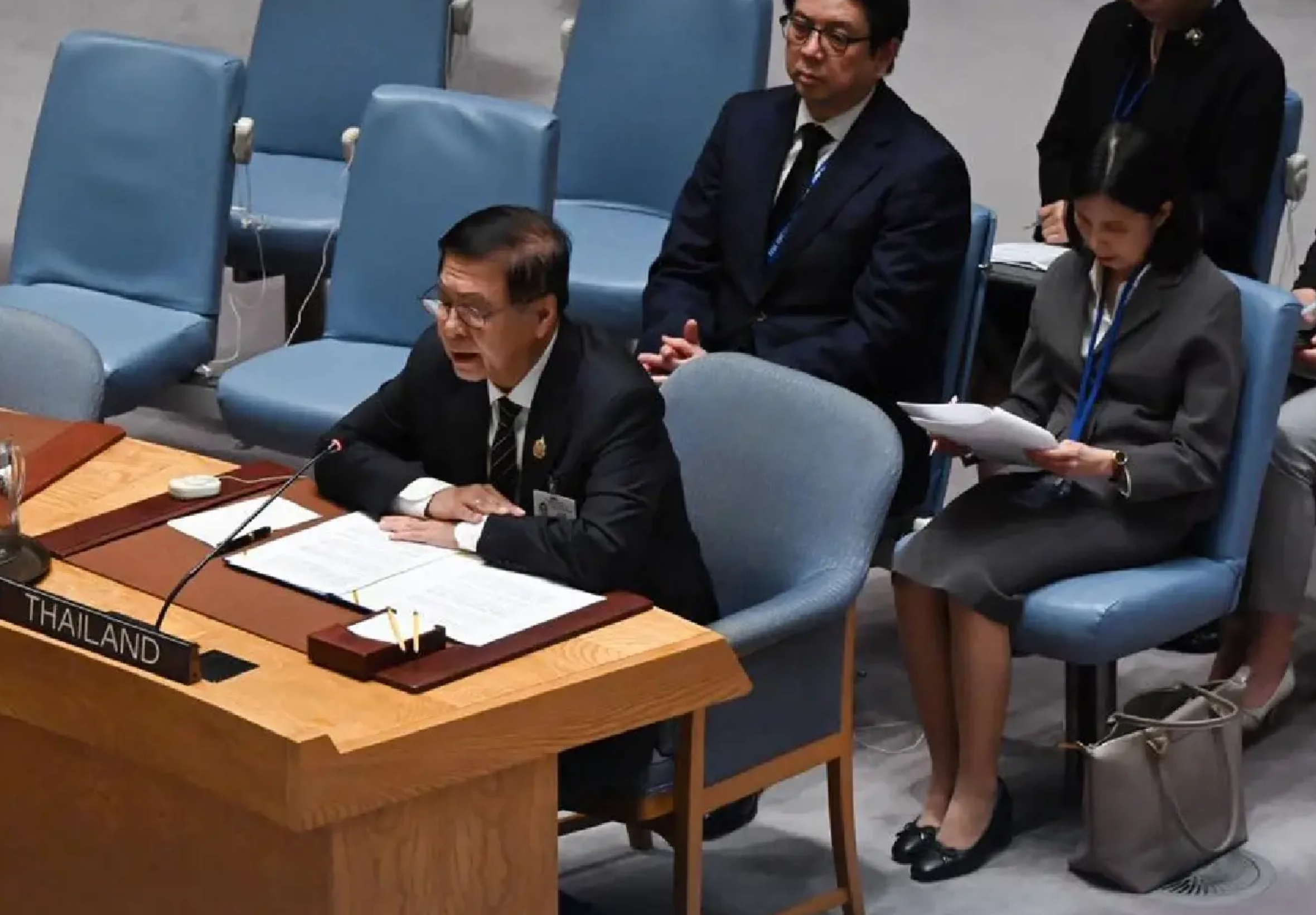
Thailand told the United Nations Security Council (UNSC) on May 26 that it has never sought to claim the territory of any other country, after Cambodia raised the Thai-Cambodian dispute during a debate in New York.

Get today's headlines by email image.png

Thai representative Sihasak Phuangketkeow addressed the UNSC open debate on maintaining international peace and security at UN headquarters. He said Thailand remained fully committed to the ceasefire agreement with Cambodia, but warned that lasting peace required sincere cooperation and an end to accusations made on international platforms.

Sihasak attended the session at the invitation of Chinese Foreign Minister Wang Yi. During his remarks, he congratulated China on assuming the presidency of the Security Council and warned that confidence in the United Nations-centred international system was declining amid growing instability and geopolitical tensions.

He said the idea that “might makes right” and transactional politics were increasingly replacing established international rules and principles. Sihasak stressed that respect for international law and the UN Charter should not become “merely rhetoric or tools for pursuing unilateral interests”.
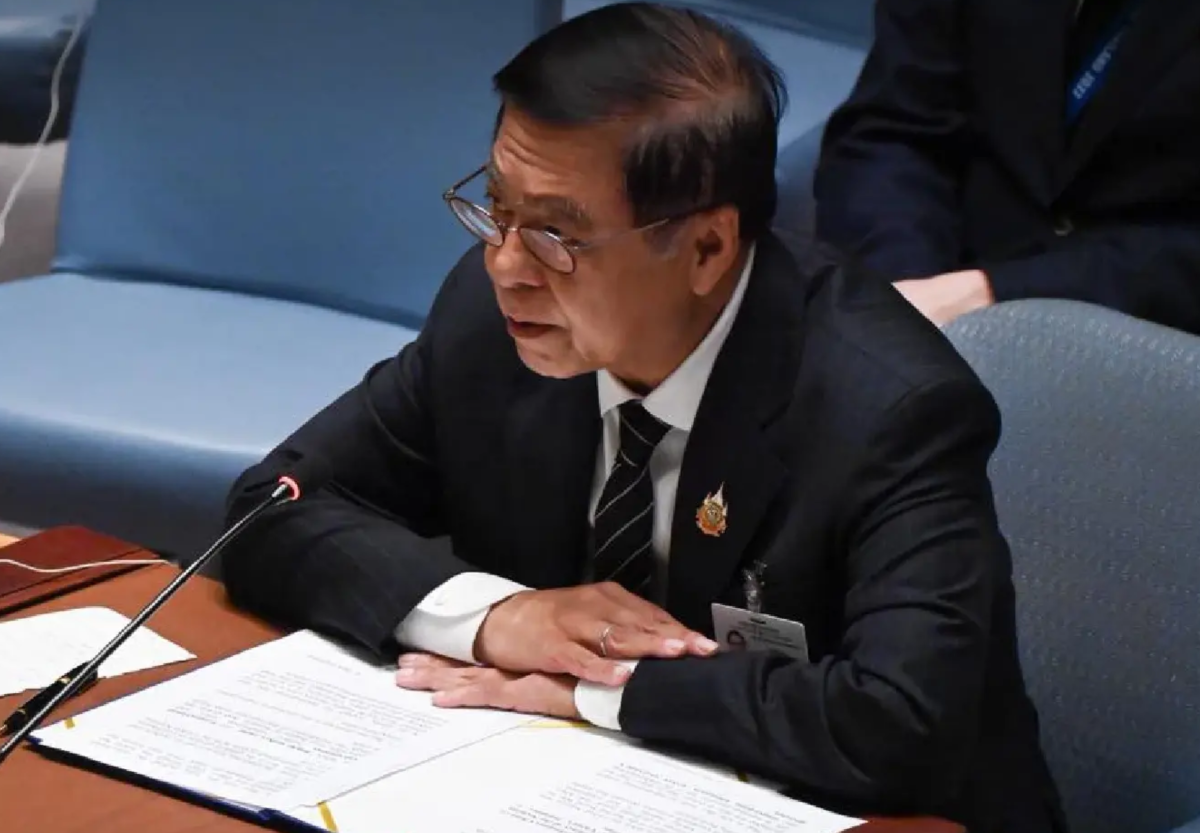
image.png

Picture courtesy of The Nation

Thailand proposed three key principles to strengthen multilateralism and preserve the UN-centred international order. First, Sihasak called for stronger collective responsibility and restraint among member states, saying both major powers and smaller nations shared responsibility for defending the UN Charter.

Second, he urged reforms to multilateral institutions so they remain effective and resilient in responding to complex global challenges. He said the UNSC should not become a platform for geopolitical confrontation and called on the five permanent members to exercise greater responsibility, particularly regarding veto powers in cases involving genocide or mass atrocities.

Third, Sihasak said stronger regional and subregional cooperation could reinforce multilateralism. He warned that without the United Nations, the world would face greater division, uncertainty and danger.

Sihasak later addressed the Thai-Cambodian issue directly after Cambodia’s Deputy Prime Minister and Foreign Minister Prak Sokhonn referred to conflict, ceasefire arrangements and territorial matters during the debate.

He said Thailand had initially not intended to raise bilateral issues because the UNSC was not the appropriate venue for such discussions. However, he said Thailand had to respond after Cambodia mentioned the dispute during the session.

Sihasak stated that Thailand wanted progress not only on ceasefire arrangements but also towards sustainable and stable peace. He added that both countries needed to build trust and open “a new chapter of history” based on international law and the UN Charter.

He also criticised Cambodia for what he described as attempts to seek unilateral advantage and divert attention from core issues. “Sustainable ceasefire efforts leading to sustainable peace must come from both sides, with sincerity and genuine intentions. Words and actions must match,” he said.

Speaking after the debate, Sihasak said Thailand had repeatedly made clear that if progress was to be achieved on border demarcation, the MOU framework or maritime issues under the United Nations Convention on the Law of the Sea (UNCLOS), Cambodia must stop making accusations against Thailand.

The Nation reported that on the sidelines of the meeting, Sihasak also held bilateral talks with representatives from the United States, Costa Rica and China. Discussions included regional developments, the Thai-Cambodian border issue and strengthening Thailand’s international partnerships.

Join the discussion? image.png

Already a member? image.png

image.png Adapted by ASEAN Now Nation 28 May 2026

User Feedback

Recommended Comments

ikke1959 Diamond Member

ikke1959

Advanced Member

Maybe this man forgot that Thailand is one which doesn't accept the border with Cambodia and has already for decades a problem with it. Thailand does not recognize the ICJ, which also decided that Thailand has to accept the border. However this man can say they don't claim territory, as in the mind of Thailand it is theirs. So why a dispute than?

Myran Gold Member

Myran

Advanced Member
6 hours ago, ikke1959 said:

Maybe this man forgot that Thailand is one which doesn't accept the border with Cambodia and has already for decades a problem with it. Thailand does not recognize the ICJ, which also decided that Thailand has to accept the border. However this man can say they don't claim territory, as in the mind of Thailand it is theirs. So why a dispute than?

"Thailand does not recognize the ICJ, which also decided that Thailand has to accept the border"

Stop spreading misinformation. The ICJ has made absolutely no ruling on the border between Cambodia and Thailand. In fact, they expressively state: "The Court will not engage in a general delimitation of the frontier area between the two countries."

ikke1959 Diamond Member

ikke1959

Advanced Member
47 minutes ago, Myran said:

"Thailand does not recognize the ICJ, which also decided that Thailand has to accept the border"

Stop spreading misinformation. The ICJ has made absolutely no ruling on the border between Cambodia and Thailand. In fact, they expressively state: "The Court will not engage in a general delimitation of the frontier area between the two countries."


The International Court of Justice (ICJ) has been involved in several historical and recent boundary disputes between Cambodia and Thailand. The core legal interventions focus on the ancient Khmer temple of Preah Vihear and four other disputed border areas. [1, 2]

The history and current status of these ICJ cases involve:

1. Preah Vihear Temple (1962 Judgment)

  • The Ruling: The ICJ ruled that the 11th-century Hindu temple of Preah Vihear is situated in territory under the sovereignty of Cambodia, and ordered Thailand to withdraw its military and police forces from the area.

  • Basis: The court largely relied on a mapping error made by French cartographers in 1904 (known as the Annex I map) which placed the temple within Cambodia, though Thailand later contested this line.

  • 2013 Interpretation: Following renewed armed clashes in the late 2000s, Cambodia requested an interpretation of the 1962 judgment. The ICJ unanimously clarified that the 1962 ruling granted Cambodia sovereignty over the entire promontory of Preah Vihear, including the adjacent vicinities, and reiterated Thailand's obligation to withdraw its personnel. [1, 2, 3, 4, 5]

  • 2. Four New Disputed Areas (2025 Submission)

    • The Dispute: Border tensions escalated significantly, leading to armed clashes. The ongoing dispute centers on the overlapping territorial claims of four specific areas: the Ta Moan Thom, Ta Moan Toch, and Ta Krabei ancient temples, as well as the Mom Bei region.

    • ICJ Referral: After failed bilateral negotiations, the Cambodian government formally submitted a letter to the ICJ at The Hague to seek arbitration for these four disputed locations.

    • Thailand's Stance: Thailand has consistently maintained a position against internationalizing the dispute. The Thai government has historically rejected the ICJ's compulsory jurisdiction in this matter, arguing that boundary demarcation issues should be resolved through direct bilateral mechanisms and Joint Boundary Commissions (JBC

    The statement above is just to find on the internet... nothing to do with misinformation as you claim

Myran Gold Member

Myran

Advanced Member
13 minutes ago, ikke1959 said:


The International Court of Justice (ICJ) has been involved in several historical and recent boundary disputes between Cambodia and Thailand. The core legal interventions focus on the ancient Khmer temple of Preah Vihear and four other disputed border areas. [1, 2]

The history and current status of these ICJ cases involve:

1. Preah Vihear Temple (1962 Judgment)

  • The Ruling: The ICJ ruled that the 11th-century Hindu temple of Preah Vihear is situated in territory under the sovereignty of Cambodia, and ordered Thailand to withdraw its military and police forces from the area.

  • Basis: The court largely relied on a mapping error made by French cartographers in 1904 (known as the Annex I map) which placed the temple within Cambodia, though Thailand later contested this line.

  • 2013 Interpretation: Following renewed armed clashes in the late 2000s, Cambodia requested an interpretation of the 1962 judgment. The ICJ unanimously clarified that the 1962 ruling granted Cambodia sovereignty over the entire promontory of Preah Vihear, including the adjacent vicinities, and reiterated Thailand's obligation to withdraw its personnel. [1, 2, 3,

    , 5]

  • 2. Four New Disputed Areas (2025 Submission)

    • The Dispute: Border tensions escalated significantly, leading to armed clashes. The ongoing dispute centers on the overlapping territorial claims of four specific areas: the Ta Moan Thom, Ta Moan Toch, and Ta Krabei ancient temples, as well as the Mom Bei region.

    • ICJ Referral: After failed bilateral negotiations, the Cambodian government formally submitted a letter to the ICJ at The Hague to seek arbitration for these four disputed locations.

    • Thailand's Stance: Thailand has consistently maintained a position against internationalizing the dispute. The Thai government has historically rejected the ICJ's compulsory jurisdiction in this matter, arguing that boundary demarcation issues should be resolved through direct bilateral mechanisms and Joint Boundary Commissions (JBC

    The statement above is just to find on the internet... nothing to do with misinformation as you claim

Thanks for proving my point: they have made absolutely no ruling on the border. They have only ruled that Preah Vihear and the small promontory it stands on is Cambodian. They have said nothing about Thailand "having to accept the border". They ruled about Preah Vihear only, not the border.

Again, they literally spell it out themselves: ""The Court will not engage in a general delimitation of the frontier area between the two countries."

In other words, claiming "Thailand does not recognize the ICJ, which also decided that Thailand has to accept the border." is a lie.

Create an account or sign in to comment

Account

Navigation

Search

Search

Configure browser push notifications

Chrome (Android)
  1. Tap the lock icon next to the address bar.
  2. Tap Permissions → Notifications.
  3. Adjust your preference.
Chrome (Desktop)
  1. Click the padlock icon in the address bar.
  2. Select Site settings.
  3. Find Notifications and adjust your preference.

