



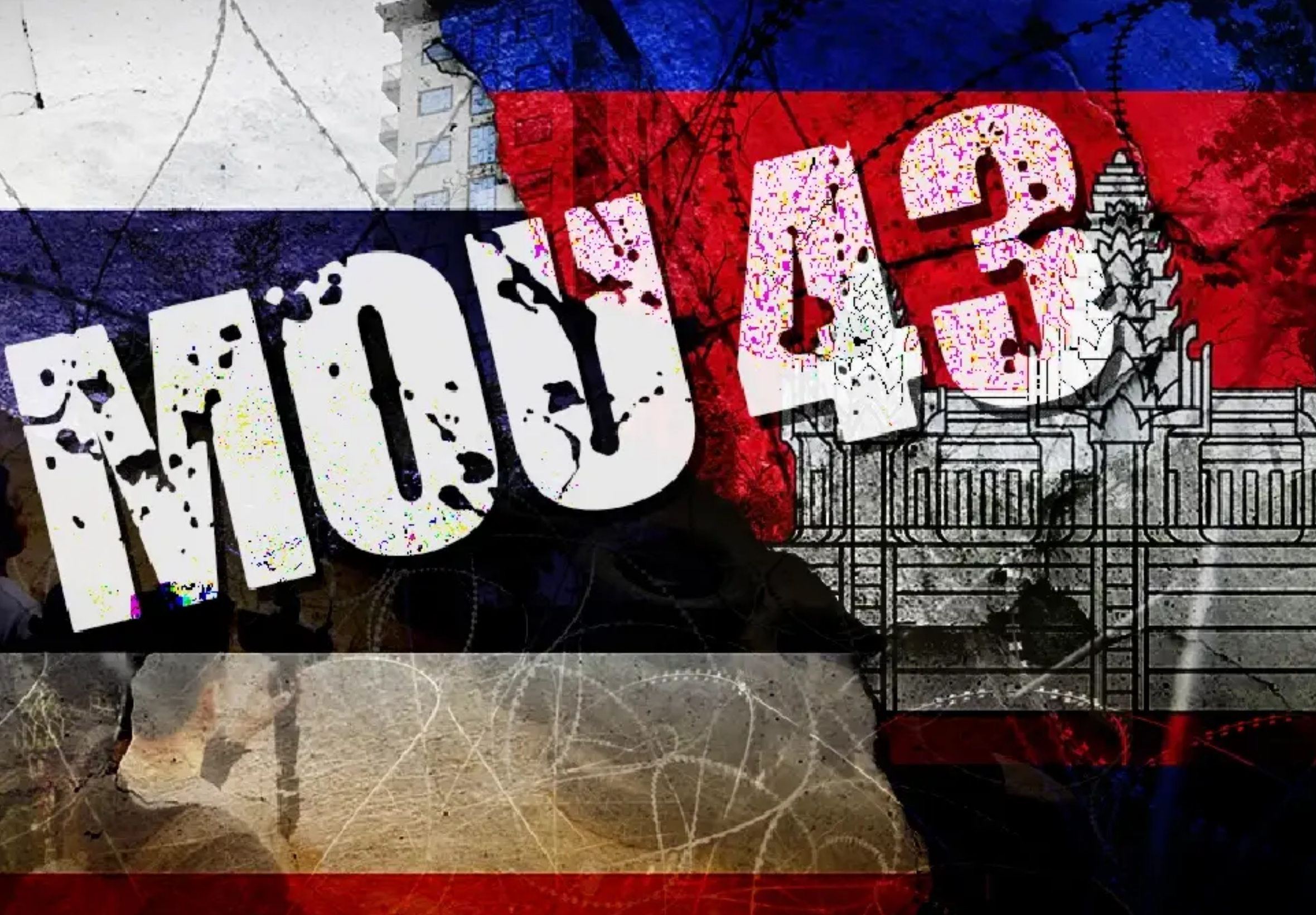

A Senate committee has unanimously urged Thailand to revoke MOU43, arguing the Thai-Cambodian border agreement may be legally flawed and ineffective in resolving long-running territorial disputes linked to disputed French-era maps. The recommendation was debated in the Senate on Monday, May 18, before a vote on whether to forward the report to the government and Cabinet for consideration.
Get today's headlines by email 
The ad hoc committee, chaired by Senator Noppadon Inna, was established to study whether Thailand should cancel MOU43 and MOU44. MOU43, also known as MOU 2000 or MOU 2543, governs the survey and demarcation of the Thai-Cambodian land boundary through the Joint Boundary Commission (JBC).
The committee argued that MOU43 may not have been constitutionally valid because the Cabinet in 2000 allegedly only acknowledged the agreement rather than formally approving it. It also claimed the agreement was never submitted to Parliament despite involving maps that could affect Thai territory or state jurisdiction.
MOU43 is a bilateral framework signed in June 2000 between Thailand and Cambodia to guide negotiations and survey work along disputed sections of the land border. The agreement established the Joint Boundary Commission as the main mechanism for resolving border issues, but did not itself redraw the frontier.
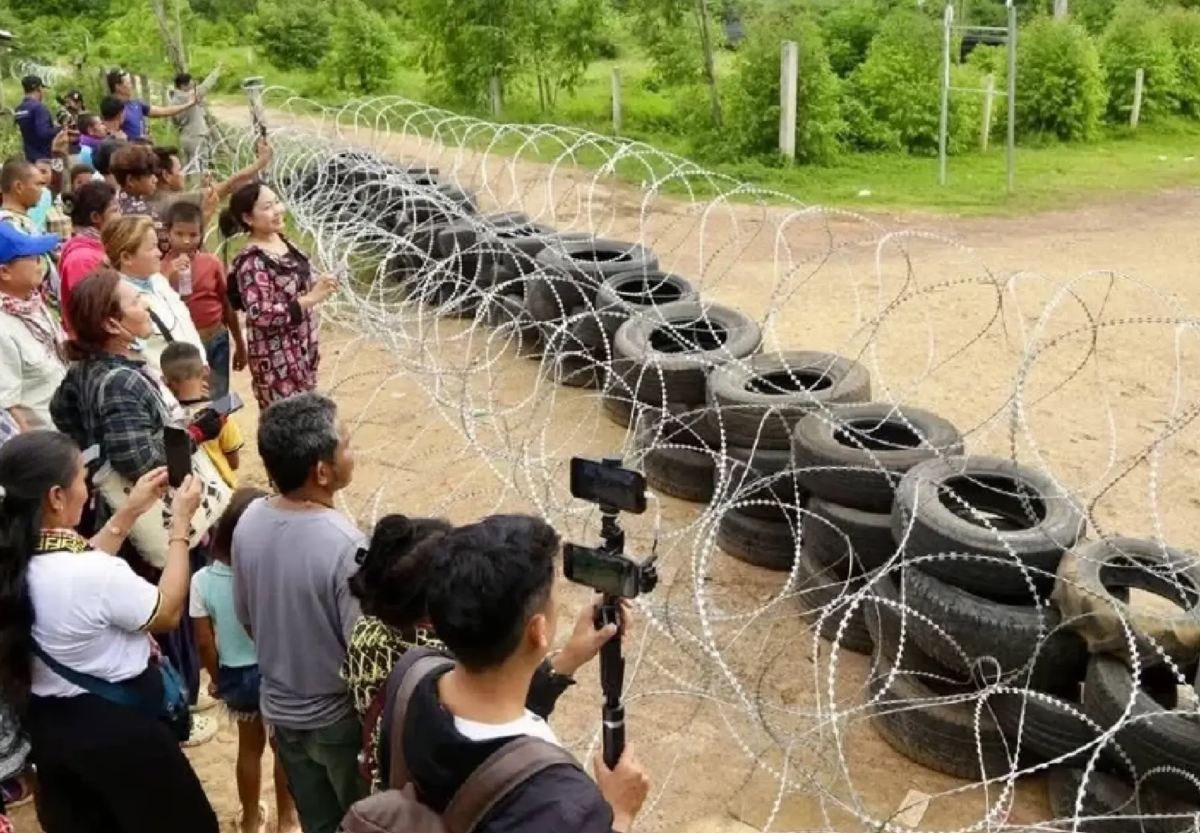
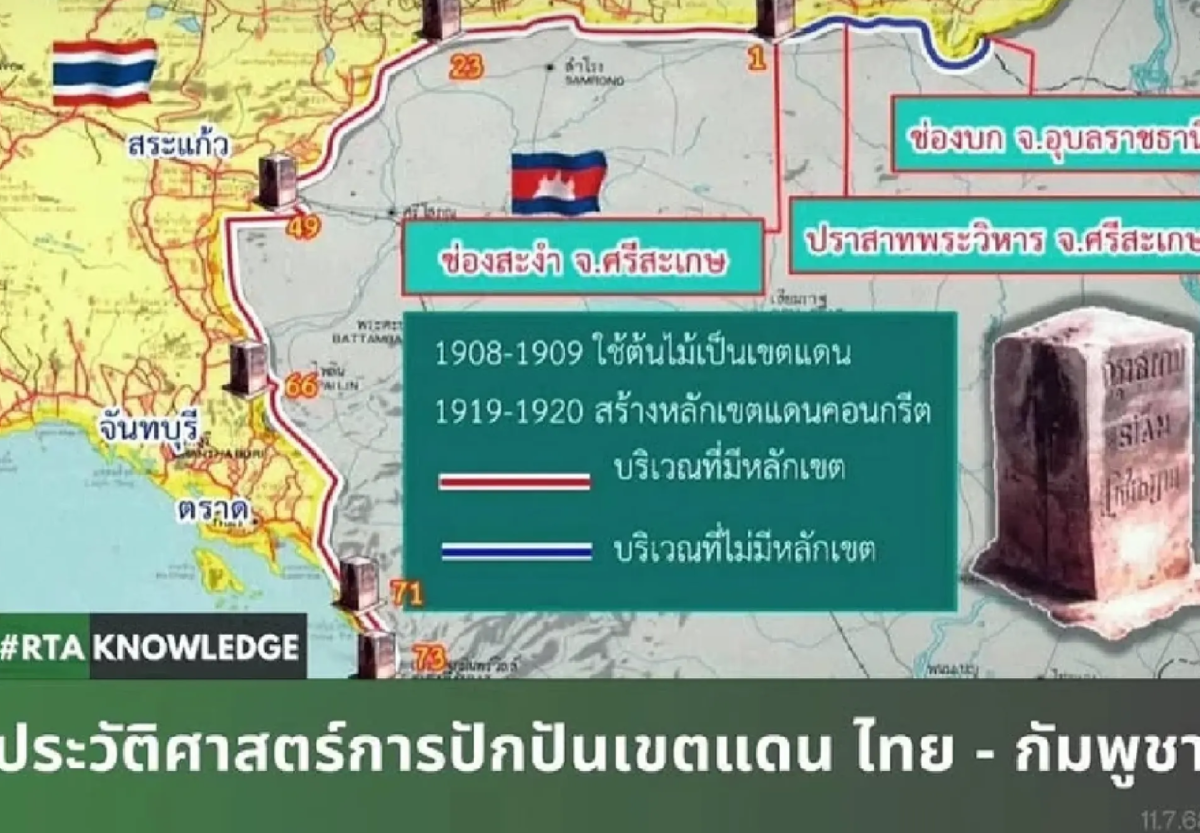
A major focus of the committee’s criticism was the use of 1:200,000-scale French-era maps. The report stated these maps were not formally produced by the Siam-Indochina Boundary Demarcation Commission and had never previously been accepted by Thailand as binding boundary maps.
The committee also argued that the boundary shown in the Dangrek Mountains section differed significantly from actual geographical conditions. The area around the Preah Vihear temple has remained one of the most contentious points in the dispute, with Thailand relying on the watershed principle while Cambodia has historically referred to French-produced maps.
The report further criticised the powers of the JBC, saying the body lacked sufficient authority to deal with alleged encroachment or physical changes along border areas. It claimed Cambodian officials had repeatedly allowed or encouraged movement into disputed areas, while Thai protests and negotiations had failed to halt the alleged activities.
Committee members also said MOU43 had failed to deliver meaningful progress despite being in place for nearly 26 years. They argued the framework became outdated following border clashes in 2025, after which a ceasefire took effect on December 27, 2025, following talks under the General Border Committee.
The committee proposed that Thailand instead use the December 27, 2025 Joint Statement as the main framework for future negotiations. It said the ceasefire arrangement, border controls and demining measures should remain in place until both land and maritime boundary disputes are resolved.
The report also highlighted Cambodia’s 1993 Constitution, which refers to borders defined by 1:100,000-scale maps produced between 1933 and 1953. The committee argued this could create future deadlock because Cambodia may reject watershed-based surveys while Thailand may reject maps based on disputed French-era boundaries.
The Nation reported that acording to the committee, Thailand could revoke MOU43 unilaterally by notifying Cambodia at least three months in advance. Existing agreements reached before revocation would remain valid, while other treaties and bilateral mechanisms would continue to apply.
Pictures courtesy of The Nation
Join the discussion? 
Already a member? 
 Adapted by ASEAN Now Nation 19 May 2026
Recommended Comments
Create an account or sign in to comment