



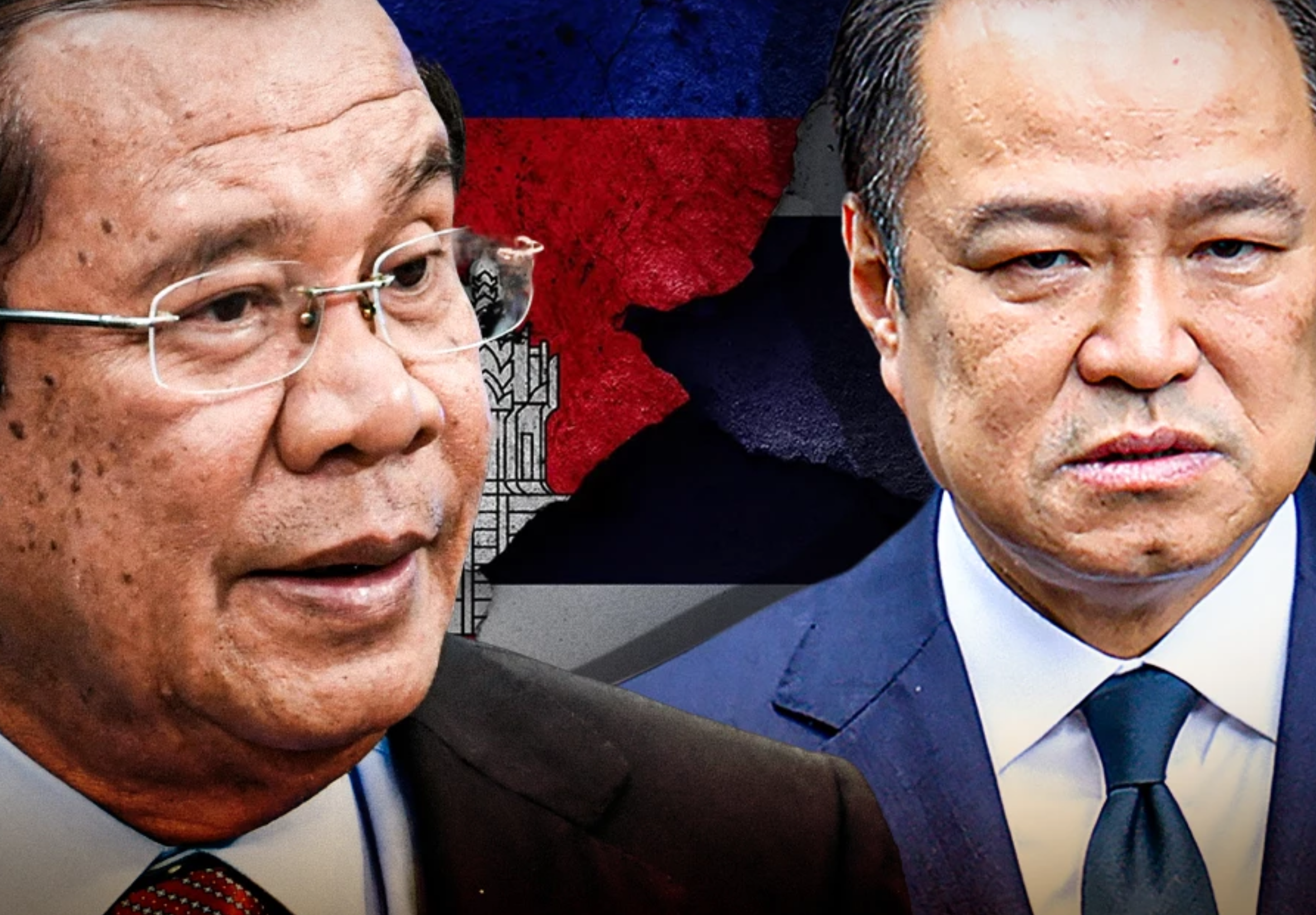

Thailand is preparing to formally cancel the 2001 Memorandum of Understanding (MOU 44) with Cambodia, marking a major policy shift that could reopen long-running disputes over maritime claims and undersea resources. The move follows more than two decades of deadlock, with no agreement reached on maritime boundaries. Prime Minister Anutin Charnvirakul confirmed the decision will be included in the government’s policy statement to Parliament.
Get today's headlines by email 
The new Cabinet is scheduled to take the oath of office on April 6, 2026, with its first meeting the same day to approve the policy statement for delivery on April 9-10. Anutin had pledged to cancel MOU 44 during his campaign ahead of the February 8, 2026 election. He reiterated his stance after meeting senior defence officials on March 31, stating clearly that the agreement would be scrapped.
MOU 44 extends from land boundary marker 73 in Khlong Yai district, Trat, to the continental shelf, covering areas believed to hold valuable resources. However, negotiations between Thailand and Cambodia have failed to define a maritime boundary since the 1970s. Thai military officials have consistently argued that any resource-sharing must be tied to final boundary demarcation, not handled separately.
Critics in Thailand have warned that MOU 44 could weaken territorial claims, particularly regarding Cambodia’s Line 266, which cuts across Koh Kood. On land, disputes persist around boundary markers, including marker 72, which has disappeared, leaving a contested area of around 286,098 square metres. The issue traces back to the 1907 Siam-France treaty, which originally defined the boundary.
Tensions have also centred on a sediment-trapping dam built by Cambodia in 1997, which Thailand says has caused the loss of about 3,000 square metres of land while expanding nearby areas in Koh Kong by around 30,000 square metres. Although part of the dam was dismantled, Thai authorities say the work was incomplete and further dredging is required. Reports indicate that efforts to remove the remaining structure stalled after intervention by Cambodian Senate President Hun Sen.
Cambodia has so far shown little public reaction to Thailand’s plan to cancel MOU 44, possibly because the agreement has yielded no tangible progress. However, Hun Sen has strongly opposed any move to cancel MOU 43, which governs land boundaries and requires both sides to avoid altering disputed areas. Thai military sources argue that recent operations have already moved beyond its framework.
The Nation reported that the Thai government may turn to international law to resolve maritime claims while addressing the unfinished dam issue. On land, any revision or replacement of MOU 43 would need to reflect current security conditions. With both maritime and land disputes unresolved, tensions along the Thai-Cambodian border are likely to continue.
Join the discussion? 
Already a member? 
 Adapted by ASEAN Now Nation 4 Apr 2026
Recommended Comments
Create an account or sign in to comment