



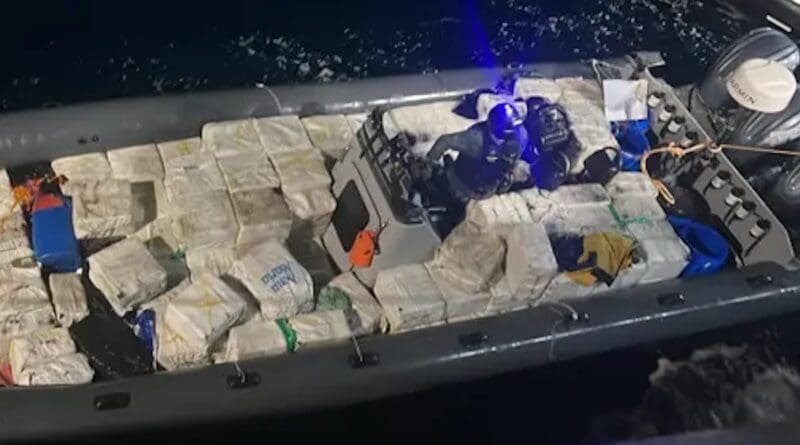

Authorities say a coordinated international operation has disrupted a key maritime drug trafficking corridor across the Atlantic, seizing large quantities of narcotics and intercepting multiple vessels linked to smuggling networks.
Get today's headlines by email 
The mission, coordinated by Europol, targeted routes used to transport cocaine from Latin America to Europe through complex transfers at sea designed to evade detection.
Officials reported that more than 12 tonnes of cocaine and about 9.5 metric tonnes of hashish were confiscated during the two-week operation. Eight vessels suspected of trafficking were intercepted and 54 people were arrested.
Coordinated effort across the Atlantic
The crackdown took place between April 13 and April 26 and involved several international law enforcement agencies operating across the Atlantic Ocean.
Investigators focused their efforts on waters between the Canary Islands and the Azores, an area authorities say has become a major corridor for narcotics shipments bound for Europe.
Teams were deployed to strategic locations across the ocean to detect, track and intercept vessels suspected of transporting drugs. The operation aimed to disrupt trafficking networks that rely on covert transfers between boats at sea, rather than moving large shipments directly through heavily monitored ports.
Traffickers adapting their routes
Europol said the operation confirmed earlier intelligence suggesting that smuggling groups are increasingly moving their operations offshore.
According to the agency, criminal networks are adopting what it calls “fragmented maritime routes”, where shipments are broken up and transferred in stages between vessels. By dividing cargo and moving it across multiple boats, traffickers attempt to spread risk and reduce the chance of detection by authorities.
This strategy allows smuggling groups to avoid scrutiny at major European ports, which have strengthened inspections in recent years.
Intelligence from the “cocaine highway”
Investigators say the waters between the Canary Islands and the Azores have become so heavily used for these transfers that authorities refer to the area as the “cocaine highway”.
Europol said intelligence gathered during the operation has helped authorities better understand how these evolving trafficking networks operate across the Atlantic.
Jean-Philippe Lecouffe, Europol’s deputy executive director of operations, said criminal organizations involved in the trade are becoming increasingly flexible and internationally connected.
However, he said law enforcement agencies are also adapting their response.
“Over a two-week operational period, law enforcement dealt a significant blow to what is known as the cocaine highway,” Lecouffe said in a statement.
The agency said the intelligence collected during the operation will now be used to help identify and dismantle the criminal networks responsible for these trans-Atlantic trafficking operations.
Join the discussion? 
Already a member? 
 Adapted by ASEAN Now. Source 11 May 2026
Recommended Comments
Create an account or sign in to comment