



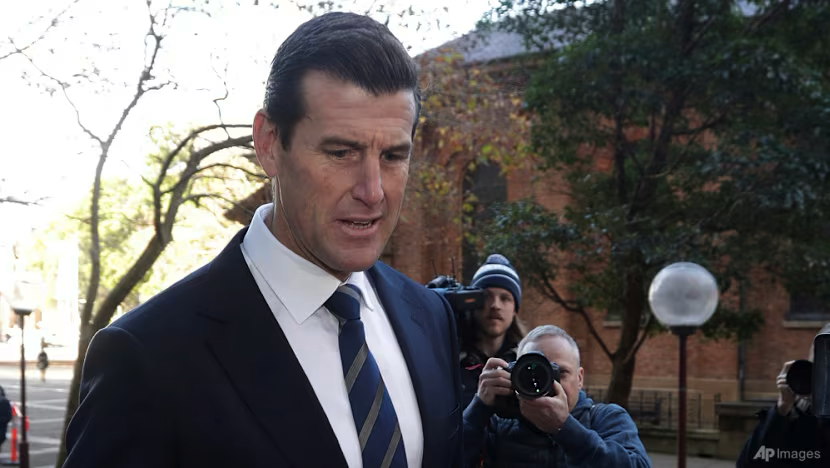

Australia’s most decorated living soldier, Ben Roberts-Smith, has been charged with multiple war crimes linked to alleged killings during his service in Afghanistan.
Get today's headlines by email 
The former Special Air Service (SAS) corporal was arrested at Sydney Airport on Tuesday and is due to appear in court over five charges related to the war crime of murder. He is expected to remain in custody overnight ahead of a bail hearing scheduled for Wednesday.
Roberts-Smith, 47, denies the allegations. He has previously described the claims against him as false and malicious.
Arrest and charges
Australia’s federal police confirmed that a former soldier aged 47 had been arrested and charged over alleged offences committed while deployed in Afghanistan between 2009 and 2012.
Authorities say the charges include one count of murder as a war crime, one count of jointly committing murder and three counts of aiding, abetting, counselling or procuring murder.
According to investigators, the case centres on allegations that unarmed detainees were killed during military operations.
Australian Federal Police Commissioner Krissy Barrett said prosecutors would argue that some victims were shot either by Roberts-Smith himself or by subordinate soldiers acting under his orders.
“It will be alleged the victims were shot by the accused or shot by subordinate members of the Australian Defence Force in the presence of, and acting on the orders of, the accused,” she told reporters in Sydney.
Previous civil court findings
The charges follow years of scrutiny over Roberts-Smith’s conduct during the Afghanistan conflict.
In 2023, a Federal Court judge ruled in a defamation case that newspaper reports accusing him of unlawful killings were substantially true. The ruling found, on the balance of probabilities, that he had been involved in several killings of unarmed Afghans.
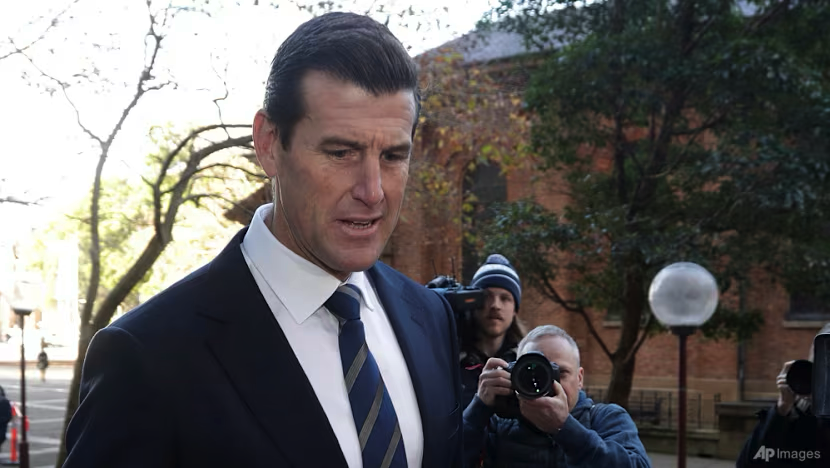
Roberts-Smith brought the case after media outlets first published allegations against him in 2018. The civil trial was the first time an Australian court examined claims of war crimes involving the country’s forces in Afghanistan.
He argued the alleged deaths occurred lawfully during combat or did not happen. However, he lost the case and later failed in an appeal.
The judge concluded that Roberts-Smith had participated in at least four killings. These included allegations that he ordered junior soldiers to shoot unarmed detainees and that he was involved in the deaths of a handcuffed Afghan man and a captured Taliban fighter.
War crimes investigations
The case stems partly from a landmark military investigation known as the Brereton Report, released in 2020. That inquiry found credible evidence that Australian special forces had unlawfully killed 39 people during the war in Afghanistan.
The report recommended criminal investigations into 19 current or former members of the Australian Defence Force.
In response, authorities created a specialist investigative unit known as the Office of the Special Investigator (OSI).
Ross Barnett, the OSI’s director of investigations, said the arrest marked an important development but acknowledged the difficulties of investigating alleged crimes committed during wartime.
He noted investigators faced significant obstacles, including the lack of access to crime scenes in Afghanistan and limited forensic evidence.
“We can’t go to that country, we don’t have access to the crime scenes,” Barnett said, adding that investigators also lack physical evidence such as projectiles, photographs and other forensic material.
National reaction
Prime Minister Anthony Albanese declined to comment on the case, saying it was inappropriate to discuss matters before the courts.
Separately, the Australian War Memorial said it would review its display related to Roberts-Smith. His uniform and medals remain on exhibit, with accompanying information updated in recent years to reflect the allegations and legal proceedings.
Before the accusations emerged, Roberts-Smith had been widely celebrated in Australia for his military service. He received the Victoria Cross, the country’s highest military honour, for actions during a battle in Afghanistan in which he overpowered Taliban fighters attacking his SAS patrol.
His subsequent legal battle to challenge the allegations lasted seven years and cost millions of dollars, becoming one of the most closely watched court cases in Australia in recent history.
Join the discussion? 
Already a member? 
 Adapted by ASEAN Now. Source 7 April 2026
Recommended Comments
Create an account or sign in to comment