



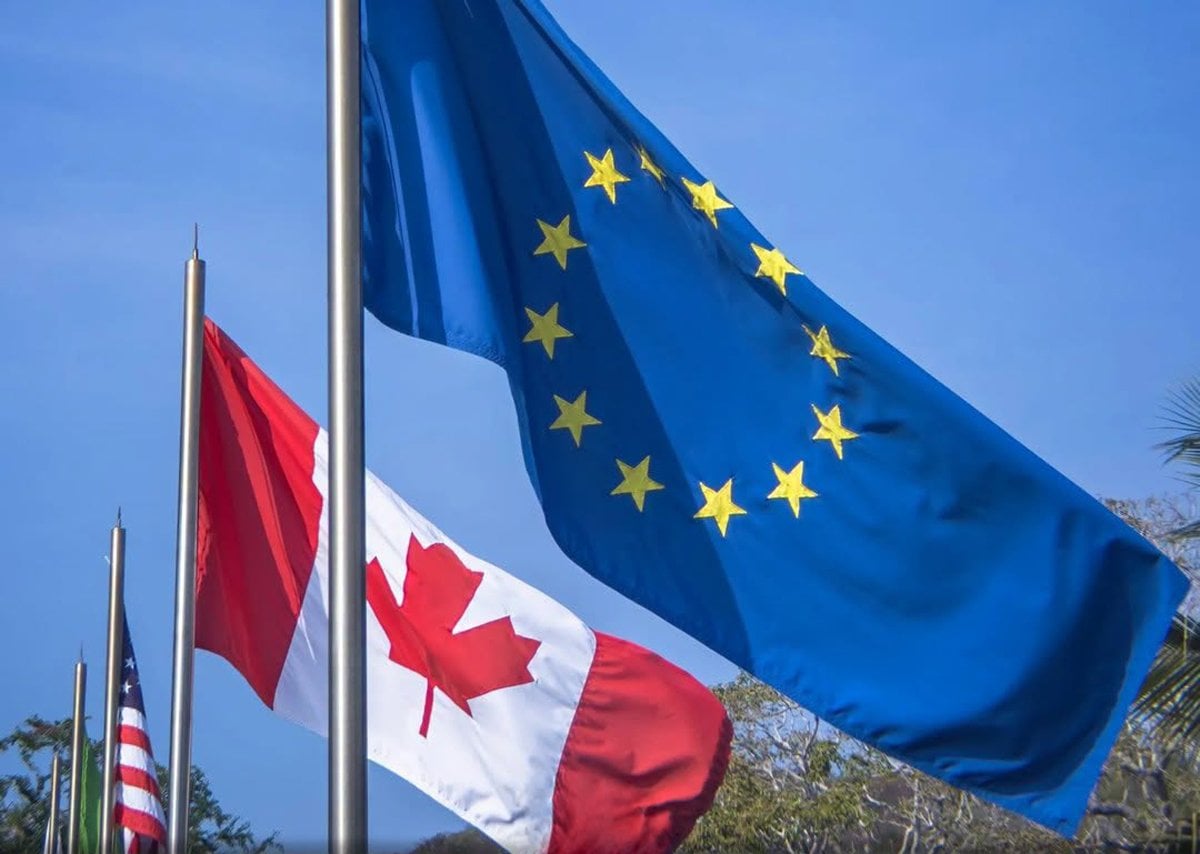

Canada should “team up” with a proposed economic alliance between Canada and Europe, the Canadian finance minister, François-Philippe Champagne, has said.
Speaking to the BBC, Champagne said the push was aimed at creating an “alliance of the future”, arguing that the wider world has shifted since current trade and political arrangements were set. He pointed to changes in the United States and said Canada and Europe needed to adjust accordingly.
Canada’s Push for an EU-Canada Alliance
Champagne’s comments follow remarks from European Commission President Ursula von der Leyen, who proposed opening the door to an associate EU membership for Canada. Von der Leyen’s proposal, made during a period of talks about closer ties between Ottawa and Brussels, marks an unprecedented step for the EU.
Canadian Prime Minister Mark Carney visited the EU institutions in Strasbourg soon after von der Leyen’s proposal. Champagne said the trip was intended to “build the alliance of the future”.
Carney has previously described the idea in terms of cooperation among “middle powers”, with a focus on economic growth, resilience and security.
Champagne told the BBC that Canada and the UK shared values and suggested the two countries should work together as sovereign partners. He said Canada and the UK were aligned on their vision for the world, and argued they would be stronger by coordinating their approach.
“Independent and sovereign”, he said, but “stronger together”.
Canada’s Response to the US Trade War
Champagne also gave a direct assessment of Canada’s ongoing dispute with the United States after a deal collapsed last month. He said Canada had responded by imposing tariffs, describing this as standing up for its industries, workers and the country.
Ottawa has been locked in an escalating tit-for-tat trade war with Washington, with both sides imposing tariffs after negotiations broke down at the last moment in August.
He said Canada did not seek escalation, adding that at some point it had to say “enough is enough”. Champagne said no one should infringe on Canada’s economic sovereignty and argued the dispute had drawn international attention.
The minister said Canada would provide support to affected industries “as long as it takes and whatever it takes”. He also said Ottawa would “re-engage at the right time” with the United States.
Champagne said Canada’s strong fiscal position helped underpin its resilience, and that the confrontation provided an opportunity for Canada to diversify.
Wider Implications for Britain and Its Partners
The minister’s remarks come as the UK weighs how to position itself with both Europe and the US following Brexit. After returning to the White House last year, Donald Trump imposed sweeping global tariffs, including on longstanding trade allies such as the UK.
Although the UK renegotiated a trade deal with the US in June last year, Champagne’s comments about closer UK-Canada-EU coordination raise questions about the direction of Britain’s post-Brexit relationship with the continent.
Champagne said Trump had also threatened further tariffs on the EU if the associate membership plan was “hostile” to the US, calling the idea laughable and describing Canada as a “terrible trading partner”.
Carney met Prime Minister Andy Burnham in Liverpool during the latter’s trip that included meetings with EU officials in Brussels and Strasbourg. Champagne attended a meeting of EU finance ministers in Dublin on Friday alongside Chancellor John Healey.
Burnham will meet Trump for the first time this week at the UN General Assembly in New York.
Details of the EU’s associate membership offer for Canada have yet to be formalised. Carney, speaking previously, has pointed to Canadian participation in EU university, scientific research, artificial intelligence and defence funding schemes, and to opportunities for young Canadians and Europeans to study and live across the Atlantic. He has also said Canada can supply critical minerals and gas, while seeking access to European advanced technologies.
It is understood that both Canada and the EU see the prospect of a process for like-minded nations that may not become full members, with examples including Australia.
Join the discussion? 

22 September 2026
Recommended Comments
Create an account or sign in to comment