



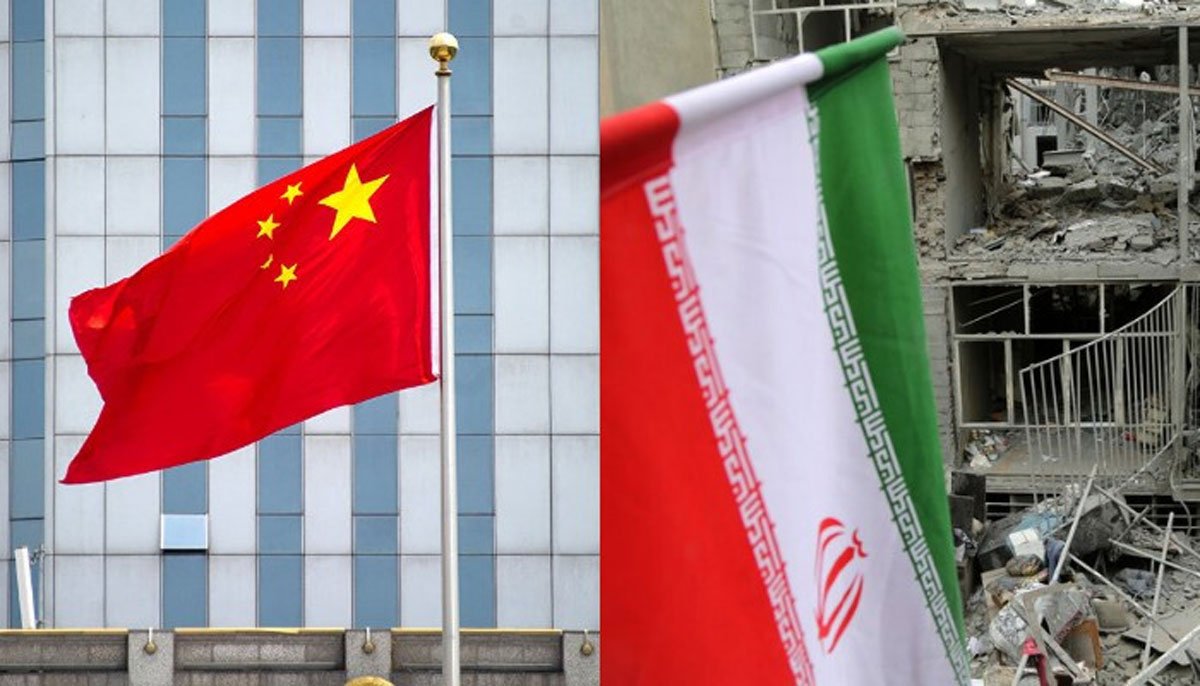

China’s foreign ministry has said there is “no point” in the United States continuing its conflict with Iran, calling instead for a ceasefire and renewed diplomatic efforts to resolve the crisis.
Get today's headlines by email 
The remarks came on Friday after a two-day summit between US President Donald Trump and Chinese President Xi Jinping in Beijing, where global trade, Taiwan and tensions in the Middle East were among the main issues discussed.
Beijing did not confirm whether Iran was formally addressed during the leaders’ talks, though Trump later suggested the two sides shared similar views on ending the conflict.
China calls for diplomatic solution
A Chinese foreign ministry spokesperson said the ongoing confrontation between Washington and Tehran should not continue and urged both sides to seek a political settlement.
“There is no point in continuing this conflict which should not have happened in the first place,” the spokesperson said, without directly confirming whether the subject had been raised during the meeting between Trump and Xi.
The ministry added that reaching an early resolution would benefit not only the United States and Iran, but also countries across the region and the wider international community.
China also called for a ceasefire and further diplomatic negotiations aimed at ending hostilities.
Summit discussions and US pressure on Beijing
The comments followed a high-level summit between the leaders of the world’s two largest economies, where relations between Washington and Beijing and several geopolitical flashpoints were on the agenda.
It remains unclear whether the meeting produced any formal agreements related to Iran.
However, the US has been pressing China to use its economic ties with Tehran to encourage negotiations. China is the largest purchaser of Iranian oil, buying roughly 90% of Iran’s exported supply, according to the US-China Economic and Security Review Commission.
Those purchases generate tens of billions of dollars each year for Iran.
Trump said after the talks that Washington and Beijing shared similar goals regarding the conflict.
“We feel very similar,” he told reporters, adding that the United States does not want Iran to obtain nuclear weapons and wants shipping to remain open through a key regional waterway.
Strait of Hormuz tensions
The Strait of Hormuz has become a major point of tension in the dispute between Washington and Tehran.
Disruptions to shipping in the narrow waterway have affected global oil markets for months. In peacetime, the route carries about one-fifth of the world’s oil supply.
A statement released by the White House following Trump’s visit said Xi had made clear that China opposed the “militarisation of the Strait” or any attempt to impose tolls on vessels passing through it.
According to the statement, Xi also indicated that China was interested in purchasing more American oil in the future, which could help reduce its dependence on shipping routes through the strait.
Military supplies and stalled negotiations
Trump also said Xi had pledged that China would not provide military equipment to Iran.
Speaking to Fox News in an interview, the US president said the Chinese leader had been clear about withholding such support, although he acknowledged that China continues to rely heavily on Iranian oil imports.
China has previously said it does not supply weapons to Tehran.
Meanwhile, negotiations between Washington and Tehran aimed at securing a longer-term agreement to end hostilities appear to have stalled.
Officials on both sides have rejected the other’s latest proposals, leaving the conflict unresolved despite calls for diplomacy.
Join the discussion? 
Already a member? 
 Adapted by ASEAN Now. Source 16 May 2026
Recommended Comments
Create an account or sign in to comment