



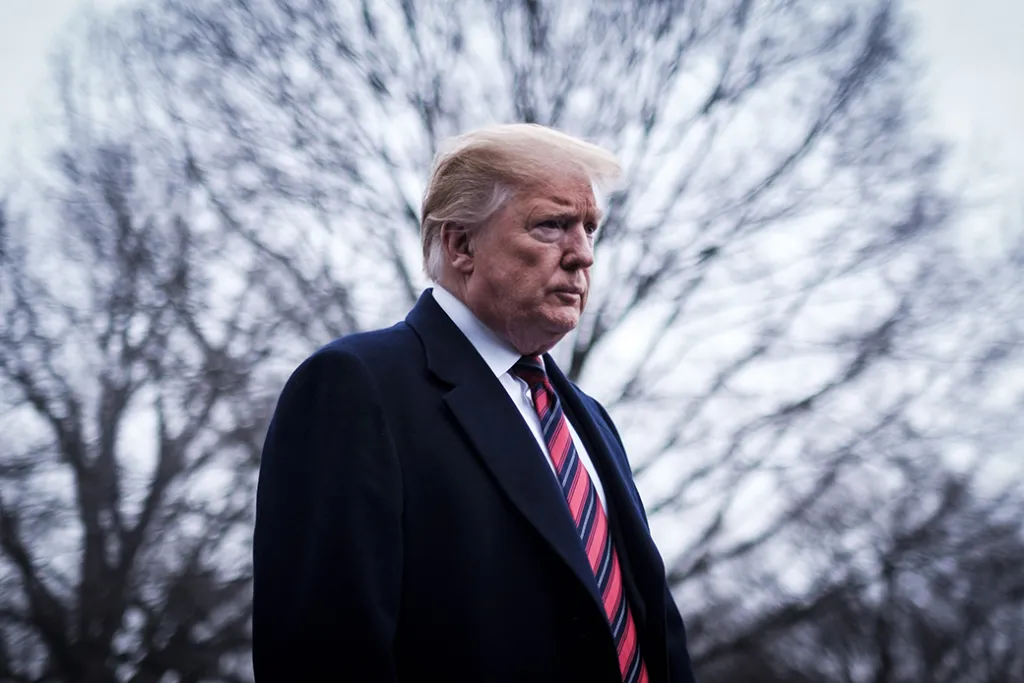

Conspiracy theories helped fuel the political rise of Donald Trump, but now the same forces are increasingly turning against him as both right- and left-wing commentators question his actions and spread claims targeting the president.
Get today's headlines by email 
For years, Trump embraced conspiracy narratives that energized supporters. Early in his political career, he promoted the false “birther” claim that Barack Obama had not been born in the United States. Later he amplified allegations about a supposed “deep state” undermining his presidency and continued to insist that the 2020 election had been fraudulently taken from him.
Yet conspiracy movements often operate outside the control of any single political figure. Recently, Trump has become the focus of speculation and accusations from some of the same voices that once championed him.
Claims spread after White House dinner
The shift became visible following Saturday’s White House Correspondents’ Association dinner. Soon after reports emerged of an apparent assassination attempt, social media filled with unfounded claims that the incident had been staged to benefit Trump politically. No evidence has surfaced to support those allegations.
Some of the speculation came from figures who had previously been vocal supporters of the president. Conspiracy broadcaster Alex Jones suggested online that the shooting might have been orchestrated. Former Republican congresswoman Marjorie Taylor Greene questioned the rapid release of writings linked to the suspect.
Skepticism also appeared on the political left. Progressive podcasters Jennifer Welch and Angie Sullivan published an episode speculating about possible “false flag” elements in the aftermath of the shooting.
The White House rejected the claims outright. Spokesman Davis Ingle said suggestions that Trump staged an assassination attempt were baseless. Republican senator Bernie Moreno, who attended the dinner, also dismissed the theories, saying those making the claims should step away from social media.
Trump himself appeared surprised by the speed with which conspiracy narratives circulated. Speaking to 60 Minutes, he remarked that such claims usually take longer to emerge.
Break with influential supporters
The backlash highlights a widening rift between Trump and several prominent conservative commentators who previously supported him.
Media personalities including Tucker Carlson and Candace Owens have recently criticised the president, particularly over the conflict with Iran and disputes surrounding information about disgraced financier Jeffrey Epstein.
Trump has responded with sharp criticism, accusing some of the figures of promoting extreme or baseless claims. In a social media post he labelled several former allies “nut jobs,” citing conspiracy theories they had spread.
A former senior campaign official said tensions with influential right-wing commentators could pose a political challenge for Trump. The person pointed to internal polling suggesting some softening in Republican support.
Influence of online personalities
Researchers who study online political communities say the split reflects broader changes in the digital media ecosystem.
According to Brian Friedberg of the Harvard Kennedy School Shorenstein Center, several pro-Trump media outlets have seen declines in their audiences, while independent personalities such as Carlson and Owens remain highly popular on video platforms.
The fragmentation makes it difficult to predict whether shifting narratives among online commentators will translate into changes in voter behaviour.
Conspiracy theories across the political spectrum
The trend also illustrates how conspiracy thinking has spread beyond any single political camp.
Trump’s early campaigns were closely linked with conspiracy claims, from the birther theory about Obama to false assertions that he won the 2020 election. During his presidency he also declined to fully distance himself from the movement known as QAnon.
However, conspiracy narratives have increasingly appeared among critics of Trump as well. A survey published by the National Academy of Sciences found that more than three-quarters of Americans believe at least one conspiracy theory.
Some Democratic politicians, including Ro Khanna and Jamie Raskin, have suggested cooperating with unlikely allies on issues such as opposition to war. Others within the party caution that aligning with conspiracy-minded figures could be politically risky.
Political strategists say the evolving landscape reflects a broader shift in American politics, where distrust of institutions and cross-ideological populist sentiments can bring together activists from different sides of the spectrum.
Join the discussion? 
Already a member? 
 Adapted by ASEAN Now. Source 2 May 2026
Recommended Comments
Create an account or sign in to comment