




El Salvador has enacted a new law allowing courts to impose life sentences on minors as young as 12 for serious crimes, including murder, terrorism and rape, as President Nayib Bukele’s government continues a sweeping crackdown on gang violence.
Get today's headlines by email 
The legislation was published by the government on Tuesday and is scheduled to take effect on April 26. It forms part of a broader set of security policies introduced during a nationwide state of emergency that has been in force for more than four years.
Authorities say the measures are aimed at dismantling criminal gangs that have long plagued the country. Human rights organisations, however, warn the policies risk undermining legal protections and could lead to further abuses.
Hardline anti-crime campaign
El Salvador has been operating under a state of emergency since March 2022, when a surge in gang-related killings prompted the government to grant expanded powers to police and the military.
The emergency decree temporarily suspended certain civil liberties and was initially intended to last 30 days. It has since been extended repeatedly, becoming a central feature of the government’s anti-crime strategy.
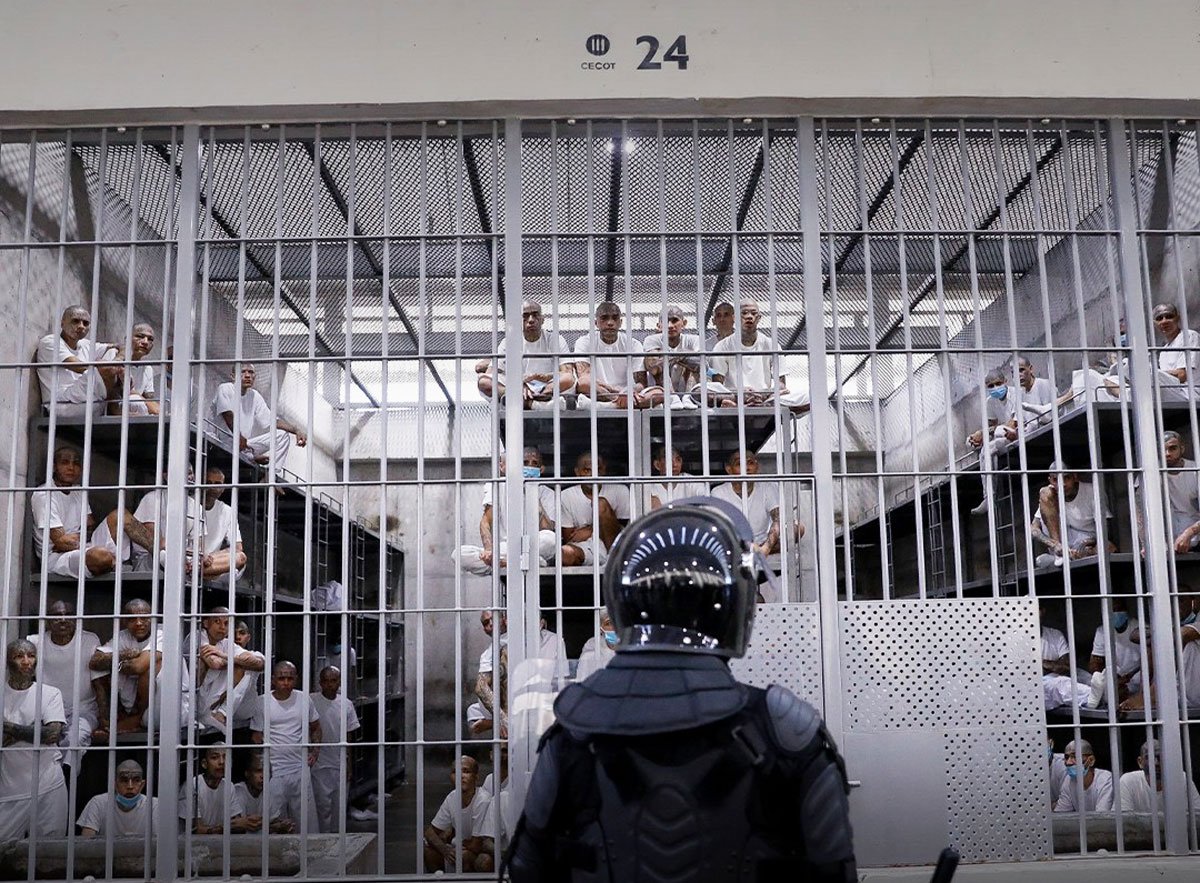
During this period, security forces have carried out a mass arrest campaign that has resulted in more than 90,000 people being detained.
According to rights groups including Human Rights Watch, the crackdown has contributed to one of the world’s highest incarceration rates, with nearly 1.9 percent of El Salvador’s population currently in prison.
Some detainees have reportedly been held without formal charges, while others have faced mass trials. A legal change approved in 2023 allows courts to try up to 900 defendants simultaneously.
Constitutional change expands penalties
The new sentencing rules for minors stem from a constitutional amendment approved in March. The measure was promoted by President Bukele and passed by the legislative assembly, which is dominated by his Nuevas Ideas party.
Supporters argue that harsher penalties are necessary to deter violent crime, including offences carried out by youth linked to gangs.
Following the amendment’s approval, Bukele criticised opponents of the reform on social media, saying they were too lenient toward serious criminals.
“We shall see who supports this amendment, and who will dare to argue that the Constitution should continue to prohibit murderers and rapists from remaining in prison,” he wrote in a post on March 17.
Although the law allows life imprisonment for minors, it includes provisions for periodic reviews of sentences and the possibility of supervised release.
International concern over children’s rights
International organisations have expressed concern about the new legislation. The United Nations Children’s Fund (UNICEF) warned that life sentences for children could have lasting effects on their development and may not reduce crime.
In a joint statement with the UN Committee on the Rights of the Child, UNICEF said imposing extremely long prison terms on minors conflicts with international standards on child justice.
“The imposition of life sentences and excessively long detention measures on children and adolescents constitute a contradiction of the standards enshrined in the Convention on the Rights of the Child,” the organisations said.
They emphasised that international guidelines require justice systems to prioritise rehabilitation and reintegration for children in conflict with the law.
Human rights advocates have also urged El Salvador to end the prolonged state of emergency, arguing that the anti-crime campaign has weakened legal safeguards.
Last month, the International Group of Experts for the Investigation of Human Rights Violations under the State of Emergency in El Salvador released a report alleging that crimes against humanity may have been committed during the crackdown.
The report cited statements from President Bukele acknowledging that at least 8,000 detainees were innocent.
“These are not isolated cases, but a policy in which crimes are committed on a large scale and in a systematic manner,” said expert Jose Guevara.
Ongoing debate over security policies
Despite criticism, Bukele’s anti-gang strategy remains widely supported within El Salvador, where the government says tough measures have helped reduce violence and restore public safety.
The introduction of life sentences for young offenders is likely to intensify debate over the balance between security and human rights as the state of emergency continues.
Join the discussion? 
Already a member? 
 Adapted by ASEAN Now. Source 17 April 2026
Recommended Comments
Create an account or sign in to comment