



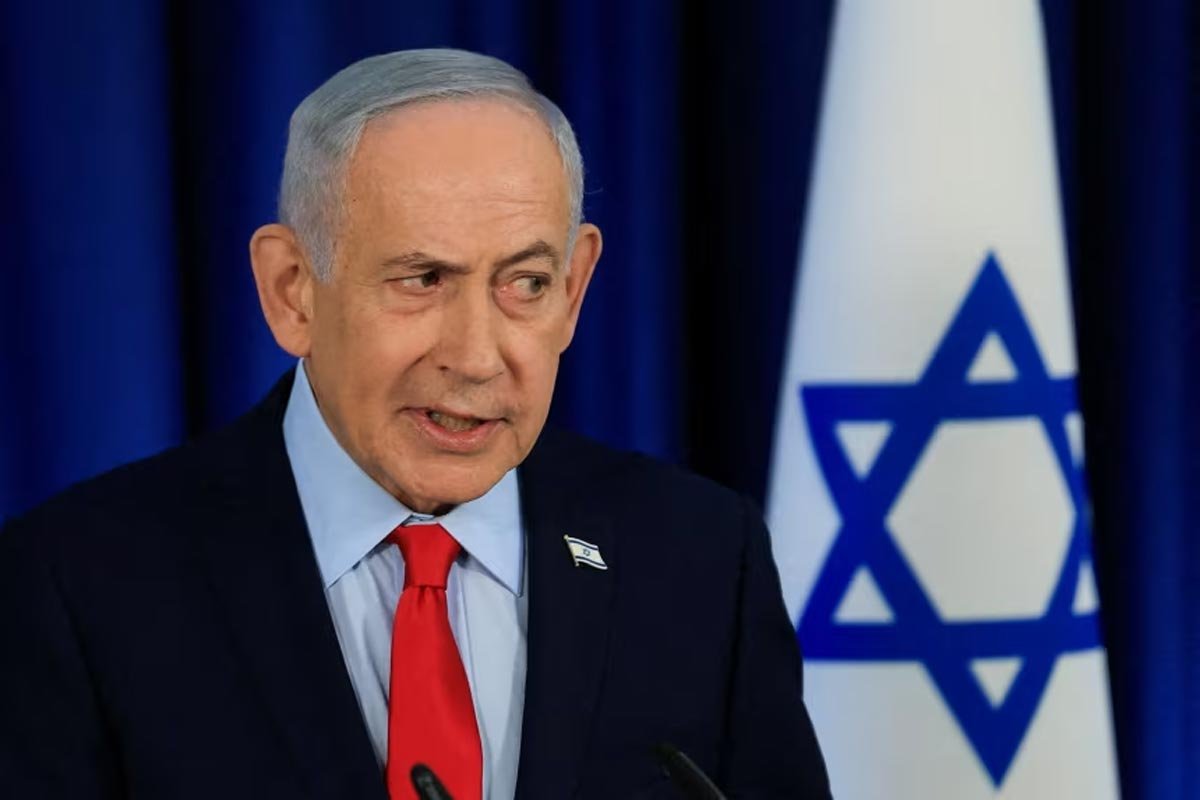

When the United States and Israel launched coordinated strikes against Iran in February, President Donald Trump and Prime Minister Benjamin Netanyahu publicly celebrated what they described as a historic partnership.
Get today's headlines by email 
Just three months later, that military campaign appears to be giving way to a US-led diplomatic effort with Iran, leaving Netanyahu with limited influence over the outcome.
According to Israeli sources, the prime minister has avoided publicly criticizing Trump but has privately acknowledged that Israel has little leverage over the ongoing negotiations. Since a ceasefire was announced in April, Netanyahu has repeatedly urged Washington to resume broader military pressure on Iran, arguing that continued operations could weaken or even topple the Iranian government. The White House, however, has instead pursued a diplomatic path.
Israeli officials fear that any interim agreement that does not remove Iran’s stockpile of highly enriched uranium could leave Tehran with a future route to developing nuclear weapons.
Israeli Frustration Over US Approach
The emerging negotiations have fueled growing frustration within Israel’s leadership.
One Israeli official said Netanyahu had advocated targeting Iran’s oil infrastructure as a way to further strain the country’s economy and weaken the regime. Concerns have also been raised that easing economic restrictions on Iran could strengthen the government financially and help it recover from the conflict.
Some Israeli figures have expressed disappointment more directly, arguing that Washington’s shift toward diplomacy has come at Israel’s expense.
Lebanon has become another point of contention. Iran is reportedly seeking provisions that would include a ceasefire in Lebanon, where the United States has already sought to limit Israeli military activity. At the same time, Hezbollah has intensified drone attacks against Israeli forces and communities near the northern border.
Netanyahu has responded by ordering an expansion of Israeli military operations in Lebanon, insisting that Israel will continue acting against security threats despite international pressure.
The issue has also created tensions inside Israel’s governing coalition. Far-right ministers Itamar Ben Gvir and Bezalel Smotrich have both demanded a tougher military response.
A Different Strategy Than in 2015
Israel’s reaction to the current negotiations differs sharply from Netanyahu’s campaign against the 2015 Iran nuclear agreement negotiated under former President Barack Obama.
At that time, Netanyahu openly challenged Washington and delivered a controversial speech to the US Congress warning against the deal. Such a confrontation appears unlikely now, given the political importance of his relationship with Trump and the risks associated with publicly opposing him ahead of elections.
Instead, Israeli sources say Netanyahu has directed criticism toward members of the US negotiating team, including Jared Kushner and Steve Witkoff, accusing them of steering Trump toward a diplomatic settlement.
Others suggest Israel misjudged Trump’s political priorities. According to a source familiar with discussions between the two countries, Trump became increasingly concerned that he was being portrayed domestically as following Netanyahu’s lead into a wider Middle East conflict and sought to demonstrate that he remained in control of US policy.
Legacy and Election Risks
The outcome of the Iran conflict could have significant political consequences for Netanyahu.
The campaign against Iran was expected to become a central element of his effort to reshape his legacy following the Hamas attacks of October 2023. Instead, public opinion appears divided.
Polling by the Institute for National Security Studies found that many Israelis believe the country’s position regarding Iran has worsened since October 2023, while nearly half think Israel has either lost or is unlikely to win the confrontation with Tehran.
Some Israeli officials believe Trump may seek to offset Netanyahu’s political difficulties by promoting normalization efforts between Israel and Arab states, expanding the framework of the Abraham Accords, or offering public displays of support before Israeli elections.
For Netanyahu, however, the stakes extend beyond immediate politics. For decades, he has built his political identity around confronting Iran’s nuclear ambitions through military pressure and close cooperation with Washington. If a US-Iran agreement ultimately preserves the Iranian regime and leaves key aspects of its nuclear program unresolved, critics argue it could undermine one of the defining themes of his political career.
Join the discussion? 
Already a member? 
 Adapted by ASEAN Now. Source 31 May 2026
-
 1
1
Recommended Comments
Create an account or sign in to comment