



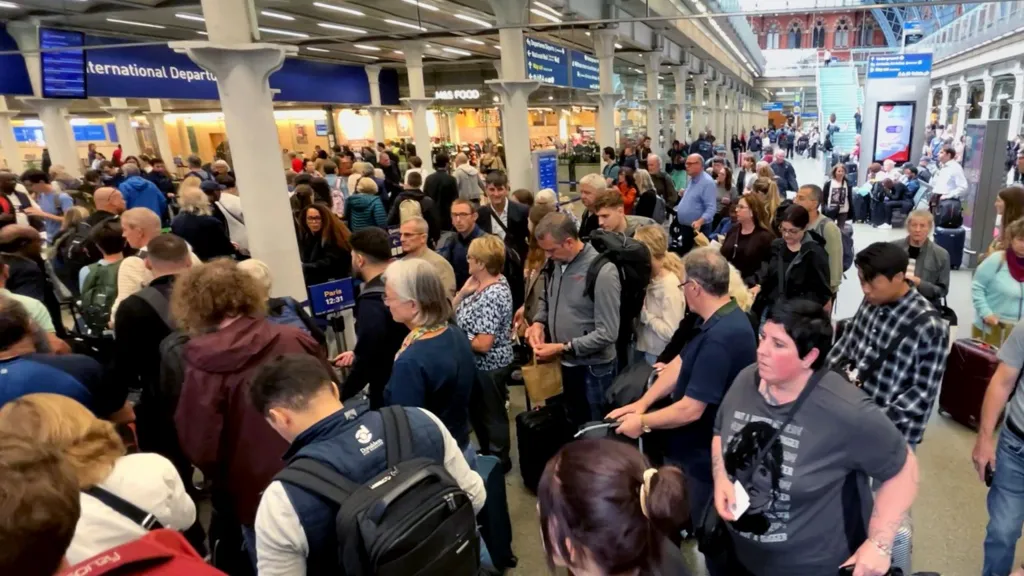

The European Union’s new digital border control system requiring travellers to provide fingerprints and photographs alongside passport scans is scheduled to be fully operational from Friday.
Get today's headlines by email 
Known as the Entry/Exit System (EES), the scheme is designed to register the arrival and departure of non-EU citizens entering the Schengen Area. The deadline set by the EU aimed for the system to be active at all Schengen border crossing points across 29 participating countries.
However, while the rollout began in October, officials acknowledge that not every airport or border post will be fully using the system immediately because of technical and operational challenges.
Authorities have already reported long queues at several European airports, with warnings that delays could intensify during busy holiday travel periods.
What the new system does
EES is intended to digitally record when travellers from outside the EU — including those from the United Kingdom — enter and leave the Schengen Area. The zone includes 29 European countries where people can travel without internal border checks.
Popular destinations for British travellers such as France, Spain, Portugal, Italy and Greece are included in the system.
Under EES, travellers must register biometric information, including fingerprints and a facial photograph, while their passport is scanned. The system will eventually replace the traditional method of border officers stamping passports.
Once registered, the traveller’s details will remain valid for three years. On subsequent trips during that period, the system will verify the stored data.
Queues and technical issues
The gradual introduction of EES began on 12 October and was intended to be phased in over six months. During early trials, some locations experienced significant delays.
In one instance at Pisa Airport, two travellers arriving from Glasgow said they waited several hours to clear border checks. One of them, who holds an Irish passport, reported passing through within about an hour, while his partner queued much longer with other British passport holders.
According to travel specialists, IT issues and unfamiliar procedures have contributed to delays at some airports.
The European Commission has indicated that border authorities will be allowed to suspend EES checks temporarily during particularly busy periods until September in order to ease congestion.
Several airports, including those in Milan and Lisbon, will not activate the system immediately.
How travellers will register
The process will vary depending on how people enter Europe.
Air passengers will typically complete the registration after landing at their destination airport.
For those travelling from the UK by ferry, through the Channel Tunnel, or by Eurostar train, registration will be carried out before departure.
At border locations such as the Port of Dover or London’s St. Pancras station, travellers will use dedicated kiosks where passports are scanned and biometric data—fingerprints and photos— are recorded. Children under 12 will not be required to provide fingerprints.
Travellers may also be asked a short series of questions about their trip, such as their accommodation arrangements and whether they have sufficient funds.
Major infrastructure changes have been made at some border crossings to accommodate the system. At Dover, additional land has been reclaimed to create a separate processing area where passengers complete checks before boarding ferries.
Transport operators including Eurostar and Eurotunnel say the system will be introduced gradually to minimise disruption.
Next step: ETIAS travel authorisation
The EU is also planning a separate electronic travel authorisation programme called the European Travel Information and Authorisation System (ETIAS).
This scheme will require travellers from visa-exempt countries, including the UK, to apply online for permission before visiting the EU.
ETIAS is expected to launch toward the end of 2026, though an exact start date has not been confirmed.
Applications will cost €20 and remain valid for three years. Travellers under 18 or over 70 will still need authorisation but will not have to pay the fee.
Join the discussion? 
Already a member? 
 Adapted by ASEAN Now. Source 11 April 2026
Recommended Comments
Create an account or sign in to comment