



Skip to content
View in the app

A better way to browse. Learn more.

Thailand News and Discussion Forum | ASEANNOW

A full-screen app on your home screen with push notifications, badges and more.

To install this app on iOS and iPadOS
  1. Tap the Share icon in Safari
  2. Scroll the menu and tap Add to Home Screen.
  3. Tap Add in the top-right corner.
To install this app on Android
  1. Tap the 3-dot menu (⋮) in the top-right corner of the browser.
  2. Tap Add to Home screen or Install app.
  3. Confirm by tapping Install.

Become a member

Become a member

Europe Has Six Weeks of Jet Fuel Left, Energy Agency Warns

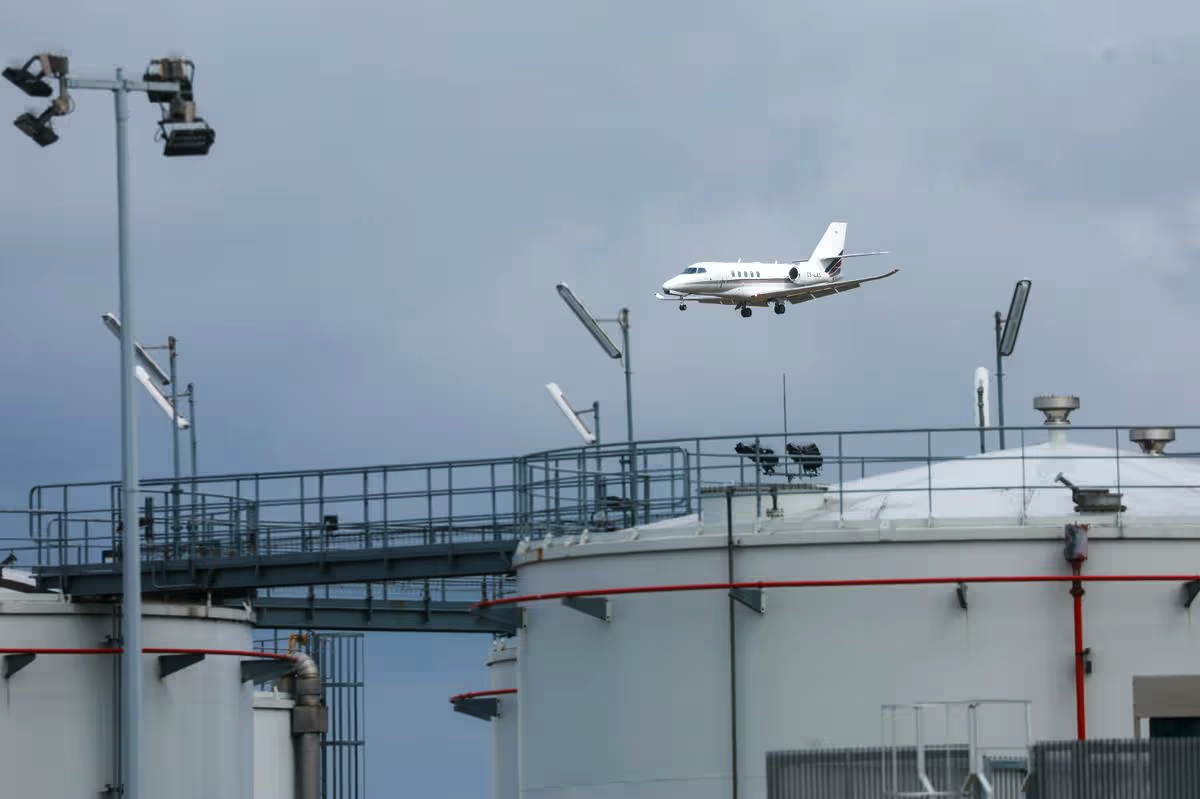
Europe could face significant pressure on aviation fuel supplies within weeks if disruptions to Middle Eastern exports continue, according to the International Energy Agency (IEA).

Get today's headlines by email image.png

The agency warned that current stockpiles of jet fuel across Europe may last for only about six weeks under present conditions, raising the prospect of flight cancellations if replacement supplies cannot be secured quickly.

The warning comes after the Strait of Hormuz — a key shipping route for fuel exports from the Gulf — has remained effectively closed for more than six weeks following tensions linked to US and Israeli military action against Iran.

Gulf Disruption Strains Aviation Fuel Market

The IEA said the closure of the vital shipping corridor has severely disrupted the global aviation fuel market. Exports from the Gulf region represent the largest single source of jet fuel traded worldwide.

Fatih Birol, executive director of the agency, told the Associated Press that European inventories could reach a critical point by June unless the region can replace at least half of its lost Middle Eastern imports.

The organisation’s latest monthly oil market report said the disruption had significantly complicated global fuel flows. It noted that refining centres in countries such as South Korea, India and China also rely heavily on crude oil imports from the Middle East, limiting their ability to compensate for the shortfall.

As a result, the agency said the situation had “thrown a proverbial wrench” into aviation fuel supply chains.

Efforts to Replace Lost Imports

European countries have been trying to secure alternative supplies as the disruption continues.

Analysts say additional shipments are arriving from the United States and Nigeria, and the IEA reported a sharp increase in US jet fuel exports in recent weeks.

However, the agency warned that even if all of those shipments were redirected to Europe, they would replace only slightly more than half of the fuel typically imported from the Middle East.

The report outlined several possible outcomes. If Europe cannot replace at least half of its lost imports, fuel shortages could begin to appear at certain airports, potentially forcing airlines to cancel flights and reduce demand.

Even if three-quarters of the missing supply can be replaced, shortages could still occur later in the summer, possibly by August.

Airlines Monitor Risks Ahead of Summer Travel

Airlines and governments say they are closely monitoring the situation but stress that major disruptions have not yet occurred.

The UK government said it was working with airlines and fuel suppliers to ensure travel and business activity could continue. Officials said British carriers had not yet reported supply problems.

Airlines UK, which represents the country’s airline industry, said it was discussing possible contingency measures with the government in case the situation worsens. These could include regulatory adjustments intended to protect passengers and maintain the competitiveness of the aviation sector.

Industry analysts warn that even if shipments from the Gulf resume soon, the effects of the disruption could still be felt during the peak summer travel season.

Amaar Khan, who oversees European jet fuel pricing at Argus Media, said shortages in some regions were becoming increasingly likely. Larger hubs such as London Heathrow would likely receive priority supplies, he said, while smaller airports could face tighter availability.

Fuel Prices Surge Amid Supply Concerns

The disruption has already pushed aviation fuel prices sharply higher.

Benchmark European jet fuel prices reached a record $1,838 per tonne in early April, more than double the roughly $831 per tonne recorded before the conflict began.

Fuel typically accounts for between 20% and 40% of airlines’ operating costs, meaning sustained price increases can quickly affect profitability.

The European Commission said earlier this week that there was currently no evidence of fuel shortages across the European Union, although officials acknowledged that supply pressures could develop in the coming weeks.

Airlines have already begun adjusting operations. Dutch carrier KLM said it plans to cancel about 160 European flights in the coming month due to higher fuel costs, though it said the cuts represent less than 1% of its regional schedule and are not linked to fuel shortages.

Low-cost airline EasyJet also reported an additional £25m in fuel expenses in March, despite having secured much of its fuel in advance through hedging agreements.

Industry Calls for Policy Clarity

Aviation groups have urged European authorities to prepare for potential disruption.

Airlines for Europe has asked the European Union to clarify passenger compensation rules so that cancellations caused by fuel shortages or airspace closures linked to the conflict are classified as “extraordinary circumstances”.

Such a designation would exempt airlines from paying compensation in those situations.

Meanwhile, Airports Council International Europe warned the European Commission last week that jet fuel shortages could emerge if the Strait of Hormuz remains closed for several more weeks.

EU officials said energy coordination groups are meeting weekly and that further measures could be announced by the European Commission president next week.

Join the discussion? Create account. orange.png

Already a member? haveyr-say.png


image.png
Adapted by ASEAN Now. Source 17 April 2026

User Feedback

Recommended Comments

mikeymike100 Platinum Member

mikeymike100

Advanced Member

The "six-week" warning for Europe is just the tip of the iceberg. Because the Strait of Hormuz is the world's most important energy chokepoint, a prolonged closure triggers a massive domino effect that hits Asia first and then ripples through the entire global economy.

TedG Ruby Member

TedG

Advanced Member

Call it the Green New Deal.

HK MacPhooey Advanced Member

HK MacPhooey

Member

If this is what it takes to finally rid the World of the 'Mad Mullahs' of Iran who have effectively held the West to ransom since the disastrous Presidency of Jimmy Carter in 1979 then so be it... short term pain / long term gain...

johng Star Member

johng

Advanced Member
14 minutes ago, HK MacPhooey said:

short term pain / long term gain...

Just remember '2 weeks to flatten the curve' !!

Patrick Wahle Newbie

Patrick Wahle

Member

Meanwhile Putin and Modi are laughing all the way to the bank.

India buys 38% of Russian crude and refines it for export.

So Europe buys some of it with a hefty premium and European airlines have to fly longer mileage to Asia in order to avoid Russian airspace.

Results of the EU sanctions: economical disaster.

https://www.reuters.com/business/energy/indias-reliance-buys-6-mln-barrels-russian-oil-march-sources-say-2026-03-09/#:~:text=NEW%20DELHI%2C%20March%209%20(Reuters,knowledge%20of%20the%20matter%20said.

TedG Ruby Member

TedG

Advanced Member
6 minutes ago, Patrick Wahle said:

Meanwhile Putin and Modi are laughing all the way to the bank.

India buys 38% of Russian crude and refines it for export.

So Europe buys some of it with a hefty premium and European airlines have to fly longer mileage to Asia in order to avoid Russian airspace.

Results of the EU sanctions: economical disaster.

https://www.reuters.com/business/energy/indias-reliance-buys-6-mln-barrels-russian-oil-march-sources-say-2026-03-09/#:~:text=NEW%20DELHI%2C%20March%209%20(Reuters,knowledge%20of%20the%20matter%20said.

Europe should man up and blockage Russia.

shackleton Platinum Member

shackleton

Advanced Member

No problem to Red Ed in the UK

Solar and wind power plus get people out of their cars walking

and riding bikes

Make the Nation a fitter and healthier country

johng Star Member

johng

Advanced Member
49 minutes ago, TedG said:

Europe should man up and blockage Russia.

How about blocking the Red sea/Suez canal the Strait of Malacca as well as the strait of Hormuz

that will teach those pesky Russians a lesson..... about how to destroy the world economy.

TedG Ruby Member

TedG

Advanced Member
34 minutes ago, johng said:

How about blocking the Red sea/Suez canal the Strait of Malacca as well as the strait of Hormuz

that will teach those pesky Russians a lesson..... about how to destroy the world economy.

I guess Europe is scared of Russia.

MIke B Bad Silver Member

MIke B Bad

Advanced Member

So Emirates should be safe flying out to say, London.........but in serious trouble trying to get back?

Screaming Gold Member

Screaming

Advanced Member

I wonder if Europe will finally realize that their dream of building a "green" EU by decommissioning Nuke power plants, discontinuing drilling for oil, setting up huge solar farms and installing bird killing wind farms is not working out for them.

1tooth Silver Member

1tooth

Advanced Member

Why waste our last fuel? We should put that fuel in an old Ford and see if it can match an F1 car.

JonnyF Star Member

JonnyF

Advanced Member

Who cares?

As long as they have diesel for the dinghys the EU technocrats will be happy as Larry.

mikeymike100 Platinum Member

mikeymike100

Advanced Member
5 hours ago, HK MacPhooey said:

If this is what it takes to finally rid the World of the 'Mad Mullahs' of Iran who have effectively held the West to ransom since the disastrous Presidency of Jimmy Carter in 1979 then so be it... short term pain / long term gain...

Absolutely agree.

For decades, the West has navigated a cycle of "negotiation and escalation" with a regime that views regional instability as its primary export. By finally enforcing a total naval blockade and refusing to buckle under the threat of energy blackmail, the current administration is making a historic gamble: that the collapse of the IRGC’s economic nervous system is a price worth paying to end nearly half a century of nuclear and maritime hostage-taking.

Luuk Chaai Platinum Member

Luuk Chaai

Advanced Member
5 hours ago, TedG said:

Europe should man up and blockage Russia.

ha ha ha ,, who's tanker and war ship sailed thru the English channel the other day while Mr. whimp Starmer did absolutely nothing .

Putin.jpg

emptypockets Platinum Member

emptypockets

Advanced Member

Anyone know what strategic reserves the armed forces hold? Avgas doesn't store very well over time.

Roadsternut Gold Member

Roadsternut

Advanced Member
2 hours ago, Luuk Chaai said:

ha ha ha ,, who's tanker and war ship sailed thru the English channel the other day while Mr. whimp Starmer did absolutely nothing .

Putin.jpg

The reason the UK (and France) allow war ships to pass through the English Channel is the same reason the US will conduct Freedom of Navigation missions in the South China Sea, and why they are trying to enforce transit rights through the Straits of Hormuz. It would be an illegal act. Or do you want His Majesty's Government to act like the Islamic Republic of Iran or the People's Republic of China? The UK is a signatory to UNCLOS.

And you are a <deleted> liar to suggest the UK government does nothing in respect of these Russian provocations.

https://www.navylookout.com/royal-navy-monitors-shadow-fleet-vessels-but-russian-naval-escort-complicates-boarding-dilemma/

During that monitoring, intelligence is being collected, learning about Russian cabilities, upgrades to vessals, comms drills, even identifying bridge crew.

What the <deleted> do you think happened during the Cold War? <deleted> all according to numpties like you.

Create an account or sign in to comment

Account

Navigation

Search

Search

Configure browser push notifications

Chrome (Android)
  1. Tap the lock icon next to the address bar.
  2. Tap Permissions → Notifications.
  3. Adjust your preference.
Chrome (Desktop)
  1. Click the padlock icon in the address bar.
  2. Select Site settings.
  3. Find Notifications and adjust your preference.

