



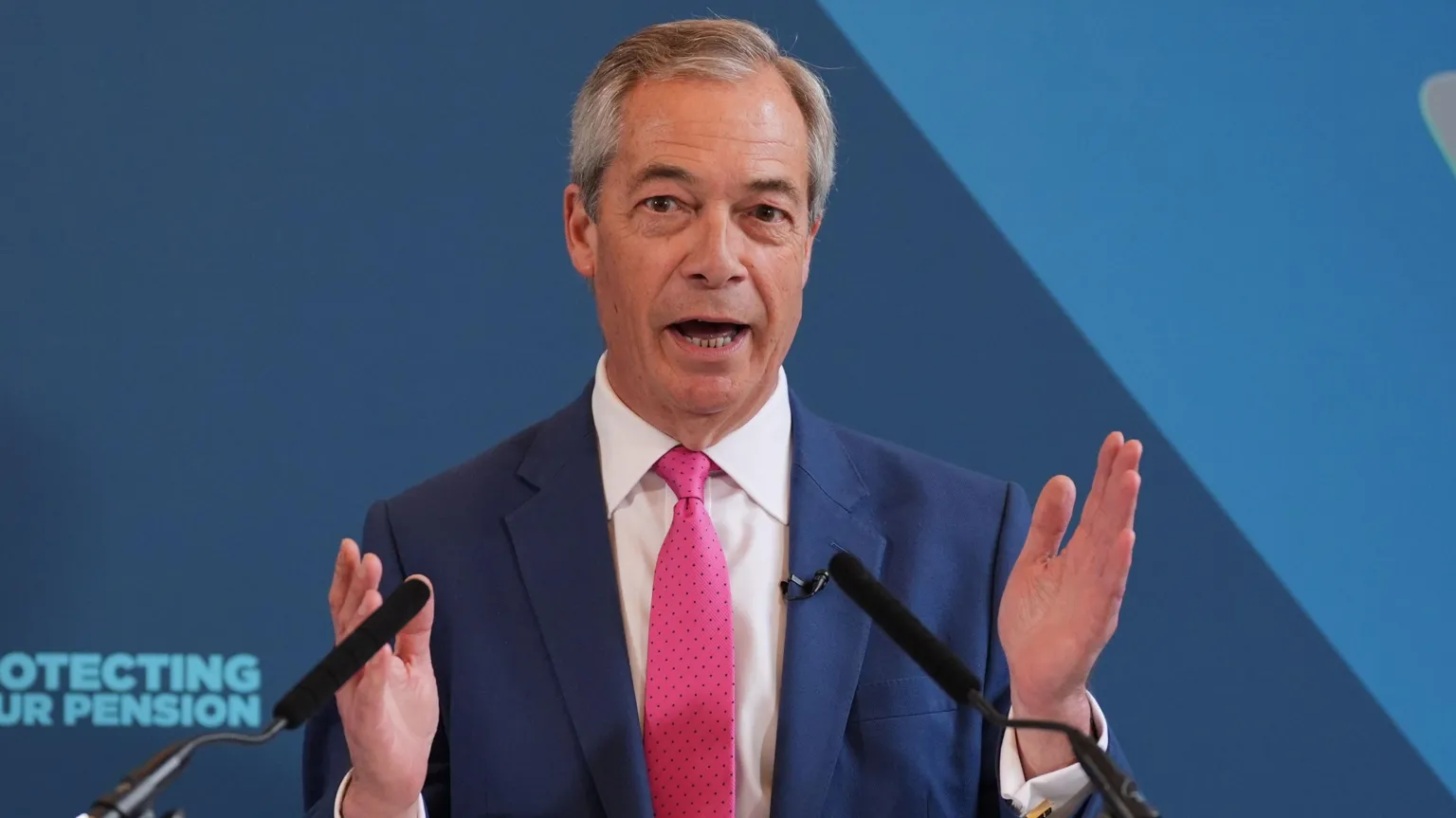

Nigel Farage said Reform UK would keep the UK’s state pension “triple lock” while offsetting the cost through large reductions in welfare spending.
Get today's headlines by email 
The triple lock, introduced in 2011, guarantees that the state pension rises each year by whichever is highest among inflation, wage growth or 2.5%. The policy has become a central issue in Britain’s fiscal debate as the population ages.
Reform UK commits to keeping pension guarantee
Speaking at a news conference on Thursday, Farage said the party had debated whether to abandon the system but decided to maintain it if elected. He described the decision as driven largely by plans to deliver what he called the largest cuts to welfare spending in the country’s history.
He said details of those reductions would be announced later.
The cost of maintaining the triple lock is expected to climb significantly, with projections suggesting it could add £15.5bn a year to public spending by 2030.
Welfare cuts planned to cover cost
The policy announcement was presented by Reform UK’s Treasury spokesman Robert Jenrick, who joined the party earlier this year after leaving the Conservative Party (UK).
Jenrick said protecting pensioners remained a priority, while acknowledging the financial scale of the commitment.
He said the party had already identified about £40bn in potential savings, though detailed costings were not provided. According to Jenrick, upcoming welfare changes would include reductions affecting people who had recently arrived in the country or entered illegally.
He argued the savings would more than cover the additional spending required to keep the pension guarantee.
Reform UK also says it has reduced spending in the English local authorities it controls, though the extent of those savings has been disputed.
Debate over sustainability of the triple lock
The triple lock was created under the 2010 coalition government led by former prime minister David Cameron. Successive governments have retained the policy despite concerns about rising long-term costs.
The measure remains popular with older voters, who traditionally turn out in higher numbers during elections. Critics argue the guarantee increasingly benefits pensioners relative to younger working taxpayers.
Economists and policy groups have warned that pension commitments are placing growing pressure on public finances.
The free-market think tank Institute of Economic Affairs said Reform UK’s decision showed that major parties were unwilling to confront the cost of pension promises. Editorial director Kristian Niemietz described the triple lock as one of the most expensive policies in Britain’s public spending framework.
The Centre for Policy Studies also questioned whether the party’s plans represented meaningful fiscal reform. Its head of economic and fiscal policy, Daniel Herring, said rising spending on pensions, healthcare and welfare was becoming unsustainable.
Political consensus remains strong
Despite criticism, the policy retains broad political support.
The Conservative Party (UK) has ruled out removing the triple lock, while both the Labour Party (UK) and the Liberal Democrats (UK) also back keeping it in place.
Before the 2024 general election, the Green Party of England and Wales proposed replacing the triple lock with a “double lock”, under which pensions would rise in line with either inflation or wages.
The state pension will increase by 4.7% from 6 April this year, reflecting recent growth in average earnings.
Join the discussion? 
Already a member? 
 Adapted by ASEAN Now. Source 3 April 2026
Recommended Comments
Create an account or sign in to comment