



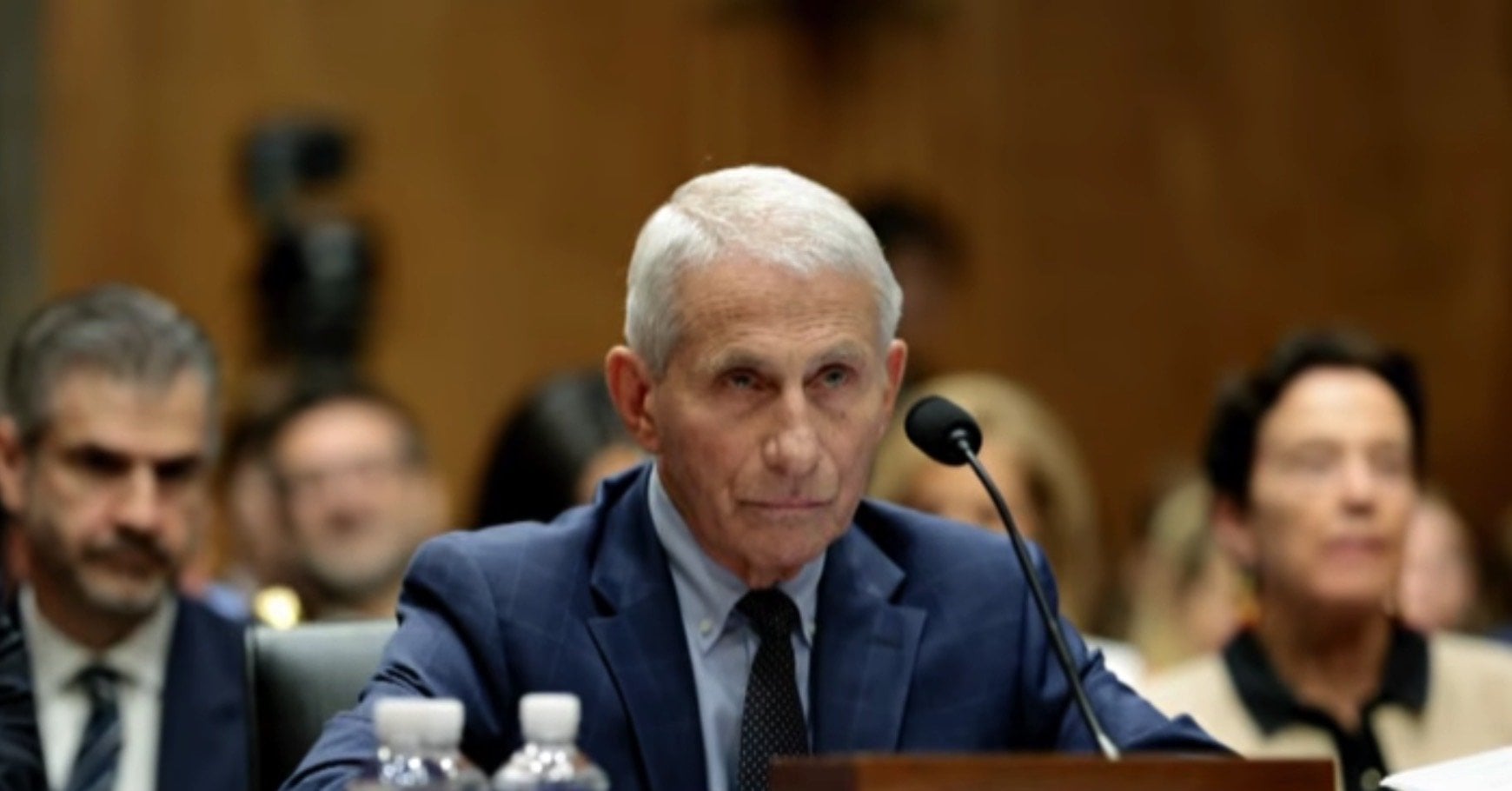

A US Senate committee voted to hold former top public health official Anthony Fauci in contempt of Congress after he refused to answer questions during a hearing on his role in the Covid-19 pandemic response.
The vote, which split along party lines, clears the way for the committee to refer the matter to the justice department for possible prosecution. It remains unclear whether prosecutors will take action.
Fauci, who testified last week, repeatedly invoked the constitutional right against self-incrimination, doing so more than 100 times during the session, according to the hearing accounts described by US media.
Contempt Referral and Legal Uncertainty
Under the committee’s contempt procedures, the panel can pass a resolution and forward the case to the justice department if it believes a witness failed to comply with a congressional subpoena.
In this case, the committee action does not itself determine whether charges will be brought. A referral would instead allow prosecutors to decide whether to pursue the contempt allegation.
If the matter were to proceed, it could raise questions about the scope of prior legal protection for Fauci, including whether any potential charges would relate to actions after a recent presidential pardon.
Fifth Amendment Claims and Defence Response
Following the committee vote, Fauci’s lawyer criticised the decision, saying it was a “crude political stunt” aimed at punishing Fauci for exercising his constitutional right.
Kentucky Republican Senator Rand Paul, the committee’s chairman, had argued before the vote that the committee was deciding whether Fauci could be ordered to answer questions and then defy that order without consequences.
Ahead of the decision, Paul said the chair had directed Fauci to respond and that Fauci refused. He also said the vote was not about Fauci’s past views or policy record.
Fauci himself denied wrongdoing during the hearing. He accused Paul of an “obvious obsession” with pursuing prosecution and said Paul was trying to get him to make statements that could support repeated claims that Fauci would end up “behind bars”.
The top Democrat on the committee, Michigan Senator Gary Peters, defended Fauci, accusing Paul of launching what he described as a rushed investigation and a long-running campaign to bring a case.
Pandemic Origins Dispute and the Pardon
The committee hearing took place against ongoing public debate in the US over the origins of the Covid-19 pandemic.
The origins have been disputed between political figures and public health officials, including differences raised during Donald Trump’s presidency, when the pandemic began in 2020. Many scientists have said exposure to an infected animal is a more likely origin than a laboratory escape.
Paul has for years accused Fauci of seeking to conceal information about the outbreak’s origins and of supporting research funding connected to a lab in Wuhan, where some people believe the pandemic started with a lab leak. Fauci has denied any wrongdoing.
In his final day in office in 2025, then-President Joe Biden granted Fauci a pre-emptive pardon protecting him from federal prosecution for actions between 2014 and 2025.
However, the pardon does not necessarily prevent other proceedings. Fauci could still face charges for conduct after the date covered by the pardon, and he could also be exposed to state or local charges not covered by the federal protection.
Committee Procedure and Past Contempt Cases
Paul, who led the Republican side of the committee, bypassed a full Senate vote on the contempt resolution, saying he did not want to “waste time” running through the wider procedure.
Normally, contempt resolutions advanced by a committee go to the full Senate, where they require a 60-vote majority to move forward. Republicans hold 53 seats in the 100-member Senate.
Fauci’s lawyer, David Schertler, previously told CBS, the BBC’s US partner, that Fauci was on “solid legal ground” in asserting his Fifth Amendment privilege, and he said taking the step does not amount to an admission of guilt. Contempt prosecutions, and resulting convictions, are rare.
In 2024, former Trump allies Steve Bannon and Peter Navarro were convicted of contempt and sentenced to jail terms, the first such convictions since the 1980s.
Join the discussion? 

7 August 2026
-
 1
1
-
 3
3
Recommended Comments
Create an account or sign in to comment