



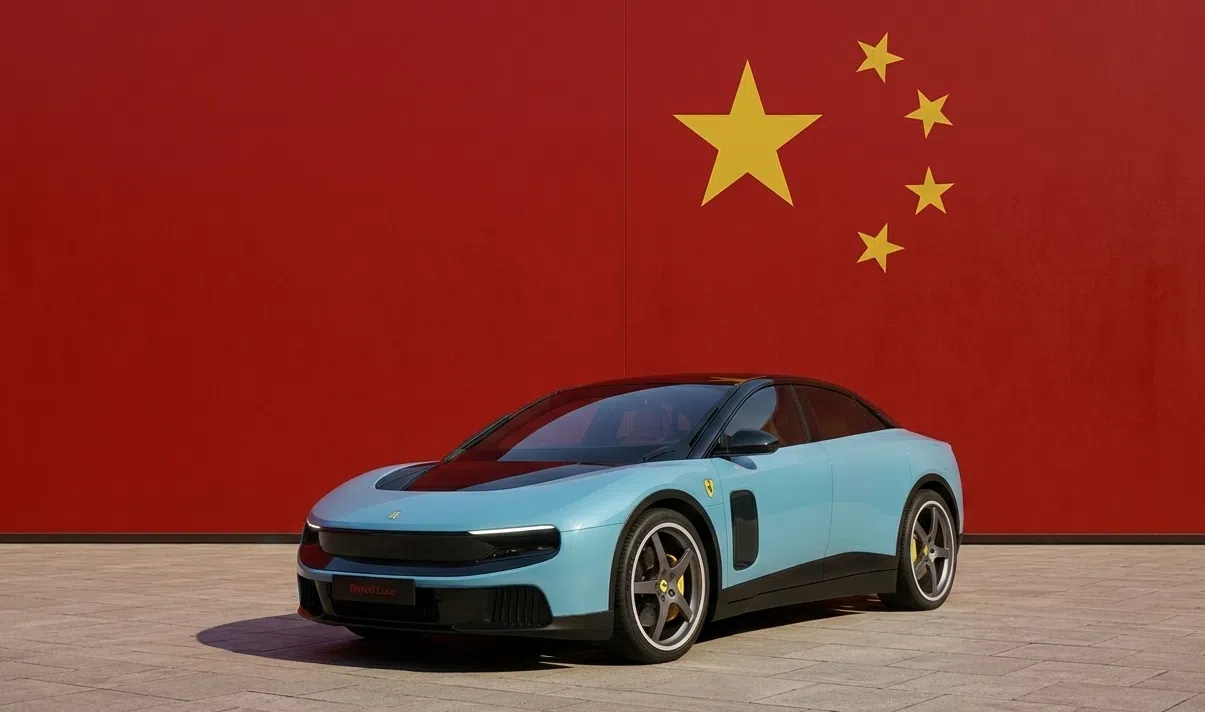

Ferrari's first electric vehicle has sparked criticism from investors, politicians and some loyal fans, overshadowing what was intended to be a landmark moment for the luxury carmaker as it responds to growing competition from Chinese electric vehicle manufacturers.
Get today's headlines by email 
The new Luce, designed with input from former Apple designer Sir Jony Ive, represents a major departure for a company best known for its petrol-powered supercars and distinctive engine sound. The launch attracted significant attention, with Italian President Sergio Mattarella and Pope Leo among those invited to preview the vehicle.
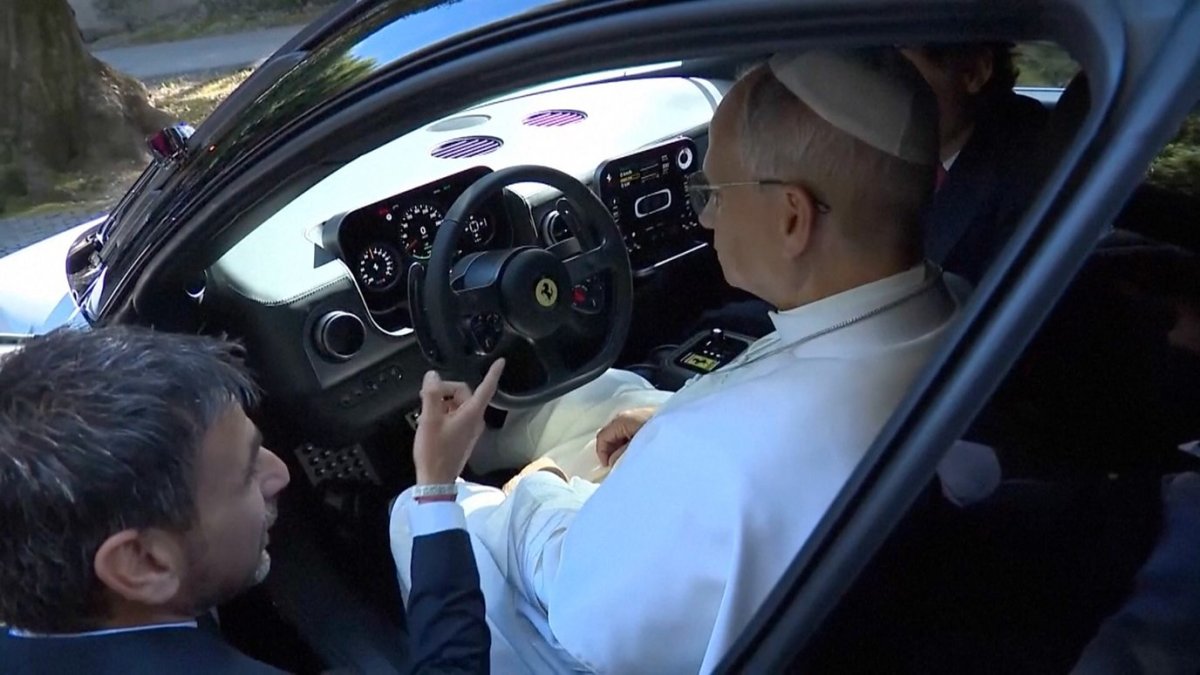
But the reaction quickly turned negative. Ferrari's shares fell 8% the day after the unveiling as social media users mocked the vehicle's appearance and its $640,000 price tag. The Luce is also Ferrari's first five-seater.
A Radical Departure
For decades, Ferrari resisted the shift toward electric vehicles even as much of the automotive industry embraced battery-powered technology.
While the Luce delivers supercar-level performance, accelerating from 0 to 60mph in about 2.5 seconds and reaching speeds above 190mph, much of the criticism has focused on its design rather than its capabilities.
Former Ferrari chairman Luca Cordero di Montezemolo said the model risked damaging the company's legacy and argued that it should not carry Ferrari's iconic badge.
Luxury car dealer and collector Shaun Baker was equally critical, saying the vehicle had weakened Ferrari's image as the world's most aspirational sports car brand.
Unlike traditional Ferraris, the Luce lacks the low-slung profile associated with the marque. As an EV, it also does away with the engine note that has long been central to Ferrari's appeal.
Italy's Deputy Prime Minister and Transport Minister Matteo Salvini questioned the design, saying the vehicle looked unlike a Ferrari and wondering what company founder Enzo Ferrari would have thought of it.
Online Backlash
The criticism spread rapidly online.
Some social media users compared the Luce to far cheaper electric cars, including models produced by Chinese manufacturers. Others posted AI-generated redesigns that they argued looked more in keeping with Ferrari's heritage.
Although some commentators praised the vehicle's styling, many others accused Ferrari of abandoning the identity that made it famous.
Ferrari chief executive Benedetto Vigna defended the project and rejected comparisons with lower-cost rivals, insisting the Luce reflects the company's commitment to innovation.
China Challenge
The controversy comes as Ferrari and other Western automakers face growing pressure from Chinese EV makers, which are increasingly competing in the premium segment once dominated by European and American brands.
China has become a major force in the electric vehicle industry thanks to extensive supply chains, lower production costs and strong domestic competition. Chinese manufacturers are producing increasingly sophisticated vehicles while pushing aggressively into overseas markets.
That challenge is particularly significant for luxury brands. Chinese consumers, a key market for Ferrari, now expect advanced technology, long driving ranges and competitive pricing.
Some Chinese performance EVs already rival established Western brands. The all-electric BYD Yangwang U9, for example, delivers supercar-level acceleration at a fraction of the Luce's price.
Changing Course
Ferrari's electric push comes at a time when some rivals are reassessing their EV ambitions.
Lamborghini has abandoned plans for a fully electric model, citing weak demand and continued customer preference for petrol-powered cars. Other manufacturers, including Porsche, Honda and Ford, have also scaled back electric vehicle programmes.
Analysts say Ferrari may be targeting a different audience with the Luce. Younger buyers tend to be more receptive to EVs, while the vehicle's unconventional design could attract customers who might not otherwise consider a Ferrari.
James Wong, a Singapore-based automotive analyst, said the interior design was impressive but argued that the vehicle as a whole was difficult to identify as a Ferrari.
Whether the backlash proves damaging remains unclear. Ferrari faced similar criticism when it launched the Purosangue SUV in 2022, yet the model went on to become a commercial success.
For now, however, the Luce has ignited a debate over Ferrari's future as it attempts to adapt to an industry increasingly shaped by electrification and competition from China.
Join the discussion? 
Already a member? 
 Adapted by ASEAN Now. Source 31 May 2026
Recommended Comments
Create an account or sign in to comment