



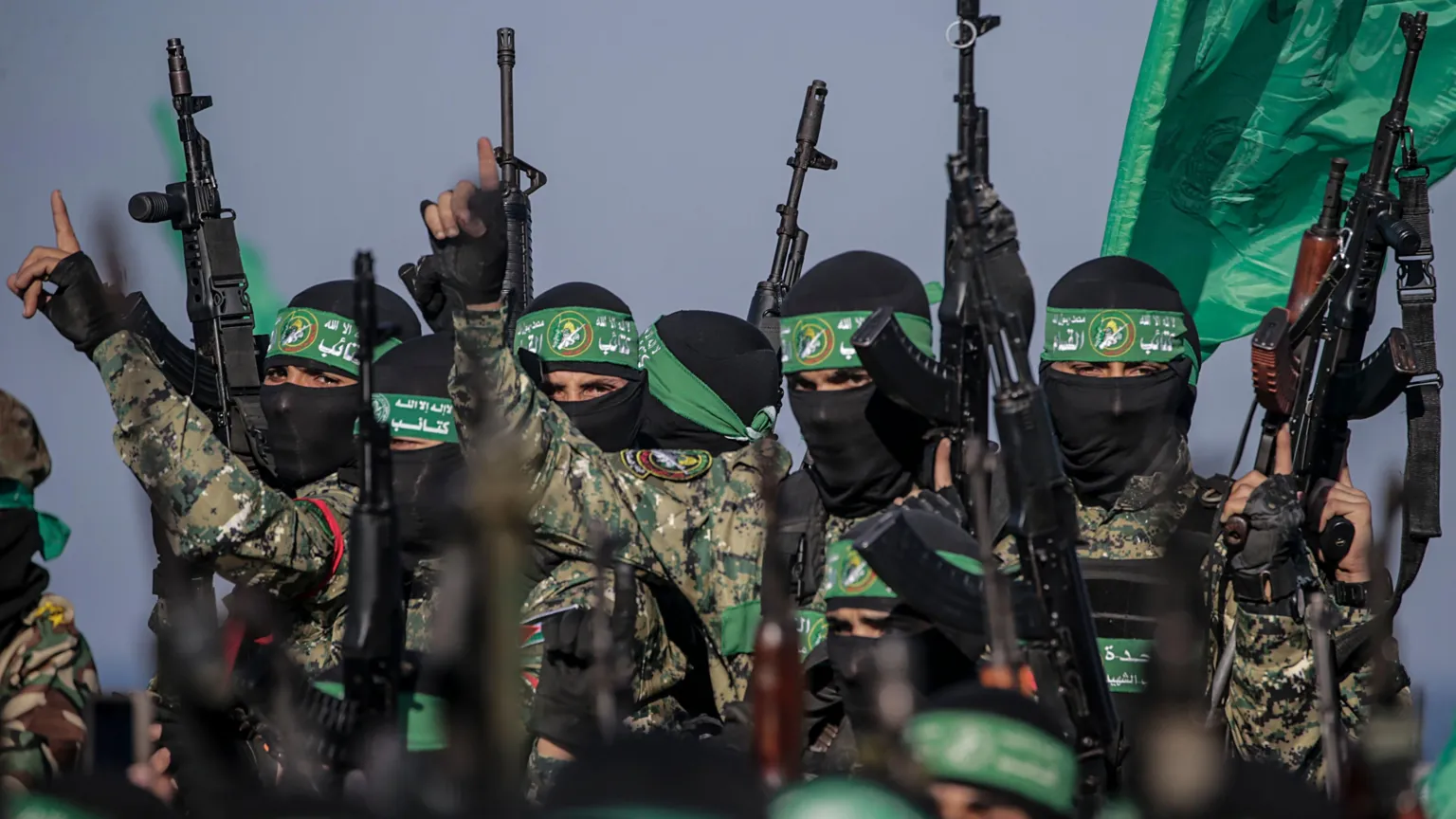

Hamas has rejected a proposal to disarm Palestinian militant groups in Gaza that was presented as part of the next stage of a US-backed peace plan, according to a senior Palestinian official familiar with the negotiations.
Get today's headlines by email 
The official said the group had told mediators it would not enter discussions on the second phase of the ceasefire agreement with Israel until the terms of the first phase had been fully implemented.
The proposal was outlined last month by Nickolay Mladenov, a senior figure involved in Donald Trump’s Gaza peace initiative. Hamas representatives have accused him of favouring Israel’s position during the negotiations.
The first phase of the deal, agreed between Hamas and Israel in October, halted the fighting and included the release of Israeli hostages held in Gaza in exchange for Palestinian prisoners held by Israel. It also required Israeli forces to carry out a partial withdrawal from the territory.
Dispute over second phase
The second stage of the plan, announced in mid-January by US Middle East envoy Steve Witkoff, is intended to move toward a permanent end to the conflict.
Under the framework presented by Mladenov, armed Palestinian factions in Gaza would dismantle their weapons as part of a process leading to reconstruction and a full Israeli withdrawal.
However, Palestinian officials say Hamas has refused to discuss disarmament before Israel completes what they describe as outstanding commitments from the first phase of the agreement.
A senior Hamas official told the BBC the group was waiting for a clear timeline showing when Israel would fulfil those obligations. He also called for guarantees that alleged Israeli violations would stop before talks on the next phase begin.
Israel has taken the opposite stance, saying progress on disarmament must occur before it agrees to move forward with further steps in the deal.
Conditions set by Hamas
Hamas and other Palestinian factions have communicated their position to regional mediators during meetings in Cairo, according to officials involved in the discussions.
They say negotiations on the next stage cannot begin until what they describe as Israeli attacks, killings and restrictions on humanitarian supplies end, alongside full implementation of the initial agreement.
Officials say Hamas is seeking a complete Israeli military withdrawal from Gaza and the deployment of international protection forces to support local police and safeguard civilians.
A second Hamas official outlined a list of outstanding measures that the group believes Israel must complete under phase one of the agreement.
These include finishing troop withdrawals, reopening the Rafah border crossing and other crossings for travellers, allowing greater flows of humanitarian aid and commercial goods, and enabling a Palestinian technocratic body known as the National Committee for the Administration of Gaza to operate.
Other demands involve restoring electricity, bringing in heavy equipment to clear rubble from destroyed buildings, and rehabilitating hospitals as well as water facilities and bakeries.
Reconstruction and security debate
The Hamas officials also criticised Mladenov’s framework, saying it ties reconstruction and humanitarian recovery directly to the disarmament of Palestinian groups.
They argue that such a condition would stall rebuilding efforts after the destruction caused during Israel’s military campaign in Gaza.
The war began after a Hamas-led attack on Israel on 7 October 2023 in which around 1,200 people were killed and 251 others were taken hostage in Gaza.
According to Gaza’s Hamas-run health ministry, more than 72,330 people have been killed by Israeli military action in the territory since the conflict began, including hundreds since the ceasefire took effect on 10 October 2025.
Last month, addressing the UN Security Council, Mladenov said the surrender of weapons by militant groups would represent a turning point for Gaza.
He said such a move could open the way to large-scale reconstruction and a full Israeli withdrawal, adding that the region faced a choice between renewed fighting and the possibility of a new beginning.
Israeli Prime Minister Benjamin Netanyahu has previously warned that Hamas will ultimately be disarmed, saying it could happen “either the easy way or the hard way”.
Join the discussion? 
Already a member? 
 Adapted by ASEAN Now. Source 15 April 2026
Recommended Comments
Create an account or sign in to comment