




A senior commander of Hamas’s armed wing has been killed in an Israeli air strike in Gaza City, according to both Hamas officials and Israeli authorities.
Get today's headlines by email 
A Hamas official confirmed that Izz ad-Din al-Haddad, a commander in the group’s military wing, died after the strike on Friday. Israeli leaders said he had played a key role in attacks against Israeli civilians and soldiers and described him as one of the planners behind the 7 October assault on Israel.
Israeli Prime Minister Benjamin Netanyahu and Defence Minister Israel Katz said in a joint statement that Haddad had been responsible for the “murder, kidnapping and injury” of thousands of Israelis.
The strike comes despite a ceasefire that has been in place in Gaza since October, though Israel has continued to carry out attacks targeting Hamas members across the territory.
Strike on Gaza City building
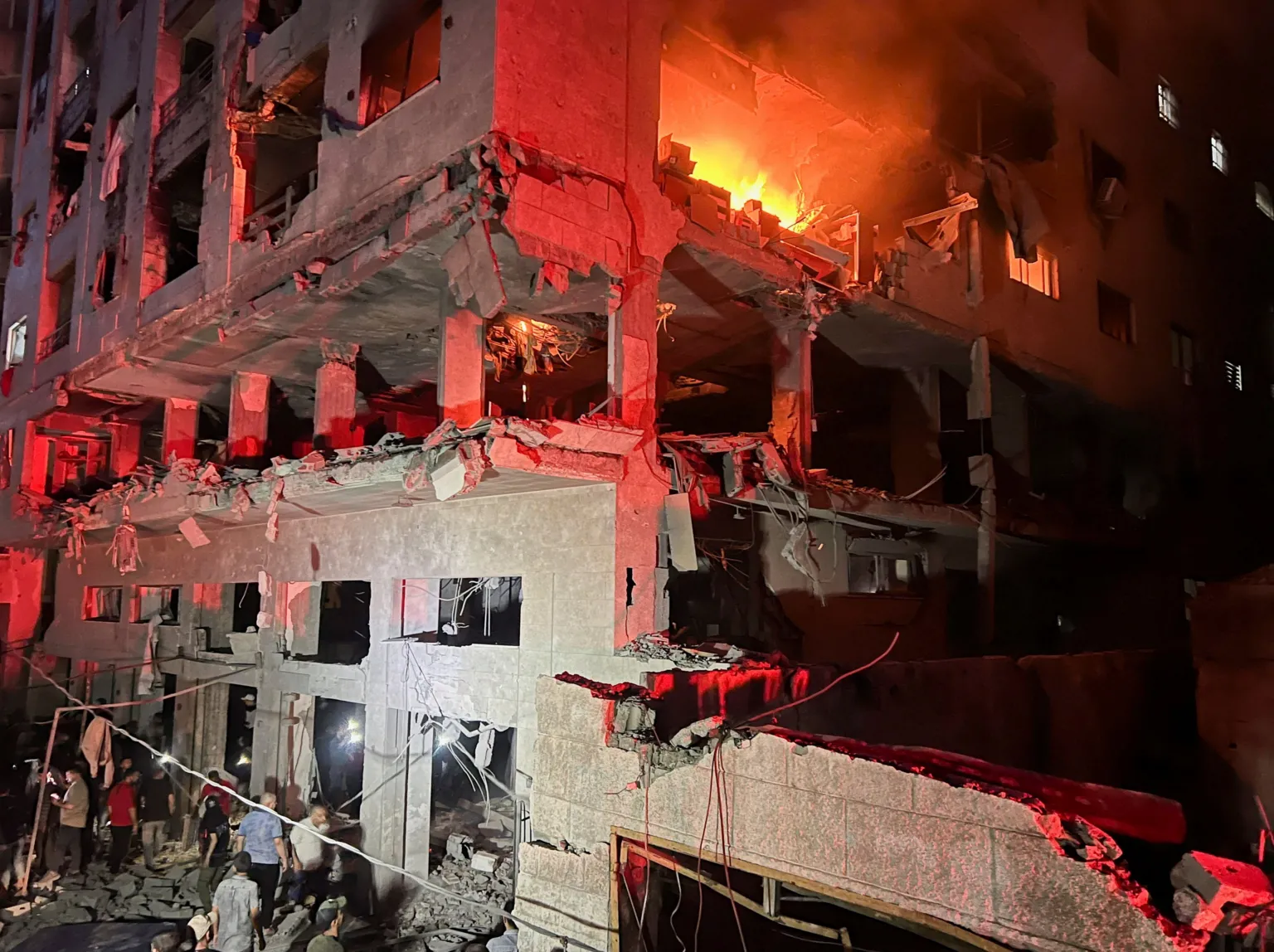
According to three eyewitnesses who spoke to the BBC, the initial strike hit a residential building known as Al-Mu'taz in central Gaza City.
Witnesses said three missiles struck the building at the same time from two directions. The attack set off a large fire and damaged the apartment block.
Emergency crews arrived shortly after the blast but struggled to evacuate those trapped inside because of the damage and flames, witnesses said.
One eyewitness reported that rescuers removed a body and several injured people from the building.
Car hit after leaving scene
A second air strike occurred shortly afterwards, targeting a vehicle seen leaving the area.
Eyewitnesses and a local source said the car was struck about 1.5km (0.9 miles) from the apartment block, killing three people.
Sources said the vehicle may have been carrying Haddad, who was believed to have been seriously injured in the initial strike.
Witnesses said armed Hamas members dressed in civilian clothing removed a severely wounded individual from the building through a side entrance before placing him in a vehicle that later came under attack.
An Israeli security official said preliminary information suggested the operation had successfully targeted Haddad.
Ceasefire tensions persist
A ceasefire between Israel and Hamas took effect on 10 October. However, Israeli forces have continued to launch strikes in Gaza during the truce.
Hamas has repeatedly accused Israel of violating the ceasefire by targeting civilians, while Israeli authorities say they retain the right to strike Hamas members.
Israel also accuses Hamas of breaching the agreement by refusing to disarm.
Efforts led by the United States to advance a broader peace plan have stalled since the outbreak of the Iran war. A second phase announced in January proposed that Gaza be governed by a temporary technocratic administration while the territory undergoes demilitarisation and reconstruction.
Talks on disarming Hamas remain deadlocked. Hamas has also reactivated its police force, a move seen as an attempt to reassert control in Gaza.
Netanyahu and Katz said Haddad had rejected calls under a US-led plan, promoted by President Donald Trump, for Hamas to disarm and for Gaza to be demilitarised.
“We will continue to act forcefully and decisively against anyone who took part in the October 7 massacre,” their statement said.
War’s origins and toll
The conflict began after Hamas led an attack on southern Israel on 7 October 2023 that killed around 1,200 people and saw 251 taken hostage.
Israel responded with a large-scale military campaign in Gaza aimed at dismantling Hamas.
More than 72,744 people have been killed in Gaza since the war began, according to the Hamas-run health ministry. It says 857 of those deaths have occurred since the ceasefire took effect.
Join the discussion? 
Already a member? 
 Adapted by ASEAN Now. Source 17 May 2026
Recommended Comments
Create an account or sign in to comment