



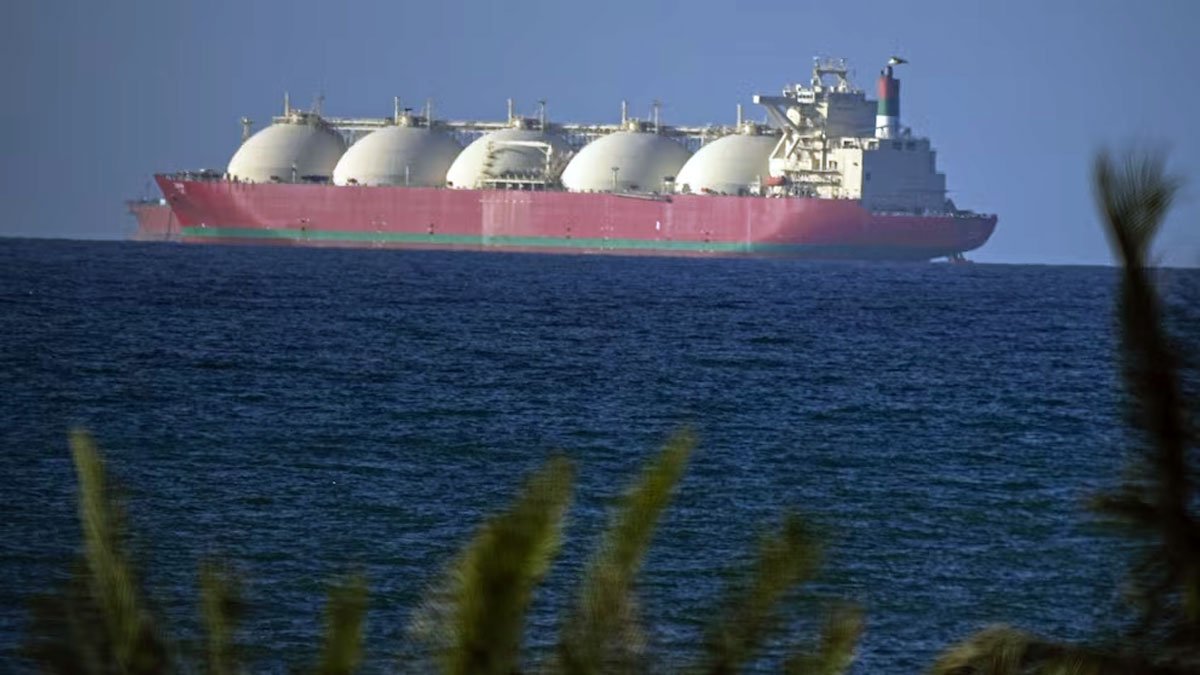

Iran has again closed the Strait of Hormuz after accusing Israel of breaching a newly agreed ceasefire, casting doubt on efforts to restore shipping through one of the world’s most critical energy routes.
Get today's headlines by email 
The move came only hours after U.S. officials said the strategic waterway had reopened under a two-week ceasefire agreement between Washington and Tehran.
The strait is a vital channel for global oil and trade, and its reopening was considered a central element of the temporary truce announced late Tuesday.
Dispute over ceasefire terms
U.S. Defense Secretary Pete Hegseth and Gen. Dan Caine, chairman of the Joint Chiefs of Staff, told reporters on Wednesday that the passage had reopened following diplomatic negotiations tied to the ceasefire deal.
But Iranian authorities later said they had shut the route again after accusing Israel of launching a major attack in Lebanon, which Tehran says violates the agreement.
Iran’s foreign minister, Abbas Araghchi, said the United States must decide whether it supports the ceasefire or continued hostilities through Israel.
“The Iran-U.S. ceasefire terms are clear and explicit,” he said in a social media post, adding that the international community was watching how Washington would respond.
Iran’s state-linked Fars News Agency reported that the closure came after several vessels, including two oil tankers, had already passed through the strait earlier in the day.
Lebanon attack complicates negotiations
The ceasefire was announced shortly before a deadline set by U.S. President Donald Trump, who had warned Iran of severe consequences if an agreement was not reached.
Pakistan’s Prime Minister Shehbaz Sharif, who helped mediate the talks, urged all sides to respect the truce after reports of violations emerged across the conflict zone.
“I earnestly and sincerely urge all parties to exercise restraint and respect the ceasefire for two weeks,” he said in a statement.
Iranian officials argue that attacks in Lebanon fall within the ceasefire’s scope. Araghchi cited Sharif’s earlier remarks suggesting that the truce applied broadly across the region, including Lebanon.
However, the White House rejected that interpretation.
President Trump said in a phone interview that Lebanon was not included in the ceasefire agreement, noting that Hezbollah—an Iranian-backed group— has continued to launch attacks against Israel from Lebanese territory.
White House press secretary Karoline Leavitt later repeated that position during a briefing, saying all parties involved had been informed that Lebanon was excluded.
Shipping industry cautious
The renewed uncertainty has unsettled global shipping companies that had begun preparing to resume traffic through the waterway.
Ed Finley-Richardson, a shipping investment analyst at Contango Research, said there had been growing optimism after both Washington and Tehran signalled that the route would reopen.
Charterers had started arranging new cargo shipments from Gulf ports for the first time since the conflict began, he said.
“That optimism fell apart when Iran deemed that the ceasefire had been violated,” he added, though conditions may still allow for a partial return of shipping if tensions ease.
Maersk, one of the world’s largest container shipping companies, said the ceasefire might create opportunities for transit but warned that the situation remains uncertain.
The company said it would continue assessing risks before sending vessels through the strait, stressing that the safety of crews, ships and cargo remained its highest priority.
Fragile truce
Iran has indicated that it will allow shipping for a limited two-week period if attacks on its territory stop, though it has warned of retaliation if strikes continue.
U.S. Vice President JD Vance described the agreement as a “fragile truce”, saying Iran had agreed to reopen the strait while the United States and its allies halted attacks.
With disputes over the ceasefire already emerging, the stability of the arrangement – and the reopening of the crucial shipping route — remains uncertain.
Join the discussion? 
Already a member? 
 Adapted by ASEAN Now. Source 9 April 2026
Recommended Comments
Create an account or sign in to comment