



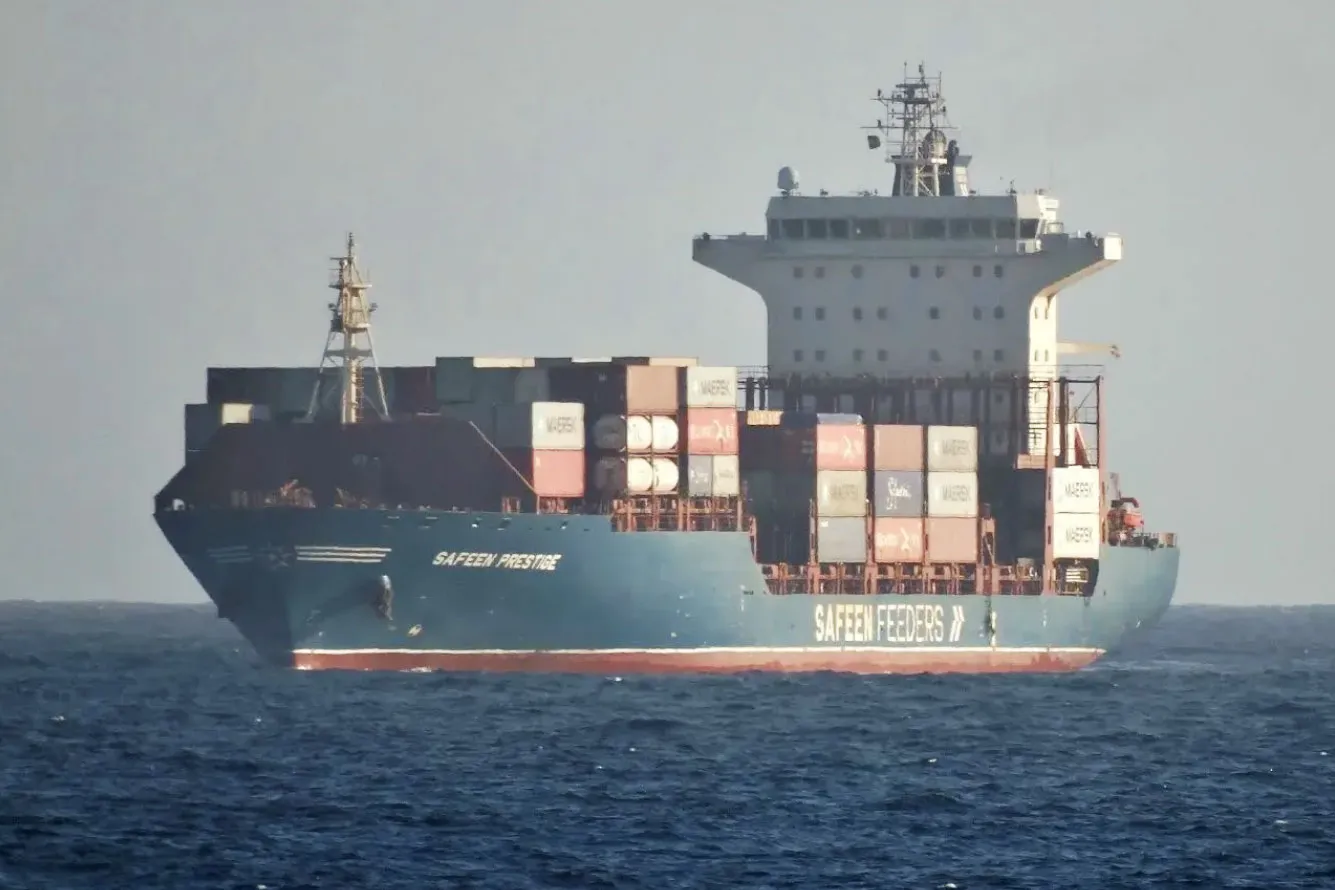

Shipping through the Strait of Hormuz has slowed to a near halt despite a ceasefire between the United States and Iran, raising fresh concerns about global energy supplies and sending oil prices back above $100 a barrel.
Get today's headlines by email 
Data from ship-tracking services shows that only a small number of vessels have passed through the strategic waterway since the truce was announced. The slowdown suggests uncertainty remains over how and when normal maritime traffic can safely resume.
Traffic Through Key Oil Route Falls Sharply
According to MarineTraffic and analytics firm Kpler, just five bulk carriers passed through the strait in the first 24 hours after the ceasefire was announced. S&P Global Market Intelligence reported that a total of nine vessels transited the waterway across Wednesday and Thursday.
These figures mark a dramatic decline from normal levels. Before the conflict, more than 100 ships typically moved through the strait each day.
Exact numbers remain difficult to verify because some vessels disable or alter their GPS tracking signals while sailing through the area.
The Strait of Hormuz is one of the world’s most important energy corridors, previously carrying about 20% of global oil and natural gas shipments. During the conflict, Iran targeted several vessels and warned it would strike ships it believed were linked to the United States or Israel.
The disruption has already unsettled energy markets. Oil prices climbed again on Thursday as initial optimism following the ceasefire gave way to uncertainty about when shipping might fully resume.
Conflicting Signals Over Whether the Strait Is Open
Disagreement among governments and industry officials has added to confusion over the status of the waterway.
Iranian authorities say ships must obtain permission before passing through the strait and have suggested vessels could be charged a transit fee. A map released by Iran’s navy late Wednesday indicated potential minefields and specified routes ships should follow to move safely through the area.
Under the guidance, outbound vessels leaving the Persian Gulf are directed south of Larak Island, while ships entering must pass north of the island — both closer to Iran’s coastline than many prewar routes.
Large areas of the strait were marked as “hazardous” on the map.
Iran’s deputy foreign minister Saeed Khatibzadeh said authorities must ensure the security of vessels navigating the passage.
However, officials in Gulf countries dispute claims that the strait has reopened.
Sultan Al Jaber, chief executive of Abu Dhabi’s national oil company and a government minister in the United Arab Emirates, said the waterway remained restricted and under Iranian control.
Legal and Security Questions Over Iran’s Proposed Fees
Iran’s suggestion that ships could be required to pay for transit has raised questions among shipping and legal experts.
The proposal has been described by some analysts as a potential “tollbooth” system. Maritime specialists say charging ships to pass through an international strait would be highly unusual and could set a precedent affecting global navigation rights.
The International Chamber of Shipping warned that any reopening must respect established maritime law and the principle of free navigation.
Complicating matters further is the fact that Iran has not ratified the United Nations Convention on the Law of the Sea, which guarantees transit passage through key maritime routes.
Meanwhile, European officials say they are preparing a naval escort mission for commercial vessels once conditions allow. French Foreign Minister Jean-Noël Barrot said planning for such a deployment is nearing completion.
Seafarers and Shipping Firms Face Ongoing Uncertainty
Shipping companies and crews remain unsure how to proceed as negotiations over transit arrangements continue.
Analysts say dozens of ships are waiting for permission to leave the Persian Gulf, including vessels operated by Chinese companies.
Uncertainty has been compounded by shifting signals from Tehran about how ships might pay for passage, with reports suggesting Iran has considered both Chinese yuan and cryptocurrency.
Industry observers also note that paying Iran could expose shipping companies to international sanctions.
For many sailors stranded in the region during the conflict, the priority is simply leaving safely.
One seafarer who had been stuck aboard an oil tanker for more than a month described how ships waiting near the strait are eager to depart once conditions allow. Many crew members, he said, are simply hoping to return home after weeks of tension in one of the world’s most sensitive maritime chokepoints.
Join the discussion? 
Already a member? 
 Adapted by ASEAN Now. Source 10 Ap
Recommended Comments
Create an account or sign in to comment